Blog
Varenius Kant geography: Foundations of Modern Geographical Thought

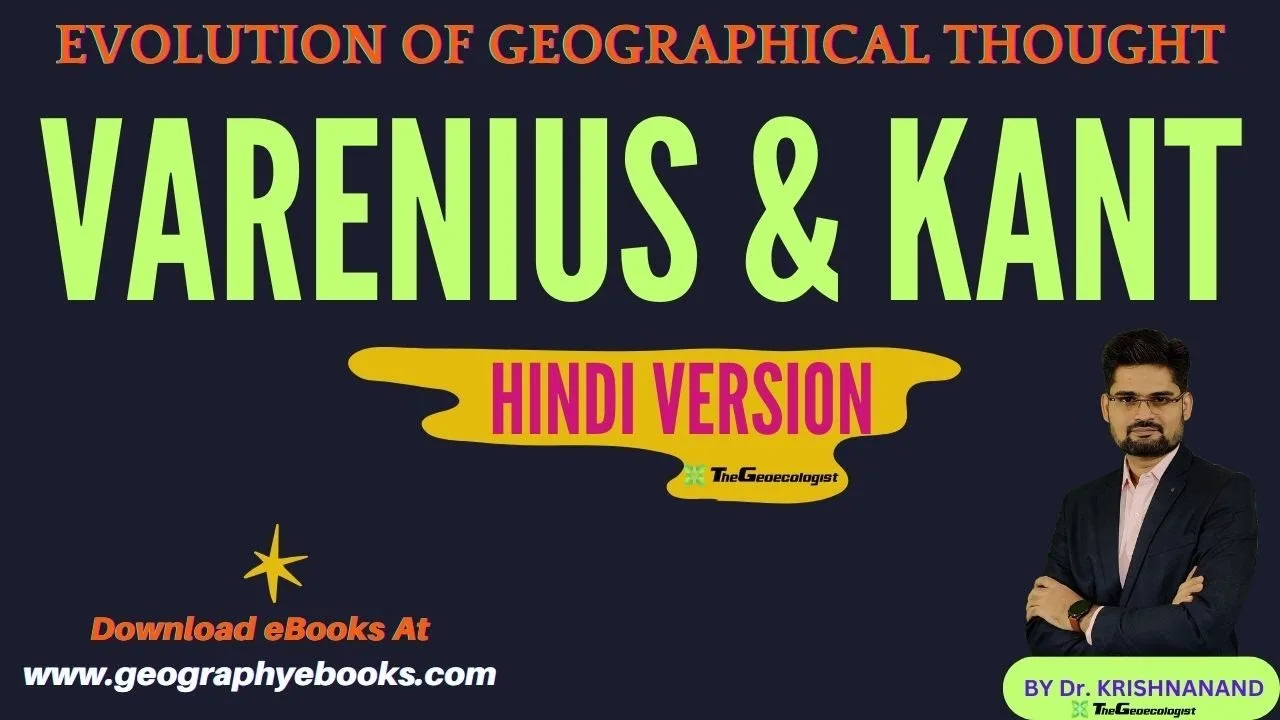
Table of Contents
- Bernard Varenius: The Father of Scientific Geography
- Early Life and Intellectual Context
- Geographia Generalis: A Systematic Masterpiece
- Classification of Geography: General vs. Regional
- Integration of Mathematics, Astronomy, and Physics
- Newton's Endorsement and the Newtonian Legacy
- Immanuel Kant: The Philosopher Who Mapped the Mind
- Kant's Academic Geography at Königsberg
- Geography as a Systematic Science: The Four-Fold Classification
- Philosophical Basis: Space, Time, and the Categorical Imperative
- Bridge Between Natural Sciences and Humanities
- Influence on Humboldt, Ritter, and Modern Spatial Analysis
- The Renaissance of Geography: From Description to Analysis
- Lasting Legacy in Contemporary Geography
- Varenius' Legacy: Classification, Cartography, and Physical Geography
- Kant's Legacy: Spatial Theory, Human-Environment Synthesis, and Critical Geography
- Conclusion: Why Varenius and Kant Matter Today
The evolution of Varenius Kant geography represents a pivotal turning point in how scholars understand the Earth as a systematic science. Bernard Varenius (1622–1650) and Immanuel Kant (1724–1804) stand as twin pillars whose intellectual frameworks transformed geography from a descriptive catalog of places into a rigorous, analytical discipline. Their combined legacy continues to shape university curricula, UPSC examination syllabi, and contemporary spatial analysis methodologies across the globe.
- Bernard Varenius established the first scientific classification of geography in Geographia Generalis (1650), dividing the field into General (Universal) and Regional (Special) geography.
- Immanuel Kant provided the philosophical architecture that positioned geography as a synthetic discipline bridging natural sciences and humanities through spatial reasoning.
- Their work collectively inspired the Renaissance of Geography in the 17th and 18th centuries, introducing mathematical rigor, astronomical precision, and philosophical depth.
- Modern subfields—physical geography, human geography, cartography, GIS, and regional planning—trace their methodological DNA directly to Varenius Kant geography principles.
- Sir Isaac Newton’s 1733 revision of Geographia Generalis and Alexander von Humboldt’s later syntheses demonstrate the enduring influence of these foundational thinkers.
Bernard Varenius: The Father of Scientific Geography
Early Life and Intellectual Context
Born in 1622 in Hitzacker, Germany, Bernard Varenius (Bernhard Varen) studied medicine and mathematics at the University of Leiden during the Dutch Golden Age—a period of extraordinary cartographic advancement driven by the Dutch East India Company (VOC). The Netherlands in the mid-17th century was the global center of mapmaking, with publishers like Blaeu and Janssonius producing atlases that combined art and science. Varenius absorbed this milieu, recognizing that geography required the same mathematical precision that governed astronomy and physics. – a key consideration for Varenius Kant geography.
Geographia Generalis: A Systematic Masterpiece
Published posthumously in 1650, Geographia Generalis (General Geography) was revolutionary. Unlike previous geographical works that merely described regions, Varenius constructed a theoretical framework applicable to the entire planet. The treatise addressed the Earth’s figure, magnitude, motion, seasons, climates, and the mathematical principles underlying navigation and cartography. He insisted that geography must employ quantitative methods—latitude, longitude, angular measurement, and spherical trigonometry—rather than relying solely on qualitative description. – a key consideration for Varenius Kant geography.
Classification of Geography: General vs. Regional
The most enduring contribution of Varenius Kant geography begins with Varenius’s binary classification:
- General Geography (Universal Geography): Studies the Earth as a unified system—its shape, size, motions, physical laws, climate zones, and universal phenomena. This branch seeks invariant principles applicable everywhere.
- Regional Geography (Special Geography): Examines specific territories—their unique combination of physical features, human settlements, economic activities, and cultural characteristics. This branch emphasizes particularity and synthesis.
This dichotomy structured geographical pedagogy for three centuries. Varenius Kant geography appears explicitly in the works of Alexander von Humboldt, Carl Ritter, and the founders of modern academic geography in Germany, France, Britain, and the United States.
Integration of Mathematics, Astronomy, and Physics
Varenius argued that geography cannot be separated from its quantitative foundations. He devoted chapters to:
- Determining the Earth’s circumference using Eratosthenes’ method refined with modern instruments
- Calculating latitude via solar altitude and longitude via lunar distances or Jupiter’s satellites
- Explaining seasonal variation through axial tilt and orbital mechanics
- Mapping climate zones using isotherms and astronomical boundaries (tropics, polar circles)
This insistence on mathematical geography as the backbone of the discipline anticipated the later development of geodesy, climatology, and remote sensing.
Newton’s Endorsement and the Newtonian Legacy
The authority of Varenius Kant geography received a monumental boost when Sir Isaac Newton edited and published a revised Latin edition of Geographia Generalis at Cambridge in 1733, with English translations following in 1734 and 1759. Newton added commentary, corrected errors, and used the text to teach mathematical geography at Trinity College. This endorsement signaled that geography deserved a place alongside physics and astronomy in the scientific curriculum. Newton’s involvement also linked Varenius’s work to the Principia Mathematica framework of universal laws governing terrestrial and celestial phenomena alike.
Immanuel Kant: The Philosopher Who Mapped the Mind

Kant’s Academic Geography at Königsberg
While globally celebrated for the Critique of Pure Reason (1781), Immanuel Kant spent over four decades as a professor of logic, metaphysics, and physical geography at the University of Königsberg (now Kaliningrad, Russia). Between 1756 and 1796, he delivered his geography lectures nearly every semester, drawing audiences of 50–100 students. These lectures were compiled posthumously as Physische Geographie (1801–1802), revealing a thinker who treated geography not as a minor subject but as essential to human cognition. – a key consideration for Varenius Kant geography.
Geography as a Systematic Science: The Four-Fold Classification
Kant’s most structural contribution to Varenius Kant geography is his epistemological taxonomy of knowledge, presented in his 1757 essay “On the Different Races of Man” and refined in his lectures:
- Logical (Rational) Knowledge: Mathematics, logic, metaphysics—truths derived from reason alone.
- Historical (Empirical) Knowledge: Events in time—politics, wars, biographies, cultural evolution.
- Natural (Physical) Knowledge: Phenomena governed by universal laws—physics, chemistry, biology.
- Geographical (Spatial) Knowledge: Phenomena distributed in space—regions, landscapes, spatial patterns, human-environment relations.
By elevating geography to a fundamental category of knowledge co-equal with history and natural science, Kant liberated Varenius Kant geography from being a mere handmaiden to navigation or commerce. Geography became the science of spatial synthesis—the discipline that integrates physical and human phenomena across the Earth’s surface.
Philosophical Basis: Space, Time, and the Categorical Imperative
In the Critique of Pure Reason, Kant argued that space and time are a priori forms of human intuition—we cannot experience the world except spatially and temporally. This philosophical insight gives geography a unique epistemological status: Varenius Kant geography studies the spatial form of experience itself. Furthermore, Kant’s moral philosophy—especially the categorical imperative—implies that understanding the spatial conditions of human life (resources, climate, borders, connectivity) is a prerequisite for ethical action on a planetary scale. Modern Varenius Kant geography scholars like David Harvey and Edward Soja have drawn directly on this Kantian heritage to develop critical human geography.
Bridge Between Natural Sciences and Humanities
Kant insisted that geography occupies the mediating position between Naturwissenschaften (natural sciences) and Geisteswissenschaften (human sciences). Physical geography provides the environmental stage; human geography narrates the cultural drama. Neither is intelligible without the other. This synthesis anticipated the 20th-century debates between environmental determinism (Ellsworth Huntington, Ellen Churchill Semple) and possibilism (Paul Vidal de la Blache, Lucien Febvre), and Varenius Kant geography underpins today’s coupled human-environment systems research.
Influence on Humboldt, Ritter, and Modern Spatial Analysis
Alexander von Humboldt read Kant avidly and credited him with shaping the Kosmos vision—a unified science of nature and humanity. Carl Ritter, co-founder of modern academic geography, explicitly adopted Kant’s four-fold classification. In the 20th century, the quantitative revolution (William Bunge, Peter Haggett, Richard Chorley) and later critical geography (David Harvey, Doreen Massey) both trace methodological lineages to Kant’s insistence on spatial logic and synthesis. Contemporary GIScience, spatial statistics, and geographic information theory operationalize Kant’s insight that spatial relations are a distinct category of knowledge requiring unique analytical tools.
The Renaissance of Geography: From Description to Analysis
The combined impact of Varenius and Kant sparked what historians of science call the Renaissance of Geography (c. 1650–1850). Before Varenius, geography was largely chorography—description of particular places for merchants, diplomats, and princes. After Geographia Generalis, Varenius Kant geography became a nomothetic science seeking universal laws. After Kant, Varenius Kant geography gained philosophical legitimacy as a university discipline. Key milestones in this renaissance include:
- 1733: Newton’s Cambridge edition of Geographia Generalis establishes mathematical geography in British academia.
- 1756–1796: Kant’s Königsberg lectures train a generation of Prussian administrators and scholars in spatial thinking.
- 1799–1804: Humboldt’s American expedition applies Varenian measurement and Kantian synthesis to produce Essay on the Geography of Plants and Political Essay on the Kingdom of New Spain.
- 1817: Carl Ritter appointed to the first chair of geography at the University of Berlin, institutionalizing the discipline.
- 1828: Founding of the Société de Géographie in Paris, the world’s first geographical society.
- 1830: Royal Geographical Society founded in London, promoting exploration and scientific geography.
This period transformed geography from a servant of empire into a science of the Earth system—a transformation rooted in Varenius Kant geography.
Lasting Legacy in Contemporary Geography
Varenius’ Legacy: Classification, Cartography, and Physical Geography
The General/Regional dichotomy remains the organizing principle of geography curricula worldwide. In India’s UPSC syllabus, Paper I (Physical Geography) maps to General Geography; Paper II (Human and Regional Geography) maps to Regional Geography. The discipline’s core subfields—geomorphology, climatology, oceanography, biogeography—are direct descendants of Varenius’s insistence that physical geography rests on physics and mathematics. Modern cartography and GIS inherit his demand for coordinate-based, projection-aware representation of the Earth. Even the International Geographical Union (founded 1922) structures its commissions along General/Regional lines.
Kant’s Legacy: Spatial Theory, Human-Environment Synthesis, and Critical Geography
Kant’s philosophical architecture undergirds three major currents in contemporary geography:
- Spatial Science & GIScience: The treatment of space as a fundamental analytical category—not merely a backdrop—derives from Kant’s transcendental aesthetic. Tobler’s First Law of Geography (“Everything is related to everything else, but near things are more related than distant things”) is a Kantian spatial axiom operationalized.
- Human-Environment Geography: The coupled human-natural systems (CHANS) framework, central to IPCC assessments and sustainability science, realizes Kant’s vision of geography as the synthesis of nature and culture.
- Critical & Postcolonial Geography: Kant’s own racial writings have been critically examined (e.g., by Robert Bernasconi and Pauline Kleingeld), prompting geographers to confront the discipline’s complicity in colonialism. This reflexive turn—geography studying its own spatial epistemologies—is a profoundly Kantian move: using reason to critique the conditions of reason itself.
Conclusion: Why Varenius and Kant Matter Today
Understanding Varenius Kant geography is not an antiquarian exercise. Varenius Kant geography is essential for any student, researcher, or policymaker who engages with spatial data, environmental planning, urban design, climate adaptation, or global equity. Varenius gave us the methodological toolkit—classification, measurement, mathematical rigor. Kant gave us the conceptual compass—space as a category of thought, synthesis as a method, ethics as a horizon. Together, they forged a discipline capable of addressing the planetary challenges of the 21st century: climate change, biodiversity loss, urbanization, migration, and geopolitical conflict. Their intellectual partnership across a century reminds us that geography’s greatest strength is its ability to integrate—across scales, across disciplines, across the physical and the human. That integration remains the discipline’s defining promise and its most urgent task.
For further study, consult the critical editions of Geographia Generalis (edited by Newton, 1733; translated by Dugdale, 1734) and Kant’s Physical Geography (edited by Rink, 1802; modern edition by Sturm & Trampota, 2022). The Wikipedia entry on Bernhardus Varenius and the Stanford Encyclopedia of Philosophy article on Kant provide accessible entry points.
Frequently Asked Questions
Bernard Varenius authored 'Geographia Generalis' (1650), introducing the first systematic classification of geography into General (Universal) and Regional (Special) branches, and establishing mathematical, astronomical, and physical foundations for the discipline.
Immanuel Kant positioned geography as a fundamental category of knowledge alongside history and natural science, argued that space is an a priori form of intuition, and established geography as the synthetic discipline bridging natural sciences and humanities through spatial analysis.
The General/Regional dichotomy structures UPSC geography syllabi, while Kant's spatial synthesis underpins contemporary GIScience, human-environment research, and critical geography. Their combined legacy provides the methodological and philosophical core of the discipline.