Blog
Slates as Rooftop Material in Himalayas #chakrata #slates #thegeoecologist #shorts

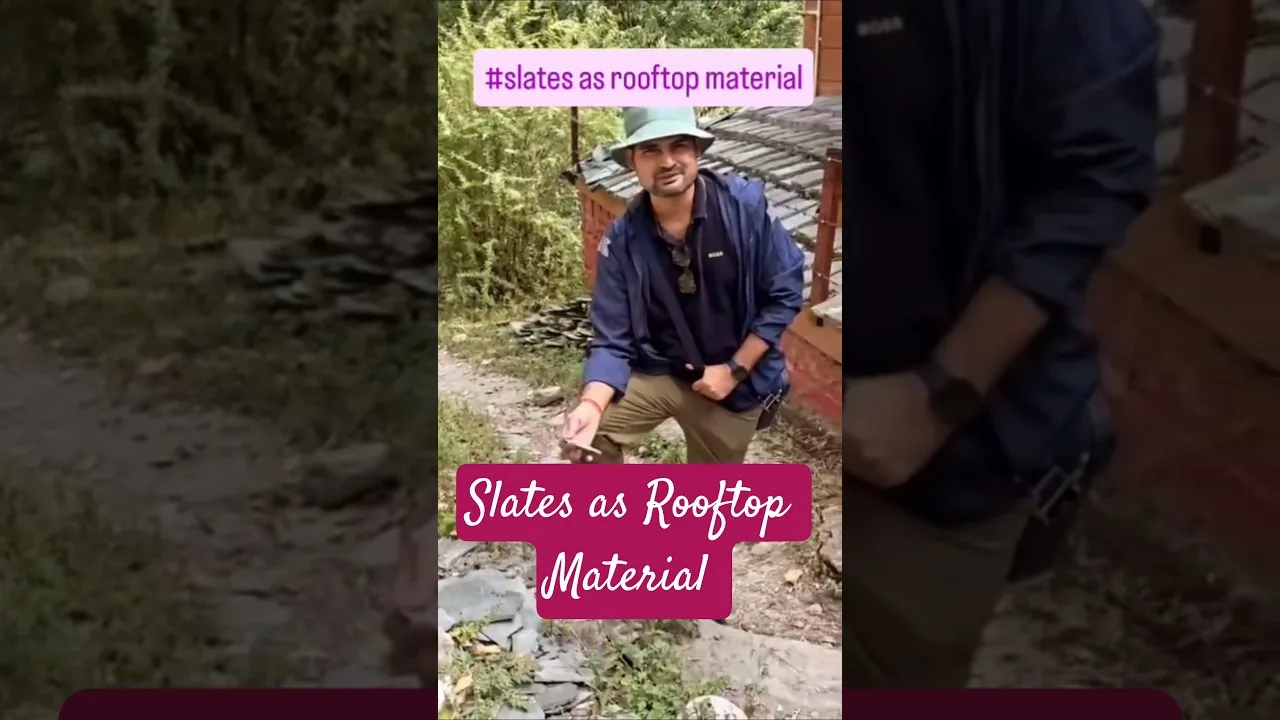
Slates as Rooftop Material in Himalayas #chakrata #slates #thegeoecologist #shorts
Of course. Here is an article based on your provided text, expanded for a general audience.
The Slate Roofs of Chakrata: Where Geology Meets Daily Life
In the ruggedly beautiful Chakrata region of Uttarakhand, the architecture tells a story millions of years in the making. Here, the roofs of homes and buildings are not made of modern concrete or metal, but of slate – a material that is as much a part of the landscape as the mountains themselves.
This is not merely an architectural choice; it is a profound example of geomorphic adaptation, where human ingenuity seamlessly blends with the natural environment.
The Geology Beneath Our Feet
The story of these slate roofs begins deep within the Earth. The region, part of the Lesser Himalayas, is composed of rocks that have undergone a dramatic transformation. Under immense tectonic pressures from the collision of tectonic plates, the rocks were subjected to intense heat and pressure, a process known as metamorphism.
The original shale and mudstone were transformed into a new type of rock: slate. This metamorphic rock is characterized by its fine grains and a property called ‘slaty cleavage’. This means the rock breaks along very fine, parallel planes, allowing it to be split into large, thin, and incredibly durable sheets.
This makes it perfect for roofing. The slate tiles are:
- Durable: They resist weathering, lasting for decades.
- Waterproof: Their dense structure prevents water from seeping through, crucial in a region with heavy rainfall.
- Heavy: Their weight makes them stable against the strong winds common in mountainous regions.
A Symbiotic Relationship
The use of slate in Chakrata is a perfect example of sustainable, locally-sourced building.
- Locally Sourced: The stone is quarried nearby, eliminating the need for long, carbon-heavy transportation.
- Natural Insulation: The thermal mass of slate helps keep interiors cool in the summer and retains heat during the cold winters.
- Zero Waste: Broken or old slates can be crushed back into the earth or used as filler material.
- Durability: A slate roof can last for generations, reducing the need for frequent replacements and the use of new materials.
Simply put, people used what the land provided. It was the most logical, efficient, and resilient choice available. This relationship between a region’s geology and its inhabitants’ way of life is known as geoheritage.
A Tradition Worth Preserving
In an age of globalized building materials, the slate roofs of Chakrata are a reminder of the beauty and logic of local solutions. They represent a built environment that is:
- Resilient: Designed to withstand the specific environmental challenges of the region.
- Sustainable: Based on a model of local sourcing and low environmental impact.
- Identity-Giving: The slate roofs are a key part of what makes the architecture of this Himalayan region unique. They are a direct, physical manifestation of the geology below.
The slate roofs of Chakrata are more than just a building technique. They are a testament to how human culture can evolve in harmony with the Earth’s geological story, creating a home that is both on the land and of it.
Read More: For more on the intersection of geology, geography, and daily life, follow #TheGeoecologist across platforms.
ChakrataHills #TheGeoecologist #SlateRoofs #HimalayanArchitecture #Geoheritage #SustainableArchitecture #GeologyInAction #Chakrata #Uttarakhand #Himalayas
Note: This article is based on the original text provided. For a deeper dive into the geological specifics of the area, one would study the Main Boundary Thrust (MBT) and the metamorphic rocks of the Lesser Himalaya.
To Download E-Books & Study Material Visit The Shop Page