Blog
Population Geography UPSC: Dr. Krishnanand’s Expert Guide

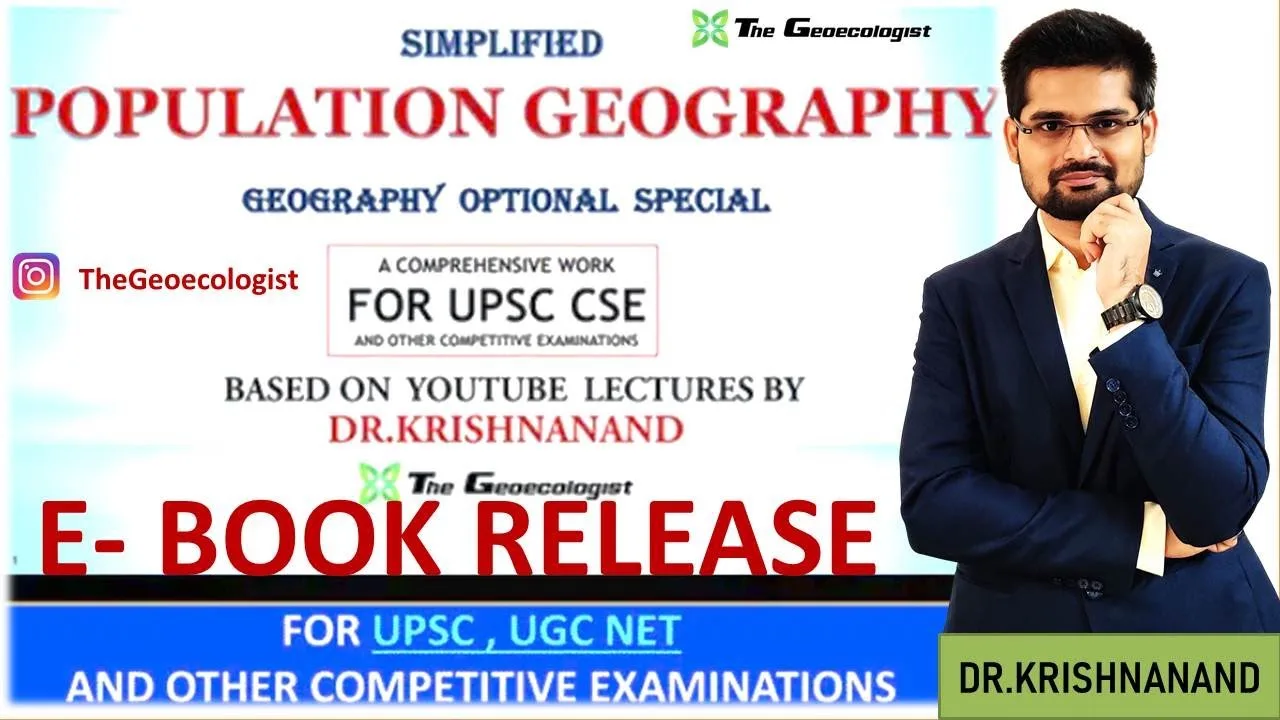
Table of Contents
- The Strategic Importance of Population Geography UPSC Preparation
- Core Pillars of the Subject
- Decoding Complex Theories with Dr. Krishnanand
- Key Features of the Simplified Population Geography E-book
- Mastering Spatial Analysis and Demographic Trends
- The Role of Technology in Geography Education
- How to Use These Resources for Maximum Impact
- Summary of Resources for Aspirants
- Conclusion: Elevate Your Geography Optional Score
Population Geography UPSC preparation requires a specialized approach that bridges the gap between theoretical demographic models and real-world spatial analysis. For aspirants targeting the Civil Services Examination, mastering this subject is not merely an option but a strategic necessity. Dr. Krishnanand, a renowned geoecologist and founder of TheGeoecologist, has released a definitive Population Geography UPSC guide designed to simplify complex demographic trends and spatial dynamics for serious candidates.
- Comprehensive Coverage: Deep dives into demographic transition models and migration theories.
- Expert Guidance: Authored by Dr. Krishnanand, a specialist in human and environmental geography.
- Exam-Oriented: Specifically tailored for the UPSC Geography Optional syllabus.
- Visual Learning: Integration of maps, graphs, and spatial diagrams for better retention.
- Resource Access: Direct links to specialized e-books and supplementary video lectures.
The Strategic Importance of Population Geography UPSC Preparation
In the evolving landscape of the UPSC syllabus, Population Geography UPSC topics act as a vital link between physical geography and human systems. It is the study of how human populations are distributed, how they change over time, and how they interact with the environment. For candidates opting for Geography as an optional subject, understanding these dynamics is crucial for both the Prelims and the Mains examination.
A student must be able to discuss the intersection of resource availability and population growth. This requires more than just memorizing facts; it requires an understanding of the spatial distribution of people. This is where the demography concepts become essential. By studying the spatial patterns of human life, candidates can answer complex questions regarding urbanization, migration, and regional development.
Core Pillars of the Subject
To excel in Population Geography UPSC, one must master several core pillars:
1. Demographic Processes: Understanding fertility, mortality, and migration rates is fundamental. These are the engines that drive population change.
2. Demographic Models: Students must be proficient in explaining theories such as the Malthusian Theory of Population and the Demographic Transition Model. These models provide the framework for predicting future population trends.
3. Spatial Distribution: Why do people live where they do? Analyzing the density and distribution of populations across different continents and Indian states is a recurring theme in the exam.
4. Socio-Economic Implications: Population growth is not just a number; it impacts economy, infrastructure, and the environment. Analyzing the ‘demographic dividend’ is a high-yield topic for the Mains exam.
Decoding Complex Theories with Dr. Krishnanand
One of the biggest hurdles in Population Geography UPSC is the complexity of theoretical frameworks. Many students struggle to differentiate between various models of population growth and the socio-economic drivers behind them. Dr. Krishnanand’s pedagogical approach solves this by breaking down high-level academic concepts into digestible, structured modules.
His work focuses on providing conceptual clarity. Instead of rote learning, his materials encourage students to understand the ‘why’ behind the data. For instance, when discussing migration, the guide doesn’t just list push and pull factors; it contextualizes them within modern global trends and Indian regional shifts. This depth is what distinguishes a high-scoring answer in the UPSC Mains from a mediocre one.
Key Features of the Simplified Population Geography E-book
The Population Geography UPSC e-book is a curated resource that includes:
- Simplified Explanations: Complex ideas like Malthusianism are explained using contemporary examples.
- Visual Learning Tools: The use of maps and diagrams helps in visualizing spatial trends, which is essential for geography students.
- Indian Context: While global models are important, the book places a heavy emphasis on Indian demographic trends, making it highly relevant for the exam.
- Model Answers: To help students refine their answer-writing skills, the book includes structured responses to previous years’ questions.
Mastering Spatial Analysis and Demographic Trends
A critical part of Population Geography UPSC is the ability to interpret data and maps. The exam often requires candidates to analyze census data or migration maps to draw conclusions about regional development. Dr. Krishnanand’s resources provide the necessary training to master these skills. By studying the spatiality of human life, students can better understand how urbanization impacts local ecosystems and resource management.
For example, the rapid urbanization seen in many developing nations is a major topic. Students must be able to discuss the implications of urban sprawl, the growth of slums, and the pressure on urban infrastructure. This level of analysis is what the UPSC expects from an optional subject candidate.
The Role of Technology in Geography Education
Modern geography education has moved beyond traditional textbooks. The integration of digital resources is essential. For students looking for more than just a book, TheGeoecologist provides a multi-platform learning experience. From video lectures on YouTube to daily infographics on Instagram, the ecosystem created by Dr. Krishnanand ensures that Population Geography UPSC preparation is continuous and engaging.
This digital approach allows for better engagement with current affairs. Since population trends change rapidly due to conflicts, pandemics, or economic shifts, staying updated with real-time data is vital. The combination of a structured e-book and dynamic digital updates provides the most comprehensive preparation possible.
How to Use These Resources for Maximum Impact
To get the most out of the Population Geography UPSC materials, students should follow a structured study plan. First, use the e-book to build a strong conceptual foundation. Don’t rush through the chapters; ensure you understand the logic behind every demographic model. Second, use the visual aids to practice drawing your own diagrams. In the UPSC Mains, a well-drawn map or flow chart can significantly boost your score.
Third, supplement your reading with current affairs. Population trends in India, such as the recent census updates or changes in fertility rates, should be integrated into your answers. Finally, practice answer writing using the model answers provided in the guide to refine your presentation and precision.
Summary of Resources for Aspirants
For those committed to success, the following resources are indispensable:
- The Simplified Population Geography E-book: Available at MithilaCraft.
- THEGEOECOLOGIST YouTube Channel: For in-depth video lectures and strategy.
- TheGeoecologist Website: For research papers and academic updates.
Conclusion: Elevate Your Geography Optional Score
Success in the UPSC examination requires precision, depth, and a strategic edge. The Population Geography UPSC subject, while vast, can be mastered with the right guidance. Dr. Krishnanand’s expertise, combined with his specialized e-book, offers students the clarity and structure needed to tackle this complex topic with confidence. By integrating these expert-curated materials into your study routine, you are not just studying geography; you are mastering the science of human spatial dynamics.
Disclaimer: This article is for informational purposes only. Aspirants are advised to consult official UPSC notifications for the latest syllabus and exam patterns.
Frequently Asked Questions
Yes, Dr. Krishnanand's e-book is specifically designed for UPSC Geography Optional aspirants, covering both theoretical and applied aspects.
The e-book is available for download through MithilaCraft at their official product page.
The book covers demographic transition models, Malthusianism, migration theories, urbanization, and spatial population distribution.