Blog
Omniverse eMagazine: Interdisciplinary Insights for UPSC & Researchers

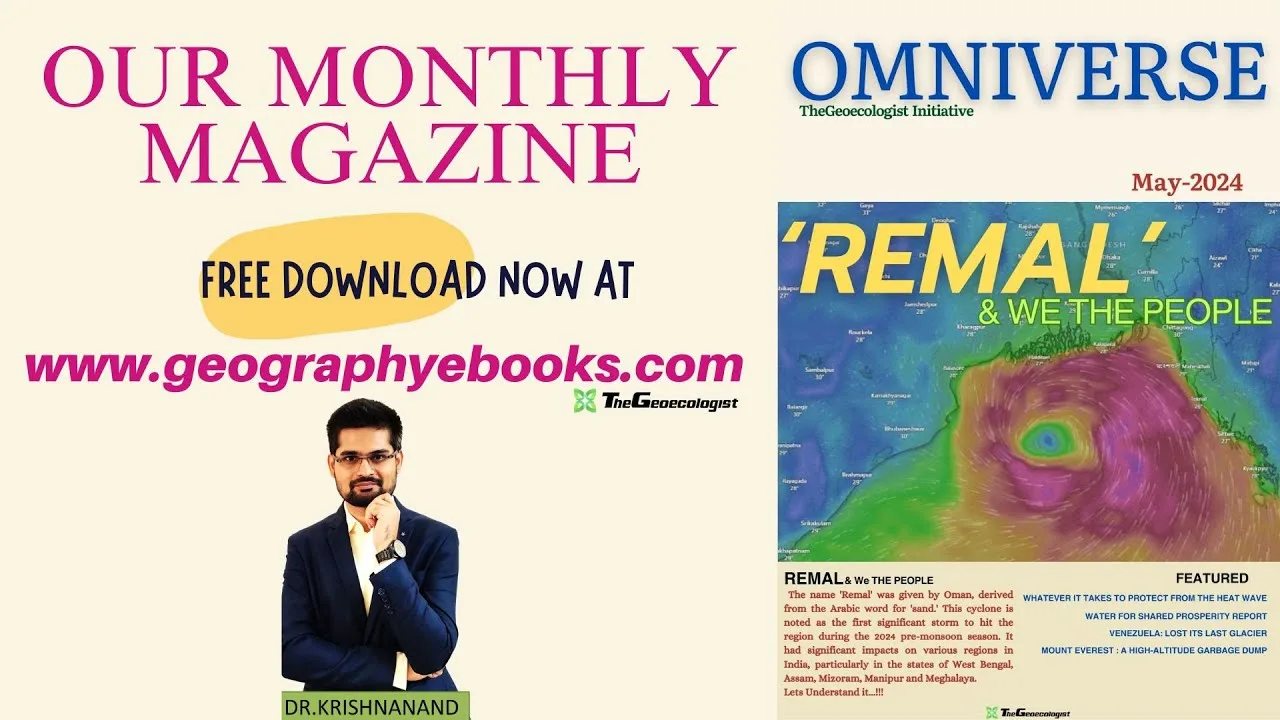
Table of Contents
- What Is Omniverse eMagazine?
- Editorial Philosophy and Mission
- Why Omniverse eMagazine Stands Out
- Interdisciplinary Depth with Exam Relevance
- Inspiration-Driven Learning
- Expert Contributions and Peer Review
- May 2024 Edition: Key Highlights
- Cover Story: The Polycentric World Order
- Environment Section: Planetary Boundaries Revisited
- Sociology & Culture: Digital Nomadism and Spatial Justice
- Who Should Read Omniverse eMagazine?
- UPSC Civil Services Aspirants
- Academic Researchers and Graduate Students
- Policy Professionals and Development Practitioners
- Accessing Omniverse eMagazine and Supplementary Resources
- Free Download and Archives
- Specialized Courses for Deep Learning
- Community Engagement Channels
- The Future of Interdisciplinary Publishing in India
- Final Thoughts: Why Download the May 2024 Issue Today
The Omniverse eMagazine May 2024 edition has been officially released by TheGeoecologist, marking a significant milestone for interdisciplinary academic publishing in India. This free digital publication bridges geography, environmental science, sociology, and international relations, offering readers a holistic lens to examine global challenges. Designed for UPSC aspirants, researchers, and lifelong learners, the magazine transforms complex socio-environmental themes into accessible narratives without sacrificing academic rigor.
- Omniverse eMagazine May 2024 edition is now available for free download via TheGeoecologist platform.
- Content spans geography, environment, sociology, geopolitics, and sustainable development.
- Ideal for UPSC preparation, interdisciplinary research, and general awareness.
- Features expert contributions blending academic depth with real-world relevance.
- Archives and supplementary courses accessible through TheGeoecologist Courses Portal.
What Is Omniverse eMagazine?
The Omniverse eMagazine is not merely a periodical—it is a curated gateway to interconnected knowledge. The term “omniverse” signifies boundless exploration across disciplinary boundaries, a philosophy reflected in every issue. Unlike conventional magazines that silo subjects, this publication weaves together physical geography, human ecology, cultural dynamics, and geopolitical strategy into cohesive analytical frameworks.
Each edition undergoes rigorous editorial review, ensuring that articles meet scholarly standards while remaining engaging for diverse audiences. The May 2024 release continues this tradition, featuring deep-dives into climate resilience, urban transformation, and shifting global power structures. For students preparing for competitive examinations like the UPSC Civil Services, the magazine provides nuanced case studies and data-driven insights directly aligned with the General Studies syllabus.
Editorial Philosophy and Mission
TheGeoecologist, the platform behind Omniverse eMagazine, operates on a clear mission: democratizing interdisciplinary education. Founded by geography educators and researchers, the initiative recognizes that 21st-century challenges—climate change, migration crises, resource conflicts—cannot be understood through a single disciplinary lens. The magazine embodies this ethos by publishing contributions from university professors, field researchers, policy analysts, and civil society practitioners.
This collaborative model ensures credibility and diversity of perspective. Articles are not opinion pieces; they are evidence-based analyses citing peer-reviewed studies, government reports, and international datasets. For instance, a recent feature on Himalayan glacial retreat incorporated data from the Intergovernmental Panel on Climate Change (IPCC) Sixth Assessment Report, grounding local observations in global scientific consensus.
Why Omniverse eMagazine Stands Out
Interdisciplinary Depth with Exam Relevance
One of the strongest differentiators of Omniverse eMagazine is its dual focus on academic depth and examination utility. UPSC aspirants often struggle to connect static geography concepts with dynamic current affairs. This publication solves that problem by framing contemporary issues—such as the Indus Water Treaty renegotiations or the Great Green Wall initiative in Africa—within fundamental geographical principles like hydrology, climatology, and political ecology.
Each article includes “Exam Pointers” sections highlighting key terms, potential question angles, and interlinkages with other GS papers. This feature has made the magazine a staple in the reading lists of top coaching institutes in Delhi, Hyderabad, and Bangalore. Researchers, meanwhile, appreciate the extensive bibliographies that accompany long-form pieces, facilitating literature reviews and citation tracking.
Inspiration-Driven Learning
Beyond facts and figures, Omniverse eMagazine sparks intellectual curiosity. The “Perspectives” column invites thought leaders to share personal research journeys, failures, and breakthroughs. These narratives humanize scholarship, showing readers that knowledge production is iterative and often nonlinear. For undergraduate students considering academic careers, this transparency is invaluable.
The magazine also publishes photo essays and infographics that visualize spatial patterns—urban heat islands, deforestation frontiers, migration corridors—making abstract data tangible. Visual literacy is increasingly tested in UPSC Mains and interviews, giving regular readers a competitive edge.
Expert Contributions and Peer Review
Every issue of Omniverse eMagazine features 8–12 articles authored by recognized authorities. The May 2024 edition includes contributions from a former Indian Foreign Service officer analyzing India’s Act East Policy through a geographical lens, a hydrologist from IIT Bombay modeling flood resilience in the Brahmaputra basin, and a sociologist from JNU studying climate-induced displacement in the Sundarbans.
Before publication, manuscripts undergo a double-blind peer review process adapted from academic journals. This ensures methodological soundness and argumentative coherence—rare for a free digital magazine. The editorial board comprises faculty from Delhi University, Jawaharlal Nehru University, and the Indian Institute of Science, lending institutional credibility.
May 2024 Edition: Key Highlights
Cover Story: The Polycentric World Order
The flagship article examines the transition from unipolarity to multipolarity using geographical determinants—resource distribution, strategic chokepoints, demographic transitions. It argues that traditional IR theories underweight physical geography, a gap Omniverse eMagazine consistently seeks to fill. The piece references the United Nations World Population Prospects 2024 revision to correlate demographic dividends with rising geopolitical influence.
Environment Section: Planetary Boundaries Revisited
Building on the Stockholm Resilience Centre framework, this section updates the nine planetary boundaries with 2023–24 data. Nitrogen cycle disruption and biosphere integrity emerge as the most transgressed boundaries in the Indian subcontinent. The article links these findings to India’s National Action Plan on Climate Change (NAPCC) implementation gaps, offering policy recommendations grounded in systems thinking.
Sociology & Culture: Digital Nomadism and Spatial Justice
A fascinating exploration of how remote work reshapes urban-rural dynamics in the Global South. Case studies from Goa, Dharamshala, and Bali illustrate gentrification pressures, infrastructure deficits, and cultural friction. The piece introduces the concept of “spatial justice” from critical geography, encouraging readers to evaluate development through equity lenses.
Who Should Read Omniverse eMagazine?
UPSC Civil Services Aspirants
For the 10+ lakh candidates appearing annually for the UPSC CSE, Omniverse eMagazine serves as a high-yield current affairs companion. Its geography-environment-society nexus coverage directly maps to GS Paper I (Geography), GS Paper III (Environment, Disaster Management), and Essay paper. Many successful candidates in CSE 2023 credited the magazine’s “Interlinkages” column for helping them write multidimensional answers.
The magazine also publishes previous year question (PYQ) analyses showing how interdisciplinary themes have been tested. This reverse-engineering approach helps aspirants prioritize reading and practice answer writing with relevant examples.
Academic Researchers and Graduate Students
PhD scholars and master’s students in geography, environmental studies, development studies, and international relations find Omniverse eMagazine valuable for literature discovery. The extensive reference lists—often 30–50 citations per major article—act as curated reading lists. Several university libraries in India have added the magazine to their digital repositories, citing its open-access model and scholarly standards.
Early-career researchers also benefit from the “Methodology Notes” boxes explaining techniques like GIS mapping, remote sensing interpretation, and qualitative coding—skills rarely taught comprehensively in coursework.
Policy Professionals and Development Practitioners
NGO workers, government officials, and consultants use the magazine to stay updated on evidence-based policy debates. The “Policy Brief” format distills 5,000-word research into 800-word actionable summaries with clear recommendations. This bridges the academic-practice divide that often hinders effective implementation of schemes like Jal Jeevan Mission or National Clean Air Programme.
Accessing Omniverse eMagazine and Supplementary Resources
Free Download and Archives
The May 2024 issue of Omniverse eMagazine and all previous editions are available for free download at the Geography eBooks section of TheGeoecologist website. No registration is required, reflecting the platform’s commitment to open knowledge. Issues are provided in PDF format optimized for both desktop and mobile reading, with searchable text and hyperlinked references.
The archive stretches back to January 2022, creating a repository of over 250 articles across 28 editions. A thematic index allows readers to browse by topic—water security, urbanization, borderlands, renewable energy—making it easy to compile research dossiers.
Specialized Courses for Deep Learning
For those seeking structured guidance, TheGeoecologist offers paid courses on the Courses Portal. Flagship programs include “Geography Optional Masterclass for UPSC,” “Environment & Ecology Comprehensive Coverage,” and “Interdisciplinary Answer Writing Workshop.” These courses integrate Omniverse eMagazine articles as core reading material, with video lectures explaining key concepts and demonstration answers.
Course enrollment includes access to a private Discord community where aspirants discuss articles, share notes, and receive mentor feedback. This ecosystem approach—magazine + courses + community—has produced consistent results, with 40+ selections in UPSC CSE 2023 from the program’s alumni network.
Community Engagement Channels
Stay connected with TheGeoecologist through multiple channels:
- YouTube Channel: Weekly lectures, PYQ discussions, and author interviews.
- Instagram: Daily map-based quizzes, infographic summaries, and exam tips.
- Website: Notification alerts for new issues, course launches, and free webinars.
Subscribing to the YouTube channel with notifications enabled ensures you never miss the live analysis sessions conducted within 48 hours of each magazine release.
The Future of Interdisciplinary Publishing in India
Omniverse eMagazine represents a broader shift in Indian academic publishing. As the National Education Policy (NEP) 2020 emphasizes multidisciplinary education, platforms like TheGeoecologist are pioneering models that combine accessibility with rigor. The magazine’s success—50,000+ monthly downloads, 15,000+ course enrollments—demonstrates demand for content that transcends disciplinary silos.
Future editions will experiment with interactive formats: embedded data visualizations, audio narrations for visually impaired readers, and multilingual translations (starting with Hindi and Tamil). The editorial team is also exploring partnerships with university geography departments for student-led research contributions, creating a pipeline for emerging scholars.
Critically, the magazine remains free. In an era where quality educational content is increasingly paywalled, Omniverse eMagazine sustains itself through course revenue and institutional grants, not advertisements or subscription fees. This model preserves editorial independence and ensures equitable access—a core value for a publication focused on social and environmental justice.
Final Thoughts: Why Download the May 2024 Issue Today
The Omniverse eMagazine May 2024 edition is more than a collection of articles—it is an intellectual toolkit for navigating complexity. Whether you are drafting a UPSC Mains answer on Indo-Pacific geopolitics, designing a watershed management project, or simply trying to understand why heatwaves are intensifying in Central India, this issue provides frameworks, data, and perspectives that isolated sources cannot.
Download your free copy today from the Geography eBooks portal. Join the 50,000+ readers who have made interdisciplinary thinking a habit. In a world of fragmented information, Omniverse eMagazine offers coherence—connecting the physical, human, and political dimensions of our shared planet.
Disclaimer: This article is based on publicly available information about TheGeoecologist’s publications. The author is not affiliated with TheGeoecologist. Readers are encouraged to visit the official website for the most current downloads and course offerings.
Frequently Asked Questions
Yes, Omniverse eMagazine is completely free to download. All issues, including the May 2024 edition and archives dating back to 2022, are available at no cost on TheGeoecologist's Geography eBooks portal without any registration requirement.
Omniverse eMagazine provides exam-oriented interdisciplinary content covering geography, environment, sociology, and international relations. It includes PYQ analyses, exam pointers, answer writing frameworks, and case studies directly aligned with UPSC GS Papers I, III, and Essay syllabus.
Omniverse eMagazine is published by TheGeoecologist, an educational platform founded by geography educators and researchers. The editorial board includes faculty from Delhi University, JNU, and IISc, ensuring academic rigor and credibility.