Blog
Indian Geographical Thought: Why Evolution Of Geographical Thought (Revised) is the Best E-Book for UPSC Aspirants


Many UPSC CSE aspirants and geography undergraduates find themselves searching for reliable material on Indian Geographical Thought and Scholars, only to encounter fragmented notes or overly dense texts that lack clarity. The demand for a structured, exam‑focused resource that traces the development of geographical ideas from ancient India to modern perspectives has grown steadily, yet few publications meet this niche with both depth and accessibility.
- Understand the core evolution of Indian geographical ideas in a single, coherent narrative.
- Save study time with point‑wise highlights, diagrams, and maps that reinforce retention.
- Gain confidence for UPSC CSE, state PSC, and undergraduate exams by covering the prescribed CBCS syllabus.
- Learn directly from Dr. Krishnanand’s acclaimed YouTube lectures, now condensed into an easy‑to‑read format.
- Access a portable e‑book that can be studied anytime, anywhere, on any device.
Understanding the Importance of Indian Geographical Thought in Competitive Exams
Indian Geographical Thought forms a critical component of the geography syllabus for UPSC CSE, especially in the General Studies Paper I and the optional geography paper. Questions often probe the contributions of Indian scholars such as Dadabhai Naoroji, Mahatma Gandhi’s views on rural geography, and modern thinkers like R. L. Singh. A solid grasp of this topic not only helps in answering direct questions but also enriches answers in related areas like environment, disaster management, and regional planning. Unfortunately, many aspirants rely on scattered coaching material or outdated textbooks that miss the nuanced progression of ideas, leaving gaps in understanding.
The Indian Geographical Thought segment in the UPSC syllabus expects candidates to trace the evolution from ancient Indian cartography—seen in works like the Surya Siddhanta and early Puranas—to the colonial era surveys and post‑independence geographical institutions. Without a dedicated resource, students struggle to connect these chronological milestones, resulting in superficial answers that fail to impress examiners.
Challenges Faced by Students Studying Geographical Thought
One of the biggest hurdles is the lack of a single, authoritative source that presents Indian Geographical Thought in a logical, easy‑to‑digest format. Most available texts either:
- Focus heavily on Western geographical theories, giving only a passing mention to Indian contributors.
- Present information in a dense, paragraph‑heavy style that makes revision tedious.
- Omit visual aids such as maps, diagrams, or timelines that are essential for spatial understanding.
- Fail to align with the latest CBCS curriculum, causing mismatches between what is studied and what is examined.
These challenges lead to wasted time, frustration, and lower confidence during mock tests. Aspirants often report spending hours cross‑referencing multiple PDFs, only to find contradictions or missing details. The need for a streamlined, exam‑oriented guide is therefore not just convenient—it is essential for competitive success.
How to Evaluate a Good Resource on Geographical Thought
When evaluating any study material for Indian Geographical Thought, consider the following criteria:
- Syllabus Alignment: Does the content explicitly cover the topics listed in the UPSC and CBCS syllabi?
- Clarity and Structure: Are concepts broken down into point‑wise headings, with summaries and visual aids?
- Author Credibility: Is the material created by a subject expert with proven teaching experience, preferably linked to reputable platforms?
- Updated Information: Does it incorporate recent developments, such as the role of GIS in Indian geographical research or contemporary policy debates?
- Practice Orientation: Are there practice questions, previous year question references, or quick‑revision notes?
A resource that satisfies most of these points will significantly reduce preparation time and improve retention. The ideal guide should read like a well‑structured lecture, allowing the student to grasp complex ideas quickly and recall them during the exam.
Why Evolution Of Geographical Thought (Revised) by Dr. Krishnanand Stands Out
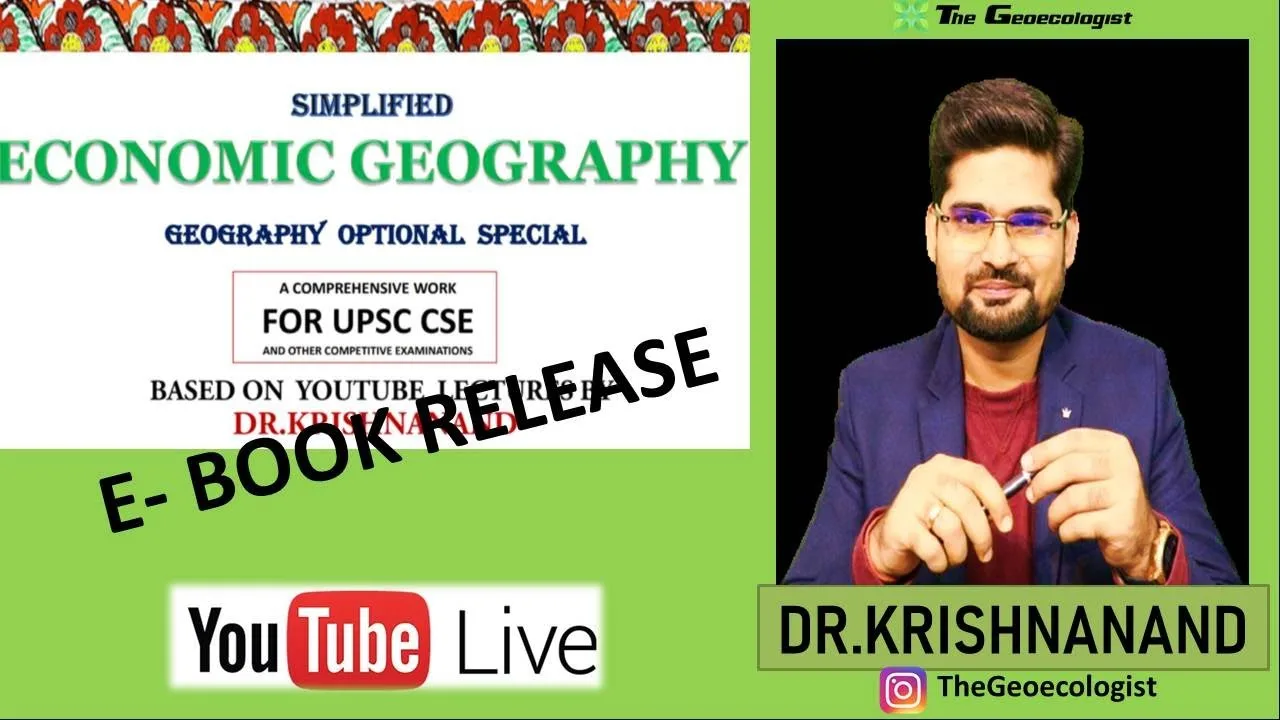
The Evolution Of Geographical Thought (Revised) e‑book by Dr. Krishnanand directly addresses the gaps identified above. First, it is meticulously aligned with the UPSC CSE geography syllabus and the CBCS undergraduate curriculum, ensuring that every topic listed under Indian Geographical Thought is covered. Second, Dr. Krishnanand—known for his popular YouTube channel TheGeoecologist—distills years of teaching experience into a format that is both comprehensive and concise.
Key features that make this e‑book a standout choice include:
- Point‑wise highlighted descriptions that enable quick scanning and revision.
- Integrated diagrams, maps, and images that illustrate concepts such as ancient Indian cartographic techniques, the contributions of scholars like Varāhamihira, and the evolution of geographical societies in post‑independence India.
- Lecture‑style narration that mirrors Dr. Krishnanand’s video explanations, making the transition from video to text seamless for his existing audience.
- Coverage of both historical perspectives and modern developments, including the impact of remote sensing and GIS on Indian geographical research.
- A revised edition that incorporates feedback from thousands of readers, correcting earlier ambiguities and adding new case studies relevant to current UPSC trends.
Because the product is delivered as an e‑book, it is instantly downloadable, compatible with smartphones, tablets, and laptops, and does not require any physical storage. This flexibility allows aspirants to study during commutes, breaks, or late‑night revision sessions without carrying heavy books.
Practical Tips for Using the E-Book in Your Study Routine
To maximize the benefit of Evolution Of Geographical Thought (Revised), integrate it into a structured study plan:
- Initial Overview: Begin by skimming the table of contents and reading the introductory chapter to grasp the chronological flow of Indian geographical ideas.
- Topic‑wise Deep Dive: Allocate specific days to each major section (e.g., Ancient Indian Thought, Medieval Contributions, Colonial Surveys, Post‑Independence Developments). Use the point‑wise highlights to create quick‑reference notes.
- Visual Reinforcement: Pause at each diagram or map, redraw it from memory, and label key features. This active recall technique strengthens spatial memory.
- Self‑Assessment: After completing a chapter, attempt related previous year UPSC questions or mock test items. Compare your answers with the explanations provided in the e‑book.
- Revision Loop: In the final weeks before the exam, revisit the highlighted points and visual aids only—this condensed review can be completed in a few hours and ensures high retention.
By following this method, the e‑book transforms from a mere reading material into an active learning tool that builds both knowledge and exam‑taking confidence.
Comparing With Other Available Resources
Many aspirants turn to generic geography textbooks or coaching institute PDFs when searching for Indian Geographical Thought material. While these resources may offer breadth, they often lack the depth and exam‑specific focus that Dr. Krishnanand’s e‑book provides. For instance, standard textbooks may devote a single chapter to Indian geographical thought, whereas this e‑book dedicates multiple sections, each enriched with visual aids and lecture‑style commentary. Additionally, the absence of a reliable authorial voice in many free PDFs raises concerns about accuracy, whereas Dr. Krishnanand’s credentials and the popularity of his YouTube channel serve as a quality guarantee.
When compared to other paid e‑books, the price point of ₹249 is competitive, especially considering the breadth of content, the inclusion of diagrams, and the alignment with the latest syllabus. The investment is modest relative to the potential score improvement in a highly competitive exam.
Final Recommendation and Where to Get It
For anyone serious about mastering Indian Geographical Thought for UPSC CSE, state PSC examinations, or undergraduate geography courses, Evolution Of Geographical Thought (Revised) by Dr. Krishnanand offers a targeted, reliable, and student‑friendly solution. Its structured presentation, visual support, and author credibility make it a superior alternative to fragmented notes or overly dense texts.
To obtain the e‑book, visit the product page and complete the simple download process. Once accessed, you can begin integrating it into your study routine immediately, moving closer to your goal of clearing the exam with confidence.
Further reading: Indian Geographical Thought on Wikipedia
Our Recommendation
📖 Part of our complete guide: Evolution of Geographical Thought: A Comprehensive Guide for UPSC Aspirants and Geography Enthusiasts
Frequently Asked Questions
What makes Evolution Of Geographical Thought (Revised) suitable for UPSC CSE preparation?
The e-book aligns with the UPSC CSE geography syllabus and CBCS curriculum, offers point-wise highlights, diagrams, maps, and lecture-style explanations from Dr. Krishnanand, making complex concepts easy to grasp and revise.
Does the e-book cover both historical and modern aspects of Indian Geographical Thought?
Yes, it traces the evolution from ancient Indian cartography and scholars like Varāhamihira through colonial surveys to contemporary developments such as GIS and remote sensing applications in India.
Is the content updated according to the latest exam patterns?
The revised edition incorporates feedback from thousands of readers, adds new case studies, and aligns with recent UPSC question trends, ensuring relevance for current aspirants.