Blog
British American Schools Geographical Thought: Comprehensive Guide for UPSC Aspirants


Understanding the development of geographical ideas is essential for anyone preparing for competitive exams like the UPSC Civil Services, especially when the syllabus emphasizes the evolution of geographical thought. The British American Schools Geographical Thought concept often appears in question papers, yet many aspirants struggle to find a concise, well‑illustrated resource that explains the philosophical shift from environmental determinism to possibilism and then to modern critical geography. This gap leads to fragmented notes, rote memorisation, and lower confidence when tackling essay‑type questions that demand a nuanced historical perspective. In this guide we break down the problem, show how to evaluate a reliable study material, demonstrate why the e‑book Evolution Of Geographical Thought (Revised) by Dr. Krishnanand directly addresses the need, and give practical tips on how to use it effectively for exam success.
- Identify the core challenges students face when studying the British American Schools Geographical Thought.
- Learn the criteria for evaluating a geography e‑book that covers historical schools of thought.
- Discover how Dr. Krishnanand’s revised e‑book aligns with the UPSC CBCS syllabus and provides point‑wise, diagram‑rich explanations.
- Get actionable advice on integrating the e‑book into your study routine and maximizing retention.
- Find answers to frequently asked questions about the product and its usage.
Problem: Why the British American Schools Geographical Thought Topic Is Difficult for Aspirants
The British American Schools Geographical Thought covers a chronological trajectory that begins with early environmental determinism in British geography, moves through the American regional tradition, and culminates in contemporary critical and postmodern approaches. Aspirants often report three main pain points:
- Volume of material. Standard textbooks devote only a few pages to each school, forcing candidates to supplement with scattered lecture notes.
- Lack of visual aids. Understanding the shift from deterministic maps to possibilistic landscapes is easier with diagrams, yet many resources are text‑heavy.
- Exam‑oriented phrasing. UPSC questions frequently ask for comparisons (e.g., “Contrast the British School’s emphasis on landscape with the American School’s focus on region”) requiring precise, point‑wise recall.
Without a dedicated source that consolidates these ideas, students waste time cross‑referencing multiple books, risking incomplete preparation and lower scores in the geography optional paper.
How to Evaluate a Solution for Studying British American Schools Geographical Thought
When selecting a study aid, consider the following five criteria:
- Syllabus coverage. Does the resource explicitly mention the topics listed in the UPSC CBCS geography syllabus, including the British and American schools?
- Clarity of presentation. Are concepts broken down into bullet points, with highlighted key terms and summarising tables?
- Use of visuals. Are maps, diagrams, and timelines included to illustrate the evolution of thought?
- Author credibility. Is the author an experienced educator with a track record in geography teaching and online lectures?
- Accessibility and format. Is the material available as a searchable e‑book that can be annotated on multiple devices?
A resource that satisfies most of these points will save study time, improve retention, and boost confidence when answering descriptive questions.
Why Evolution Of Geographical Thought (Revised) by Dr. Krishnanand Fits the Bill
The e‑book titled Evolution Of Geographical Thought (Revised) directly addresses each evaluation criterion:
- Syllabus alignment. The product description states that the e‑book is on the prescribed CBCS syllabus in geography, ensuring that the British American Schools Geographical Thought module is covered comprehensively.
- Point‑wise, highlighted explanations. Each lecture begins with clear headings, and important definitions are highlighted in bold or colour, making rapid revision easier.
- Diagrams, maps, and images. The long description mentions that point wise highlighted descriptions along with diagrams, maps and images make it more comprehensive and interesting. These visuals help learners visualise the shift from environmental determinism (British School) to possibilism and regional geography (American School).
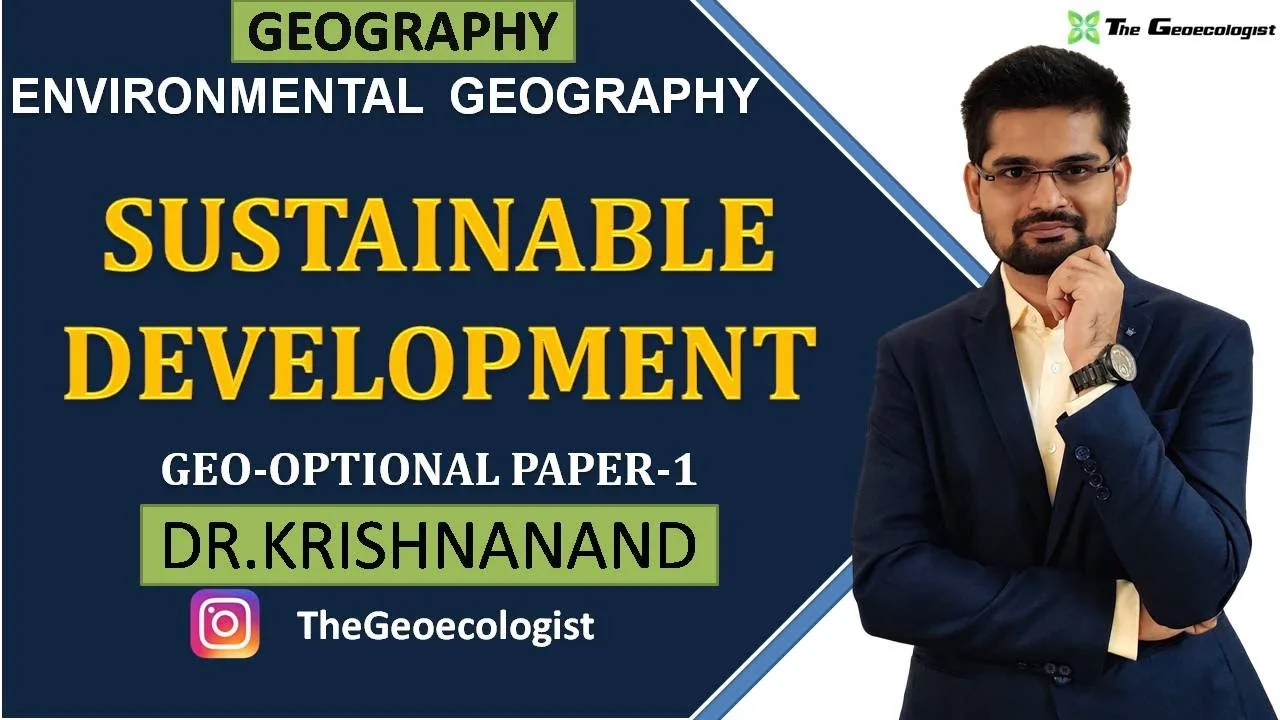
- Author expertise. Dr. Krishnanand is known for his YouTube channel TheGeoecologist, where he lectures on geographical thought; his academic background lends authority to the content.
- Convenient e‑book format. Available as a downloadable PDF, the e‑book can be read on tablets, laptops, or printed for annotation, supporting flexible study habits.
Specifically, the e‑book dedicates a full chapter to the British School, discussing figures such as Halford Mackinder and their emphasis on the physical landscape as a determinant of human activities. Another chapter details the American School, highlighting Carl Sauer’s cultural landscape theory and the regional tradition that emerged in the United States. By presenting these schools side by side with comparative tables, the e‑book enables aspirants to answer questions like “Compare the methodological approaches of the British and American schools of geographical thought” with confidence.
Practical Usage: How to Integrate the E‑Book into Your Study Routine
To extract maximum benefit from Evolution Of Geographical Thought (Revised), follow this step‑by‑step plan:
- Initial scan (Day 1). Read the table of contents and the introductory chapter to grasp the overall timeline of geographical thought. Highlight the sections on the British and American schools.
- Detailed reading (Days 2‑4). Allocate 45‑minute sessions to each school. Use the point‑wise format to create quick‑reference notes: write down three key contributions, two major criticisms, and one lasting impact for each school.
- Visual reinforcement (Day 5). Re‑visit the diagrams and maps accompanying each chapter. Redraw a simple flowchart showing the transition from environmental determinism → possibilism → regional geography → critical geography.
- Practice questions (Days 6‑7). Attempt previous year UPSC questions that ask for comparison or explanation of the British and American schools. Compare your answers with the e‑book’s highlighted points to identify gaps.
- Revision loop (Weekly). Before each mock test, skim the highlighted bullet points and the comparative table. This 10‑minute refresh keeps the information fresh without re‑reading entire chapters.
Because the e‑book is searchable, you can instantly locate phrases like “Mackinder’s heartland theory” or “Sauer’s cultural landscape” when you need to double‑check a fact during answer writing.
Buying Guidance: What to Expect When You Purchase
The product is priced at INR 249 and delivered as an immediate download link after payment. No physical shipping is involved, so you can start studying within minutes. The file size is optimized for quick download even on modest internet connections. Since the e‑book is marketed as “Extremely Popular” among geography aspirants, many users have already integrated it into their preparation strategy, which adds to its credibility as a trusted resource.
When you open the e‑book, you will find a brief preface by Dr. Krishnanand explaining how the revised edition incorporates feedback from readers and updates based on recent developments in geographical theory. The chapters are numbered consistently with his YouTube lecture series, allowing you to cross‑reference video explanations if you prefer audiovisual learning.
Frequently Asked Questions
Is the e‑book suitable for undergraduate geography students besides UPSC aspirants?
Yes. While the content is tailored to the UPSC CBCS syllabus, the clear explanations and visual aids make it valuable for any undergraduate studying the history of geographical thought.
How does the e‑book handle the transition from the American School to modern critical geography?
After detailing the American School’s regional focus, the e‑book includes a dedicated chapter on the quantitative revolution, behavioural geography, and finally critical and postmodern approaches, showing a logical progression of ideas.
Are there any practice questions or model answers included?
The e‑book itself focuses on conceptual clarity; however, the author’s YouTube channel often provides practice questions and answer discussions that complement the reading material.
Final Thoughts: Turning a Complex Topic into a Scorable Advantage
Mastering the British American Schools Geographical Thought not only helps you answer direct questions but also equips you with the analytical lens to interconnect geographical theories with current affairs—a skill highly valued in the UPSC interview stage. By choosing a resource that is syllabus‑aligned, visually enriched, and authored by an experienced educator, you transform a traditionally challenging subject into a scoring opportunity. The e‑book Evolution Of Geographical Thought (Revised) by Dr. Krishnanand delivers exactly that combination, making it a worthwhile addition to your preparation toolkit.
Further reading: British American Schools Geographical Thought on Wikipedia
Our Recommendation
📖 Part of our complete guide: Evolution of Geographical Thought: A Comprehensive Guide for UPSC Aspirants and Geography Enthusiasts
Frequently Asked Questions
Is the e‑book suitable for undergraduate geography students besides UPSC aspirants?
Yes. While the content is tailored to the UPSC CBCS syllabus, the clear explanations and visual aids make it valuable for any undergraduate studying the history of geographical thought.
How does the e‑book handle the transition from the American School to modern critical geography?
After detailing the American School’s regional focus, the e‑book includes a dedicated chapter on the quantitative revolution, behavioural geography, and finally critical and postmodern approaches, showing a logical progression of ideas.
Are there any practice questions or model answers included?
The e‑book itself focuses on conceptual clarity; however, the author’s YouTube channel often provides practice questions and answer discussions that complement the reading material.