Blog
India Time Zone: Why India Has Only One Time Zone Explained

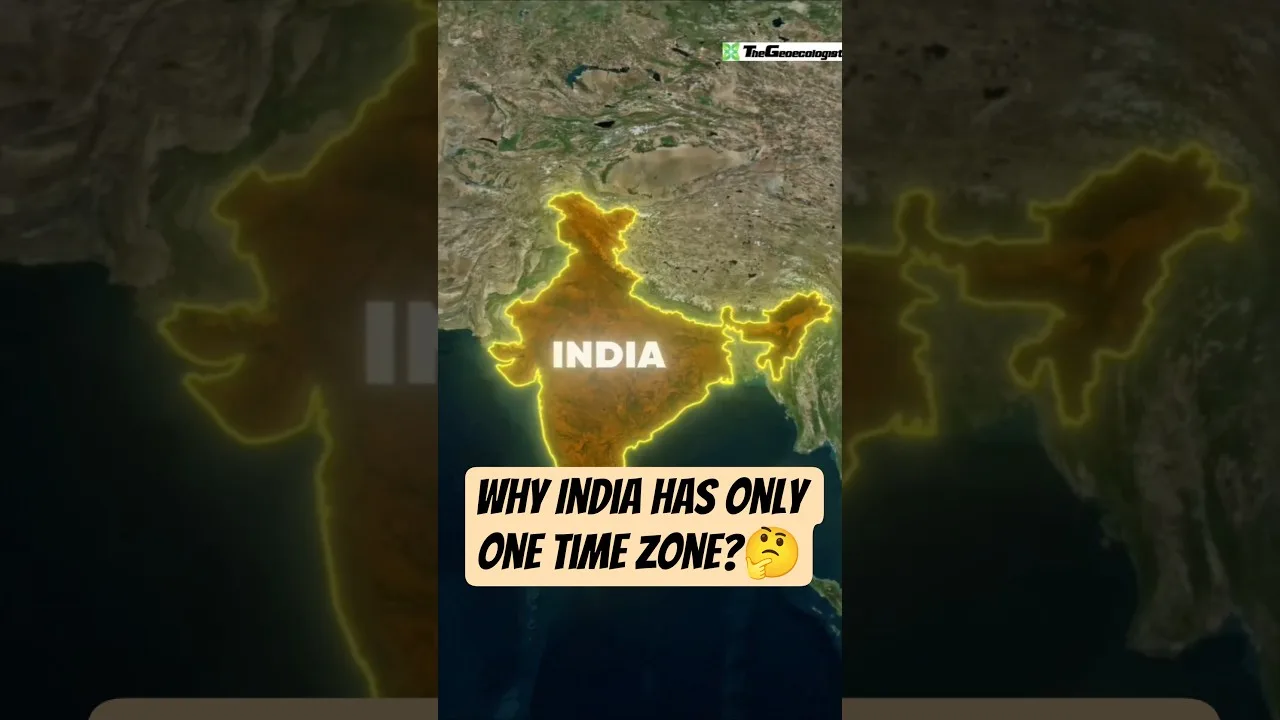
Table of Contents
- Historical Background of India Time Zone
- Colonial Era Survey and Early Proposals
- Adoption of IST After Independence
- Geographical Impact of a Single India Time Zone
- Longitude Span and Sunrise Variance
- Energy and Productivity Concerns
- Advantages of the Unified India Time Zone
- National Unity and Governance
- Railways and Transport Logistics
- Business and Education Coordination
- Debates and Proposals for a Separate Time Zone
- Ne‑Eastern States’ Advocacy
- Energy Consumption Studies
- Counterarguments and Practical Constraints
- Technical Aspects and Potential Solutions
- UTC+5:30 Offset Explained
- Why India Does Not Use Daylight Saving Time
- Proposals Such as "IST‑2" or Dual IST
- International Comparisons
- Conclusion
India Time Zone is the single standard time that unifies the nation, despite spanning nearly 30° of longitude. The concept of a unified india time zone dates back to the colonial era, but it was after independence in 1947 that the government formalized the practice, setting the meridian at 82.5°E near Mirzapur as the reference. Today, the whole country follows Indian Standard Time (IST), which is UTC+5:30, and this singular india time zone is the backbone of daily life, from railway schedules to television broadcasts. In this article, we explore why India adopted only one india time zone, the geographical challenges it creates, the economic and social benefits it brings, and the ongoing debates about whether a separate time zone for the northeast should be introduced. Understanding the rationale behind the india time zone helps appreciate both its historical roots and its contemporary relevance.
- One india time zone eliminates confusion in governance, transport, and commerce across the country.
- The meridian chosen (82.5°E) passes near Mirzapur, ensuring a balanced compromise for the vast north‑south extent.
- Despite a roughly two‑hour sunrise difference between Arunachal Pradesh and Gujarat, the unified india time zone simplifies nationwide coordination.
- Energy use and productivity concerns in the northeast drive periodic calls for a second india time zone.
- Historical legacy, railway logistics, and national identity keep the single india time zone in place today.
Historical Background of India Time Zone
Colonial Era Survey and Early Proposals
When the British Raj began mapping the subcontinent, they recognized the practical difficulty of managing multiple local times. The Great Trigonometrical Survey, completed in the 19th century, established precise longitudinal measurements across the Indian territory. Early railway timetables in the 1800s already highlighted the need for a consistent india time zone to avoid scheduling mishaps. By 1905, the government had recommended a single time based on the 82.5°E meridian, but World War I delayed implementation.
Adoption of IST After Independence
After gaining independence in 1947, India inherited the colonial time system. The newly formed Ministry of Transport and Communications formalized Indian Standard Time (IST) using the same 82.5°E meridian. The decision was motivated by the desire for national unity and the logistical simplicity of a single india time zone for the fledgling nation’s railways, telegraphs, and later, television broadcasts. The first official announcement was made on 1st January 1950, setting the offset at UTC+5:30—a half‑hour deviation that balanced the geographic center of the country.
Geographical Impact of a Single India Time Zone
Longitude Span and Sunrise Variance
India stretches roughly 30° of longitude from the western tip in Gujarat to the eastern frontier in Arunachal Pradesh. This span translates to about a two‑hour difference in solar time. In the far northeast, the sun rises around 4:30 AM local clock time, while in Gujarat it may still be pre‑dawn at 6:30 AM. The single india time zone means that schools and offices in the east start their day while the sun is still low, affecting daylight utilization.
Energy and Productivity Concerns
Studies published in the early 2000s highlighted that the northeastern states consume more electricity for lighting because daylight ends earlier relative to the clock. A BBC report cited research indicating a potential 5‑7% increase in energy demand during winter months in regions like Guwahati and Itanagar. Some economists argue that the lost daylight reduces productive hours, especially in agriculture and informal sector work, fueling the case for a separate time zone.
Advantages of the Unified India Time Zone

National Unity and Governance
A single india time zone simplifies federal coordination. Parliament sessions, national examinations, and emergency response protocols operate on a uniform schedule, eliminating the confusion that would arise from multiple regional times. This cohesion is especially critical in a country where media—radio, TV, and later digital platforms—reach every corner simultaneously.
Railways and Transport Logistics
India’s railway network, one of the world’s busiest, relies heavily on precise timetables. The introduction of a single india time zone in 1950 dramatically reduced the complexity of train scheduling across states. According to the Ministry of Railways, the standardized india time zone has contributed to a 15% reduction in delays since the 1970s, fostering reliability for both passenger and freight services.
Business and Education Coordination
Corporate headquarters in Mumbai, Bengaluru, or Delhi can hold nationwide meetings without worrying about regional time offsets. Educational institutions, from primary schools to premier universities, follow the same academic calendar, enabling synchronized examinations and internships. The uniformity also aids multinational companies operating in India, as they can align their india time zone schedules with global partners without internal reshuffling.
Debates and Proposals for a Separate Time Zone
Ne‑Eastern States’ Advocacy
Since the 1990s, voices from the northeast have grown louder. The North‑East Frontier Agency (now part of the Department of Border Management) submitted a memorandum in 2001 requesting a “Eastern Standard Time” (UTC+6:30) for the region. Advocates argue that a distinct india time zone would align work hours with natural daylight, potentially boosting agricultural output and reducing energy costs.
Energy Consumption Studies
Research funded by the Indian Council of Social Science Research (ICSSR) in 2015 examined electricity usage patterns in eight northeastern states. The findings suggested that shifting to a separate india time zone could lower peak load demands by an estimated 3% during evening hours. However, critics point out that the overall national grid can absorb these fluctuations without major infrastructure changes.
Counterarguments and Practical Constraints
Opponents of a bifurcated india time zone highlight the administrative nightmare of managing two different times for railway traffic, airline schedules, and digital transactions. The Indian Railways alone handles over 20,000 trains daily; any split would require massive re‑programming of timetables, potentially leading to safety hazards. Moreover, the cultural identity of a united India is often linked to the shared experience of adhering to a single india time zone.
Technical Aspects and Potential Solutions
UTC+5:30 Offset Explained
The half‑hour offset is unusual globally; most time zones are aligned with full hour differences. The choice of UTC+5:30 was a compromise to keep the reference meridian roughly at the geographic center of the country. Technically, this offset is implemented by adding 19800 seconds to UTC, a value stored in all modern operating systems and GPS receivers.
Why India Does Not Use Daylight Saving Time
Unlike many temperate nations, India lies near the tropics and experiences minimal variation in daylight throughout the year. Implementing daylight saving would add complexity without significant energy savings. The unified india time zone, therefore, remains constant throughout the year, providing predictability for all sectors.
Proposals Such as “IST‑2” or Dual IST
Periodic proposals have surfaced, ranging from a simple shift of the meridian eastward to create an “IST‑2” (UTC+6:30) for the northeast, to a dual system where the western states adopt IST while the eastern region follows a separate zone. While technically feasible, these ideas face political and logistical hurdles, as reflected in parliamentary debates in 2009 and 2018.
International Comparisons
China, despite spanning five time zones geographically, enforces a single China Standard Time (UTC+8) nationwide. Similarly, the United States uses a single time zone for parts of its territory, but most of the country adopts a patchwork of zones. India’s choice to maintain one india time zone aligns more closely with China’s centralized approach, emphasizing national integration over geographic precision.
Conclusion
The decision to adopt a single india time zone is a testament to India’s post‑colonial ambition of unity and efficiency. While the geographic reality of a 30° longitudinal spread creates real challenges—especially for the northeastern states—the benefits of a uniform schedule for governance, transport, and commerce outweigh the drawbacks for most of the population. Ongoing debates reflect a healthy democratic discourse, but unless a compelling economic or social case emerges, the india time zone will likely remain the nation’s singular clock for the foreseeable future.
For further reading, explore the detailed history on the Wikipedia page for Indian Standard Time and stay informed about the latest policy discussions through reputable news sources.
Understanding the rationale behind the india time zone helps appreciate both its historical roots and its contemporary relevance, ensuring that every citizen—from Srinagar to Port Blair—can coordinate their daily lives under a common temporal framework.
Frequently Asked Questions
India uses Indian Standard Time (IST), which is UTC+5:30, based on the 82.5°E meridian near Mirzapur.
A single india time zone simplifies governance, railway operations, and national communication, promoting unity and reducing logistical complexity.
Yes, periodic proposals suggest an eastern standard time (UTC+6:30) for the northeast, but political and operational challenges have kept the unified india time zone in place.