

Blog
India groundwater crisis: Alarming Depletion Threatens Millions

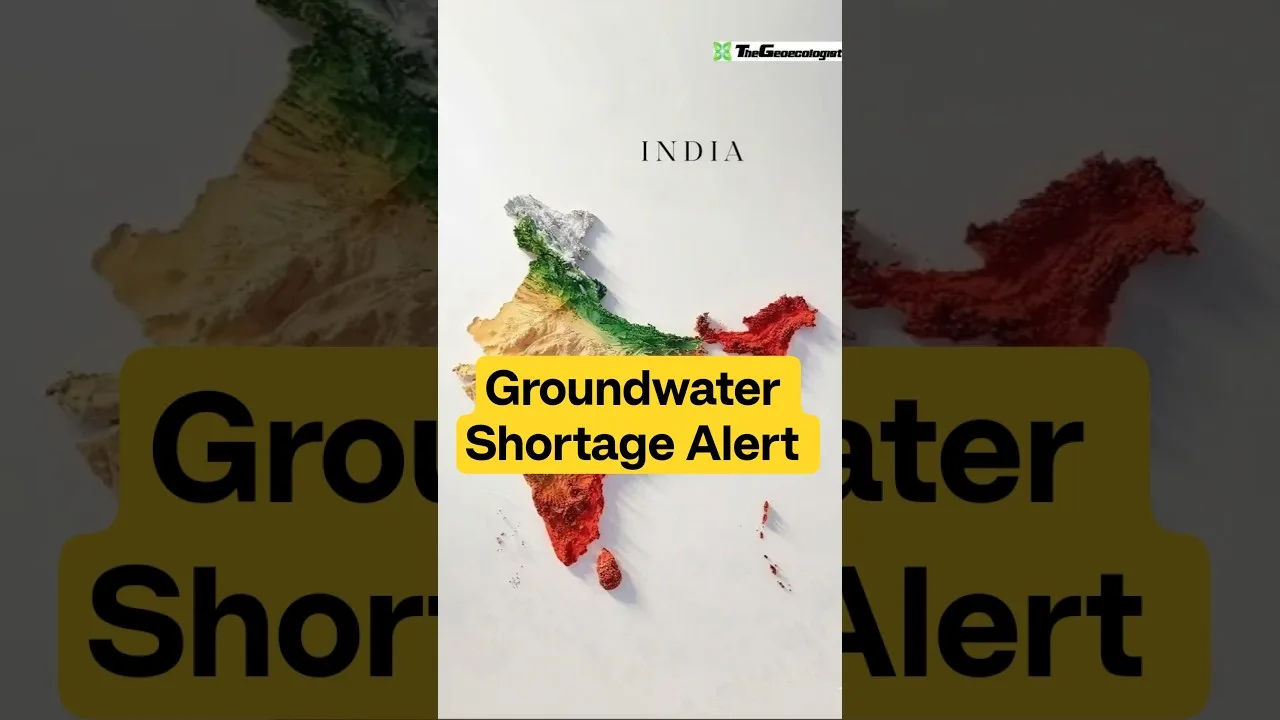
Table of Contents
- Understanding the Scale of the India Groundwater Crisis
- Historical Context and Policy Drivers
- Hydrological Reality: Recharge vs. Extraction
- Consequences: From Farm Distress to Urban Thirst
- Agricultural Vulnerability
- Drinking Water and Public Health
- Urban Water Insecurity
- Climate Change: A Threat Multiplier
- Solutions: From Policy to Practice
- Managed Aquifer Recharge (MAR)
- Demand Management: Micro-Irrigation and Crop Diversification
- Governance Reforms: Regulation and Pricing
- Data-Driven Management: The Digital Turn
- The Path Forward: Collective Action for Water Security
The India groundwater crisis is not a distant threat but a present reality unfolding beneath our feet. While monsoon floods capture headlines, the silent depletion of aquifers across the subcontinent poses an existential risk to agriculture, industry, and drinking water security for over 1.4 billion people. Unlike surface water shortages that are visible, the groundwater emergency remains hidden until wells run dry, forcing communities into costly and unsustainable alternatives.
- Critical Depletion: India extracts more groundwater than any other nation — approximately 251 cubic kilometers annually, exceeding the combined withdrawal of the United States and China.
- Recharge Deficit: In states like Punjab, Haryana, and Rajasthan, extraction rates surpass 150% of annual recharge, causing water tables to plummet by 0.5–2 meters per year.
- Economic Impact: Falling water tables increase irrigation costs by 20–30% per decade, pushing smallholder farmers into debt and reducing crop yields.
- Quality Deterioration: Over-extraction mobilizes geogenic contaminants like arsenic, fluoride, and uranium, affecting over 100 million people.
- Proven Solutions: Rainwater harvesting, managed aquifer recharge, micro-irrigation, and policy reforms can reverse trends if implemented at scale.
Understanding the Scale of the India Groundwater Crisis
India is the world’s largest groundwater user, accounting for 25% of global extraction. According to the Central Ground Water Board (CGWB), 1,186 out of 7,089 assessment units (blocks/taluks) are categorized as “over-exploited,” meaning annual extraction exceeds recharge. Another 313 units are “critical” and 972 are “semi-critical.” This translates to nearly 35% of assessed units facing unsustainable stress. The crisis is most acute in the northwestern Indo-Gangetic Plain — the country’s breadbasket — where Green Revolution agriculture relies on flood irrigation powered by free or subsidized electricity. – a key consideration for India groundwater crisis.
Historical Context and Policy Drivers
The roots of the India groundwater crisis trace back to the 1960s when high-yielding wheat and rice varieties were introduced alongside massive public investment in tube wells and rural electrification. While this achieved food self-sufficiency, India groundwater crisis institutionalized a water-intensive cropping pattern (rice-wheat rotation) in regions with low rainfall. The policy of free electricity for agriculture, adopted by states like Punjab in 1997, removed the marginal cost of pumping, incentivizing over-extraction. A 2023 report by the World Bank estimated that energy subsidies for groundwater irrigation cost state exchequers over ₹1.2 lakh crore annually, while accelerating aquifer decline.
Hydrological Reality: Recharge vs. Extraction
India receives an average annual rainfall of 1,170 mm, but its distribution is highly skewed — both spatially and temporally. Over 75% of precipitation occurs during the June–September monsoon, leaving a narrow window for natural recharge. Hard rock aquifers covering 65% of the land area (peninsular India) have low storage and transmissivity, limiting recharge to 5–10% of rainfall. In contrast, alluvial aquifers in the north have high storage but face extraction rates of 150–170% of recharge. The CGWB’s 2022 assessment shows the national stage of groundwater extraction at 60.08%, up from 58% in 2017, indicating worsening stress. – a key consideration for India groundwater crisis.
Consequences: From Farm Distress to Urban Thirst
Agricultural Vulnerability
Groundwater irrigates 62% of India’s net irrigated area, supporting 70% of food grain production. As water tables drop, farmers deepen wells — often beyond 300 meters in Punjab — escalating capital and energy costs. A 2021 study by the Indian Council of Agricultural Research (ICAR) found that each meter of water table decline increases pumping cost by ₹150–200 per hectare per season. Smallholders, constituting 86% of farmers, are disproportionately affected, with many abandoning agriculture or migrating. The shift to water-intensive crops like sugarcane in Maharashtra and paddy in Telangana, driven by minimum support prices, exacerbates regional depletion. – a key consideration for India groundwater crisis.
Drinking Water and Public Health
Over 85% of rural drinking water supply and 50% of urban supply depend on groundwater. As aquifers deplete, hand pumps and shallow tubewells fail, forcing reliance on tanker water or contaminated sources. Geogenic contamination is a growing crisis: arsenic affects 21 states (worst in West Bengal, Bihar, Uttar Pradesh), fluoride in 19 states (Rajasthan, Andhra Pradesh), and nitrate from agricultural runoff is ubiquitous. The World Health Organization estimates that 1.5 million deaths annually in India are attributable to unsafe water and sanitation, with groundwater quality a major factor. – a key consideration for India groundwater crisis.
Urban Water Insecurity
Cities like Bengaluru, Chennai, Delhi, and Hyderabad face acute groundwater dependence. Bengaluru, with negligible perennial surface water, extracts 1,392 MLD against a sustainable yield of 600 MLD. The 2019 “Day Zero” scare in Chennai — when reservoirs ran dry — highlighted the fragility of urban systems reliant on distant rivers and depleting aquifers. Unregulated private borewells, estimated at over 400,000 in Bengaluru alone, accelerate the crisis. Land subsidence, observed in Kolkata, Delhi, and parts of Gujarat, is an irreversible consequence of excessive withdrawal. – a key consideration for India groundwater crisis.
Climate Change: A Threat Multiplier
Climate projections for India indicate increased monsoon variability — more intense wet spells and longer dry spells — reducing effective recharge. Higher temperatures elevate evapotranspiration, increasing irrigation demand by 10–15% by 2050. Himalayan glacier retreat threatens base flows of the Indus, Ganga, and Brahmaputra, which currently recharge northern alluvial aquifers. A 2022 IPCC report warns that under high-emission scenarios, groundwater recharge in the Indo-Gangetic Plain could decline by 20–30% by 2100, turning the India groundwater crisis into a structural water scarcity.
Solutions: From Policy to Practice
Managed Aquifer Recharge (MAR)
MAR — the intentional recharge of aquifers via surface spreading, injection wells, or rooftop harvesting — is the most direct supply-side intervention. The Atal Bhujal Yojana (launched 2020, ₹6,000 crore) incentivizes community-led MAR in 8,350 gram panchayats across seven states. Early results from Gujarat’s Saurashtra region show 3–5 meter water table recovery where check dams and percolation tanks were built. Scaling MAR requires scientific site selection using aquifer mapping (NAQUIM program) and maintenance frameworks. – a key consideration for India groundwater crisis.
Demand Management: Micro-Irrigation and Crop Diversification
Shifting from flood to drip/sprinkler irrigation can reduce water use by 40–60% while increasing yields. The Pradhan Mantri Krishi Sinchayee Yojana (PMKSY) targets 10 million hectares under micro-irrigation by 2026; as of 2023, 6.8 million hectares are covered. Equally critical is crop diversification — replacing paddy with millets, pulses, or oilseeds in water-stressed regions. Haryana’s “Mera Pani Meri Virasat” scheme offers ₹7,000/acre for switching from paddy to alternative crops, saving an estimated 0.5 BCM annually. – a key consideration for India groundwater crisis.
Governance Reforms: Regulation and Pricing
The Model Groundwater Bill (2017, revised 2020) proposes aquifer-based management, registration of wells, and volumetric pricing for commercial/industrial users. However, only a few states (Maharashtra, Karnataka, Himachal Pradesh) have enacted groundwater laws. Electricity pricing reform — moving from flat tariffs to metered, time-of-day pricing — can curb wasteful pumping without harming small farmers if paired with direct income support. The Punjab government’s pilot “Paani Bachao, Paise Kamao” (Save Water, Earn Money) pays farmers for verified electricity savings, showing 6–10% reduction in pumping hours.
Data-Driven Management: The Digital Turn
Real-time monitoring is transforming governance. The CGWB’s National Water Informatics Centre (NWIC) integrates data from 23,000+ monitoring wells, satellite gravity (GRACE) measurements, and IoT-enabled piezometers. The “India Water Resources Information System” (India-WRIS) portal provides open access to groundwater levels, quality, and extraction data. States like Andhra Pradesh use automated water level recorders linked to a central dashboard, enabling dynamic regulation. Citizen science initiatives — training farmers to measure and report water levels — expand coverage and build awareness.
The Path Forward: Collective Action for Water Security
Reversing the India groundwater crisis demands a paradigm shift from extraction to stewardship. This requires aligning agricultural, energy, and water policies — currently operating in silos — around the principle of sustainable yield. The 2023 UN Water Conference recognized India’s Jal Jeevan Mission (rural tap water) and Atal Bhujal Yojana as global best practices, but implementation gaps remain vast. Success hinges on empowering local institutions (panchayats, water user associations) with data, funds, and authority. Every drop recharged today is an insurance policy for tomorrow. As the ancient Indian text Arthashastra states: “The root of happiness is dharma; the root of dharma is artha; the root of artha is rajya; the root of rajya is indriya-jaya; the root of indriya-jaya is vinaya; the root of vinaya is vriddhopaseva.” In modern terms: water security is the foundation of ecological, economic, and social stability. The time to act is now — before the wells fall silent.
Frequently Asked Questions
The primary cause is unsustainable extraction for irrigation, driven by free electricity subsidies, water-intensive cropping patterns (rice-wheat), and lack of regulation, exceeding natural recharge rates in 35% of assessed units.
The northwestern states of Punjab, Haryana, Rajasthan, and Delhi, along with parts of Tamil Nadu, Karnataka, and Andhra Pradesh, face the most severe depletion, with extraction rates exceeding 150% of annual recharge.
Rainwater harvesting and managed aquifer recharge are essential but insufficient alone. They must be combined with demand-side measures like micro-irrigation, crop diversification, electricity pricing reform, and strong groundwater governance to achieve sustainability.
