Blog
Humanistic Geography: Exploring Yi-Fu Tuan’s Humanism in Geographical Thought

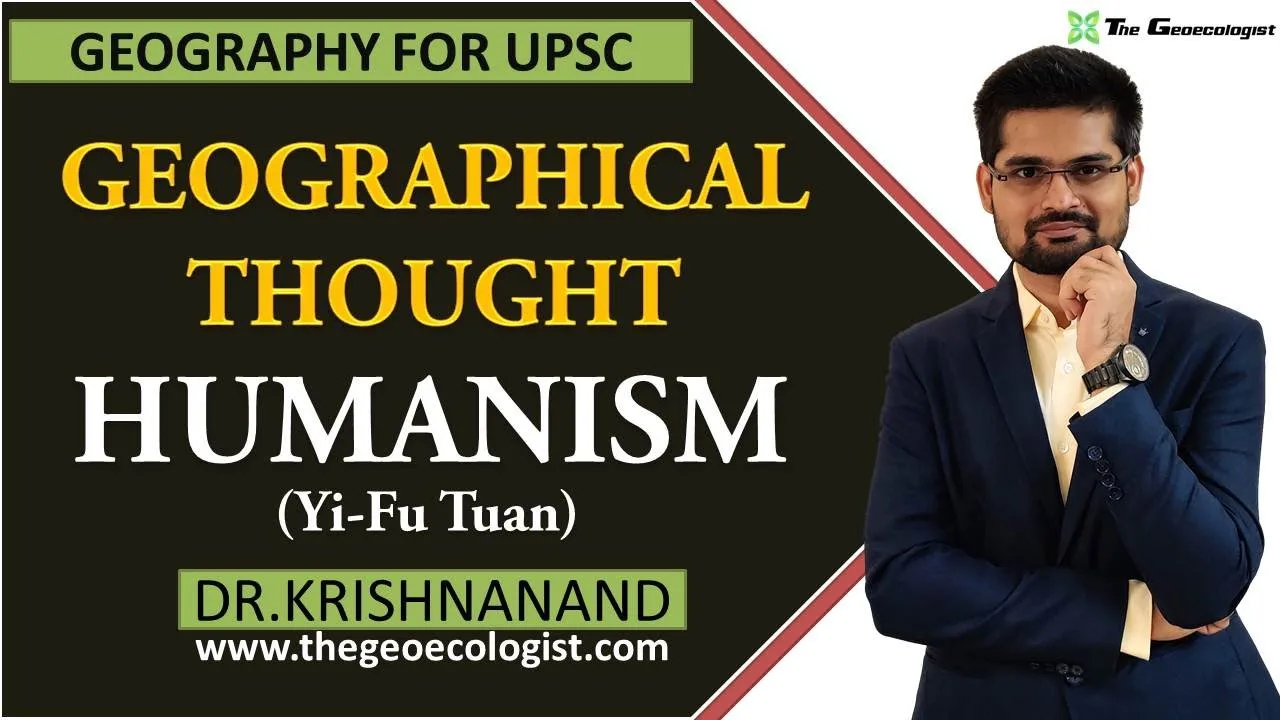
Table of Contents
Humanistic Geography: Exploring Yi-Fu Tuan’s Humanism in Geographical Thought
The Humanistic Geography paradigm, pioneered by Yi-Fu Tuan, revolutionized how we perceive spatial relationships by integrating human emotions, culture, and subjective experiences into geographical analysis. This article delves into Tuan’s seminal contributions, emphasizing how his humanistic approach reshaped traditional geographical paradigms. For UPSC aspirants and geography students, understanding this framework is critical for grasping the evolution of geographical thought. Yi-Fu Tuan’s Wikipedia page provides detailed insights into his life and work.
- Humanistic Geography prioritizes human experience over purely spatial data.
- Tuan’s work bridges geography and humanities, focusing on place as a lived reality.
- The paradigm emphasizes emotions like fear, joy, and reverence in shaping landscapes.
Key Concepts of Humanistic Geography
At its core, Humanistic Geography challenges the reductionist view of space. Yi-Fu Tuan argued that geography must account for the feel of a place—how people emotionally and culturally interact with their environment. For instance, a mountain might not just be a topographic feature but a symbol of spiritual significance. This perspective aligns with the broader goal of making geography more holistic and human-centered. TheGeoecologist’s resources further elaborate on Tuan’s theories.
Yi-Fu Tuan’s Contributions
Yi-Fu Tuan, a Chinese-American geographer, is often hailed as the father of Humanistic Geography. His seminal work, Space and Place (1974), introduced the idea that spaces are not neutral but imbued with meaning through human interaction. Tuan’s framework emphasizes three key dimensions: place (subjective, emotional experience), space (objective, measurable dimensions), and place-space (the dynamic relationship between the two). This triad remains foundational in modern geographical studies.
Humanistic Geography and UPSC Relevance

For UPSC candidates, mastering Humanistic Geography is essential for optional papers. Questions often explore Tuan’s theories in the context of Indian landscapes, urban planning, or cultural geography. For example, understanding how traditional villages in India embody Tuan’s concept of place can provide nuanced answers. The Evolution of Geographical Thought e-book (available at here) offers structured study material for such topics.
Synergy with Humanism and Geography
Humanism in geographical thought, as articulated by Tuan, rejects purely scientific or economic determinism. Instead, it advocates for an interdisciplinary approach that includes anthropology, sociology, and philosophy. This aligns with the humanistic ethos of valuing human dignity and cultural diversity. Scholars like Dr. Krishnanand (featured in this lecture) continue to popularize Tuan’s ideas through lectures and publications, making them accessible to students and professionals alike.
Critiques and Evolution
While Humanistic Geography has been influential, it faces critiques for being overly subjective. Critics argue that it lacks empirical rigor compared to quantitative methods. However, proponents counter that Tuan’s approach complements rather than replaces traditional geography. Modern adaptations, such as participatory mapping and GIS-based humanistic studies, seek to balance subjectivity with data-driven analysis.
Conclusion
Yi-Fu Tuan’s Humanistic Geography remains a paradigm-shifting framework that redefines our understanding of space. By prioritizing human experience, it offers a richer, more empathetic lens for analyzing geographical phenomena. For UPSC aspirants, this knowledge is not just academic but practical, aiding in comprehending complex socio-spatial issues. Download the Evolution of Geographical Thought e-book to deepen your understanding of this transformative concept.
Frequently Asked Questions
It focuses on human emotions, culture, and subjective experiences in shaping geographical spaces.
A Chinese-American geographer who pioneered Humanistic Geography, emphasizing the emotional and cultural aspects of place.
It helps in understanding spatial issues through a human-centric lens, crucial for geography optional papers.