Blog
How seasons occur on earth #climate #seasons #thegeoecologist #shorts

How seasons occur on earth #climate #seasons #thegeoecologist #shorts
How Seasons Occur on Earth
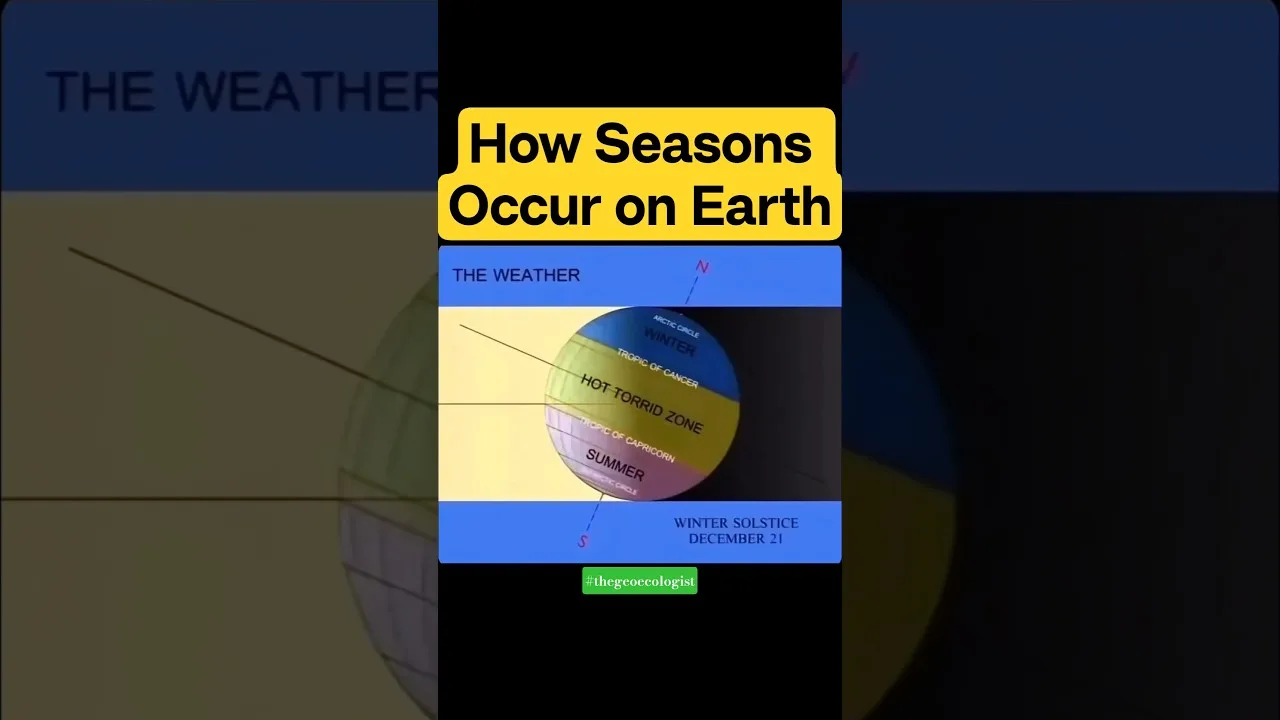
Ever wondered why we experience different seasons on Earth? It’s a fascinating question with a surprisingly simple scientific answer: seasons aren’t caused by Earth’s distance from the Sun, but by the tilt of Earth’s axis (about 23.5 degrees) combined with its orbit around the Sun.
The Science Behind the Seasons
While many assume seasons result from Earth moving closer or farther from the Sun, our planet’s orbit is nearly circular. Instead, the real driver is Earth’s axial tilt. As Earth revolves around the Sun:
- Summer occurs when your hemisphere tilts toward the Sun, receiving direct, concentrated sunlight and longer days.
- Winter happens when your hemisphere tilts away from the Sun, receiving indirect, slanted sunlight and shorter days.
- Spring and autumn are transitional seasons when neither hemisphere is fully tilted toward or away from the Sun, leading to moderate temperatures.
Why This Matters for Climate
This 23.5° tilt dictates:
- Solar intensity: Direct sunlight (summer) warms more efficiently than slanting rays (winter).
- Daylight duration: Longer days in summer increase heating; shorter days in winter reduce it.
- Global patterns: The Tropic of Cancer and Capricorn mark the farthest points where direct sunlight reaches, shaping tropical, temperate, and polar climates.
The Big Picture
Seasons aren’t just about weather—they drive ecosystems, agriculture, and human cultures. Without Earth’s tilt, we’d have no seasonal cycles, impacting biodiversity and life itself. Simple science, profound consequences! 🌍☀️❄️
climate #seasons #geography #earthscience #thegeoecologist #shortsviral
To Download E-Books & Study Material Visit The Shop Page