

Blog
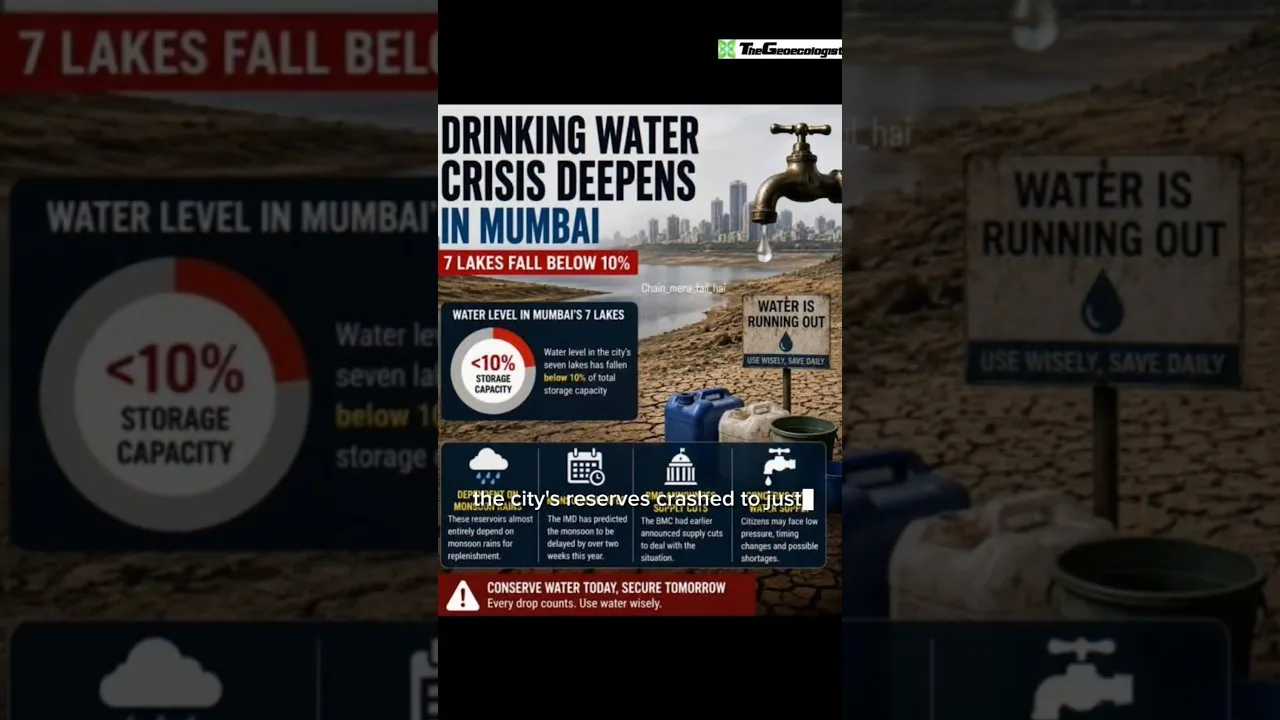
Drinking Water Crisis in Mumbai #mumbai #watercrisis #shorts

Drinking Water Crisis in Mumbai #mumbai #watercrisis #shorts
Here is a comprehensive article based on your prompt.
The Great Paradox: Why Mumbai Faces a Water Crisis Despite Heavy Rainfall 💧🌧️
Mumbai, the financial powerhouse of India, is a city of extremes. Every year, the monsoon transforms the metropolis into a water-logged landscape, with torrential rains flooding streets and halting trains. Yet, as soon as the clouds clear, the city enters a familiar cycle of water cuts, tankers, and scarcity.
How can a city that receives thousands of millimeters of rain every year still struggle to provide consistent drinking water to its residents? To understand this paradox, we must look beyond the weather and explore the intersection of geography, infrastructure, and urban planning.
1. The Geography of Dependence
Despite the heavy local rainfall, Mumbai does not rely on its own immediate geography for water. The city’s water supply is dependent on seven distant lakes and dams located far outside the city limits (such as Modak Sagar, Tansa, and Vihar).
Because the city is an island/peninsula with limited natural freshwater storage capacity within its urban boundaries, it is entirely dependent on the catchment areas of these distant reservoirs. If the rainfall in those specific catchment regions is poor—even if it pours in South Mumbai—the city faces a shortage.
2. The Infrastructure Gap: Leakage and Theft
Mumbai’s water distribution network is an aging labyrinth. A significant percentage of the treated water never actually reaches the consumer’s tap.
- Aging Pipes: Many of the city’s pipelines are decades old, leading to massive losses through leakages (Non-Revenue Water).
- Illegal Connections: In many unplanned settlements and slums, illegal tapping into main lines is common. This leads to a drop in water pressure for legal consumers and a loss of thousands of millions of liters of water daily.
3. Urban Planning and the “Concrete Jungle”
The rapid urbanization of Mumbai has fundamentally altered its hydrology. In the past, mangroves, wetlands, and open grounds acted as natural sponges, absorbing rainwater and recharging the groundwater table.
Today, these have been replaced by concrete skyscrapers and asphalt roads. This creates two problems:
- Run-off vs. Absorption: Instead of seeping into the ground to recharge aquifers, rainwater rushes into the drains and flows straight back into the Arabian Sea.
- Loss of Natural Buffers: The destruction of mangroves has not only increased flood risks but has also stripped the city of its natural water-management systems.
4. Population Pressure and Inequality
Mumbai is one of the most densely populated cities in the world. The demand for water grows every day, but the infrastructure cannot keep pace. This creates a stark divide: while some high-rises have 24/7 supply, millions living in informal settlements rely on municipal water tankers or community taps, often paying inflated prices for a basic human right.
The Way Forward: Can the Crisis be Solved?
To break this cycle, Mumbai needs a shift from supply-side management to demand-side sustainability:
- Rainwater Harvesting (RWH): Making RWH mandatory for all residential and commercial buildings to capture the massive monsoon runoff.
- Waste Water Recycling: Implementing large-scale greywater recycling for gardening and industrial use to reduce the load on drinking water pipes.
- Infrastructure Overhaul: Replacing ancient pipelines with “smart” sensors to detect and fix leaks in real-time.
Final Thoughts
Mumbai’s water crisis is not a failure of nature—it is a failure of planning. The rain is there; the problem is that we have forgotten how to hold onto it. Until the city integrates ecological wisdom into its urban planning, the paradox of “floods in July and shortages in May” will continue.
Want to dive deeper into the geography and current affairs shaping our world?
👉 Follow @TheGeoecologist for more insightful analysis! 🌍📍
mumbai #watercrisis #shorts #urbanplanning #geography #sustainability #india #climatechange
To Download E-Books & Study Material Visit The Shop Page
