Blog
Geography of North America-North American Realm-Geoecologist

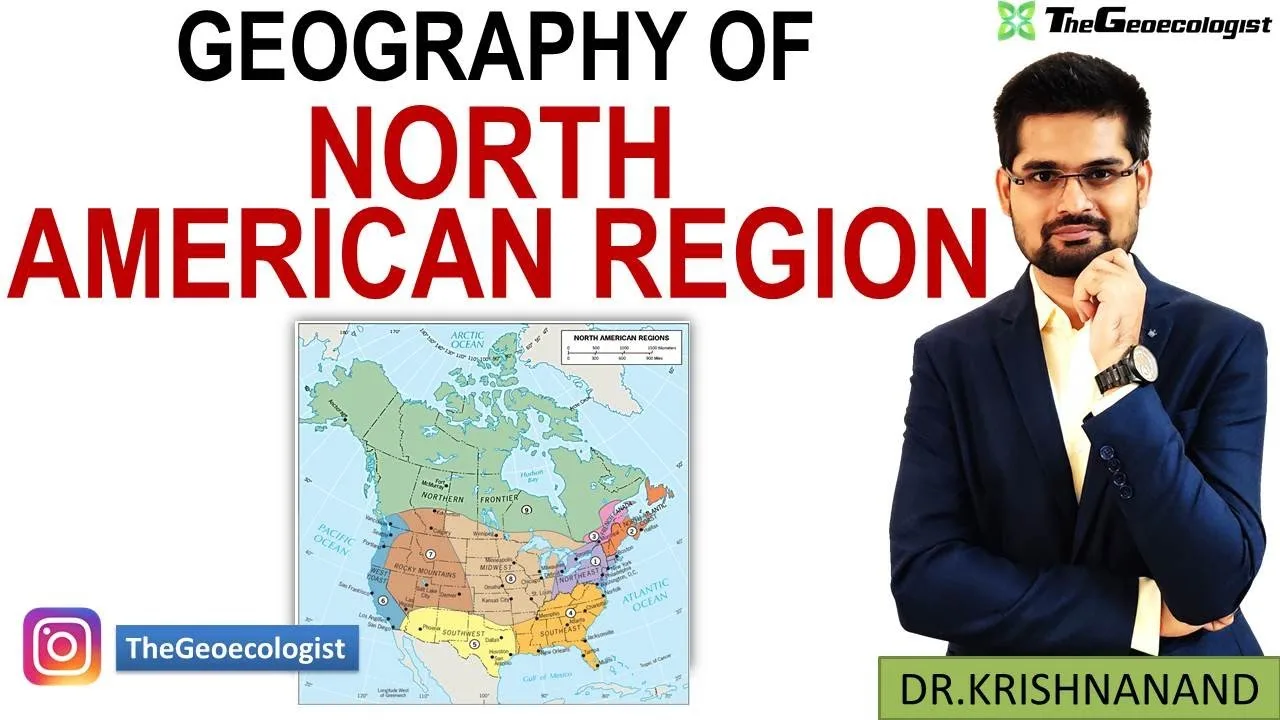
Geography of North America-North American Realm-Geoecologist
Of course. Here is an article based on the provided information, structured to be engaging and informative for students and competitive exam aspirants.
Exploring the North American Realm: A Geographer’s Perspective on a Diverse Continent
The continent of North America, often referred to as the North American realm in geographical studies, presents a fascinating tapestry of physical, cultural, and economic patterns. For students of geography, particularly those preparing for competitive examinations like the UPSC, understanding this realm is not just about memorizing facts about mountains and rivers; it’s about comprehending the dynamic interplay between the environment and human societies. This article delves into the core concepts of the North American realm, highlighting its significance in regional geography.
The Geographic Personality of North America
The North American realm is characterized by its immense diversity. Stretching from the frozen Arctic expanses of Canada to the tropical rainforests of Central America, the continent boasts a wide range of physical environments. This diversity is primarily a product of its vast latitudinal extent, complex geology, and varied climatology.
The western part is dominated by the young, north-south trending mountain systems like the Rocky Mountains and the Sierra Madre, which create a significant rain shadow effect, giving rise to arid and semi-arid regions like the Great Basin. The eastern part features older, more subdued mountain ranges like the Appalachians and vast interior plains. This physical setup has profoundly influenced the continent’s hydrography, soil distribution, and consequently, its agricultural and settlement patterns.
Geo-Ecology and Environmental Challenges
A geo-ecologist views North America through the lens of its biomes and ecosystems. From the tundra of the north to the deserts of the southwest and the deciduous forests of the east, each region has a unique ecology. However, this natural environment is under constant pressure from human activity. Issues like water scarcity in the southwestern states, deforestation in Central America, and the management of transboundary water resources (like the Great Lakes) are critical areas of study. Understanding these challenges is crucial not just for academic purposes but for formulating sustainable policies.
Human Geography: The Socio-Economic Landscape
Beyond the physical, the human geography of North America is equally compelling. The realm is home to some of the world’s most developed nations—the United States and Canada—as well as developing nations in Central America and the Caribbean. This creates a stark economic contrast, often termed as the “Global North” and “Global South” divide within a single continent.
This economic disparity drives phenomena like migration, trade patterns, and cultural exchange. The concept of North America as a “core” economic region with a “periphery” is a classic example in regional geography. The North American Free Trade Agreement (NAFTA), now the USMCA, is a direct outcome of this geographic and economic reality.
Why It Matters for Competitive Exams
For a UPSC aspirant or a geography student, the North American realm is not just a collection of facts. It’s a case study in:
- Regional Planning: Understanding how resource distribution (e.g., oil in the Gulf of Mexico, minerals in the Canadian Shield) has shaped regional development.
- Geopolitics: The continent’s relative isolation, bounded by oceans, has influenced its historical development and current geopolitical stance.
- Environmental Studies: The realm faces all major environmental issues—from climate change impacts on its long coastlines to the management of its vast forest resources.
- Economic Geography: The shift from a resource-based to a service-based economy in the northern nations versus the development path of the southern nations.
Conclusion: An Interconnected Realm
The North American realm is a prime example of how physical geography sets the stage for human activity, which in turn, reshapes the environment. From the megacities of the United States to the forested highlands of Central America, it’s a realm of contrasts and connections. For any student of geography, appreciating this complexity is the first step towards mastering world regional geography.
Sources & Further Reading:
- World Regional Geography by various authors (e.g., Hobbs, Fouberg)
- CIA World Factbook
- World Bank Data
This article is inspired by the lecture series by Dr. Krishnanand, founder of TheGeoecologist, aimed at simplifying complex geographical concepts for aspirants and enthusiasts.
Note: The information provided here is for academic purposes only. For detailed study, always refer to standard textbooks and trusted sources.
(Alert)
To Download E-Books & Study Material Visit The Shop Page