Blog
Geography Courses UPSC: Complete Guide for UPSC & UGC NET Preparation


Table of Contents
- Why Specialized Geography Courses UPSC Aspirants Need Are Non-Negotiable
- The Cost of Inadequate Preparation
- Complete Syllabus Coverage: What Top Geography Courses UPSC Platforms Deliver
- Physical Geography: The Foundation Pillars
- Human Geography & Regional Planning: The Scoring Segments
- Technical Geography: GIS, Remote Sensing & Cartography
- Expert Guidance: The Differentiator in Geography Courses UPSC Candidates Choose
- Scholar References & Diagrams: Writing High-Scoring Answers
- Exclusive Study Materials: Simplified eBooks for Every Exam
- Interactive & Structured Learning: Beyond Passive Video Consumption
- Who Can Benefit: Target Audience for Geography Courses UPSC & NET
- UPSC & State PSC Aspirants
- UGC NET/JRF Candidates
- College Students, Researchers & Educators
- Success Strategies: Maximizing ROI from Geography Courses UPSC Platforms
- 1. Follow the Structured Timeline
- 2. Prioritize Answer Writing from Day 1
- 3. Integrate Current Affairs Weekly
- 4. Master Diagrams Through Repetition
- 5. Revise Through eBooks, Not Videos
- Frequently Asked Questions
- How do TheGeoecologist's geography courses UPSC aspirants take differ from general coaching institutes?
- Can I prepare for both UPSC Geography Optional and UGC NET simultaneously?
- Are the eBooks sufficient without video lectures?
- What if I miss a live class or doubt session?
- How frequently is the course content updated?
- Conclusion: Your Geography Preparation Deserves the Best
Finding the right geography courses UPSC aspirants can trust is the single most important decision in your competitive exam journey. With the UPSC Civil Services Examination and UGC NET Geography demanding exceptional conceptual clarity, scholar-backed references, and answer-writing precision, generic study material simply falls short. TheGeoecologist has emerged as India’s premier platform for specialized geography education, offering meticulously structured courses that bridge the gap between academic depth and exam-focused strategy. Whether you are targeting Geography Optional for UPSC Mains, Paper-II for UGC NET JRF, or State PSC examinations, this comprehensive guide explores why structured geography courses UPSC candidates choose make all the difference in final selection.
- Comprehensive syllabus coverage spanning Physical, Human, and Technical Geography modules
- Exam-focused pedagogy with simplified concepts, scholar references, and diagram-driven learning
- Expert faculty with proven track records in UPSC and UGC NET mentorship
- Exclusive study materials including simplified eBooks for Optional, NET, and State PSC exams
- Interactive learning ecosystem with videos, notes, quizzes, and answer-writing practice
Why Specialized Geography Courses UPSC Aspirants Need Are Non-Negotiable
The Union Public Service Commission (UPSC) Geography Optional syllabus is vast, interdisciplinary, and dynamically linked to current affairs. Unlike general studies papers, Geography Optional demands technical precision in geomorphology, climatology, and oceanography alongside analytical depth in human geography and regional planning. Similarly, the UGC NET Geography Paper-II tests research-level understanding across 10 units, requiring mastery over models, theories, and contemporary geographical thought. Self-study without structured guidance often leads to syllabus gaps, outdated references, and poor answer presentation — the three primary reasons for low scores despite hard work. – a key consideration for geography courses UPSC.
Quality geography courses UPSC platforms provide a curated learning pathway that eliminates guesswork. TheGeoecologist’s curriculum is designed by educators who have not only cleared these examinations but also mentored hundreds of successful candidates. Their approach integrates static syllabus completion with dynamic current affairs integration, ensuring every topic — from plate tectonics to sustainable development goals — is taught through the lens of previous year questions (PYQs) and expected question patterns.
The Cost of Inadequate Preparation
Data from UPSC annual reports consistently shows Geography Optional success rates hovering around 5-7% among candidates who appear for Mains. However, candidates enrolled in structured mentorship programs report significantly higher conversion ratios. The difference lies in three factors: (1) syllabus completion within a defined timeline, (2) access to scholar references like Savindra Singh, Majid Husain, and R.C. Chandna that examiners expect, and (3) regular answer-writing evaluation with personalized feedback. Without these, even brilliant aspirants struggle to translate knowledge into marks.
Complete Syllabus Coverage: What Top Geography Courses UPSC Platforms Deliver
Physical Geography: The Foundation Pillars
Physical Geography constitutes approximately 40% of both UPSC Geography Optional Paper-I and UGC NET Unit 1-3. TheGeoecologist’s geography courses UPSC modules cover Geomorphology (earth’s interior, plate tectonics, landform evolution), Climatology (atmospheric composition, pressure belts, cyclones, climate change), Oceanography (ocean floor relief, temperature-salinity, marine resources), and Biogeography (ecosystems, biodiversity hotspots, conservation). Each topic is taught with animated diagrams, real-world case studies (e.g., 2023 Turkey-Syria earthquake for seismicity, IPCC AR6 findings for climatology), and PYQ analysis.
Human Geography & Regional Planning: The Scoring Segments
Human Geography (UPSC Paper-II, UGC NET Units 4-6) and Regional Planning (UPSC Paper-II, UGC NET Unit 7) are high-yield areas where conceptual clarity directly translates to marks. TheGeoecologist covers Population Geography (demographic transition, migration theories), Settlement Geography (Christaller’s Central Place Theory, Losch’s model), Economic Geography (von Thünen, Weber, Rostow’s stages), and Regional Planning (growth poles, core-periphery, sustainable development). The courses emphasize model application to Indian context — a frequent UPSC requirement — with updated Census 2011/2021 data, NITI Aayog reports, and government scheme linkages (Aspirational Districts Programme, PM Gati Shakti).
Technical Geography: GIS, Remote Sensing & Cartography
Modern geography is incomplete without technical proficiency. The Geographic Information System (GIS) and Remote Sensing modules in TheGeoecologist’s geography courses UPSC curriculum cover satellite sensors (Landsat, Sentinel, IRS series), image interpretation, GIS data models, spatial analysis, and cartographic techniques. These topics appear consistently in UGC NET (Unit 9-10) and UPSC (Paper-I & II). The practical demonstration videos using QGIS and Google Earth Engine give aspirants a competitive edge, especially for research-oriented UGC NET JRF preparation.
Expert Guidance: The Differentiator in Geography Courses UPSC Candidates Choose
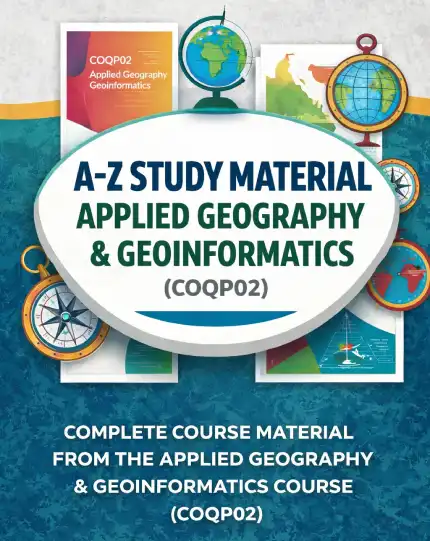
Faculty credibility is the backbone of any educational platform. TheGeoecologist’s teaching team comprises educators with UPSC Mains 300+ marks in Geography Optional, UGC NET JRF qualifications, and years of classroom/online mentoring experience. Their pedagogical philosophy rests on three pillars: conceptual simplification without dilution, scholar reference integration, and exam-pattern alignment. Unlike generic coaching institutes that treat geography as a memory subject, these experts teach geography as an analytical discipline — training aspirants to think like geographers.
Live doubt-resolution sessions, monthly current affairs classes linking geography to The Hindu/PIB/PRB reports, and personalized mentorship calls ensure no aspirant feels isolated. The faculty’s PYQ-based teaching methodology means every lecture directly addresses “what UPSC asks” and “how UGC NET frames questions.” This laser focus saves months of directionless reading.
Scholar References & Diagrams: Writing High-Scoring Answers
UPSC and UGC NET examiners reward answers that cite authoritative sources. TheGeoecologist’s geography courses UPSC study materials embed references from Savindra Singh (Physical Geography), Majid Husain (Human Geography, Models), R.C. Chandna (Regional Planning), K. Siddhartha (Climatology, Oceanography), and Goh Cheng Leong (Certificate Physical Geography). Diagram banks — 200+ hand-drawn, exam-ready diagrams for geomorphological cycles, climatic classifications, ocean currents, population pyramids, and settlement patterns — are provided as downloadable PDFs. Aspirants learn not just what to draw, but how to annotate diagrams for maximum marks within time constraints.
Exclusive Study Materials: Simplified eBooks for Every Exam
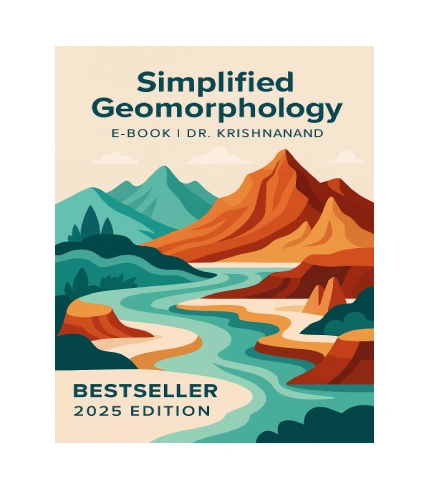
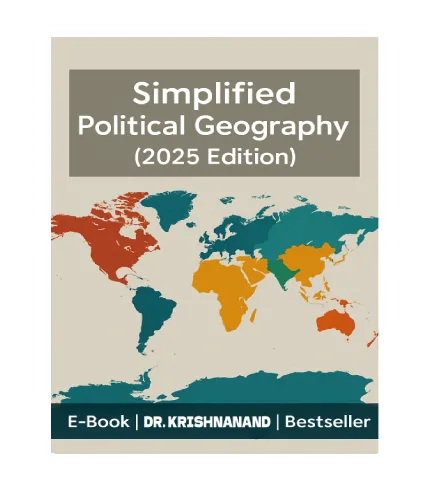
Recognizing that video lectures alone are insufficient for revision, TheGeoecologist offers a dedicated eBook platform at geographyebooks.com. These eBooks are not mere transcriptions — they are exam-optimized compendiums with:
- UPSC Geography Optional eBooks: Paper-I & II segregated, PYQ-tagged, with model answers for 2013-2023 questions
- UGC NET Geography eBooks: Unit-wise coverage (10 units), previous year solved papers (2012-2023), and expected MCQs with explanations
- State PSC & University Exam eBooks: Tailored for BPSC, MPPSC, UPPCS, RPSC, and university semester patterns
Each eBook follows a “Concept → Scholar Reference → Diagram → PYQ → Practice Question” format, enabling active recall and spaced repetition. The language is deliberately simplified — complex theories like Isostasy or Demographic Transition Model are explained in conversational English with Indian examples.
Interactive & Structured Learning: Beyond Passive Video Consumption
Passive watching creates an illusion of competence. TheGeoecologist’s geography courses UPSC ecosystem combats this through:
- Chapter-wise quizzes (5000+ MCQs for NET, 2000+ subjective questions for UPSC) with instant explanations
- Weekly answer-writing assignments evaluated by faculty with line-by-line feedback
- Full-length mock tests simulating actual exam interface and difficulty
- Progress tracking dashboard showing syllabus completion %, accuracy trends, and weak areas
- Peer discussion forums moderated by teaching assistants for collaborative learning
This interactivity transforms the course from a content repository into a guided preparation system. Aspirants preparing while working full-time or attending college particularly benefit from the mobile-app access, offline download feature, and flexible scheduling.
Who Can Benefit: Target Audience for Geography Courses UPSC & NET
UPSC & State PSC Aspirants
Geography Optional remains one of the highest-scoring and most popular optionals (3000+ candidates annually). TheGeoecologist’s course strengthens both Optional Papers and GS Paper-I (Geography component ~100 marks). State PSC aspirants (BPSC, MPPSC, UPPCS, RPSC, etc.) benefit from the common syllabus overlap — syllabus coverage with state-specific current affairs modules.
UGC NET/JRF Candidates
With UGC NET Geography conducted twice yearly (June & December), systematic preparation across 10 units is essential. TheGeoecologist’s NET-focused track provides unit-wise video lectures, unit-test series, and full mock tests aligned with the latest NTA pattern. The emphasis on Research Aptitude (Paper-I) and Geography (Paper-II) integration helps aspirants clear both papers simultaneously.
College Students, Researchers & Educators
Undergraduate and postgraduate geography students use these courses for semester exam excellence, CUET-PG preparation, and research proposal development. Teachers and college lecturers access simplified teaching resources, updated case studies, and pedagogical techniques to enhance classroom delivery.
Success Strategies: Maximizing ROI from Geography Courses UPSC Platforms
1. Follow the Structured Timeline
TheGeoecologist provides a 6-month (UPSC) / 4-month (NET) study planner. Adhering to geography courses UPSC prevents the common pitfall of over-reading Physical Geography at the expense of Human Geography. The planner allocates specific weeks for each module, revision cycles, and mock tests.
2. Prioritize Answer Writing from Day 1
Knowledge without expression yields zero marks. Submit at least 2 answers weekly for evaluation. TheGeoecologist’s faculty feedback highlights structural issues (introduction-body-conclusion), diagram integration, scholar citation, and keyword usage — the four pillars of high-scoring answers.
3. Integrate Current Affairs Weekly
Geography is dynamic. The 2023 UPSC Mains asked about “Climate Change Impact on Indian Monsoon” and “Urban Heat Islands in Indian Cities.” TheGeoecologist’s monthly current affairs classes connect static syllabus to such themes. Maintain a “Geography in News” register with 5-6 entries monthly.
4. Master Diagrams Through Repetition
Practice drawing 5 diagrams daily from the provided diagram bank. Focus on speed (2-3 minutes per diagram), labeling accuracy, and caption writing. In UPSC Mains, a well-drawn diagram can fetch 3-4 marks in a 10-marker question.
5. Revise Through eBooks, Not Videos</h3
During the final 60 days before UPSC Mains or NET, switch to eBook-based revision. Videos are for first-time learning; eBooks are for rapid recall. TheGeoecologist’s eBooks are formatted for this exact transition.
Platform Access & Getting Started
Starting your journey with TheGeoecologist’s geography courses UPSC aspirants recommend is straightforward:
- Visit thegeoecologist.com for course details, demo lectures, and faculty profiles
- Explore geographyebooks.com for eBook previews and free sample chapters
- Choose your track: UPSC Geography Optional, UGC NET Geography, State PSC, or Combo packages
- Enroll and gain instant access to the learning app (iOS/Android), desktop portal, and Telegram community
Free demo lectures for Geomorphology, Climatology, and Population Geography are available to evaluate teaching style before commitment. The platform offers EMI options, group discounts for college batches, and a 7-day refund policy for risk-free trial.
Frequently Asked Questions
How do TheGeoecologist’s geography courses UPSC aspirants take differ from general coaching institutes?
Unlike generalist institutes that cover 10+ subjects superficially, TheGeoecologist is a geography-only platform. This specialization means deeper faculty expertise, geography-specific pedagogy (diagrams, maps, models), and a community of like-minded aspirants. The curriculum is updated annually based on UPSC/NET trend analysis, not recycled from static notes.
Can I prepare for both UPSC Geography Optional and UGC NET simultaneously?
Yes. The syllabus overlap is 70-75%. TheGeoecologist offers a Combo Package with integrated study planner, common lectures for overlapping topics, and separate modules for exam-specific requirements (subjective answer writing for UPSC, MCQ practice for NET). Many candidates have cleared both in the same cycle using this approach.
Are the eBooks sufficient without video lectures?
eBooks are designed as revision companions, not standalone first-reading material. For conceptual clarity — especially in technical topics like GIS, Remote Sensing, and Geomorphology — video lectures with animations and faculty explanations are essential. The ideal sequence: Video Lecture → eBook Reading → Quiz → Answer Writing → Revision via eBook.
What if I miss a live class or doubt session?
All live sessions are recorded and uploaded within 4-6 hours. The mobile app allows offline download. Doubt resolution is also available via the discussion forum (24-hour response guarantee) and monthly live Q&A with faculty.
How frequently is the course content updated?
Major updates occur annually (post-UPSC Mains/NET cycle) incorporating new PYQs, current affairs, and syllabus changes. Minor updates (new government reports, IPCC findings, Census data) are added quarterly via “Current Affairs Modules” accessible to all enrolled students.
Conclusion: Your Geography Preparation Deserves the Best
Choosing the right geography courses UPSC and UGC NET aspirants rely on is not merely an expense — geography courses UPSC’s an investment in your rank. TheGeoecologist’s combination of expert faculty, comprehensive syllabus coverage, scholar-backed study materials, interactive learning tools, and proven student outcomes makes it the definitive choice for serious geography aspirants. Whether you aim for a top-100 UPSC rank, UGC NET JRF qualification, or State PSC selection, the structured guidance, answer-writing rigor, and continuous mentorship provided here bridge the gap between aspiration and achievement. Visit thegeoecologist.com today, watch the free demos, and take the first step toward mastering geography for your dream exam. Your future self — the one holding the appointment letter — will thank you for this decision.
Frequently Asked Questions
Unlike generalist institutes that cover 10+ subjects superficially, TheGeoecologist is a geography-only platform. This specialization means deeper faculty expertise, geography-specific pedagogy (diagrams, maps, models), and a community of like-minded aspirants. The curriculum is updated annually based on UPSC/NET trend analysis, not recycled from static notes.
Yes. The syllabus overlap is 70-75%. TheGeoecologist offers a Combo Package with integrated study planner, common lectures for overlapping topics, and separate modules for exam-specific requirements (subjective answer writing for UPSC, MCQ practice for NET). Many candidates have cleared both in the same cycle using this approach.
eBooks are designed as revision companions, not standalone first-reading material. For conceptual clarity — especially in technical topics like GIS, Remote Sensing, and Geomorphology — video lectures with animations and faculty explanations are essential. The ideal sequence: Video Lecture → eBook Reading → Quiz → Answer Writing → Revision via eBook.