


Functional Classification of Towns- Ashok Mitra-Geoecologist
Understanding the Functional Classification of Towns: Ashok Mitra’s Legacy in Settlement Geography
Introduction
Urban settlements, as dynamic hubs of human activity, have long fascinated geographers and planners. Classifying towns based on their functions provides critical insights into their economic, administrative, and cultural roles. Dr. Ashok Mitra, a distinguished Indian geoecologist, revolutionized this field with his seminal work on the Functional Classification of Towns. This article explores Mitra’s framework, its relevance for UPSC Geography Optional aspirants, and its application in understanding India’s urban landscape.
What is Functional Classification of Towns?
Functional classification categorizes towns based on their primary economic activities or administrative roles. Unlike hierarchical classifications (based on population size), this approach emphasizes the dominant function shaping a town’s identity and economy. These functions include governance, industry, commerce, education, or religion. Understanding this classification aids urban planning, resource allocation, and regional development strategies.
Ashok Mitra’s Classification: A Pioneering Approach
Dr. Ashok Mitra, former Registrar General of India, introduced a data-driven methodology in the 1970s. His classification relied on employment statistics to identify the dominant sector within a town’s workforce. By analyzing the percentage of workers engaged in various sectors, Mitra categorized towns into distinct functional types, offering a nuanced view of India’s urban diversity.
Key Categories in Ashok Mitra’s Framework
Administrative Towns: Centers of governance and public services.
Example: New Delhi (seat of government) and Shimla (state capital).Industrial Towns: Dominated by manufacturing or processing industries.
Example: Jamshedpur (steel production) and Surat (textiles).Commercial Towns: Hubs of trade and commerce.
Example: Mumbai (financial capital) and Chennai (port-based trade).Mining Towns: Economies centered on mineral extraction.
Example: Dhanbad (coal mining) and Kolar Gold Fields.Transport Nodes: Towns pivotal for transportation networks.
Example: Nagpur (national highways and railways) and Kandla (port).Religious/Cultural Towns: Centered on pilgrimage or heritage.
Example: Varanasi (spiritual significance) and Madurai (temple town).- Educational Towns: Renowned for academic institutions.
Example: Pilani (home to BITS) and Shantiniketan (Visva-Bharati University).
Significance of Mitra’s Classification
- Policy Formulation: Helps policymakers tailor infrastructure and employment strategies.
- Exam Relevance: Crucial for UPSC aspirants tackling questions on urbanization, regional planning, and human geography.
- Academic Utility: Provides a framework to analyze the socio-economic fabric of urban India.
Modern Context and Criticisms
While Mitra’s classification remains foundational, contemporary urban dynamics—such as the rise of IT hubs like Bengaluru—highlight the need for evolving frameworks. Critics argue for integrating hybrid functions, as many modern towns blend roles (e.g., Hyderabad’s tech industry alongside historical sites).
Resources for Further Study
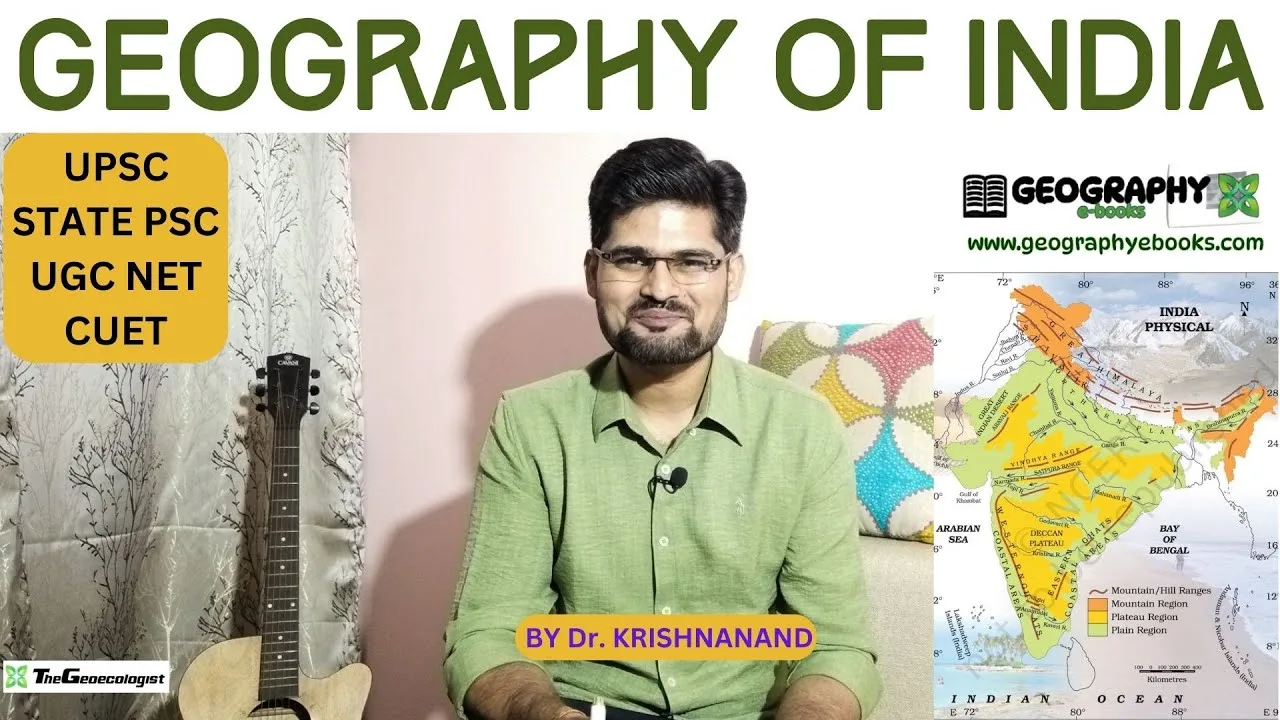
For in-depth exploration, Dr. Krishnanand’s video lecture on Functional Classification of Towns offers a simplified explanation. The accompanying e-book on Settlement Geography delves into theoretical and case-study approaches.
Conclusion
Ashok Mitra’s functional classification remains a cornerstone in human geography, empowering students and planners to decode urban complexities. As cities evolve, revisiting such frameworks ensures they adapt to new realities. For UPSC aspirants and geography enthusiasts, mastering this topic is key to excelling in exams and contributing to sustainable urban futures.
Explore More
- Visit TheGeoecologist for study materials.
- Follow @thegeoecologist on Instagram for updates.
AshokMitra #FunctionalClassificationOfTowns #SettlementGeography
This article synthesizes insights from Dr. Krishnanand’s video lecture and Mitra’s seminal work, tailored for academic and competitive exam preparation.
To Download E-Books & Study Material Visit The Shop Page