Blog
Ecosystem Their Management and Conservation| Environmental Geography | Dr. Krishnanand

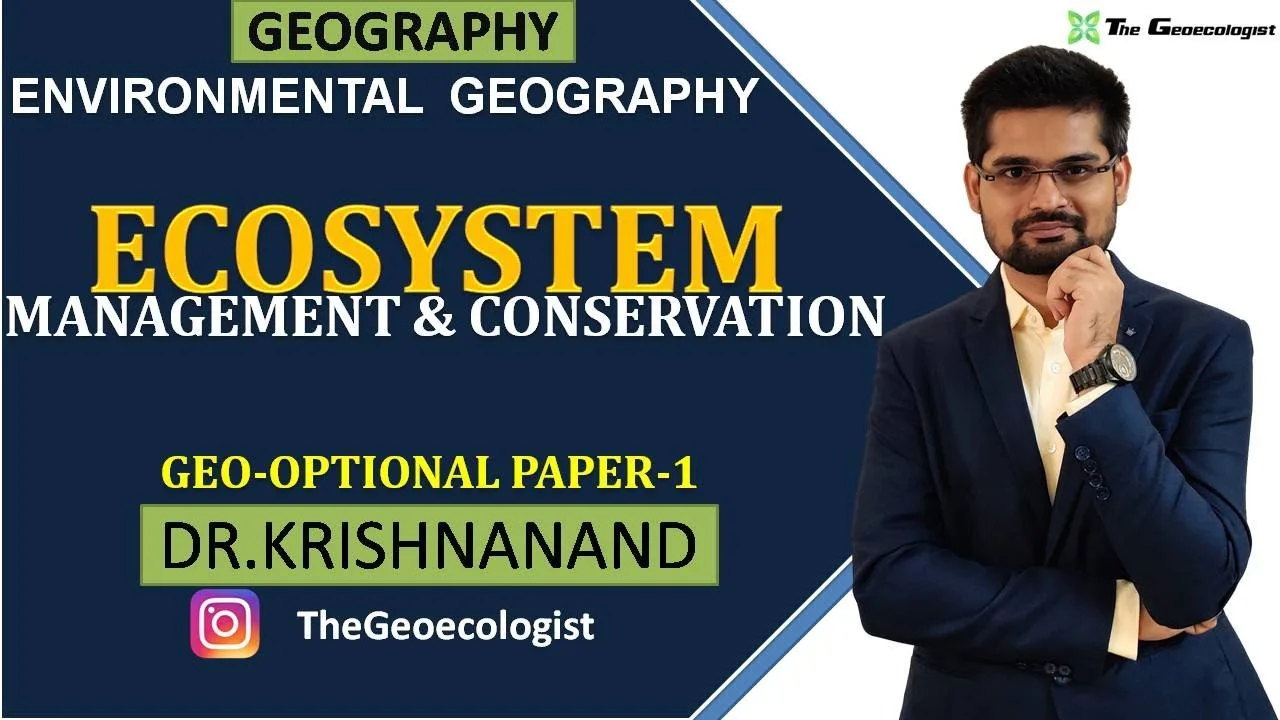
Ecosystem Their Management and Conservation| Environmental Geography | Dr. Krishnanand
Ecosystems, Their Management and Conservation: A Simplified Guide for Geography Students and UPSC Aspirants
Ecosystems are the lifeblood of our planet—complex networks of living organisms (biotic components) interacting with their physical environment (abiotic components) such as soil, water, and climate. Understanding ecosystems is fundamental to environmental geography, and Dr. Krishnanand’s 11th lecture in his series on “Ecosystems, Their Management and Conservation” (aimed at undergraduate geography students and UPSC optional aspirants) breaks down these concepts into accessible, actionable insights.
Why Study Ecosystems?
Ecosystems regulate climate, purify air and water, support biodiversity, and provide essential resources like food, medicine, and timber. Without healthy ecosystems, human survival is unsustainable. Dr. Krishnanand emphasizes that for UPSC aspirants, grasping ecosystem dynamics is critical for tackling questions in Geography (Optional) and General Studies Papers III (Environment & Ecology).
Simplified Explanation of Key Concepts
Structure of Ecosystems:
- Biotic Components: Plants, animals, microorganisms.
- Abiotic Components: Sunlight, temperature, water, soil nutrients.
- Functional Units: Energy flow (via food chains/webs) and nutrient cycling (carbon, nitrogen, water).
Types of Ecosystems:
Terrestrial (forests, grasslands, deserts) and Aquatic (oceans, wetlands, rivers). Each faces unique threats and requires tailored management strategies.Threats to Ecosystems:
Climate change, pollution, deforestation, invasive species, and overexploitation disrupt ecological balance. For UPSC, linking these to policies (e.g., National Mission for Green India) is essential.
Management and Conservation: Practical Steps
Dr. Krishnanand simplifies ecosystem management into core principles:
- Sustainable Use: Harvest resources (timber, water) at rates allowing regeneration.
- Protected Areas: Establish national parks, biosphere reserves, and wetlands (e.g., Ramsar Sites).
- Restoration: Reforestation, pollution control, and soil conservation.
- Community Involvement: Leverage traditional knowledge (e.g., Joint Forest Management in India).
For UPSC aspirants, real-world examples matter:
- Conservation Success: Project Tiger (India) revived tiger populations through habitat protection.
- Global Frameworks: CBD (Convention on Biological Diversity), Paris Agreement.
Why Dr. Krishnanand’s Lecture Stands Out
- UPSC-Focused: Simplifies complex theories (ecosystem services, ecological pyramids) into clear diagrams and case studies.
- Beginner-Friendly: Uses analogies (e.g., comparing ecosystems to “city management systems”) for intuitive understanding.
- Actionable Knowledge: Highlights policy gaps and solutions, critical for mains and essay writing.
Access More Resources
Deepen your preparation with Dr. Krishnanand’s e-books:
👉 Simplified Environmental Geography
📚 Comprehensive coverage of ecosystems, climate change, and sustainable development.
Stay Connected
- Subscribe to THEGEOECOLOGIST on YouTube:
Get notified of upcoming lectures on Geography Optional for UPSC.
Subscribe Here - Instagram: Daily tips and updates @thegeoecologist
- Website & Email: Visit thegeoecologist.com or email krishna.geography@gmail.com for queries.
Final Takeaway
Ecosystems are not just academic concepts—they are the foundation of environmental security. Dr. Krishnanand’s 11th lecture bridges theory and practice, empowering students to approach ecosystem management with clarity. For UPSC aspirants, mastering this topic isn’t optional—it’s strategic.
🔍 #EcosystemManagement #EcosystemConservation #UPSC
Conservation isn’t a choice—it’s our legacy.
To Download E-Books & Study Material Visit The Shop Page