Blog
Tribes of Bihar: Complete Guide to Communities, Challenges & BPSC Relevance

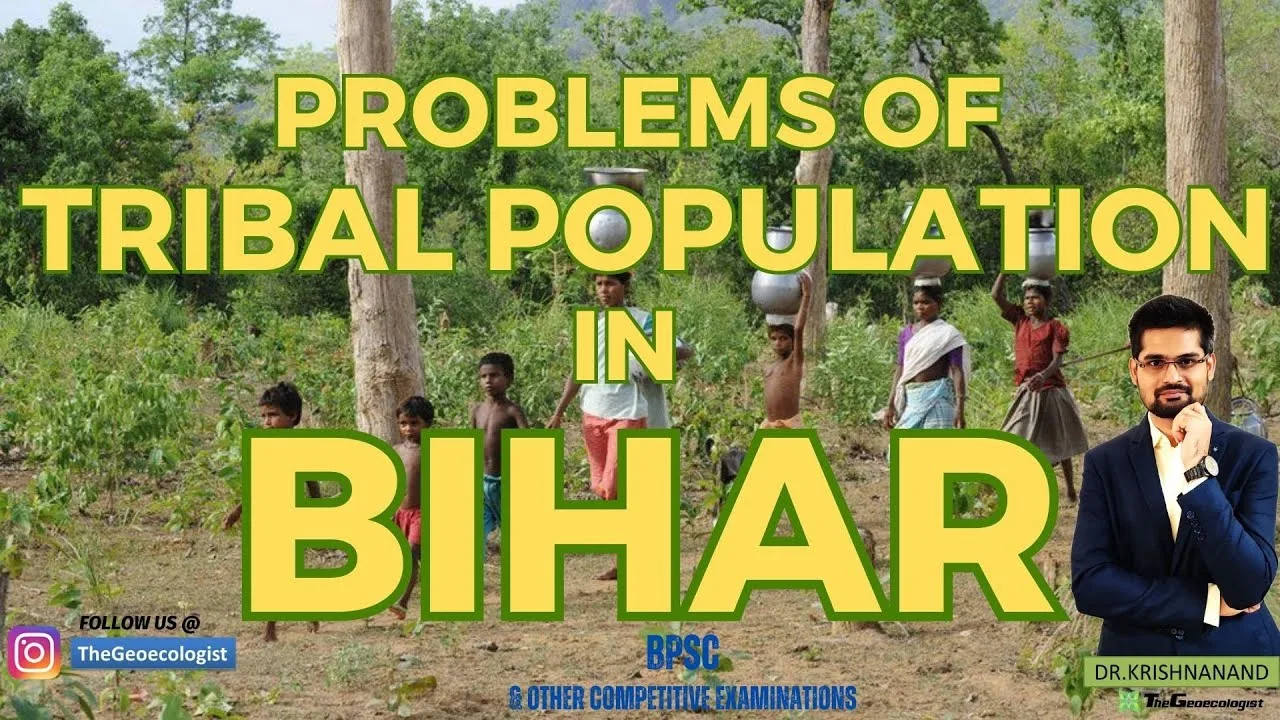
Table of Contents
- Major Tribes of Bihar: Demographic and Cultural Profile
- Santal: The Largest Tribal Community
- Oraon: Guardians of the Kaimur Hills
- Munda: Legacy of Resistance and Resilience
- Kharia: Artisans of the Forest
- Gond: The Southern Frontier Community
- Geographical Distribution and Demographic Trends
- Socio-Economic Challenges Facing Tribes of Bihar
- Land Alienation and Resource Dispossession
- Educational Disparities and Language Barriers
- Poverty, Livelihood Insecurity, and Unemployment
- Healthcare Deficits and Nutritional Vulnerability
- Social Discrimination and Political Marginalization
- Government Initiatives: Legislative and Programmatic Framework
- Constitutional and Legal Safeguards
- Key Welfare Schemes
- Historical Context: Tribal Revolts and Identity Assertion
- BPSC Exam Relevance: Strategic Preparation Guide
- Prelims Focus Areas
- Mains (GS Paper I, II, III) Analytical Themes
- Recommended Resources for BPSC Aspirants
- Conclusion: Toward Inclusive Development for Tribes of Bihar
The Tribes of Bihar represent a vibrant mosaic of indigenous cultures that have shaped the state’s social, economic, and political landscape for centuries. Comprising over 1.68 crore people according to the 2011 Census — approximately 1.3% of Bihar’s total population — these communities are concentrated primarily in the southern and southeastern districts, including the Chotanagpur plateau region, Kaimur hills, and the forested tracts of Banka, Jamui, and Gaya. For aspirants preparing for the Bihar Public Service Commission (BPSC) and other state-level competitive examinations, a thorough understanding of the Tribes of Bihar is indispensable, as questions regularly appear across General Studies papers covering geography, polity, economy, and current affairs.
- Key Takeaways:
- Tribes of Bihar constitute 1.3% of the state’s population (Census 2011), with 33 officially notified Scheduled Tribes.
- The Santal, Oraon, Munda, Kharia, and Gond are the five major tribal groups, each with distinct cultural identities.
- Systemic challenges include land alienation, educational disparities, healthcare deficits, and socio-economic marginalization.
- Key legislative protections: Forest Rights Act (2006), PESA Act (1996), and Fifth Schedule provisions.
- BPSC relevance spans static GK, current affairs, geography, and sociology — expect 3–5 questions annually.
Major Tribes of Bihar: Demographic and Cultural Profile
The Tribes of Bihar are officially categorized under 33 Scheduled Tribes notified under Article 342 of the Constitution. While numerically smaller than tribal populations in neighboring Jharkhand, Chhattisgarh, or Odisha, Bihar’s tribal communities exhibit remarkable linguistic, cultural, and occupational diversity. The five largest groups — Santal, Oraon, Munda, Kharia, and Gond — account for over 85% of the state’s total tribal population.
Santal: The Largest Tribal Community
The Santal (or Santhal) community constitutes approximately 48% of Bihar’s total tribal population, numbering over 8 lakh individuals per the 2011 Census. Primarily concentrated in the erstwhile Santal Pargana region — now spanning Banka, Jamui, and parts of Bhagalpur and Munger — the Santals are renowned for their rich oral traditions, the Sohrai harvest festival, and the Baha flower festival. Their language, Santali, written in the Ol Chiki script (developed by Pandit Raghunath Murmu in 1925), was included in the Eighth Schedule of the Constitution in 2003. Historically agrarian, Santals practice settled cultivation and have a strong tradition of collective village governance through the Manjhi-Paraganait system. – a key consideration for Tribes of Bihar.
Oraon: Guardians of the Kaimur Hills
The Oraon (or Kurukh) community, numbering approximately 2.5 lakh in Bihar, predominantly inhabits the Rohtas, Kaimur, and Bhabua districts along the Kaimur plateau. They speak Kurukh, a Dravidian language, and maintain a distinct cultural identity centered around the Sarna religious tradition — nature worship focused on sacred groves. The Oraons are known for their sustainable agricultural practices, including terraced farming on hill slopes, and a vibrant tradition of folk dance such as Karma and Jadur. Their traditional governance institution, the Parha system, continues to play a role in community dispute resolution. – a key consideration for Tribes of Bihar.
Munda: Legacy of Resistance and Resilience
With a population of roughly 1.8 lakh in Bihar, the Mundas are concentrated in the southern districts of Aurangabad, Gaya, and Nawada. The community’s historical significance is underscored by the Munda Rebellion (1899–1900), led by Birsa Munda — revered as Dharti Aba (Father of the Earth) — against British colonial exploitation and feudal zamindari oppression. This revolt, known as Ulgulan (The Great Tumult), remains a cornerstone of tribal resistance history in India. Mundas speak Mundari, an Austroasiatic language, and practice shifting cultivation (jhum) alongside settled agriculture. Their social organization revolves around the Munda-Manjhi village council system. – a key consideration for Tribes of Bihar.
Kharia: Artisans of the Forest
The Kharia community, numbering around 60,000 in Bihar, is primarily found in the forested regions of Jamui, Banka, and Gaya. They are subdivided into three groups — Hill Kharia, Delki Kharia, and Dudh Kharia — each with distinct cultural practices. Traditionally hunter-gatherers and shifting cultivators, the Kharias are master artisans known for intricate basket-weaving, bamboo craft, and leaf-plate making. Their language, Kharia, belongs to the Austroasiatic family. The community faces acute vulnerability due to forest conservation policies restricting access to traditional resources.
Gond: The Southern Frontier Community
The Gond population in Bihar is relatively small (approximately 25,000), concentrated in the southernmost districts bordering Jharkhand and Chhattisgarh. Part of the larger Gondwana cultural zone, they speak Gondi (a Dravidian language) and have historically been associated with forestry, minor forest produce collection, and traditional medicine. The Gonds in Bihar maintain cultural links with larger Gond populations in central India, and their presence highlights the state’s role as a transitional zone between the Gangetic plains and the Deccan plateau tribal belt.
Geographical Distribution and Demographic Trends
The Tribes of Bihar exhibit a highly uneven spatial distribution, with over 90% concentrated in just 12 districts. The erstwhile Santhal Pargana division (now Banka, Jamui, Godda, Sahibganj, Pakur, Dumka — the latter four now in Jharkhand) remains the heartland. Post-2000 bifurcation, Bihar retained significant tribal populations in Banka (2.1 lakh), Jamui (1.8 lakh), Kaimur (1.2 lakh), Rohtas (1.1 lakh), and Gaya (0.9 lakh) as per Census 2011. The decadal growth rate (2001–2011) for Scheduled Tribes in Bihar was 24.5%, notably higher than the state’s overall growth of 25.4%, indicating improving enumeration and natural growth. However, the sex ratio among STs (958 females per 1000 males) remains below the national ST average (990), signaling gendered vulnerabilities.
Socio-Economic Challenges Facing Tribes of Bihar
Despite constitutional safeguards and targeted welfare schemes, the Tribes of Bihar continue to grapple with deep-rooted structural disadvantages that impede their holistic development.
Land Alienation and Resource Dispossession
Land alienation remains the single most critical issue. Historical displacement from large infrastructure projects — notably the Mandal Dam (Kaimur), Kohira Dam (Rohtas), and various mining leases in Jamui and Banka — has severed communities from ancestral lands. The Bihar Scheduled Areas Regulation, 1969 (extended to nine blocks in four districts) and the Chotanagpur Tenancy Act, 1908 (applicable in parts of erstwhile Santhal Pargana) provide legal protections against non-tribal land transfers, but enforcement remains weak. A 2018 study by the India Environment Portal documented over 12,000 pending cases of illegal land transfer in tribal blocks of Bihar. The Forest Rights Act (FRA), 2006 — a landmark legislation recognizing individual and community forest rights — has seen abysmal implementation in Bihar: as of March 2023, only 1,842 individual forest rights titles had been distributed against 18,500+ claims filed, a recognition rate of under 10%, among the lowest in India.
Educational Disparities and Language Barriers
The literacy rate among Tribes of Bihar stands at 51.1% (Census 2011), significantly below the state average (61.8%) and the national ST average (59%). Female tribal literacy is a mere 39.4%. Key barriers include: (1) acute shortage of schools in remote tribal habitations — 38% of ST villages lack a primary school within 1 km; (2) medium of instruction (Hindi) alien to children speaking Santali, Kurukh, Mundari, or Kharia at home; (3) high dropout rates post-primary due to economic compulsion and cultural disconnect. The Eklavya Model Residential Schools (EMRS) scheme, launched in 1997–98, has established only 6 functional schools in Bihar as of 2024, against a sanctioned 22. The Ashram Schools and Kasturba Gandhi Balika Vidyalayas (KGBVs) provide partial coverage but suffer from infrastructure deficits and teacher absenteeism.
Poverty, Livelihood Insecurity, and Unemployment
Over 65% of tribal households in Bihar fall below the poverty line (Planning Commission, 2011–12 estimates), compared to 33.7% for the state overall. The workforce participation rate among STs is high (48.2%), but 78% are engaged as agricultural laborers or marginal cultivators with insecure tenure. Non-timber forest produce (NTFP) — mahua, tendu leaves, sal seeds, lac — constitutes a critical income source, but monopolistic procurement by state corporations and middlemen depresses returns. The Van Dhan Vikas Karyakram (launched 2018) aims to create tribal enterprise groups for value addition, but only 15 Van Dhan Kendras operate in Bihar as of 2024. Migration — seasonal and distress-driven — to Punjab, Haryana, and Delhi for brick-kiln and construction work is rampant, exposing workers to exploitation and health hazards.
Healthcare Deficits and Nutritional Vulnerability
Health indicators for Tribes of Bihar are alarming. The infant mortality rate (IMR) among STs is estimated at 52 per 1,000 live births (NFHS-5, 2019–21), versus 47 for the state. Over 60% of tribal women (15–49 years) are anemic; 42% of tribal children under five are stunted. Access barriers are severe: 45% of tribal habitations lack a sub-centre within 5 km; specialist care requires travel of 50+ km to district hospitals. Cultural factors — preference for traditional healers (ojha, baiga), mistrust of institutional medicine, and language gaps — compound structural deficits. The National Health Mission (NHM) tribal sub-plan allocates dedicated funds, but utilization in Bihar remains under 60% annually due to administrative bottlenecks.
Social Discrimination and Political Marginalization
Despite constitutional reservations (ST seats in Lok Sabha: 0 in Bihar; Vidhan Sabha: 2 seats — Katoria and Sikandra), tribal political voice remains muted. Caste-based social hierarchies in the Gangetic plains often subsume tribal identities under “backward” categories, erasing distinctiveness. Atrocities against STs — land grabbing, witch-hunting (particularly targeting single women), bonded labor — are underreported. The Scheduled Castes and Scheduled Tribes (Prevention of Atrocities) Act, 1989 (amended 2015, 2018) provides stringent penalties, but conviction rates in Bihar hover below 15%. The absence of a Tribal Advisory Council (mandated under Fifth Schedule) in Bihar — unlike Jharkhand, Chhattisgarh, or Odisha — further weakens institutional advocacy.
Government Initiatives: Legislative and Programmatic Framework
A multi-layered framework of constitutional provisions, central legislation, and state schemes targets the development of Tribes of Bihar.
Constitutional and Legal Safeguards
- Fifth Schedule: Provides for Tribal Advisory Councils, Governor’s regulatory powers over land transfer and money-lending in Scheduled Areas (applicable to 9 blocks in 4 districts of Bihar).
- PESA Act, 1996 (Panchayats Extension to Scheduled Areas): Mandates Gram Sabha authority over natural resources, minor minerals, and local governance — partially implemented in Bihar’s Scheduled Areas.
- Forest Rights Act, 2006: Recognizes individual (up to 4 hectares) and community forest rights; critical for tenure security.
- SC/ST (Prevention of Atrocities) Act, 1989: Special courts, victim compensation, and preventive measures.
Key Welfare Schemes
- Special Central Assistance to Tribal Sub-Scheme (SCA to TSS): Flexible funding for education, health, livelihood — Bihar received ₹142 crore in FY 2023–24.
- Article 275(1) Grants: Constitutional grant for ST welfare — ₹89 crore allocated in FY 2023–24.
- Eklavya Model Residential Schools (EMRS): 22 sanctioned, 6 operational; target: one per block with >50% ST population.
- Pre-Matric & Post-Matric Scholarships: Cover 3.2 lakh ST students annually; DBT implementation since 2017.
- Van Dhan Vikas Karyakram: 15 Kendras established; focus on mahua, tamarind, honey value chains.
- Pradhan Mantri Adi Adarsh Gram Yojana (PMAAGY): 367 villages selected for integrated development (2021–26).
Historical Context: Tribal Revolts and Identity Assertion
The history of Tribes of Bihar is inseparable from a legacy of resistance against colonial and feudal exploitation. Beyond the iconic Munda Ulgulan (1899–1900) led by Birsa Munda, the region witnessed the Santhal Hul (1855–56) — one of the largest tribal uprisings in Indian history — led by Sidhu, Kanhu, Chand, and Bhairav Murmu against zamindari oppression and British revenue policies. The Kharia Revolt (1767–1770) against East India Company’s forest monopolies and the Oraon Tana Bhagat Movement (1914–1920) — a socio-religious reform movement resisting forced labor and advocating non-violence — further illustrate the continuum of assertion. These movements are not merely historical footnotes; they directly informed post-independence policy, including the Fifth Schedule, PESA, and FRA. For BPSC aspirants, these revolts are high-yield topics appearing in both Prelims (factual) and Mains (analytical) questions.
BPSC Exam Relevance: Strategic Preparation Guide
Tribes of Bihar Tribes of Bihar is a recurring theme across the BPSC syllabus, with consistent weightage in both Preliminary and Main examinations.
Prelims Focus Areas
- Static GK: Names, locations, languages, festivals of major tribes (Santal, Oraon, Munda, Kharia, Gond); Constitutional provisions (Art. 342, Fifth Schedule, PESA, FRA).
- Data Points: Census 2011 ST population, literacy, sex ratio, decadal growth; district-wise concentration.
- Schemes: EMRS, Van Dhan, PMAAGY, SCA to TSS — objectives, funding, implementation status in Bihar.
- Current Affairs: Recent FRA title distribution data; new EMRS sanctions; tribal welfare budget allocations; High Court judgments on land rights.
Mains (GS Paper I, II, III) Analytical Themes
- GS-I (Geography/Sociology): Spatial distribution patterns; impact of bifurcation (2000) on tribal demographics; cultural geography of Chotanagpur plateau fringe.
- GS-II (Polity/Governance): Fifth Schedule implementation gaps in Bihar; PESA vs. state Panchayati Raj Act conflicts; FRA implementation challenges; role of Tribal Advisory Council (absence in Bihar).
- GS-III (Economy/Environment): Livelihood transitions — forest dependence to wage labor; NTFP economy and value chains; impact of mining/industrial projects on tribal displacement; climate vulnerability of tribal agriculture.
- Essay/Ethics: “Development vs. Displacement: The Tribal Question in Bihar”; “Constitutional Morality and Tribal Rights”; “Inclusive Governance: Lessons from Tribal Self-Governance Systems.”
Recommended Resources for BPSC Aspirants
- Dr. Krishnanand’s “Geography of Bihar” — comprehensive coverage of tribal geography, demography, and economy.
- TheGeoecologist video lectures — bilingual (Hindi-English) concept clarity on tribal topics.
- Bihar Economic Survey (annual) — Chapter on SC/ST Welfare; latest budget allocations.
- Ministry of Tribal Affairs Annual Reports — national schemes, Bihar-specific performance.
- Census 2011 Primary Census Abstract (ST) — authoritative demographic data.
- Xaxa Committee Report (2014) and Virginius Xaxa’s works — sociological perspectives.
Conclusion: Toward Inclusive Development for Tribes of Bihar
The Tribes of Bihar embody a resilient cultural heritage that has withstood centuries of marginalization, displacement, and policy neglect. While constitutional safeguards and targeted schemes provide a framework for justice and development, the implementation gap — particularly in FRA recognition, EMRS operationalization, and PESA compliance — remains stark. For Bihar to achieve its Sustainable Development Goals (SDGs) — especially Goal 1 (No Poverty), Goal 4 (Quality Education), Goal 10 (Reduced Inequalities), and Goal 16 (Peace, Justice, Strong Institutions) — closing this gap is non-negotiable. For BPSC aspirants, mastering Tribes of Bihar is not merely an exam requirement; Tribes of Bihar is an intellectual imperative to understand the complexities of governance in a plural society. As Dr. B.R. Ambedkar cautioned, “Political democracy cannot last unless there lies at the base of it social democracy.” The empowerment of Tribes of Bihar is a litmus test for that social democracy.
Explore Further:
- Download the Geography of Bihar eBook for structured BPSC preparation.
- Enroll in comprehensive courses at TheGeoecologist for expert-guided tribal studies modules.
- Follow Scheduled Tribes in India – Wikipedia for authoritative reference on constitutional provisions and national demographics.
Frequently Asked Questions
Bihar has 33 officially notified Scheduled Tribes under Article 342 of the Constitution, including major groups like Santal, Oraon, Munda, Kharia, and Gond.
The Scheduled Tribe population in Bihar was 1.68 crore (approximately 1.3% of the state's total population) according to the 2011 Census.
Key tribal revolts include the Santhal Hul (1855–56), Munda Ulgulan (1899–1900) led by Birsa Munda, Kharia Revolt (1767–1770), and the Oraon Tana Bhagat Movement (1914–1920).