Blog
Special Economic Zones SEZ: Comprehensive Guide for UPSC Aspirants & Geography Students

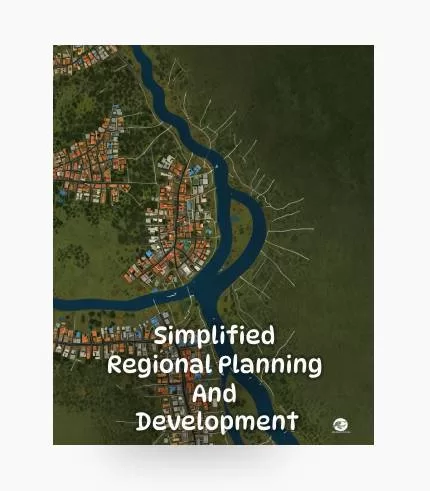
Special Economic Zones SEZ have become a focal point for aspirants preparing for UPSC CSE geography papers, as they encapsulate the interplay of policy, economics, and regional development. Understanding the nuances of SEZs and their relationship with industrial corridors is essential for answering questions on regional planning, sustainable growth, and infrastructure policy. This guide breaks down the core concepts, chronological evolution, geographical distribution, and contemporary challenges associated with SEZs and industrial corridors in India, while highlighting how the Simplified Regional Planning And Development | E-Book | Dr. Krishnanand | Bestseller can serve as a reliable study companion.
- Clear definition and objectives of Special Economic Zones SEZ in the Indian context.
- Chronological milestones from the SEZ Act, 2000 to recent policy amendments.
- Geographical spread of major SEZs and their contribution to exports and employment.
- Overview of key industrial corridors such as the Delhi-Mumbai and Chennai-Bengaluru corridors.
- Analytical framework linking SEZs with corridor development for balanced regional growth.
- Critical issues including land acquisition, environmental impact, and socio‑economic disparities.
- Effective study strategies for UPSC geography using targeted resources.
Understanding Special Economic Zones SEZ – Definition and Objectives
The term Special Economic Zones SEZ refers to delineated areas within a country where business and trade laws differ from the rest of the nation, aiming to attract foreign direct investment (FDI), boost exports, and generate employment. In India, SEZs are governed by the Special Economic Zones Act, 2000, which offers fiscal incentives such as tax holidays, customs duty exemptions, and streamlined approval processes. The primary objectives include enhancing infrastructure, promoting technological upgradation, and fostering regional development by reducing spatial inequalities. For UPSC aspirants, grasping these objectives helps in evaluating policy effectiveness and linking them to broader themes like inclusive growth and sustainable development.
Evolution of SEZ Policy in India – From 2000 Act to Present
India’s SEZ journey began with the establishment of export processing zones (EPZs) in the 1960s, but the formal SEZ policy emerged with the 2000 Act, modeled after China’s successful Shenzhen zone. Since then, over 400 SEZs have been approved, with approximately 260 operational as of 2023. Notable amendments include the introduction of the SEZ (Amendment) Rules, 2019, which relaxed minimum land area requirements and allowed multi‑product zones. The policy shift towards “Developer‑driven” models has encouraged private participation, yet it has also sparked debates over land use and displacement. Tracking this evolution is crucial for answering questions on policy continuity and change in regional planning papers.
Major SEZs Across India – Examples and Economic Impact
Geographically, SEZs are concentrated in states with strong industrial bases and port access. Gujarat leads with operational SEZs like Dahej and Mundra, contributing significantly to petrochemical and textile exports. Tamil Nadu’s Sriperumbudur and Coimbatore zones focus on automobiles and electronics, while Karnataka’s Bengaluru SEZ champions IT and biotechnology. According to the Directorate General of Foreign Trade, SEZs accounted for roughly ₹7.5 lakh crore in exports during FY 2022‑23, representing about 30% of India’s total outward shipments. Employment generation exceeds two million workers, highlighting the socio‑economic footprint of these zones. These statistics provide concrete data points that UPSC candidates can cite in mains answers and interviews.
Industrial Corridors in India – Concept and Key Projects
Industrial corridors are broad infrastructural belts integrating transport networks (highways, railways, ports) with industrial clusters to create seamless logistics hubs. The Government of India has sanctioned eleven national corridors, with the Delhi-Mumbai Industrial Corridor (DMIC) being the flagship project. Spanning 1,504 km across six states, DMIC aims to develop 24 investment regions featuring smart cities, manufacturing zones, and logistics parks. Other notable corridors include the Chennai‑Bengaluru Industrial Corridor (CBIC) and the Amritsar‑Kolkata Industrial Corridor (AKIC). These corridors are designed to reduce transaction costs, enhance competitiveness, and promote balanced regional development—core themes in geography and planning syllabi.
Linkages Between SEZs and Industrial Corridors – Synergistic Development
The strategic placement of SEZs along industrial corridors creates a synergistic effect: corridors provide the logistical backbone, while SEZs offer focused investment pockets with policy incentives. For instance, the DMIC corridor hosts SEZs in Gujarat (Dahej), Maharashtra (JNPT), and Uttar Pradesh (Greater Noida), enabling seamless movement of raw materials and finished goods. This integration reduces lead times, lowers inventory costs, and attracts export‑oriented units. Academic literature, such as the World Bank’s report on “Connecting to Compete 2023,” emphasizes that corridor‑linked SEZs achieve higher productivity gains than isolated zones. Understanding this linkage equips aspirants to analyze case studies on regional development models and answer application‑based questions effectively.
Challenges and Criticisms – Land Acquisition, Environmental Concerns, and Socio‑Economic Disparities
Despite their economic promise, SEZs and industrial corridors face significant criticism. Land acquisition processes have often been accused of inadequate compensation and displacement of agrarian communities, leading to protests in places like Nandigram and Singur. Environmental concerns include deforestation, water pollution, and loss of biodiversity, particularly in ecologically sensitive zones such as the Western Ghats. Moreover, studies by the Centre for Science and Environment indicate that benefits of SEZs tend to concentrate among skilled workers and urban populations, exacerbating regional inequalities. Addressing these challenges requires robust social impact assessments, stringent environmental clearances, and inclusive benefit‑sharing mechanisms—topics frequently explored in UPSC geography essays.
How to Study SEZs and Industrial Corridors for UPSC – Using Simplified Regional Planning And Development E‑Book
For aspirants seeking a structured, exam‑oriented resource, the Simplified Regional Planning And Development | E-Book | Dr. Krishnanand | Bestseller offers a concise yet comprehensive treatment of regional planning concepts, including dedicated chapters on SEZs and industrial corridors. The e‑book presents information in a point‑wise format with highlighted key terms, diagrams, and maps that facilitate quick revision. Each chapter ends with practice questions aligned to the UPSC pattern, enabling self‑assessment. By integrating this e‑book into your study plan, you can build a solid conceptual foundation, retain factual details through visual aids, and develop answer‑writing skills grounded in authentic syllabus coverage.
Practical Tips for Maximizing Your Preparation
To excel in questions on Special Economic Zones SEZ and industrial corridors, adopt a three‑pronged approach: first, memorize core definitions and objectives from reliable sources; second, map major SEZs and corridors on a blank India map to reinforce spatial memory; third, practice writing balanced answers that discuss both advantages and challenges, citing specific examples and data. Utilize the e‑book’s chapter summaries for rapid review before mock tests, and refer to external authoritative links such as the Ministry of Commerce and Industry for the latest policy updates. Consistent revision and answer practice will transform this complex topic into a scoring advantage.
Our Recommendation
📖 Part of our complete guide: Evolution of Geographical Thought: A Comprehensive Guide for UPSC Aspirants and Geography Enthusiasts
Frequently Asked Questions
What are the main objectives of Special Economic Zones SEZ in India?
The main objectives of SEZs in India are to attract foreign direct investment, boost exports, generate employment, enhance infrastructure, promote technological upgradation, and foster balanced regional development by reducing spatial disparities.
How do industrial corridors complement SEZs in regional planning?
Industrial corridors provide integrated transport and logistics infrastructure that connect SEZs to ports, raw material sources, and markets, thereby lowering transaction costs, increasing productivity, and creating synergistic growth poles along the corridor.
Which external sources provide authoritative information on India's SEZ policy?
Authoritative sources include the Ministry of Commerce and Industry’s official website (commerce.gov.in) and the Directorate General of Foreign Trade publications, which detail SEZ approvals, incentives, and export performance statistics.