Blog
Social Forestry Agroforestry Sustainable Land Use: A Complete Guide for Students and Practitioners

Social forestry agroforestry sustainable land use practices represent one of the most critical frameworks for addressing deforestation, biodiversity loss, and rural livelihoods across the globe. As land degradation accelerates — the United Nations estimates that over 40% of the world’s land is already degraded — understanding how communities integrate tree planting, agroforestry systems, and social forestry programs into everyday land management has never been more urgent. Whether you are a UPSC CSE aspirant studying ecology, an undergraduate geography student, or a working professional in environmental science, grasping these concepts is essential.
- Social forestry empowers rural and marginalized communities to manage forests collectively, improving both ecological health and socioeconomic outcomes.
- Agroforestry integrates trees with crops and livestock, boosting farm productivity while restoring soil fertility and carbon sequestration.
- Sustainable land use requires balancing economic productivity with conservation, and both social forestry and agroforestry are proven pathways to achieving that balance.
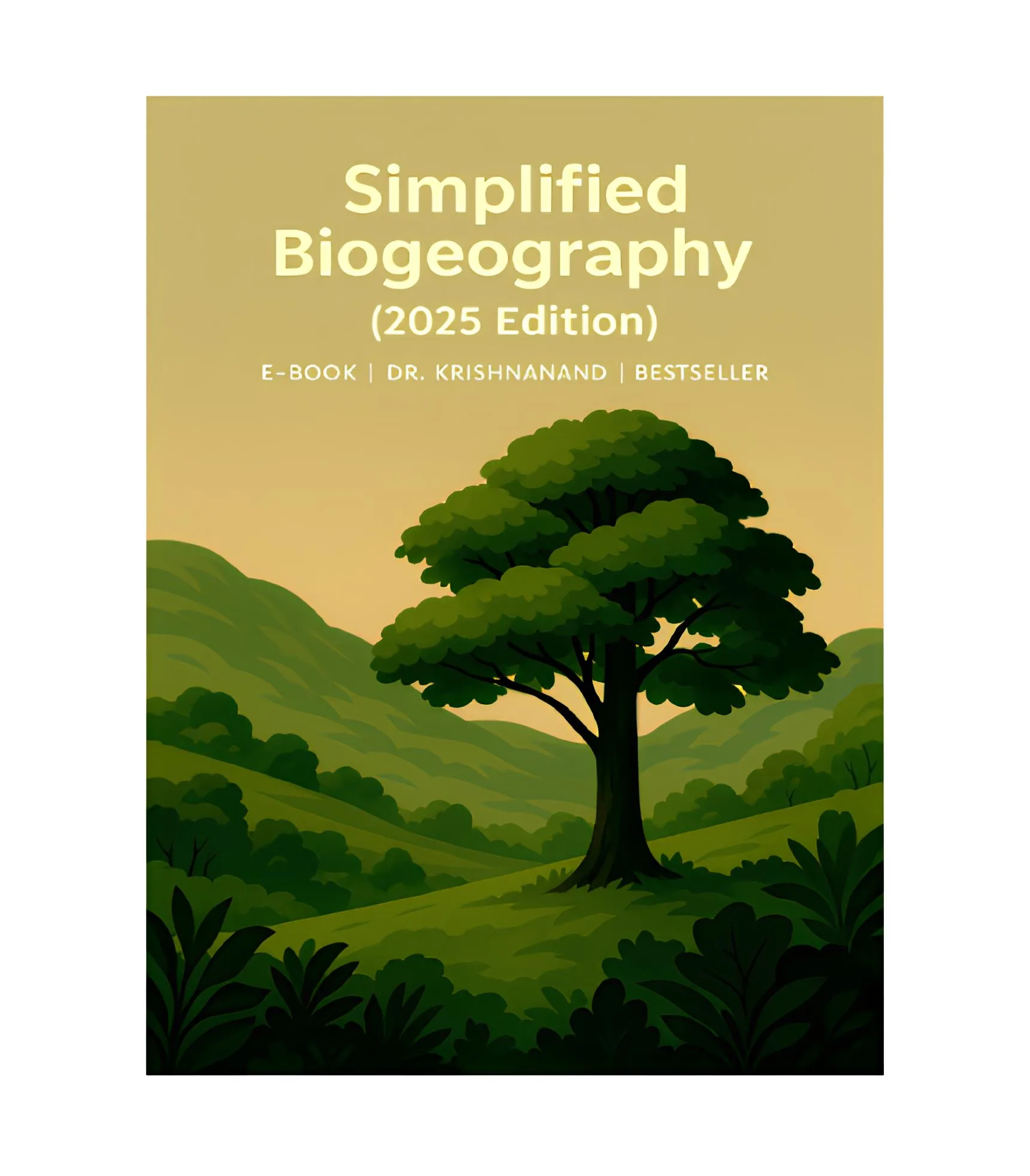
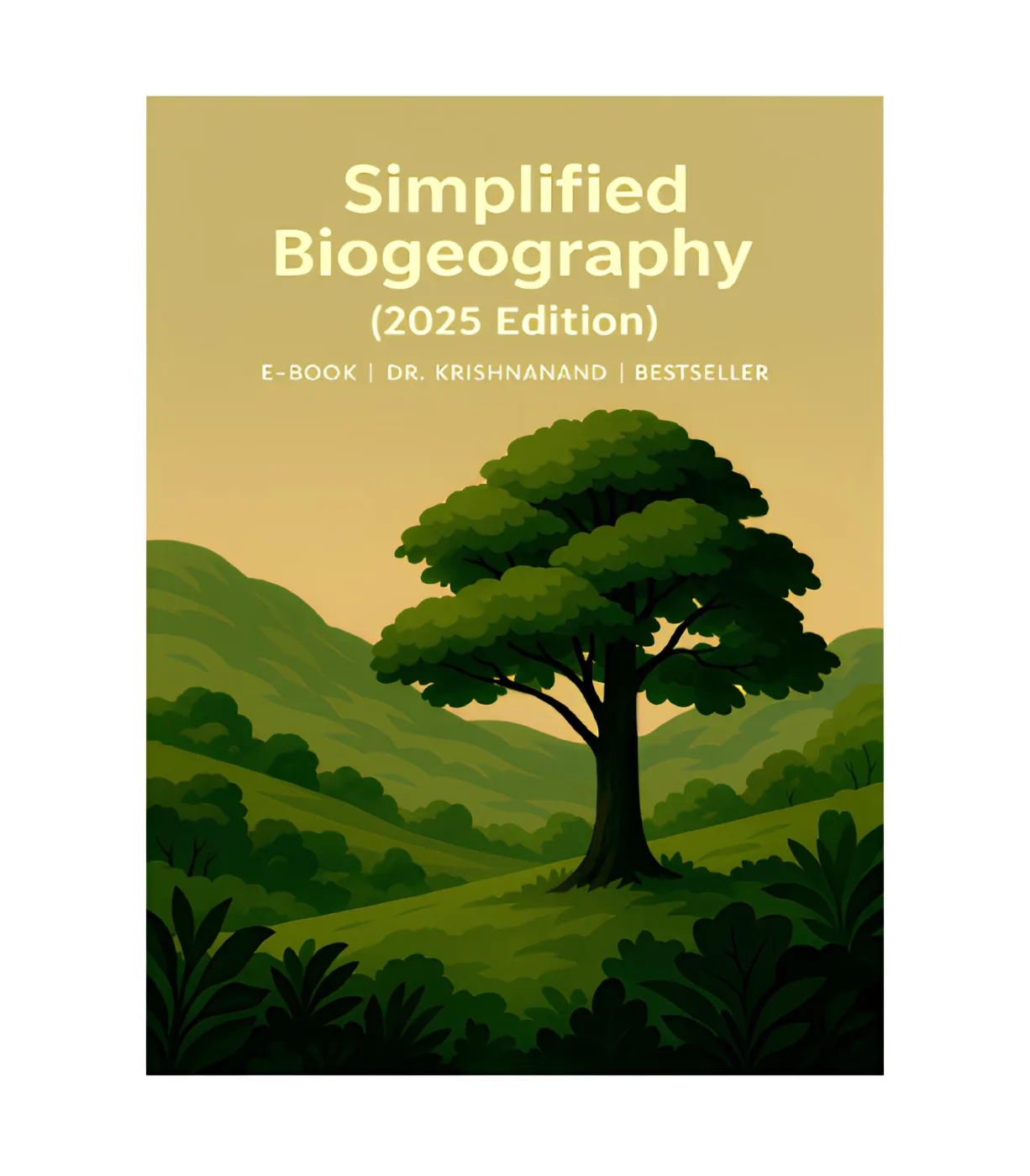
- Resources like Simplified Biogeography (2025 Edition) by Dr. Krishnanand help students build the foundational knowledge in biomes, vegetation distribution, and ecosystem dynamics needed to understand these practices in depth.
The Problem: Land Degradation and the Need for Community-Based Solutions
Land degradation is a global crisis. According to the United Nations Convention to Combat Desertification (UNCCD), approximately 12 million hectares of productive land are lost each year to drought and desertification. Conventional top-down forestry policies often exclude local communities, leading to conflicts, illegal logging, and poor conservation outcomes. This is precisely where social forestry and agroforestry sustainable land use strategies fill the gap — by placing decision-making authority in the hands of those who depend on the land most.
Social forestry programs, first formalized in India through the National Commission on Agriculture in 1976, were designed to involve village-level cooperatives, tribal groups, and smallholder farmers in afforestation and forest management. Agroforestry, meanwhile, provides farmers with diversified income streams — timber, fodder, fruits, and fuel — alongside crop production, reducing vulnerability to climate shocks.
Defining Social Forestry and Agroforestry in Context
What Is Social Forestry?
Social forestry refers to the management and protection of forests and afforestation on barren or degraded lands with the active participation of local communities. It encompasses three major subtypes: farm forestry, community forestry, and rural forestry. The core principle is that forests are not merely ecological assets but social institutions that support livelihoods, cultural practices, and gender-equitable resource access.
What Is Agroforestry?
Agroforestry is a land-use system where trees or shrubs are grown around or among crops or pastureland. The Food and Agriculture Organization (FAO) reports that agroforestry systems cover over 1 billion hectares globally and contribute significantly to food security and climate resilience. Key forms include alley cropping, silvopasture, forest farming, and home gardens.
Both social forestry and agroforestry sustainable land use approaches share a common thread: they recognize that ecological health and human welfare are inseparable. For students seeking a deeper understanding of how biomes, climate zones, and vegetation types underpin these systems, Simplified Biogeography (2025 Edition) by Dr. Krishnanand offers point-wise descriptions, diagrams, maps, and images aligned with the prescribed CBCS syllabus in geography — making it an invaluable study companion for mastering the ecological foundations of these practices.
How to Evaluate Effective Sustainable Land Use Solutions
Not all land use interventions deliver equal results. When assessing whether a social forestry or agroforestry program is genuinely sustainable, consider these evaluation criteria:
1. Ecological Impact Metrics
Measure changes in soil organic carbon, biodiversity indices (species richness, Shannon-Wiener index), and watershed-level hydrological outcomes. Effective agroforestry systems typically increase soil organic carbon by 0.3–0.6 tonnes per hectare per year compared to conventional monocultures.
2. Socioeconomic Outcomes
A sustainable program must improve household income, nutritional diversity, and gender-inclusive access to forest resources. The Indian Council of Agricultural Research (ICAR) has documented that agroforestry farmers in states like Kerala and Karnataka earn 20–30% higher annual incomes than non-tree-crop farmers.
3. Institutional and Governance Quality
Community forestry initiatives succeed when there is clear tenure security, transparent governance, and active participation of women and tribal groups. India’s Joint Forest Management (JFM) program, which covers over 27 million hectares, illustrates how devolved governance structures can drive both conservation and livelihood gains.
Why Simplified Biogeography Is the Right Resource for Understanding These Systems
Understanding biogeography — the distribution of life across Earth’s biomes — is foundational to any serious engagement with social forestry agroforestry sustainable land use practices. Without knowing how tropical evergreen forests, monsoon deciduous forests, savannas, and other biomes function, it is impossible to design interventions that match local ecological conditions.
Simplified Biogeography (2025 Edition) | E-Book | Dr. Krishnanand | Bestseller is specifically designed for UPSC CSE aspirants, undergraduates, and geography enthusiasts who need a clear, comprehensive, and visually rich resource. The book covers every major biome — from tropical evergreen forests (Chapter 3) to monsoon deciduous forests (Chapter 4) to savannas (Chapter 5) — with point-wise highlighted descriptions, diagrams, maps, and images that make complex ecological relationships accessible. This is not a generic textbook; it is tailored to the CBCS syllabus and built for practical, exam-ready learning.
Practical Usage and Buying Guidance
Who Should Use This E-Book?
- UPSC CSE aspirants preparing for Geography optional or General Studies papers on environment and ecology.
- Undergraduate geography and environmental science students who need a visually engaging, syllabus-aligned textbook.
- Researchers and practitioners working on forestry, agroforestry, and sustainable land use who want a quick-reference guide to biome characteristics.
How to Maximize the Value
Use the chapter-wise structure to build your understanding progressively: start with the introduction to biogeography (Chapter 1), move through biome classification (Chapter 2), and then study each biome in detail. The diagrams and maps are particularly useful for retaining spatial and visual information — a skill directly transferable to answering questions about social forestry and agroforestry sustainable land use practices in examinations and fieldwork alike. Priced at ₹249, this e-book provides exceptional value for a comprehensive, syllabus-aligned resource.
Real-World Case Studies of Social Forestry and Agroforestry Success
The effectiveness of social forestry and agroforestry sustainable land use approaches is well-documented across the world:
India’s Social Forestry Movement: States like Rajasthan and Madhya Pradesh have successfully reversed desertification through community-driven afforestation. The Chipko Movement in Uttarakhand became a global symbol of how local communities can protect forests through non-violent social forestry activism.
Agroforestry in East Africa: The World Agroforestry Centre (ICRAF) has promoted ‘Evergreen Agriculture’ in Malawi, Zambia, and Tanzania, where farmers integrate nitrogen-fixing trees with maize cultivation. Results show yield increases of 50–100% alongside improved soil fertility.
Community Forest Management in Nepal: Nepal’s community forestry program covers over 2.3 million hectares and has been credited with increasing forest cover from 29% in 2001 to over 45% by 2016, demonstrating that social forestry can deliver measurable ecological restoration at scale.
Frequently Asked Questions
FAQs on Social Forestry, Agroforestry, and Sustainable Land Use
What is the difference between social forestry and agroforestry?
Social forestry focuses on community-based forest management, protection, and afforestation for collective benefit, while agroforestry integrates trees with agricultural crops and livestock on the same land unit to enhance productivity and sustainability. Both contribute to sustainable land use but operate through different mechanisms.
How does agroforestry contribute to carbon sequestration?
Agroforestry systems sequester significant amounts of carbon in both biomass (tree trunks, branches, leaves) and soil organic matter. Studies published in Agronomy for Sustainable Development show that well-managed agroforestry systems can sequester 2–9 tonnes of CO₂ equivalent per hectare per year, depending on tree species and climate zone.
Is social forestry effective in developing countries?
Yes. Evidence from India, Nepal, Ethiopia, and Indonesia shows that social forestry programs improve forest cover, enhance rural livelihoods, and empower marginalized communities — particularly women and tribal groups — when supported by clear tenure rights and institutional frameworks.
Who is Dr. Krishnanand, and why is this e-book recommended?
Dr. Krishnanand is a geography educator and author whose Simplified Biogeography (2025 Edition) is a bestseller for UPSC CSE aspirants and geography undergraduates. The e-book simplifies complex biogeographical concepts with diagrams, maps, and point-wise descriptions aligned with the CBCS syllabus, making it an excellent resource for understanding the ecological foundations of social forestry and agroforestry sustainable land use practices.
Our Recommendation
📖 Part of our complete guide: Evolution of Geographical Thought: A Comprehensive Guide for UPSC Aspirants and Geography Enthusiasts
Frequently Asked Questions
What is the difference between social forestry and agroforestry?
Social forestry focuses on community-based forest management, protection, and afforestation for collective benefit, while agroforestry integrates trees with agricultural crops and livestock on the same land unit to enhance productivity and sustainability. Both contribute to sustainable land use but operate through different mechanisms.
How does agroforestry contribute to carbon sequestration?
Agroforestry systems sequester significant amounts of carbon in both biomass (tree trunks, branches, leaves) and soil organic matter. Studies published in Agronomy for Sustainable Development show that well-managed agroforestry systems can sequester 2–9 tonnes of CO₂ equivalent per hectare per year, depending on tree species and climate zone.
Is social forestry effective in developing countries?
Yes. Evidence from India, Nepal, Ethiopia, and Indonesia shows that social forestry programs improve forest cover, enhance rural livelihoods, and empower marginalized communities — particularly women and tribal groups — when supported by clear tenure rights and institutional frameworks.
Who is Dr. Krishnanand, and why is this e-book recommended?
Dr. Krishnanand is a geography educator and author whose Simplified Biogeography (2025 Edition) is a bestseller for UPSC CSE aspirants and geography undergraduates. The e-book simplifies complex biogeographical concepts with diagrams, maps, and point-wise descriptions aligned with the CBCS syllabus, making it an excellent resource for understanding the ecological foundations of social forestry and agroforestry sustainable land use practices.