Blog
Orogeny Mountain Building Theories: A Complete Guide for Aspirants and Geographers


Understanding Orogeny Mountain Building Theories: Why This Topic Matters
Orogeny Mountain Building Theories form one of the most critical chapters in physical geography and geomorphology, especially for UPSC CSE aspirants and undergraduate geography students. The concept of orogeny — the process of mountain formation through tectonic forces — sits at the heart of understanding how Earth’s surface has evolved over millions of years. Whether you are preparing for the UPSC CSE exam or building a strong foundation in geomorphology, mastering Orogeny Mountain Building Theories is non-negotiable. This guide breaks down the key theories, evaluates the best study resources, and shows you how to approach this topic with confidence.
- Orogeny refers to the tectonic process that leads to the formation of mountain ranges through crustal deformation.
- The major theories include the Geosyncline Theory, Continental Drift Theory, and Plate Tectonics Theory — all interlinked with Orogeny Mountain Building Theories.
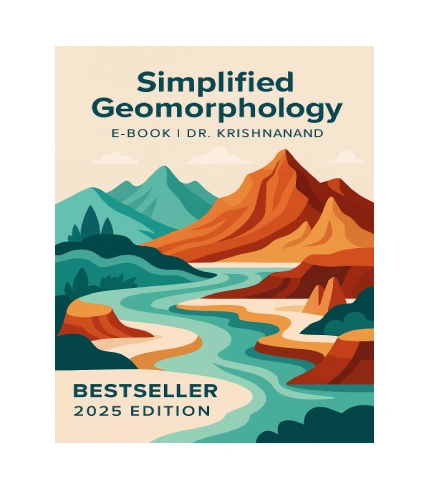
- Dr. Krishnanand’s Simplified Geomorphology (2025 Edition) covers Orogeny Mountain Building Theories with point-wise highlighted descriptions, diagrams, and maps aligned with the UPSC CBCS syllabus.
- Understanding Orogeny Mountain Building Theories requires clarity on concepts like orogenesis, epeirogenesis, and the Kober theory of geosynclines.
- The 2025 Edition of the recommended textbook is updated with the latest UPSC syllabus changes, making it the most current resource available.
The Core Problem: Why Orogeny Mountain Building Theories Confuse Aspirants
Many UPSC CSE aspirants and geography students struggle with Orogeny Mountain Building Theories because the subject sits at the intersection of multiple geological disciplines. The Kober geosyncline theory, the sequential development of mountain belts, and the distinction between orogenesis and epeirogenesis create a dense web of concepts that can feel overwhelming. According to the UPSC CSE preliminary and main syllabus, geomorphology carries significant weight, and questions on Orogeny Mountain Building Theories appear frequently in both GS Paper I and optional geography papers. Without a structured resource that simplifies these complex ideas, candidates often resort to scattered notes that lack coherence and depth.
The challenge intensifies when students try to differentiate between related but distinct concepts. For instance, orogeny specifically refers to mountain-building processes involving crustal folding and faulting, while epeirogenesis refers to broad, vertical movements of large continental areas. The Kober theory, proposed by Hans Kober, suggested that geosynclines — large downward troughs in the Earth’s crust — were the precursors to mountain formation. Understanding these distinctions within Orogeny Mountain Building Theories demands a resource that presents each theory systematically, with clear diagrams and point-wise explanations.
How to Evaluate the Best Resource for Orogeny Mountain Building Theories
When selecting a study material for Orogeny Mountain Building Theories, aspirants should evaluate resources against several criteria. First, the content must align with the latest UPSC CBCS syllabus — the 2025 update introduced specific changes that older editions do not cover. Second, the resource should offer point-wise highlighted descriptions, as UPSC rewards concise, exam-oriented answers. Third, diagrams, maps, and images are essential for illustrating complex geological processes like subduction, continental collision, and mountain uplift.
Third-party academic sources such as Nature and the United States Geological Survey (USGS) confirm that plate tectonics and orogenic processes remain active areas of geological research, reinforcing the importance of up-to-date educational materials. A resource that integrates these scientific perspectives while maintaining accessibility for exam preparation is invaluable. Simplified Geomorphology (2025 Edition) by Dr. Krishnanand meets all these criteria, offering comprehensive coverage of Orogeny Mountain Building Theories with the latest syllabus alignment and visual aids.
Why Simplified Geomorphology (2025 Edition) Is the Ideal Resource for Orogeny Mountain Building Theories
Dr. Krishnanand’s Simplified Geomorphology (2025 Edition) has earned its reputation as a bestseller among UPSC CSE aspirants and geography undergraduates. The book’s approach to Orogeny Mountain Building Theories is methodical and exam-focused. Chapter-by-chapter coverage ensures that every aspect of geomorphology — from the internal structure of the Earth to plate tectonics and geosynclines — is addressed with precision. The 2025 Edition specifically incorporates the latest CBCS syllabus updates, ensuring that what you study is exactly what the exam expects.
The book’s strength lies in its presentation style. Point-wise highlighted descriptions make revision efficient, while the inclusion of diagrams, maps, and images helps visual learners grasp abstract geological processes. For Orogeny Mountain Building Theories specifically, the text breaks down the Kober theory, the stages of orogenesis, and the relationship between geosynclines and mountain belts into digestible sections. This structured approach transforms what could be a daunting topic into a manageable, scoreable area of the syllabus.
Practical Usage: How to Study Orogeny Mountain Building Theories Effectively
Once you have the right resource, the next step is a disciplined study plan for Orogeny Mountain Building Theories. Start by reading the relevant chapters in Simplified Geomorphology (2025 Edition) to build conceptual clarity. Focus on understanding the sequence: internal Earth structure → isostasy → continental drift → plate tectonics → geosynclines → orogenesis. Each concept builds on the previous one, and Orogeny Mountain Building Theories sit at the culmination of this logical progression.
After reading, create concise notes using the point-wise format that the book itself employs. Practice drawing diagrams of mountain-building processes — subduction zones, continental collisions, and rift valleys — as these frequently appear in UPSC questions. Supplement your study with the USGS resources on plate tectonics (usgs.gov) to gain a broader scientific perspective. Regular revision using the highlighted points in the textbook will ensure long-term retention of Orogeny Mountain Building Theories.
Buying Guidance: What to Look for Before Purchasing a Geomorphology E-Book
Before investing in any e-book for Orogeny Mountain Building Theories, verify a few key factors. First, confirm that the edition matches the current UPSC CBCS syllabus — the 2025 Edition of Simplified Geomorphology by Dr. Krishnanand is specifically updated for this purpose. Second, check whether the book includes visual aids like diagrams and maps, as these are crucial for understanding geological processes. Third, look for author credentials; Dr. Krishnanand is a recognized authority in geography education, and the book’s bestseller status reflects its acceptance among successful aspirants.
Price is also a consideration. At ₹249, Simplified Geomorphology (2025 Edition) offers excellent value for the comprehensive coverage it provides. Unlike printed textbooks that can cost several times more, this e-book delivers the same quality content in a digital format that is portable and searchable. For UPSC CSE aspirants on a budget, this makes it an accessible yet powerful tool for mastering Orogeny Mountain Building Theories and the broader geomorphology syllabus.
Frequently Asked Questions About Orogeny Mountain Building Theories
What are the main theories of Orogeny Mountain Building?
The main theories of Orogeny Mountain Building include the Geosyncline Theory (Kober), Continental Drift Theory (Wegener), and Plate Tectonics Theory. Each theory explains how tectonic forces lead to the formation of mountain ranges through processes like folding, faulting, and volcanic activity. Simplified Geomorphology (2025 Edition) covers all these theories comprehensively.
Who proposed the Kober theory related to Orogeny Mountain Building?
Hans Kober, a German geologist, proposed the Geosyncline Theory, which suggests that large sedimentary troughs (geosynclines) in the Earth’s crust were the precursors to mountain formation. This theory is a foundational component of Orogeny Mountain Building Theories and is extensively covered in Dr. Krishnanand’s textbook.
Is the 2025 Edition of Simplified Geomorphology updated for the latest UPSC syllabus?
Yes, the 2025 Edition of Simplified Geomorphology by Dr. Krishnanand is specifically aligned with the latest UPSC CBCS syllabus update of 2025. This ensures that aspirants studying Orogeny Mountain Building Theories and other geomorphology topics are preparing with content that directly matches exam expectations.
How does orogeny differ from epeirogenesis?
Orogeny refers specifically to the process of mountain building through horizontal tectonic forces that cause crustal folding and faulting. Epeirogenesis, on the other hand, involves broad, vertical movements of large continental blocks. Both are components of Earth movements studied under Orogeny Mountain Building Theories, and Chapter 6 of the recommended textbook addresses both concepts in detail.
Our Recommendation
📖 Part of our complete guide: Evolution of Geographical Thought: A Comprehensive Guide for UPSC Aspirants and Geography Enthusiasts
Frequently Asked Questions
What are the main theories of Orogeny Mountain Building?
The main theories of Orogeny Mountain Building include the Geosyncline Theory (Kober), Continental Drift Theory (Wegener), and Plate Tectonics Theory. Each theory explains how tectonic forces lead to the formation of mountain ranges through processes like folding, faulting, and volcanic activity.
Who proposed the Kober theory related to Orogeny Mountain Building?
Hans Kober, a German geologist, proposed the Geosyncline Theory, which suggests that large sedimentary troughs (geosynclines) in the Earth's crust were the precursors to mountain formation.
Is the 2025 Edition of Simplified Geomorphology updated for the latest UPSC syllabus?
Yes, the 2025 Edition of Simplified Geomorphology by Dr. Krishnanand is specifically aligned with the latest UPSC CBCS syllabus update of 2025, ensuring aspirants are preparing with content that directly matches exam expectations.