Blog
Biogeography study guide: Ultimate Resource for UPSC CSE Mains and UGC NET JRF Aspirants

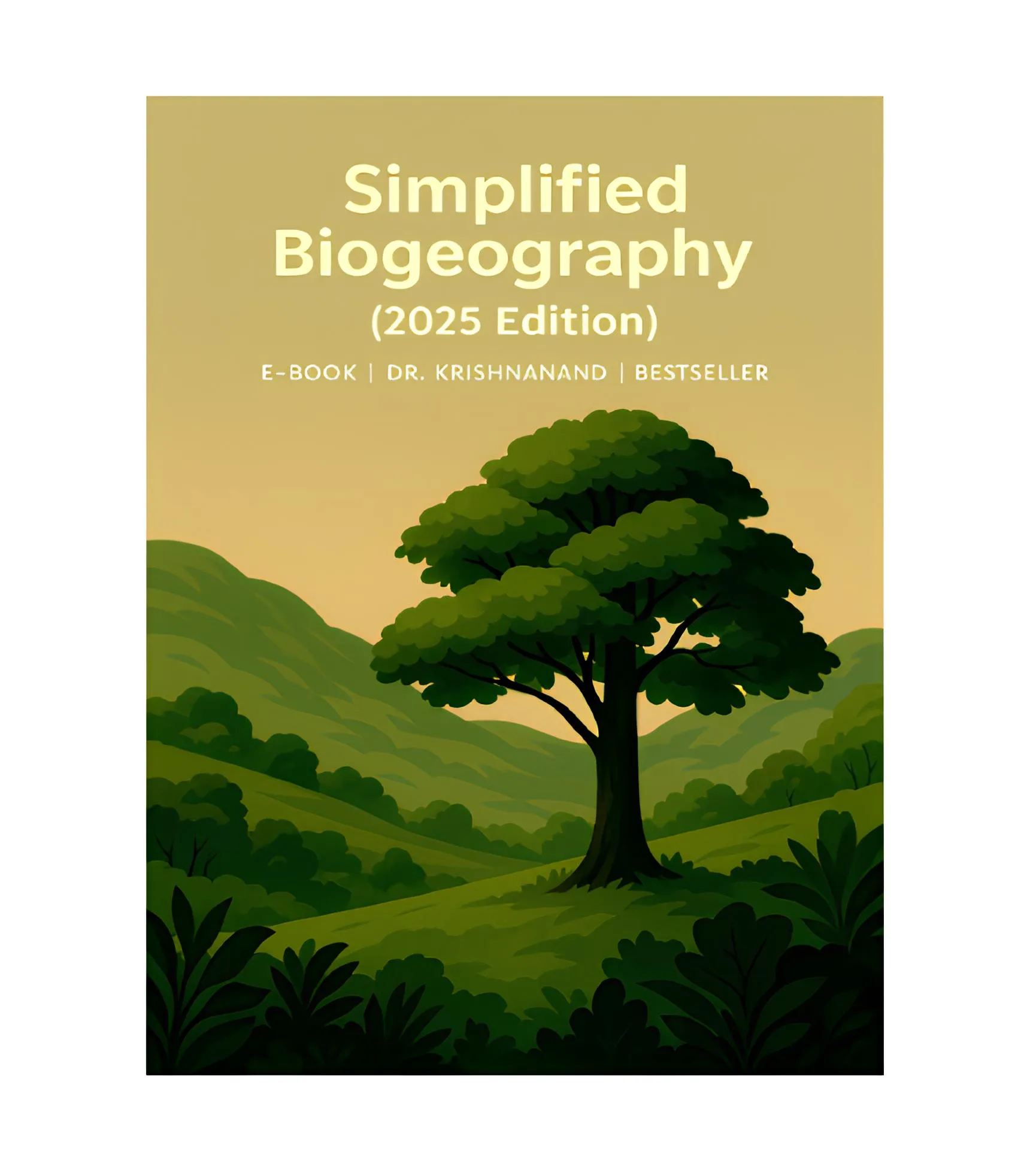
Biogeography study guide aspirants often struggle to find a concise yet comprehensive resource that aligns with the UPSC CSE Mains and UGC NET JRF syllabi, especially when tackling the dynamic distribution of flora and fauna across biomes.
- Clear, point‑wise explanations that match the CBCS curriculum.
- Diagrams, maps, and images that reinforce spatial understanding.
- Updated 2025 edition reflecting recent exam patterns and environmental changes.
- Affordable pricing at INR 249 for instant digital access.
Why Candidates Need a Targeted Biogeography Study Guide
The UPSC CSE Mains geography paper and the UGC NET JRF exam both allocate significant marks to biogeography, yet standard textbooks often overwhelm readers with excessive detail. Candidates report difficulty in retaining biome classifications, climate‑vegetation relationships, and regional case studies without a structured approach. A focused Biogeography study guide distills core concepts, highlights frequently asked questions, and provides visual aids that improve recall during timed writing.
How to Evaluate a Quality Biogeography Study Resource
When assessing any guide, consider these five criteria:
- Syllabus Alignment: Does it follow the latest UPSC and UGC NET syllabi, including CBCS modules?
- Conceptual Clarity: Are definitions, classifications, and processes explained in simple language with examples?
- Visual Support: Are maps, diagrams, and photographs included to illustrate biome boundaries and species distribution?
- Practice Orientation: Does it offer summary points, quick‑reference tables, or question‑answer snippets useful for answer writing?
- Credibility & Updates: Is the author an expert in geography, and is the edition revised to reflect current data (e.g., 2025)?
A resource meeting these benchmarks saves study time and boosts confidence.
How Simplified Biogeography (2025 Edition) Fits the Ideal Guide
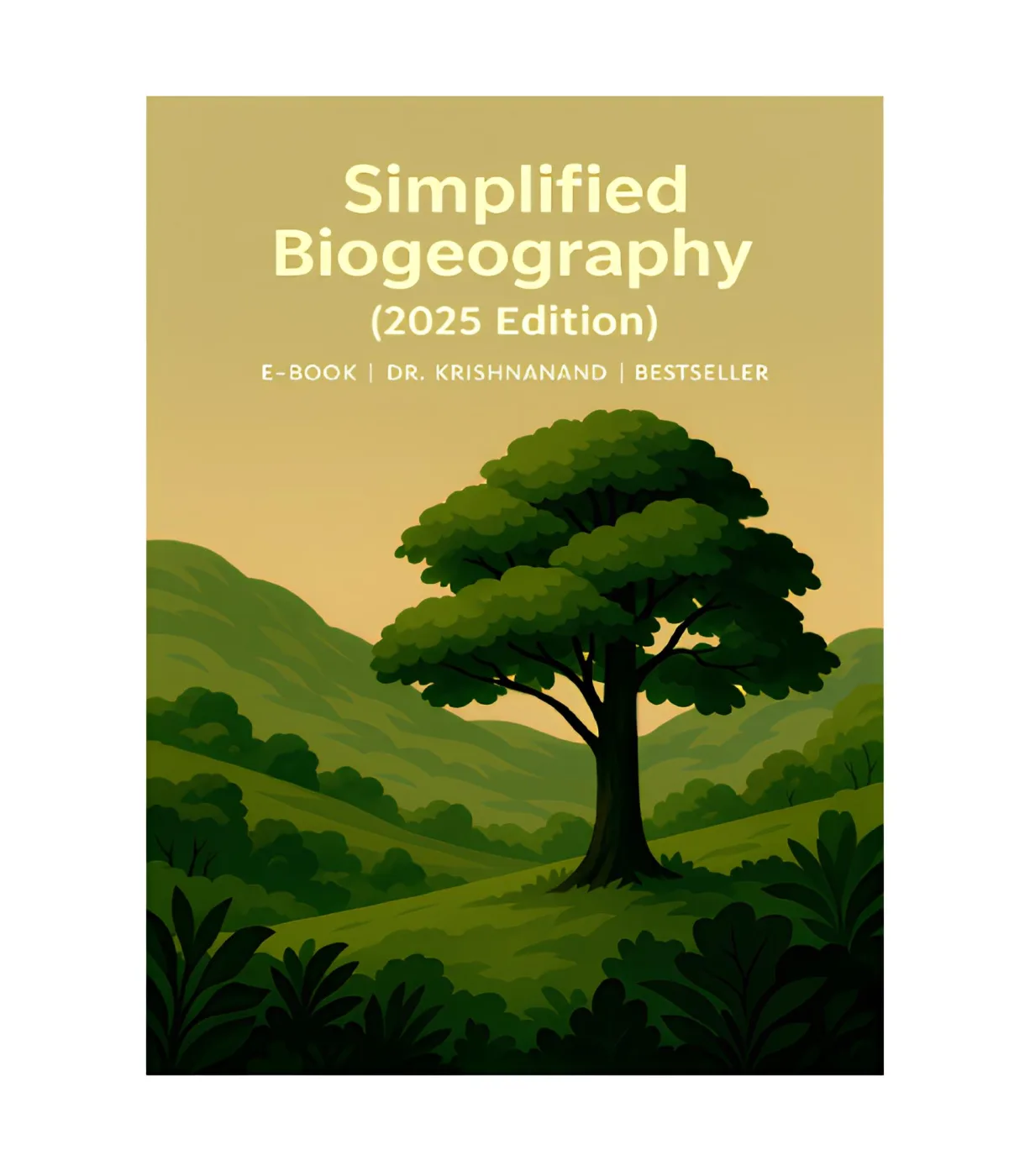
Authored by Dr. Krishnanand, a recognized scholar in environmental geography, Simplified Biogeography (2025 Edition) is explicitly designed for UPSC CSE Mains and UGC NET JRF aspirants. The e‑book adheres to the CBCS syllabus, ensuring that every chapter maps directly to university‑level geography papers and competitive exam topics. Its point‑wise highlighted descriptions enable rapid revision, while the inclusion of detailed diagrams, maps, and images supports visual learners—a critical advantage for grasping biome characteristics.
The 2025 edition incorporates recent updates such as the reclassification of certain savanna regions, updated monsoon patterns, and new case studies on biodiversity hotspots, making it more relevant than older texts. Because it is sold as an e‑book, candidates can access it instantly on any device, search for keywords, and annotate sections without carrying a heavy volume.
Chapter‑wise Highlights and What to Expect
The e‑book is organized into eight focused chapters, each ranging from 10 to 20 pages:
- Chapter 1 – Introduction to Biogeography: Defines scope, outlines historical development, and lists key controlling factors (climate, soil, barriers).
- Chapter 2 – Biomes: Concept and Classification: Explains biome criteria, presents the Whittaker classification, and includes a world biome map.
- Chapter 3 – Tropical Evergreen Biome: Details structure, flora‑fauna adaptations, and highlights the Amazon and Western Ghats.
- Chapter 4 – Monsoon Deciduous Forest Biome: Discusses leaf‑drop phenology, seasonal productivity, and examples from central India.
- Chapter 5 – Savanna Biome: Covers fire‑adapted vegetation, herbivore‑predator dynamics, and African versus Indian savannas.
- Chapter 6 – Desert Biome: Examines xerophytic adaptations, soil salinity, and the Thar and Sahara deserts.
- Chapter 7 – Tundra and Alpine Biomes: Describes low‑temperature constraints, permafrost, and altitudinal zonation.
- Chapter 8 – Oceanic Biomes and Island Biogeography: Introduces marine zones, coral reefs, and equilibrium models of species turnover.
Each chapter ends with a “Key Points” box summarizing definitions, diagrams, and potential exam questions—ideal for last‑minute review.
Effective Study Strategies Using the E‑book
To maximize retention, integrate the Biogeography study guide into a three‑phase plan:
- Phase 1 – Overview (2‑3 days): Skim all chapters, focus on the point‑wise highlights and diagrams. Create a mind map linking biomes to climate zones.
- Phase 2 – Deep Dive (1‑2 weeks): Study one chapter per day. After reading, write a 150‑word summary without looking at the text, then compare with the chapter’s summary box.
- Phase 3 – Application (ongoing): Practice answer writing using previous year UPSC and UGC NET questions. Use the e‑book’s maps to sketch biome distributions in your answers.
Because the content is searchable, you can quickly locate specific terms like “monsoon deciduous” or “savanna fire adaptation” during revision.
Purchase Guidance and Value Assessment
Available at , the e‑book is priced at INR 249—a competitive rate compared to printed textbooks that often exceed INR 800. The purchase grants immediate PDF download, enabling study on smartphones, tablets, or laptops. No additional software is required; the file opens with any standard PDF reader.
Given its syllabus relevance, visual richness, and author credibility, the investment offers high return on study efficiency. Candidates who have used earlier editions report improved scores in the geography section of UPSC mains and better confidence in UGC NET JRF paper‑II.
Further reading: Biogeography study guide on Wikipedia
Our Recommendation
📖 Part of our complete guide: Evolution of Geographical Thought: A Comprehensive Guide for UPSC Aspirants and Geography Enthusiasts
Frequently Asked Questions
Is Simplified Biogeography (2025 Edition) aligned with the latest UPSC syllabus?
Yes, the e‑book follows the current UPSC CSE Mains geography syllabus and the CBCS undergraduate curriculum, ensuring all required topics are covered.
Can I use this e‑book for UGC NET JRF paper‑II preparation?
Absolutely. The content matches UGC NET JRF geography specifications, with clear explanations and diagrams that aid in answering both objective and descriptive questions.
What format is the e‑book provided in after purchase?
The product is delivered as a printable PDF file that can be opened on any device using standard PDF readers.