Blog
Mineral Resources Uttar Pradesh: Comprehensive Guide for Exams

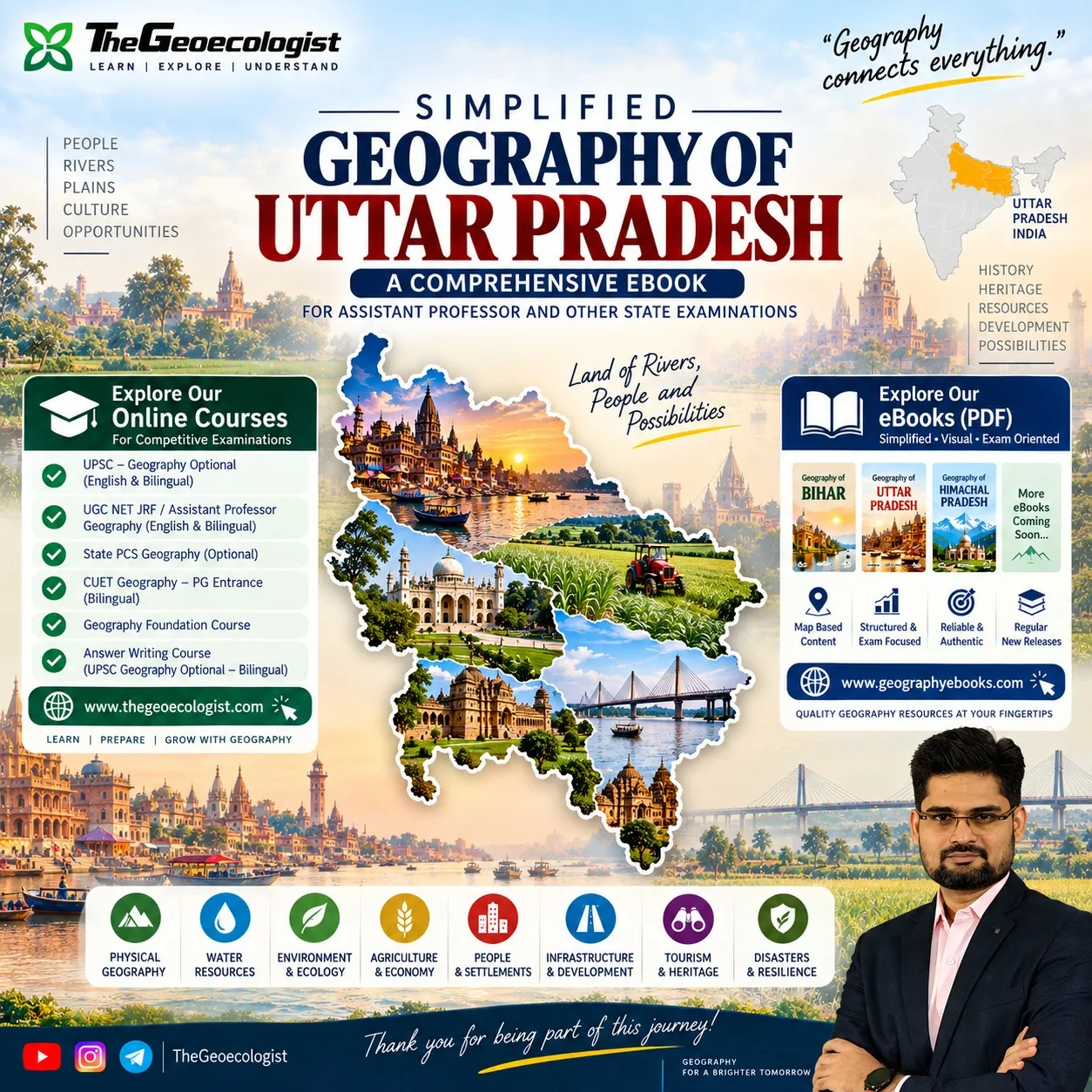
Mineral Resources Uttar Pradesh play a pivotal role in shaping the state’s industrial growth, energy security, and socioeconomic development, making them a frequent topic in competitive exams.
- Understand the distribution of key minerals such as limestone, dolomite, silica sand, and coal across Uttar Pradesh.
- Grasp the significance of energy infrastructure including power plants, renewable projects, and transmission networks.
- Learn how mineral extraction and energy development influence agriculture, settlements, and disaster resilience.
- Access map‑based explanations that connect physical geography with human activity.
- Prepare effectively for Assistant Professor, UP State PCS, UPSC optional, and UGC NET Geography exams.
Mineral Resources Uttar Pradesh: Why They Matter for Exam Success
When aspirants search for Mineral Resources Uttar Pradesh, they are usually looking for a clear, factual overview that can be recalled quickly in the exam hall. The state’s mineral belt runs from the Sonbhadra region in the south‑east, where coal and limestone deposits are abundant, to the Bundelkhand plateau, known for dolomite and silica sand. Understanding these spatial patterns helps candidates answer map‑based questions and explain the locational advantages of industries such as cement, steel, and power generation. Moreover, questions often link mineral availability to energy infrastructure, asking how coal‑based thermal plants in Uttar Pradesh support the state’s power deficit and how renewable projects are being integrated into the grid.
The product Geography of Uttar Pradesh | eBook | Dr. Krishnanand addresses exactly this need by presenting mineral distribution through annotated maps, cross‑sections, and concise tables that highlight reserve estimates, production trends, and environmental considerations. By studying these visuals, learners can move beyond rote memorisation and develop a spatial reasoning skill set that is highly valued in UPSC optional papers and State PCS examinations.
How to Evaluate Study Materials for Mineral Resources and Energy Infrastructure
Not all resources are created equal. When evaluating a guide for Mineral Resources Uttar Pradesh, consider the following criteria:
- Coverage of Physical and Human Dimensions: Does the material explain both the geological occurrence of minerals and their socio‑economic impact?
- Use of Visual Aids: Are maps, diagrams, and spatial models included to reinforce locational understanding?
- Exam‑Oriented Language: Is the content aligned with the syllabus of Assistant Professor, UP State PCS, and UGC NET Geography?
- Currency of Data: Are the latest reserve figures, production statistics, and policy initiatives (e.g., Uttar Pradesh Solar Policy 2022) reflected?
- Integration with Related Topics: Does it connect mineral resources to energy infrastructure, agriculture, and disaster resilience?
The Geography of Uttar Pradesh | eBook | Dr. Krishnanand satisfies each of these benchmarks. It dedicates a full chapter to water resources and river systems, another to environment and ecology, and a separate section to agriculture and economy, thereby allowing readers to see how mineral extraction influences irrigation, soil quality, and livelihoods. The eBook also includes a dedicated segment on disasters and resilience, linking mining‑induced land subsidence and flood risk to mitigation strategies.
Why Geography of Uttar Pradesh eBook by Dr. Krishnanand is the Ideal Resource
Authored by Dr. Krishnanand, a seasoned educator who has mentored thousands of UPSC and State PCS aspirants, this eBook transforms scattered facts into a coherent spatial narrative. Unlike generic notes that list minerals in bullet form, the eBook uses maps, diagrams, spatial models, and geographical synthesis to answer the core question: “Know Where, Understand Why There, See the Bigger Picture.” For instance, a detailed map of the Sonbhadra coalfield is overlaid with layers showing nearby thermal power plants, railway corridors, and water bodies, enabling aspirants to explain why power generation is concentrated in that region.
The content is specifically tailored for exams that test conceptual clarity and map‑based interpretation. Questions in the UPSC Geography optional often ask candidates to describe the distribution of non‑metallic minerals and assess their industrial potential. The eBook provides ready‑to‑use case studies, such as the limestone reserves in Mirzapur supporting the cement industry, and the silica sand deposits in Allahabad supporting glass manufacturing. These examples are presented with data points (e.g., annual production of limestone ≈ 12 million tonnes) that can be directly quoted in answers.
Furthermore, the eBook’s language is concise yet comprehensive, avoiding unnecessary jargon while maintaining academic rigor. This balance makes it suitable for both quick revision and deep study sessions.
Practical Usage: How to Maximise the eBook for Exam Preparation
To get the most out of the Geography of Uttar Pradesh | eBook | Dr. Krishnanand for Mineral Resources Uttar Pradesh topics, follow this study plan:
- Initial Scan (Day 1): Read the chapter on “Water Resources & River Systems” and “Environment & Ecology” to understand the baseline physical setting.
- Focused Study (Days 2‑3): Dive into the “Physical Geography & Relief” and “Agriculture & Economy” sections. Pay special attention to the maps showing mineral belts and annotate them with your own notes.
- Application Practice (Day 4): Attempt previous year questions that ask about mineral distribution or energy infrastructure. Use the eBook’s diagrams to sketch quick maps in your answers.
- Revision & Consolidation (Day 5): Review the “Infrastructure & Development” and “Disasters & Resilience” chapters to see how mineral extraction impacts power generation, transportation, and vulnerability to floods or landslides.
- Mock Test (Day 6): Take a full‑length mock test focusing on Geography papers; compare your answers with the eBook’s explanations to identify gaps.
By integrating the eBook’s visual resources with active recall and map‑drawing exercises, aspirants can convert factual knowledge into higher‑order analytical answers — exactly what examiners reward.
Buying Guidance and What to Expect
When you decide to purchase the Geography of Uttar Pradesh | eBook | Dr. Krishnanand, you receive a PDF‑format eBook that is instantly downloadable after payment. The file is compatible with all major devices — smartphones, tablets, laptops — allowing you to study wherever you are. The price is set at ₹249, offering substantial value given the depth of content, the number of original maps, and the author’s expertise.
Before buying, verify that the eBook includes the following components:
- High‑resolution maps of mineral resources and energy infrastructure.
- Chapter‑wise summary boxes for quick revision.
- Practice questions modeled after UPSC and State PCS patterns.
- References to authoritative sources such as the Uttar Pradesh Wikipedia page and the Ministry of Mines, Government of India for further reading.
These features ensure that you are not just buying a static document but a dynamic study tool that aligns with the latest exam trends and provides a solid foundation for answering any question related to Mineral Resources Uttar Pradesh.
Frequently Asked Questions
What makes this eBook different from regular geography notes?
The eBook emphasizes spatial synthesis — using maps, diagrams, and models to link physical processes with human activities — rather than presenting isolated facts. This approach directly supports the “Know Where, Understand Why There” methodology that scores well in map‑based exam questions.
Is the content updated with the latest mineral production data?
Yes. The eBook incorporates the most recent reserve estimates and production figures available up to 2023, including data from the Indian Bureau of Mines and the Uttar Pradesh Department of Geology and Mining.
Can I use this eBook for UGC NET Geography preparation?
Absolutely. The material covers the syllabus topics of physical geography, economic geography, and environmental geography, with a special focus on state‑specific case studies that are frequently asked in UGC NET papers.
Our Recommendation
📖 Part of our complete guide: Evolution of Geographical Thought: A Comprehensive Guide for UPSC Aspirants and Geography Enthusiasts
Frequently Asked Questions
What makes this eBook different from regular geography notes?
The eBook emphasizes spatial synthesis — using maps, diagrams, and models to link physical processes with human activities — rather than presenting isolated facts. This approach directly supports the "Know Where, Understand Why There" methodology that scores well in map‑based exam questions.
Is the content updated with the latest mineral production data?
Yes. The eBook incorporates the most recent reserve estimates and production figures available up to 2023, including data from the Indian Bureau of Mines and the Uttar Pradesh Department of Geology and Mining.
Can I use this eBook for UGC NET Geography preparation?
Absolutely. The material covers the syllabus topics of physical geography, economic geography, and environmental geography, with a special focus on state‑specific case studies that are frequently asked in UGC NET papers.