Blog
Land Resources: Class 12 NCERT Geography Guide for CBSE

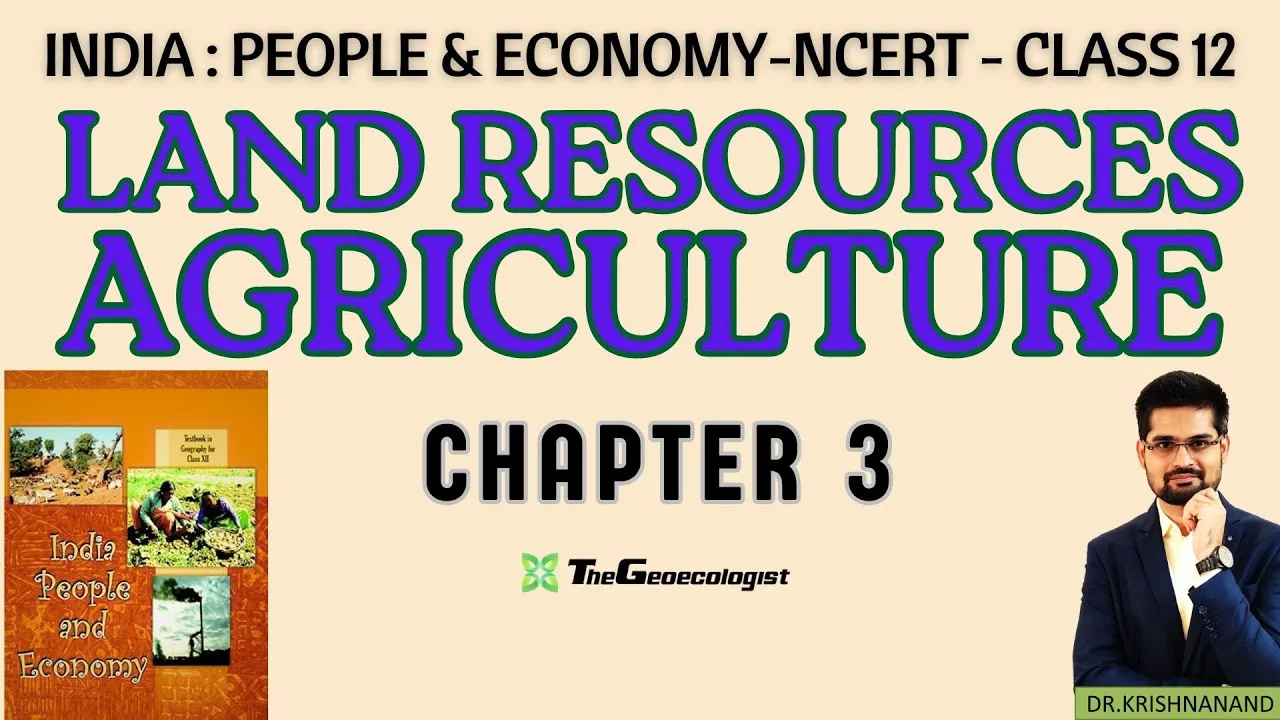
Table of Contents
- Land Resources: Overview and Significance
- Land Resources Utilization Patterns
- Land Resources and Agricultural Practices
- Major Crops and Their Geography of Land Resources
- Challenges Affecting Land Resources
- Government Initiatives Targeting Land Resources
- Sustainable Practices for Land Resources Management
- Technology Integration in Land Resources Utilization
- Land Resources: Exam Preparation Guide
- Conclusion
Land Resources and agriculture form the backbone of India’s economy and cultural identity. This article provides a detailed exploration of Land Resources as discussed in NCERT Class 12 Geography, integrating statistics, government initiatives, and exam-oriented insights for CBSE, CUET, UPSC, and UGC NET aspirants.
- Land Resources encompass all usable terrestrial area for economic activities, including agriculture, forestry, and settlement.
- India’s Land Resources are under pressure from degradation, fragmentation, and competing urban-industrial demands.
- Understanding Land Resources is crucial for analyzing agricultural productivity, food security, and sustainable development.
- Key government schemes target Land Resources improvement: Pradhan Mantri Krishi Sinchayee Yojana, Soil Health Card Scheme, and Watershed Development.
- Exam focus: Land use patterns, cropping seasons, Green Revolution impact, and policy frameworks.
Land Resources: Overview and Significance
Land Resources refer to the stock of land available for various uses. According to the Land use in India Wikipedia page, the country’s geographical area is approximately 3.28 million square kilometres. The Agricultural Census 2015-16 classifies Land Resources into several categories: Net Sown Area (NSA) covers about 54% of the total land, forest cover accounts for roughly 22%, barren and wasteland makes up 12%, and non-agricultural uses (urban, industrial, infrastructure) constitute the remaining 8%. This distribution highlights the importance of managing Land Resources efficiently to balance ecological integrity with developmental needs.
The significance of Land Resources extends beyond economics. They influence biodiversity, water cycles, and climate regulation. Degradation of Land Resources through soil erosion, waterlogging, and salinization affects an estimated 30% of India’s land, reducing agricultural yields and increasing vulnerability to droughts and floods. Moreover, the fragmentation of Land Resources—over 85% of farmers hold less than two hectares—hampers mechanization, limits economies of scale, and complicates the adoption of modern agricultural technologies.
Land Resources Utilization Patterns
Utilization of Land Resources varies across states due to differences in climate, soil type, and socio-economic factors. Punjab and Haryana exhibit high intensity of Land Resources use, with Net Sown Area exceeding 80% of their geographical area, driven by intensive wheat‑rice cropping systems. In contrast, states like Arunachal Pradesh and Meghalaya show lower NSA (below 20%) but higher forest cover, reflecting their reliance on subsistence farming and forest‑based livelihoods. The Eastern region, particularly West Bengal and Assam, demonstrates a mixed pattern where Land Resources support both rice cultivation and plantation crops such as tea.
Land Resources are also subject to temporal changes. Urban expansion has converted approximately 1.5 million hectares of agricultural Land Resources into built‑up areas between 2001 and 2021, according to the Ministry of Housing and Urban Affairs. Simultaneously, government afforestation programs have added about 5 million hectares to forest cover since 2010, partially offsetting losses in other Land Resources categories.
Land Resources and Agricultural Practices
Agriculture in India is intrinsically linked to the quality and availability of Land Resources. The monsoon‑dependent nature of Indian farming means that the productivity of Land Resources fluctuates annually with rainfall variability. The Agriculture in India Wikipedia entry notes that about 48% of the Net Sown Area is irrigated, leaving the majority of Land Resources reliant on rainfed agriculture.
Types of farming systems shaped by Land Resources include:
- Subsistence Farming: Predominant in eastern and central India, where small Land Resources holdings are cultivated using traditional methods and family labour.
- Commercial Farming: Concentrated in Punjab, Haryana, and western Uttar Pradesh, focusing on high‑yield varieties of wheat, rice, sugarcane, and cotton on relatively larger Land Resources parcels.
- Plantation Agriculture: Found in Karnataka, Kerala, and Assam, where Land Resources are dedicated to perennial crops like tea, coffee, rubber, and spices.
Cropping seasons are aligned with the climatic suitability of Land Resources:
- Kharif (June–September): Utilizes Land Resources for rice, maize, sorghum, cotton, and soybean, requiring substantial rainfall.
- Rabi (October–March): Makes use of Land Resources after the monsoon for wheat, barley, mustard, and pulses, depending on residual soil moisture and irrigation.
- Zaid (April–June): Employs Land Resources for short‑duration crops such as watermelon, cucumber, and fodder, taking advantage of summer warmth.
Major Crops and Their Geography of Land Resources
The distribution of major crops reflects the heterogeneity of Land Resources across India:
- Rice: Thrives on Land Resources with clayey, loamy soils and high water retention; leading producers are West Bengal, Punjab, and Tamil Nadu.
- Wheat: Grows best on well‑drained loamy Land Resources; Uttar Pradesh, Punjab, and Haryana contribute over 70% of national output.
- Sugarcane: Requires fertile Land Resources with adequate irrigation; major belts lie in Uttar Pradesh and Maharashtra.
- Cotton: Prefers black cotton soil (regur) Land Resources; Gujarat, Maharashtra, and Andhra Pradesh are top producers.
- Horticulture: India leads globally in fruit production; mangoes and bananas are cultivated on diverse Land Resources ranging from laterite to alluvial soils.
Challenges Affecting Land Resources
Several challenges threaten the sustainability of Land Resources in India:
- Land Degradation: Soil erosion affects about 145 million hectares of Land Resources; waterlogging and salinization impact another 7 million hectares, particularly in irrigated commands of Punjab and Haryana.
- Fragmentation of Land Resources: The average landholding size has declined from 2.28 hectares in 1970‑71 to 1.08 hectares in 2015‑16, limiting the feasibility of mechanization on Land Resources.
- Urban Encroachment: Rapid urbanization converts prime agricultural Land Resources into residential and commercial zones, especially around metropolitan cities like Delhi, Mumbai, and Bengaluru.
- Climate Vulnerability: Erratic monsoons and rising temperatures increase the risk of crop failure on rainfed Land Resources.
- Policy and Market Gaps: Inadequate Minimum Support Price (MSP) coverage and limited access to national markets reduce incentives for investing in Land Resources improvement.
Government Initiatives Targeting Land Resources
Recognizing the critical state of Land Resources, the government has launched several schemes:
- Pradhan Mantri Krishi Sinchayee Yojana (PMKSY): Aims to expand irrigation coverage to 28.5 million hectares of Land Resources by 2025, promoting micro‑irrigation and watershed development.
- Soil Health Card Scheme: Provides farmers with crop‑wise recommendations of nutrients and fertilizers based on soil testing of their Land Resources, benefiting over 100 million farmers since inception.
- National Mission for Sustainable Agriculture (NMSA): Focuses on climate‑resilient agriculture, promoting drought‑tolerant varieties and efficient use of Land Resources.
- Watershed Development Component of PMKSY: Treats degraded Land Resources through ridge‑to‑valley approaches, improving groundwater recharge and reducing soil erosion.
Sustainable Practices for Land Resources Management
To ensure the long‑term productivity of Land Resources, sustainable practices are essential:
- Agroforestry: Integrates trees with crops on the same Land Resources, enhancing biodiversity, preventing soil erosion, and providing additional income.
- Organic Farming: Reduces chemical dependency, improves soil organic carbon, and enhances the resilience of Land Resources to climate stress.
- Crop Diversification: Shifts from low‑value cereals to high‑value crops such as fruits, vegetables, spices, and floriculture, optimizing returns per unit of Land Resources.
- Livestock Integration: Combines animal husbandry with cropping on Land Resources, facilitating nutrient recycling and risk mitigation.
Technology Integration in Land Resources Utilization
Modern technologies are transforming the way Land Resources are monitored and managed:
- Precision Farming: Uses GPS, sensors, and data analytics to optimize seed, fertilizer, and water application on Land Resources, increasing efficiency by up to 20%.
- GIS and Remote Sensing: Enables mapping of Land Resources use, detection of degradation hotspots, and planning of interventions.
- Drone Surveillance: Provides real‑time imagery of Land Resources for pest detection, crop health assessment, and yield estimation.
- Mobile Advisory Services: Delivers weather forecasts, market prices, and best practices directly to farmers managing Land Resources.
Land Resources: Exam Preparation Guide
For competitive exams, a thorough grasp of Land Resources is indispensable:
- UPSC: Questions often focus on land use trends, impact of the Green Revolution on Land Resources, and evaluation of government schemes like PMKSY and Soil Health Card.
- CUET: Expect multiple‑choice questions on cropping seasons, distribution of major crops, and challenges such as land fragmentation and degradation.
- UGC NET: Theoretical aspects include models like Von Thünen’s location theory applied to Land Resources, and concepts of sustainable agriculture and land‑capacity classification.
- CBSE Class 12: Requires interpretation of maps showing Land Resources utilization, analysis of statistical data from Agricultural Census, and understanding of socio‑economic implications.
To excel, students should:
- Memorize key percentages of Land Resources categories (Net Sown Area ~54%, Forest ~22%, etc.).
- Relate government schemes to specific Land Resources issues (e.g., PMKSY → irrigation expansion).
- Practice diagram‑based questions showing cropping patterns across different Land Resources zones.
- Stay updated with recent reports from the Ministry of Agriculture and Farmers Welfare and the Indian Space Research Organisation (ISRO) on Land Resources health.
Conclusion
Land Resources are not merely a factor of production; they are the foundation of India’s agricultural output, rural livelihoods, and ecological balance. The challenges facing Land Resources—degradation, fragmentation, and climate vulnerability—necessitate coordinated efforts involving policy, technology, and community participation. By adopting sustainable practices and leveraging modern innovations, India can enhance the productivity and resilience of its Land Resources, ensuring food security and sustainable development for future generations. For deeper insights, explore TheGeoecologist’s video lectures, which simplify complex topics using bilingual explanations and real‑world examples. Enroll in our paid courses at thegeoecologist.com for structured guidance and exam‑focused strategies. Follow us on Instagram for updates!
Frequently Asked Questions
Approximately 54% of India's total land is classified as Net Sown Area (NSA) based on the Agricultural Census 2015-16.
The Pradhan Mantri Krishi Sinchayee Yojana (PMKSY) aims to expand irrigation coverage to about 28.5 million hectares of Land Resources by promoting micro-irrigation and watershed development.
Land fragmentation, with over 85% of farmers holding less than two hectares, hinders mechanization, limits economies of scale, and reduces the overall productivity and sustainability of Land Resources.