Blog
Human Induced Disasters: Fire Hazards, Chemical & Industrial Accidents Explained

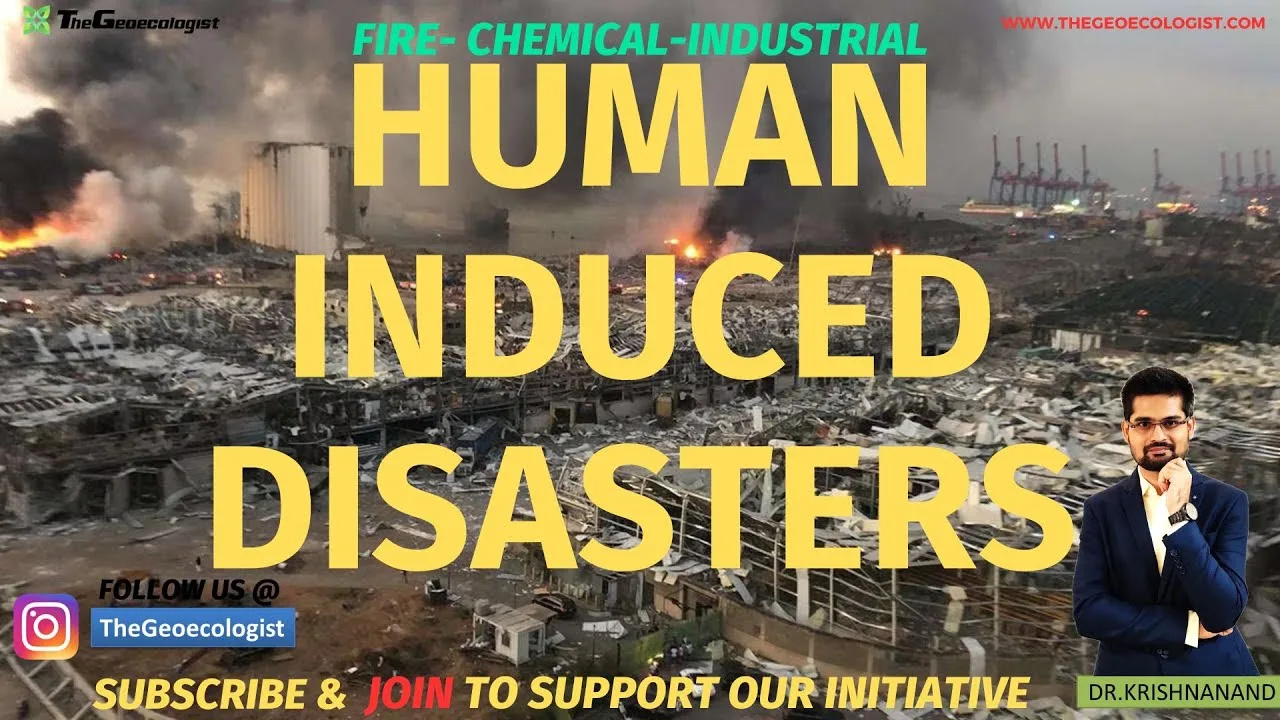
Table of Contents
- Understanding Human Induced Disasters: Definition and Classification
- Fire Hazards: Causes, Types, and Consequences
- Urbanization and Fire Risks in High-Density Settlements
- Industrial Fire Hazards: Flammable Material Mismanagement
- Forest Fires: Anthropogenic Drivers and Ecological Impact
- Case Study: Uphaar Cinema Fire (1997)
- Chemical & Industrial Accidents: A Silent Menace
- Bhopal Gas Tragedy (1984): The World's Worst Industrial Disaster
- Vizag Gas Leak (2020): Styrene Exposure in Andhra Pradesh
- Beirut Port Explosion (2020): Regulatory Negligence at Scale
- Health, Environmental, and Economic Impacts
- Disaster Management: Mitigation Strategies and Policy Frameworks
- India's Institutional Architecture: NDMA Guidelines and Legal Framework
- International Frameworks and Conventions
- Technology-Driven Risk Reduction: GIS, IoT, and Early Warning
- Community Preparedness: The First Line of Defense
- Relevance for UPSC Geography Optional: Syllabus Alignment and Answer Writing
- Emerging Trends and Future Challenges
- Natech Disasters: Climate-Industrial Risk Convergence
- Urban-Industrial Interface: The Wildland-Urban-Industrial Intermix
- Emerging Technologies: New Materials, New Risks
- Conclusion: Building Resilience Through Integrated Governance
Human induced disasters represent a growing category of catastrophic events that stem directly from human activities, technological failures, or systemic negligence rather than natural geological or meteorological processes. Unlike earthquakes or cyclones, these disasters are preventable through proper regulation, safety protocols, and sustainable planning. This comprehensive guide examines fire hazards and chemical & industrial accidents — two of the most devastating types of human induced disasters — with detailed case studies, impact analysis, and mitigation strategies essential for UPSC Geography Optional aspirants and disaster management professionals.
- Human induced disasters originate from anthropogenic activities including industrialization, urbanization, and regulatory failures.
- Fire hazards arise from electrical faults, industrial negligence, and human-caused forest fires.
- Chemical & industrial accidents involve toxic releases, explosions, and leaks with long-term health and environmental consequences.
- Key case studies include the Bhopal Gas Tragedy (1984), Uphaar Cinema Fire (1997), Vizag Gas Leak (2020), and Beirut Port Explosion (2020).
- Mitigation requires integrated policy frameworks (NDMA guidelines), technology (GIS, IoT), and community preparedness.
- UPSC Geography Optional syllabus emphasizes human-environment interactions and disaster management case studies.
Understanding Human Induced Disasters: Definition and Classification
The term human induced disasters encompasses catastrophic events where human action or inaction is the primary causative factor. The United Nations Office for Disaster Risk Reduction (UNDRR) classifies these as technological or anthropogenic hazards, distinct from natural hazards. Key characteristics include predictability, preventability, and clear accountability chains. In the Indian context, rapid industrialization post-1991 economic reforms, unplanned urbanization, and aging infrastructure have amplified vulnerability to such disasters. The Disaster Management Act, 2005 provides the legal framework for addressing these risks through the National Disaster Management Authority (NDMA) and State Disaster Management Authorities (SDMAs).
Fire Hazards: Causes, Types, and Consequences
Urbanization and Fire Risks in High-Density Settlements
Unplanned urbanization is a leading driver of fire-related human induced disasters in developing nations. India’s urban population grew from 286 million in 2001 to 483 million in 2021 (Census data), with millions residing in informal settlements lacking fire safety infrastructure. Mumbai’s Dharavi, Asia’s largest slum, experiences frequent fires due to illegal electrical connections, flammable construction materials, and inaccessible lanes for fire tenders. The 2012 Kolkata AMRI Hospital fire (92 deaths) and 2019 Delhi Anaj Mandi fire (43 deaths) exemplify systemic failures in building code enforcement and emergency egress planning.
Industrial Fire Hazards: Flammable Material Mismanagement
Industrial facilities handling petrochemicals, textiles, and chemicals face elevated fire risks. The 2021 Surat chemical factory fire and 2022 Mundra port tank farm blaze highlight inadequate fire suppression systems, poor storage segregation, and insufficient safety audits. According to the National Crime Records Bureau (NCRB), India recorded 8,491 fire accidents in 2021 alone, resulting in 8,348 deaths — a 17% increase from 2020. Electrical short circuits remain the leading cause (42%), followed by human negligence and equipment failure. – a key consideration for human induced disasters.
Forest Fires: Anthropogenic Drivers and Ecological Impact
While lightning causes some forest fires, human activities account for over 90% of incidents in India per the Forest Survey of India (FSI). Shifting cultivation, discarded cigarettes, land clearing for agriculture, and deliberate arson are primary triggers. The 2021 Uttarakhand forest fires burned 1,500+ hectares, while the 2019–20 Australian bushfires — exacerbated by climate change and land mismanagement — scorched 18 million hectares, killed 33 people directly, and displaced nearly 3 billion animals. These events demonstrate how human induced disasters intersect with climate change to create compound catastrophes.
Case Study: Uphaar Cinema Fire (1997)
The June 13, 1997 Uphaar Cinema fire in Delhi’s Green Park remains a watershed moment in India’s fire safety discourse. An electrical transformer malfunction in the basement ignited a blaze that killed 59 moviegoers and injured 100+. Investigations revealed locked exit doors, non-functional fire extinguishers, absent sprinkler systems, and gross violations of the Delhi Cinematograph Rules. The tragedy prompted the 2001 Supreme Court directive mandating fire safety audits for all public assembly buildings, yet compliance remains patchy across states. – a key consideration for human induced disasters.
Chemical & Industrial Accidents: A Silent Menace

Bhopal Gas Tragedy (1984): The World’s Worst Industrial Disaster
The December 2–3, 1984 methyl isocyanate (MIC) leak at Union Carbide India Limited’s pesticide plant in Bhopal stands as the deadliest human induced disaster in industrial history. Official figures cite 3,787 immediate deaths, though activists estimate 15,000–25,000 total fatalities. Over 500,000 people were exposed to toxic gases, causing multi-generational health impacts including respiratory disorders, ocular damage, neurological deficits, and congenital abnormalities. Groundwater contamination persists across 22 communities near the abandoned plant. The disaster exposed catastrophic failures in safety systems (refrigeration off, flare tower disconnected, scrubber inadequate), corporate accountability, and regulatory oversight. The Bhopal disaster catalyzed India’s Environment Protection Act (1986) and Public Liability Insurance Act (1991). – a key consideration for human induced disasters.
Vizag Gas Leak (2020): Styrene Exposure in Andhra Pradesh
On May 7, 2020, a styrene monomer vapor leak from LG Polymers’ plant in Venkatapuram, Visakhapatnam killed 12 people and hospitalized 585. The leak occurred during post-lockdown restart operations when a storage tank’s temperature control failed due to inadequate maintenance and absent operators. Styrene, a neurotoxin and probable carcinogen, affected 15,000+ residents within a 5-km radius. The National Green Tribunal (NGT) imposed ₹50 crore interim penalty, highlighting persistent gaps in Chemical Accidents (Emergency Planning, Preparedness and Response) Rules, 1996 enforcement. – a key consideration for human induced disasters.
Beirut Port Explosion (2020): Regulatory Negligence at Scale
The August 4, 2020 explosion at Beirut’s port — caused by 2,750 tonnes of improperly stored ammonium nitrate — killed 218, injured 7,000+, and left 300,000 homeless. The chemicals, seized from a stranded ship in 2013, were stored in Hangar 12 without safety measures for six years despite repeated customs warnings. The blast, equivalent to 1.1 kilotons of TNT, caused $15 billion in damages and devastated Lebanon’s primary grain silos. This human induced disaster underscores how bureaucratic inertia and port governance failures can transform hazardous materials into weapons of mass destruction. Details are documented on the 2020 Beirut explosion Wikipedia page. – a key consideration for human induced disasters.
Health, Environmental, and Economic Impacts
The consequences of chemical & industrial accidents extend far beyond immediate casualties. Health impacts include acute respiratory distress, chemical pneumonitis, long-term carcinogenic risks (benzene, asbestos, vinyl chloride), and transgenerational genetic damage. Environmental contamination persists for decades — Bhopal’s groundwater still contains mercury, chromium, and organochlorines at 10–50 times permissible limits. Soil remediation costs exceed ₹1,000 crore for severely contaminated sites. Economically, the World Bank estimates industrial disasters cost developing nations 0.5–1.5% of GDP annually through healthcare burden, productivity loss, litigation, and rehabilitation expenses. – a key consideration for human induced disasters.
Disaster Management: Mitigation Strategies and Policy Frameworks
India’s Institutional Architecture: NDMA Guidelines and Legal Framework
India’s disaster management paradigm shifted from relief-centric to holistic risk reduction with the Disaster Management Act, 2005. The National Disaster Management Authority (NDMA) issues hazard-specific guidelines including “Management of Chemical (Industrial) Disasters” (2007) and “Fire Safety in High-Rise Buildings” (2016). Key provisions mandate On-Site and Off-Site Emergency Plans for Major Accident Hazard (MAH) units, mandatory safety audits, and district-level crisis groups. The Manufacture, Storage and Import of Hazardous Chemical (MSIHC) Rules, 1989 (amended 2000) regulate 684 hazardous chemicals with threshold quantities for emergency planning. – a key consideration for human induced disasters.
International Frameworks and Conventions
Globally, the Sendai Framework for Disaster Risk Reduction (2015–2030) prioritizes understanding disaster risk, strengthening governance, investing in resilience, and enhancing preparedness. The Basel Convention (1989) controls transboundary hazardous waste movement. The Rotterdam Convention (1998) mandates Prior Informed Consent for hazardous chemical trade. The Minamata Convention (2013) addresses mercury pollution. ILO Convention C174 (1993) on Prevention of Major Industrial Accidents provides a model for national legislation. India is signatory to all, though implementation gaps persist.
Technology-Driven Risk Reduction: GIS, IoT, and Early Warning
Geospatial technology revolutionizes hazard mapping and vulnerability assessment. The National Database for Emergency Management (NDEM) integrates satellite imagery, census data, and industrial locations for multi-hazard risk profiling. IoT-enabled sensors monitor real-time parameters (temperature, pressure, gas concentrations) in chemical plants with automated alerts. The 2022-launched “SATARK” (System for Assessing, Tracking and Alerting for Risk and Knowledge) platform provides lightning and fire alerts to forest departments. Drone-based thermal imaging detects hotspots in landfills and warehouses. AI-driven predictive analytics forecast accident probabilities using historical data, maintenance logs, and weather patterns.
Community Preparedness: The First Line of Defense
Effective disaster management requires empowered communities. The NDMA’s “Aapda Mitra” scheme trains 100,000+ community volunteers in search, rescue, and first aid across 350 districts. School safety programs mandate quarterly fire drills and evacuation exercises. Industrial neighborhoods require community awareness programs on shelter-in-place protocols, emergency sirens, and evacuation routes. The 2019 Odisha cyclone Fani response — where 1.2 million people were evacuated with minimal casualties — demonstrates how preparedness saves lives. Similar models must be replicated for chemical industrial zones.
Relevance for UPSC Geography Optional: Syllabus Alignment and Answer Writing
The UPSC Geography Optional Paper II (Human Geography) explicitly covers “Natural Hazards and Disaster Management” with emphasis on human-induced disasters. Aspirants must master: (1) Classification and spatial distribution of technological hazards, (2) Case study analysis with socio-economic-environmental dimensions, (3) Policy evaluation — NDMA effectiveness, MSIHC Rules implementation gaps, (4) Sustainable development linkages — SDG 9 (Industry, Innovation, Infrastructure), SDG 11 (Sustainable Cities), SDG 12 (Responsible Consumption), (5) Climate change amplification of industrial risks (Natech disasters — natural hazards triggering technological accidents). Answer writing should integrate maps (industrial corridor vulnerability), data (NCRB fire statistics, CPCB pollution indices), and governance critique (regulatory capture, enforcement deficits).
Emerging Trends and Future Challenges
Natech Disasters: Climate-Industrial Risk Convergence
Natural-hazard-triggered technological (Natech) accidents represent a growing category of human induced disasters. Floods inundating chemical plants (2011 Thailand floods — 800+ industrial estates affected), cyclones damaging oil refineries (2017 Hurricane Harvey — 22 Texas refineries shutdown), and heatwaves stressing storage tanks amplify risks. India’s coastal industrial clusters (Dahej, Paradip, Ennore) face compounding cyclone-flood-industrial hazard scenarios requiring integrated climate adaptation and industrial safety planning.
Urban-Industrial Interface: The Wildland-Urban-Industrial Intermix
Expanding cities encroach on industrial zones and forests, creating complex risk interfaces. The 2020 Neyveli lignite mine fire (Tamil Nadu) and 2022 Delhi landfill fires (Bhalswa, Ghazipur) exemplify waste management-industrial-urban convergence. Master plans must enforce buffer zones, green belts, and mixed-use zoning with hazard-informed setbacks.
Emerging Technologies: New Materials, New Risks
Lithium-ion battery manufacturing, hydrogen economy infrastructure, carbon capture facilities, and nanotechnology plants introduce novel hazard profiles. Current regulations lag behind technological deployment. The 2021 Illinois lithium battery factory fire and 2023 South Korea battery plant fire (23 deaths) signal urgent need for updated safety standards for energy transition industries.
Conclusion: Building Resilience Through Integrated Governance
Human induced disasters — particularly fire hazards and chemical & industrial accidents — are not inevitable outcomes of development but symptoms of governance failures, regulatory capture, and short-term economic prioritization. The Bhopal Gas Tragedy, Uphaar Cinema Fire, Vizag Gas Leak, and Beirut Port Explosion each exposed systemic deficits that persist decades later. Effective mitigation demands: (1) Strengthening NDMA and SDMAs with technical expertise and enforcement powers, (2) Mandatory third-party safety audits with public disclosure, (3) Integrating disaster risk reduction into urban master plans and industrial corridor development, (4) Leveraging geospatial technology and IoT for real-time monitoring, (5) Empowering communities through participatory risk assessment and preparedness drills, (6) Aligning industrial policy with Sendai Framework targets and SDGs. For UPSC aspirants, mastering human induced disasters requires moving beyond rote memorization of case studies to critical analysis of institutional mechanisms, spatial patterns, and sustainable development trade-offs. The geography of human induced disasters reveals a fundamental truth: resilience is built not through reactive relief but through proactive, inclusive, and science-based governance that values human life and ecological integrity above expedient profit.
Frequently Asked Questions
The main types of human induced disasters include fire hazards (urban, industrial, forest fires), chemical and industrial accidents (toxic leaks, explosions), nuclear/radiological emergencies, transportation accidents, structural collapses, and Natech disasters (natural hazards triggering technological accidents). Fire hazards and chemical/industrial accidents are among the most frequent and devastating categories.
The Bhopal Gas Tragedy (December 2–3, 1984) is recognized as the world's worst industrial disaster. A methyl isocyanate leak at Union Carbide India Limited's pesticide plant killed 3,787 people officially (estimates range 15,000–25,000) and exposed over 500,000 to toxic gases, causing multi-generational health impacts and persistent groundwater contamination.
India's National Disaster Management Authority (NDMA) addresses chemical and industrial disasters through the Disaster Management Act 2005, specific guidelines on Management of Chemical (Industrial) Disasters (2007), enforcement of MSIHC Rules 1989, mandatory On-Site/Off-Site Emergency Plans for Major Accident Hazard units, district crisis groups, and the SATARK early warning platform. However, implementation gaps persist at state and local levels.