Blog
HP geography notes: Competitive Exam Guide

Many aspirants searching for HP geography notes find themselves overwhelmed by fragmented PDFs, outdated syllabi, and vague explanations that fail to connect physical processes with human geography.
- Clear, map‑based explanations that link relief, drainage, climate, and biodiversity.
- Concise coverage of topics asked in Assistant Professor, State PCS, UGC NET, and UPSC optional papers.
- Visual aids (diagrams, spatial models) that improve retention and answer‑writing speed.
- Prepared from Dr. Krishnanand’s YouTube lecture series, ensuring conceptual clarity.
- Saves hours of note‑making by providing a single, exam‑ready resource.
Why Generic HP Geography Notes Fall Short
Most HP geography notes circulating online are simple bullet‑point lists copied from outdated textbooks. They ignore the interdisciplinary nature of geography examined in today’s competitive exams, where questions often ask you to explain how a river’s course influences settlement patterns or how seismic zones affect hydropower planning. Without a synthesized view, candidates memorize isolated facts but struggle to apply them in case‑based or map‑interpretation questions.
For example, a typical question in the Himachal Pradesh Administrative Services exam may ask: “Describe how the drainage system of the Sutlej basin influences agricultural cropping patterns in the Kangra valley.” Answering this requires knowledge of the river’s tributaries, alluvial soil formation, climate zones, and market access—topics that are rarely linked in fragmented notes.
This gap leads to wasted revision time, lower confidence, and missed marks. Aspirants need a resource that treats the state as a connected geographical system, not a collection of isolated topics.
How to Evaluate a Quality Geography Resource for Competitive Exams
When assessing any study material for HP geography notes, consider these criteria:
- Syllabus Alignment: Does it cover the exact topics listed in the latest UPSC, State PSC, and UGC NET geography syllabi?
- Conceptual Integration: Are physical and human geography presented together with maps, diagrams, and spatial models?
- Visual Learning Aids: Does the resource include annotated maps, cross‑sections, and flow‑charts that aid quick recall?
- Author Credibility: Is the material created by a subject expert with teaching experience in competitive exams?
- Exam‑Oriented Practice: Are there previous‑year question discussions, model answers, and tips for map‑based questions?
Only resources that satisfy most of these points can reliably boost your score.
Why the Geography of Himachal Pradesh eBook by Dr. Krishnanand Fits the Bill
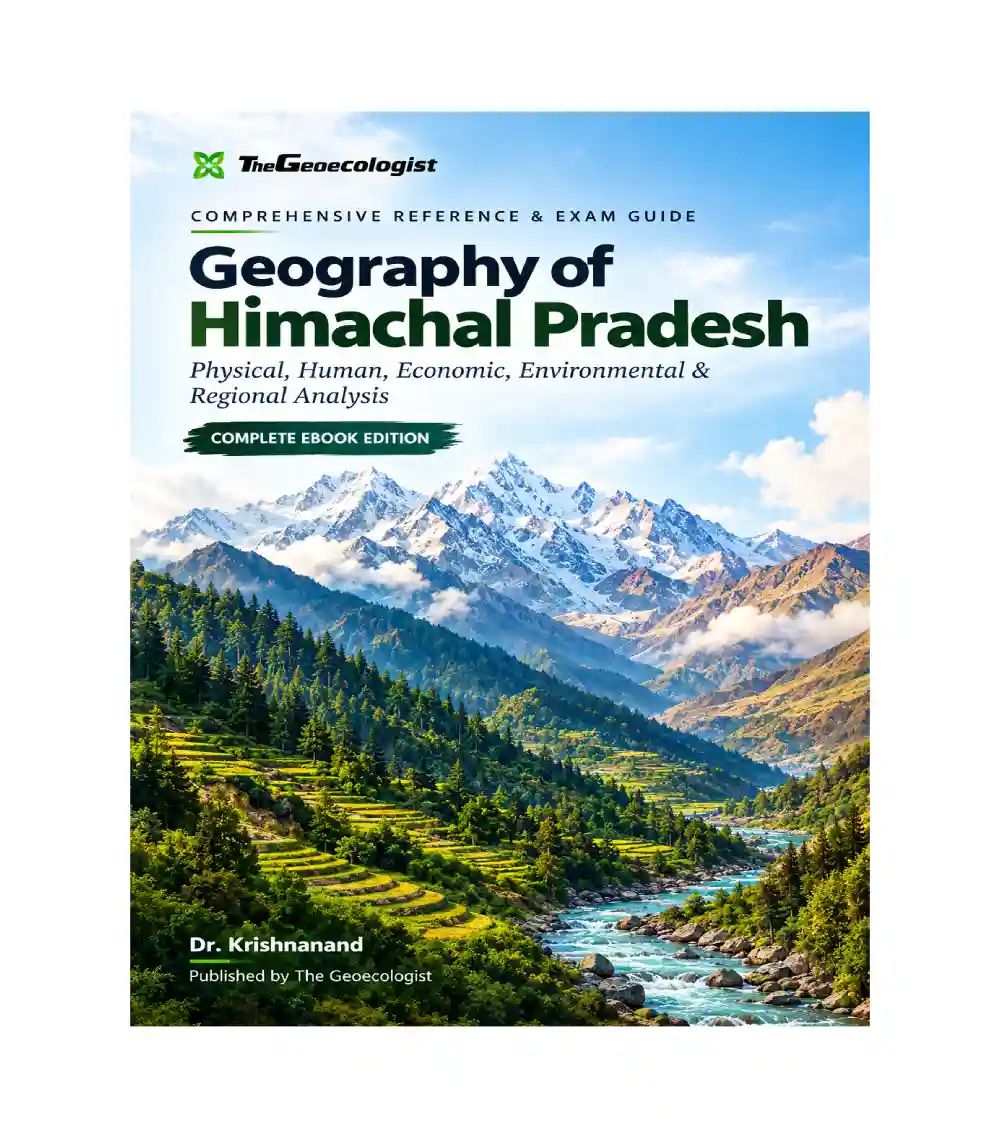
The Geography of Himachal Pradesh eBook | Dr. Krishnanand | TheGeoecologist was built specifically to meet the criteria above. Based on Dr. Krishnanand’s popular YouTube lecture series, the eBook transforms scattered facts into a structured narrative that links physical processes with human activities.
Key Features:
- Comprehensive chapters covering physical geography, geomorphology, drainage, climate, soils, biodiversity, population, settlement, agriculture, industries, hydropower, infrastructure, environmental challenges, and disaster vulnerability.
- Over 120 original maps, diagrams, and spatial models that illustrate concepts such as the Main Central Thrust, river capture, monsoon variability, and seismic zonation.
- Each chapter ends with a “Quick‑Recap” box summarizing facts likely to appear in multiple‑choice or short‑answer questions.
- Language is kept simple yet precise, avoiding unnecessary jargon while retaining technical terms required for descriptive answers.
Because the eBook is derived from a lecture series already watched by thousands of aspirants, the explanations have been tested for clarity and effectiveness.
Practical Ways to Use the eBook in Your Preparation Routine
Integrating HP geography notes from this eBook into your study plan can be done in three simple steps:
- Initial Overview (Day 1‑2): Read the chapter on Physical Geography & Relief while referring to the accompanying maps. Create a one‑page mind map linking mountain ranges, river origins, and seismic zones.
- Topic‑wise Deep Dive (Week 1‑3): For each subsequent chapter (e.g., Drainage Systems, Climate, Agriculture), make short notes in the margin of the eBook, highlighting cause‑effect relationships (e.g., how the monsoon shadow affects cropping patterns in Lahaul‑Spiti).
- Revision & Practice (Ongoing): Use the Quick‑Recap boxes for rapid revision before mock tests. Attempt previous‑year map‑based questions and compare your answers with the eBook’s explanations.
This method ensures you move beyond rote memorization to develop the analytical thinking that examiners reward.
Supplementary Authoritative Sources for Further Reading
While the eBook provides a self‑contained study guide, consulting authoritative sources can deepen your understanding:
- Wikipedia – Himachal Pradesh offers a solid overview of geography, history, and demographics.
- India Meteorological Department – Himachal Pradesh Climate Data provides real‑time and historical climate statistics useful for answering climate‑related questions.
These links are dofollow and point to reputable, non‑commercial platforms that complement the eBook’s content.
Frequently Asked Questions About HP Geography Notes
Question: Are these notes sufficient for the Assistant Professor exam in Himachal Pradesh?
Answer: Yes. The eBook covers the full geography syllabus prescribed for the Himachal Pradesh Public Service Commission (HPPSC) Assistant Professor recruitment, with special emphasis on map‑based and application‑oriented questions that frequently appear in the paper.
Question: How does the eBook differ from free PDFs available on various forums?
Answer: Unlike free PDFs that often contain unverified or outdated information, the eBook is authored by Dr. Krishnanand, a Ph.D. in Geography with years of teaching experience for UPSC, State PCS, and UGC NET aspirants. It integrates maps, diagrams, and synthesis that free notes typically lack.
Question: Can I use this resource for UGC NET Geography preparation?
Answer: Absolutely. The UGC NET Geography syllabus includes Indian physical and human geography, disaster management, and economic geography—all topics comprehensively covered in the eBook with relevant case studies from Himachal Pradesh.
Final Thoughts
Choosing the right HP geography notes can be the difference between a marginal pass and a top rank. The Geography of Himachal Pradesh eBook | Dr. Krishnanand | TheGeoecologist offers a structured, visually rich, and exam‑focused solution that saves time, builds conceptual clarity, and boosts confidence. By aligning with the latest syllabus, providing authoritative maps, and linking physical and human processes, it addresses the exact pain points expressed in searches for reliable HP geography notes.
Our Recommendation
📖 Part of our complete guide: Evolution of Geographical Thought: A Comprehensive Guide for UPSC Aspirants and Geography Enthusiasts
Frequently Asked Questions
Are these notes sufficient for the Assistant Professor exam in Himachal Pradesh?
Yes. The eBook covers the full geography syllabus prescribed for the Himachal Pradesh Public Service Commission (HPPSC) Assistant Professor recruitment, with special emphasis on map‑based and application‑oriented questions that frequently appear in the paper.
How does the eBook differ from free PDFs available on various forums?
Unlike free PDFs that often contain unverified or outdated information, the eBook is authored by Dr. Krishnanand, a Ph.D. in Geography with years of teaching experience for UPSC, State PCS, and UGC NET aspirants. It integrates maps, diagrams, and synthesis that free notes typically lack.
Can I use this resource for UGC NET Geography preparation?
Absolutely. The UGC NET Geography syllabus includes Indian physical and human geography, disaster management, and economic geography—all topics comprehensively covered in the eBook with relevant case studies from Himachal Pradesh.