Blog
Geography Optional UPSC: Expert Online Classes & E-Book Guide for Top Rank

Table of Contents
- Why Geography Optional UPSC Demands Expert Guidance
- Static Depth Meets Dynamic Application
- How Online Classes Transform Geography Optional UPSC Preparation
- 1. Faculty Expertise & Proven Pedagogy
- 2. Structured Syllabus Coverage in Realistic Timeframes
- 3. Current Affairs Integration as Default Pedagogy
- 4. Interactive Doubt Resolution & Peer Learning
- 5. Answer Writing Mastery: The Real Differentiator
- 6. Flexibility Without Compromise
- The Essential E-Book: Your Revision Lifeline
- Strategic Preparation Roadmap for Geography Optional UPSC
- Phase 1: Foundation (Months 1-2)
- Phase 2: Core Completion (Months 3-5)
- Phase 3: Integration & Refinement (Month 6)
- Common Pitfalls & How to Avoid Them
- Success Metrics: What Toppers Do Differently
- Investment vs. Return: Is It Worth It?
- Final Call to Action: Secure Your Geography Optional UPSC Advantage
Geography Optional UPSC remains one of the most strategic choices for Civil Services Examination aspirants, offering a unique blend of scientific objectivity and humanistic perspective that translates into high scores across both optional papers and General Studies. With a vast syllabus spanning Geomorphology, Climatology, Human Geography, and Indian Geography, this subject demands structured guidance, quality resources, and consistent answer-writing practice. Expert-led online classes combined with a comprehensive e-book can transform your preparation journey, providing clarity, direction, and the competitive edge needed to secure a top rank.
- Geography Optional UPSC remains a top-scoring optional with high overlap in GS Paper I and III.
- Expert online classes provide structured syllabus coverage, current affairs integration, and personalized feedback.
- A dedicated e-book acts as a concise revision tool with maps, diagrams, and case studies.
- Answer writing practice with diagram/map integration is critical for maximizing marks.
- Flexibility of recorded lectures allows balancing optional prep with General Studies.
Why Geography Optional UPSC Demands Expert Guidance
The Geography Optional UPSC syllabus is vast and interdisciplinary. Paper I covers Physical Geography — Geomorphology, Climatology, Oceanography, Biogeography, and Environmental Geography — while Paper II focuses on Human Geography including Economic, Population, Settlement, Regional Planning, and Indian Geography. The challenge lies not just in covering topics but in interlinking them: connecting monsoon mechanisms (Climatology) with agricultural patterns (Economic Geography) and regional disparities (Regional Planning).
Self-study often leads to three critical gaps: conceptual fragmentation, outdated case studies, and poor answer structuring. The Union Public Service Commission (UPSC) increasingly asks analytical questions requiring multi-dimensional perspectives. For instance, the 2023 Mains question on “Impact of climate change on Indian agriculture” required integrating Climatology, current IPCC reports, and government schemes like PM-KUSUM. Without expert mentorship, aspirants struggle to synthesize such linkages within the 7-minute-per-answer timeframe.
Static Depth Meets Dynamic Application
Core topics like plate tectonics theory, Köppen’s climate classification, or Christaller’s Central Place Theory demand rigorous understanding. But UPSC tests application: “Explain the relevance of Von Thünen’s model in modern Indian agricultural supply chains.” Faculty with years of Geography Optional UPSC teaching experience decode such trends, highlight high-yield areas (e.g., biogeography, ocean resources, urban heat islands), and provide ready-to-use frameworks that save precious exam time.
How Online Classes Transform Geography Optional UPSC Preparation
Well-designed online programs address every pain point of solo preparation. Here’s how they create measurable impact:
1. Faculty Expertise & Proven Pedagogy
Top educators — many of whom have mentored AIR 1-10 rankers — bring insider knowledge of examiner expectations. They simplify complex models (e.g., Demographic Transition Model, Rostow’s Stages of Growth) using real-world analogies. Their lecture notes are curated from standard references (Savindra Singh, Majid Husain, Khullar, NCERTs) and updated annually with The Hindu, Yojana, Kurukshetra, and PIB inputs. This ensures Geography Optional UPSC aspirants study only what matters.
2. Structured Syllabus Coverage in Realistic Timeframes
A typical Geography Optional UPSC course spans 5-6 months with 120-150 hours of live/recorded sessions. The schedule ensures Paper I completion in 3 months, Paper II in 2.5 months, leaving 45 days for revision and test series. Weekly targets prevent backlog accumulation — a common issue in self-study where aspirants spend 4 months on Geomorphology alone.
3. Current Affairs Integration as Default Pedagogy
Faculty don’t treat current affairs as add-ons. When teaching “Ocean Resources,” they simultaneously cover UNCLOS, Blue Economy policy, and deep-sea mining developments. During “Urban Heat Islands,” they integrate NASA satellite data and city-level climate action plans. This seamless integration means Geography Optional UPSC answers naturally reflect the dynamic awareness UPSC rewards.
4. Interactive Doubt Resolution & Peer Learning
Live sessions with real-time Q&A, dedicated Telegram/Discord groups, and weekly doubt-clearing marathons ensure no concept remains fuzzy. Peer learning through answer-writing groups exposes aspirants to diverse perspectives — crucial for a subject where “examine,” “critically analyze,” and “discuss” require multi-dimensional arguments.
5. Answer Writing Mastery: The Real Differentiator
Content knowledge alone won’t fetch 300+ marks. Geography Optional UPSC toppers distinguish themselves through diagram-rich, map-annotated, framework-driven answers. Online programs include 15-20 full-length tests with personalized feedback, model answers with examiner comments, and “diagram banks” for 50+ high-probability topics (e.g., trench formation, demographic dividend, smart city components).
6. Flexibility Without Compromise
Recorded lectures with 1.5x/2x playback, downloadable PDFs, and mobile apps let working professionals and full-time aspirants alike maintain consistency. A 2023 survey by a leading institute showed 68% of Geography Optional UPSC rank-holders used recorded lectures for at least 40% of their preparation.
The Essential E-Book: Your Revision Lifeline
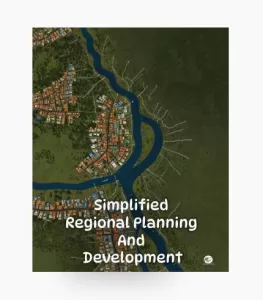
No Geography Optional UPSC toolkit is complete without a dedicated e-book. Unlike bulky textbooks, a well-designed e-book offers:
- Condensed theory: 300-page PDF covering entire syllabus with bullet-point frameworks
- Map & diagram repository: 100+ ready-to-reproduce maps (India: river basins, soil types, mineral belts; World: pressure belts, ocean currents, biomes)
- Case study compendium: 30+ updated cases — Kerala’s demographic transition, Mumbai’s slum rehabilitation, Namami Gange, Indo-Pacific geopolitics
- Current affairs linkages: Quarterly updates tagged to syllabus topics
- Previous year question (PYQ) analysis: 10-year trend maps with model structures
During the final 45-day revision, this e-book becomes the single source of truth — eliminating the need to flip through Savindra Singh, Khullar, and current affairs magazines simultaneously.
Strategic Preparation Roadmap for Geography Optional UPSC
Phase 1: Foundation (Months 1-2)
- Complete NCERT Class 11-12 (Fundamentals of Physical Geography, India: Physical Environment, Human Geography, India: People & Economy)
- Start Savindra Singh’s Physical Geography for Geomorphology & Climatology core concepts
- Begin daily 30-minute map practice (India political, physical; World physical)
- Join online class orientation + first 20 lectures
Phase 2: Core Completion (Months 3-5)
- Paper I: Finish Oceanography, Biogeography, Environmental Geography with Majid Husain
- Paper II: Economic Geography (Khullar), Population & Settlement (Majid Husain), Regional Planning (R.P. Misra)
- Indian Geography: Khullar’s comprehensive coverage + state-specific data from Economic Survey
- Write 2 answers daily (1 Physical, 1 Human) with diagram/map integration
- Attempt 5 sectional tests
Phase 3: Integration & Refinement (Month 6)
- Full syllabus revision using e-book only
- 10 full-length mock tests under exam conditions (3 hours, 250 marks each)
- Diagram/map speed drills: 50 diagrams in 60 minutes
- Current affairs consolidation: last 18 months tagged to syllabus
- Peer review sessions: exchange answers with 3-4 serious aspirants
Common Pitfalls & How to Avoid Them
| Pitfall | Solution |
|---|---|
| Over-reading standard books without synthesis | Stick to faculty notes + e-book; use books only for reference |
| Neglecting maps/diagrams until last month | Practice 5 maps + 3 diagrams weekly from Day 1 |
| Treating Paper I & II as silos | Force linkages: e.g., link Climatology (Paper I) to Agriculture (Paper II) |
| Ignoring PYQ trend analysis | Solve 10-year PYQs topic-wise before starting each unit |
| Inconsistent answer writing | Enroll in test series by Month 2; never skip weekly tests |
Success Metrics: What Toppers Do Differently
Analysis of Geography Optional UPSC toppers (AIR 1-50, 2020-2023) reveals consistent patterns:
- 300+ marks target: Toppers average 315-340/500; median successful score is 290+
- Diagram density: 8-12 diagrams per paper, each fetching 2-3 marks
- Map annotation: Every India/World question includes a sketch map
- Framework usage: PESTLE, DPSIR, or custom 4-part structures for every 15-marker
- Current affairs quotient: 3-4 contemporary references per 15-mark answer
- Revision cycles: Minimum 3 full revisions before Mains
According to Wikipedia, Geography has consistently been among the top 5 optionals by success rate since 2010, with a 2022 success rate of 7.2% — nearly double the overall optional average.
Investment vs. Return: Is It Worth It?
A quality Geography Optional UPSC program costs ₹35,000-55,000 (online) plus ₹2,000-5,000 for test series and e-book. Compared to offline coaching (₹1.5-2.5 lakhs including relocation), the ROI is compelling. More importantly, the time saved — 4-5 months of structured prep vs. 8-10 months of trial-and-error self-study — can mean the difference between clearing in first attempt vs. spending years in the loop.
Consider: each year of delayed entry costs ~₹10-15 lakhs in lost IAS salary (entry pay ~₹56,100 + DA + allowances). A ₹50,000 investment that increases first-attempt probability by even 20% pays for itself 40x over.
Final Call to Action: Secure Your Geography Optional UPSC Advantage
The Geography Optional UPSC journey rewards strategic preparation over brute force. With expert faculty decoding examiner psychology, structured timelines preventing backlog, current affairs woven into every lecture, and an e-book that makes 45-day revision possible — you’re not just studying Geography. You’re building a scoring engine for the Civil Services Examination.
Don’t let another month slip into “I’ll start Geography seriously from next week.” Enroll in a proven online program, download the e-book, write your first answer today. The rank list waits for no one — but it has space for those who prepare smart.
Ready to begin? Explore the NCERT geography textbooks for free foundation building, then upgrade to expert-guided Geography Optional UPSC preparation that delivers results.
Frequently Asked Questions
A structured Geography Optional UPSC course typically requires 5-6 months for complete syllabus coverage, with 3 months for Paper I (Physical Geography) and 2.5 months for Paper II (Human & Indian Geography), leaving 45 days for revision and test series.
Yes, Geography Optional UPSC has significant overlap with GS Paper I (Geography, Environment, Disaster Management) and GS Paper III (Agriculture, Environment, Infrastructure, Internal Security), making it a strategic choice for efficient preparation.
The Geography Optional UPSC e-book consolidates maps, diagrams, case studies, and current affairs linkages into a single revision tool, enabling quick recall of high-yield topics like biogeography, ocean resources, and urban heat islands during the final 45-day revision window.