Blog
Geography Assistant Professor mentorship: Complete Guide to Career Success

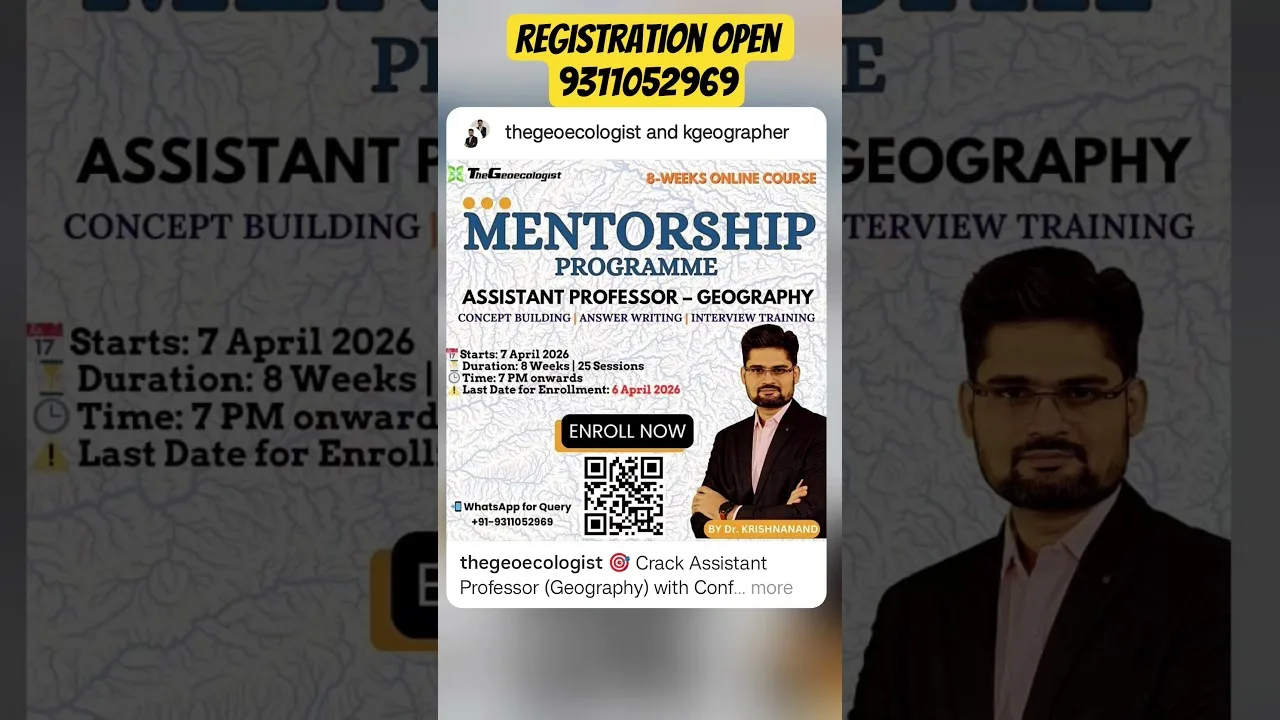
Table of Contents
- The Reality Behind the Assistant Professor Dream
- Why Talent Alone Isn't Enough
- Why Mentorship Matters for Geography Aspirants
- Insider Perspective on Selection Criteria
- Personalized Feedback Loops
- Key Challenges After Clearing UGC NET Geography
- Interview Performance Under Pressure
- Answer Writing for Academic Evaluation
- Research Vision Articulation
- What Makes Effective Geography Assistant Professor Mentorship
- Comprehensive Curriculum Design
- Limited Cohort Sizes for Personalized Attention
- Practitioner-Led Instruction
- The Geoecologist Mentorship Program Overview
- Program Philosophy and Approach
- Target Audience and Prerequisites
- Program Structure and Curriculum
- Phase 1: Academic Profile Audit and Enhancement (Weeks 1-2)
- Phase 2: Answer Writing Mastery (Weeks 3-5)
- Phase 3: Research Vision Development (Weeks 6-8)
- Phase 4: Interview Simulation and Refinement (Weeks 9-12)
- Success Metrics and Outcomes
- How to Register for the Mentorship Program
- Complementary Resources for Geography Aspirants
- Common Pitfalls to Avoid
- The Competitive Advantage of Strategic Preparation
- Conclusion: Bridging the Gap Between Potential and Selection
Securing a position as an Assistant Professor in Geography requires more than just clearing the UGC NET or JRF examination. The journey from qualified candidate to selected faculty member demands strategic Geography Assistant Professor mentorship that bridges the gap between academic knowledge and practical selection readiness. Many aspirants discover too late that passing the eligibility test represents merely the starting line, not the finish line, in the fiercely competitive academic job market.
- UGC NET/JRF clearance is only the first hurdle — interviews, answer writing, and research presentation skills determine final selection
- Structural guidance and strategic direction are critical differentiators that most self-preparation approaches lack
- Personalized mentorship programs provide insider perspective on what selection committees actually evaluate
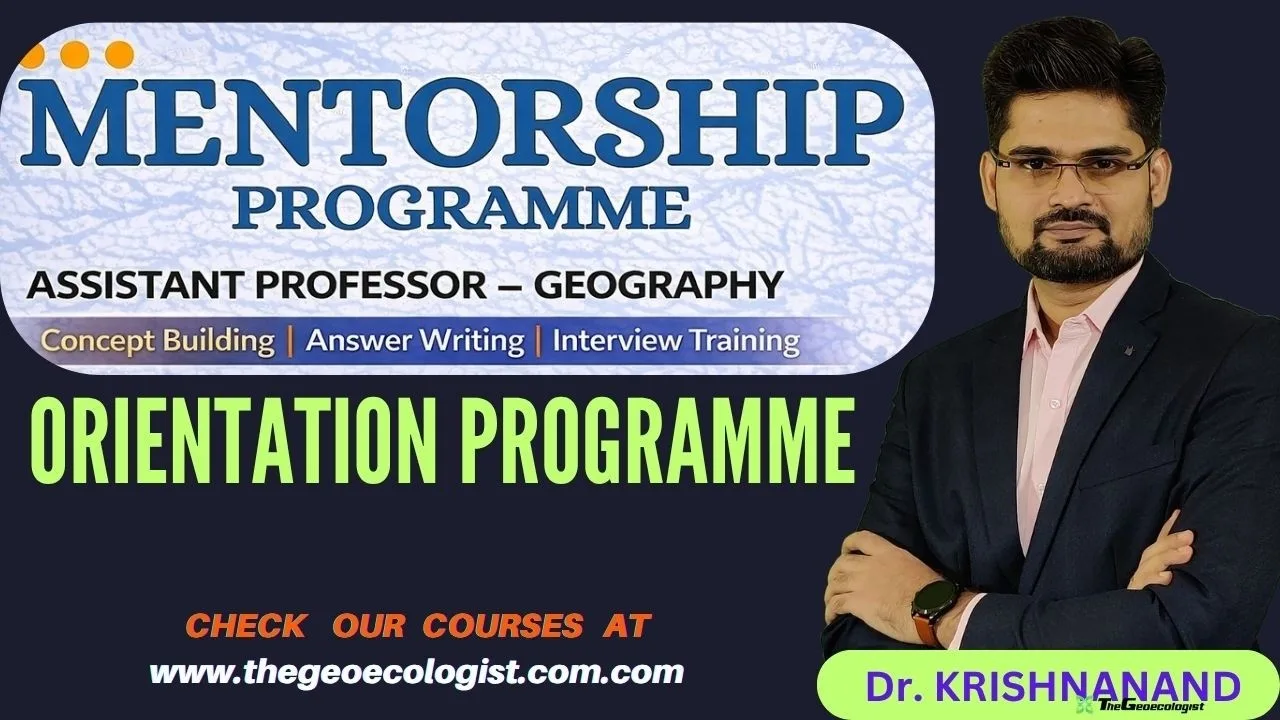
- The Geoecologist mentorship program kicks off 7 April 2026 with limited seats for focused guidance
- Early registration is essential — program includes interview techniques, answer writing strategies, and research framing
The Reality Behind the Assistant Professor Dream
Clearing the UGC NET Geography examination represents a monumental achievement that validates subject mastery. However, the harsh reality confronting most successful candidates emerges during the subsequent selection phase. Universities and colleges across India conduct rigorous interview processes, meticulous answer writing evaluations, and comprehensive research presentation assessments that test far more than textbook knowledge. – a key consideration for Geography Assistant Professor mentorship.
According to data from the University Grants Commission, less than 15% of UGC NET qualified candidates in Geography secure Assistant Professor positions within their first two years of eligibility. This statistic underscores a critical preparation gap: traditional exam-focused study methods neglect the communication, structuring, and presentation skills that selection panels prioritize. – a key consideration for Geography Assistant Professor mentorship.
Why Talent Alone Isn’t Enough
The critical failures that derail promising Geography careers rarely stem from insufficient subject knowledge. Instead, aspirants struggle with:
- Inability to structure coherent arguments under interview pressure
- Poor answer writing technique that fails to demonstrate analytical depth
- Weak research vision articulation that doesn’t align with departmental priorities
- Lack of academic profile building strategy beyond examination scores
These competencies require deliberate practice under expert guidance — precisely what effective Geography Assistant Professor mentorship provides.
Why Mentorship Matters for Geography Aspirants
The academic job market for Geography positions has intensified significantly over the past decade. With increasing numbers of PhD holders and NET-qualified candidates competing for limited vacancies, differentiation becomes paramount. A structured mentorship program addresses this through multiple strategic dimensions. – a key consideration for Geography Assistant Professor mentorship.
Insider Perspective on Selection Criteria
Experienced mentors who have served on selection committees or successfully navigated the process themselves possess invaluable tacit knowledge. They understand the unwritten evaluation rubrics that distinguish exceptional candidates from merely qualified ones. This includes: – a key consideration for Geography Assistant Professor mentorship.
- Specific phrasing and terminology that signals academic maturity
- Research proposal structures that align with funding agency priorities
- Interview response frameworks that demonstrate both breadth and depth
- Academic portfolio presentation techniques that highlight relevant achievements
Personalized Feedback Loops
Generic preparation materials cannot address individual weaknesses. Effective Geography Assistant Professor mentorship incorporates regular personalized feedback on mock interviews, written answers, and research presentations. This iterative improvement cycle accelerates skill development far beyond self-study approaches.
Key Challenges After Clearing UGC NET Geography
The transition from examination success to career placement presents distinct challenges that mentorship programs specifically target.
Interview Performance Under Pressure
Academic interviews for Assistant Professor positions typically involve panels of 5-7 senior faculty members evaluating candidates across multiple dimensions simultaneously. Candidates must demonstrate:
- Subject mastery across physical, human, and technical Geography subfields
- Pedagogical philosophy and teaching methodology awareness
- Research trajectory coherence and publication strategy
- Institutional fit and departmental contribution potential
Without simulated interview practice and expert critique, even knowledgeable candidates falter under this multidimensional scrutiny.
Answer Writing for Academic Evaluation
Unlike competitive examination answers, academic interview responses and written evaluations require different structural approaches. Selection committees look for:
- Critical analysis over descriptive enumeration
- Theoretical framework integration with empirical examples
- Methodological awareness in research design discussions
- Contemporary debate engagement within Geography scholarship
Research Vision Articulation
Candidates must present a coherent research agenda that demonstrates:
- Feasibility within institutional resource constraints
- Alignment with departmental strengths and gaps
- Funding potential from agencies like DST, ICSSR, or UGC
- Publication pathway in Scopus/Web of Science indexed journals
Developing this research vision requires mentorship from active researchers who understand current funding landscapes and publication expectations.
What Makes Effective Geography Assistant Professor Mentorship
Not all mentorship programs deliver equal value. The most effective programs share specific structural characteristics that directly address selection requirements.
Comprehensive Curriculum Design
Quality mentorship covers the entire selection pipeline:
- Profile Building: Publication strategy, conference participation, network development
- Application Optimization: CV structuring, cover letter customization, portfolio curation
- Written Assessment Preparation: Answer writing frameworks, case study analysis, research proposal drafting
- Interview Mastery: Mock panels, stress testing, feedback incorporation cycles
- Research Presentation: Seminar delivery, question handling, vision articulation
Limited Cohort Sizes for Personalized Attention
Effective mentorship requires low mentor-to-mentee ratios. Programs with 15-20 participants maximum ensure each candidate receives individualized feedback on their specific weaknesses. The Geoecologist mentorship program maintains this principle through strictly limited seat allocation. – a key consideration for Geography Assistant Professor mentorship.
Practitioner-Led Instruction
Mentors should be active academics with recent selection committee experience or successful candidates who have navigated the current system. Theoretical knowledge of the process differs significantly from practical, current insight. – a key consideration for Geography Assistant Professor mentorship.
The Geoecologist Mentorship Program Overview
The Geoecologist’s Geography Assistant Professor mentorship program represents a strategic toolkit designed specifically to transform exam-pass aspirants into selection-ready candidates. The program kicks off on 7 April 2026 with a structured pathway covering every critical selection phase.
Program Philosophy and Approach
The program operates on three foundational principles:
- Beyond Textbook Knowledge: Mastering interview techniques, developing bulletproof answer writing strategies tailored to Geography, and framing research for academic panels
- Personalized Guidance: Limited seats ensure focused mentorship with individual feedback, strength refinement, and weakness remediation
- Insider Perspective: Learning directly from experience on what selectors actually look for in successful candidates
Target Audience and Prerequisites
The program serves UGC NET/JRF qualified Geography candidates who recognize that examination success alone insufficiently prepares them for the selection process. Participants typically include:
- Recent NET/JRF qualifiers preparing for first interview cycles
- Repeated attempt candidates seeking strategic recalibration
- PhD scholars transitioning from research to faculty roles
- Working professionals targeting academic career shifts
Program Structure and Curriculum
The mentorship follows a phased approach aligned with typical recruitment timelines.
Phase 1: Academic Profile Audit and Enhancement (Weeks 1-2)
- Comprehensive CV and portfolio review
- Publication gap analysis and targeting strategy
- Conference and workshop participation planning
- Academic network mapping and outreach strategy
Phase 2: Answer Writing Mastery (Weeks 3-5)
- Geography-specific answer structuring frameworks
- Critical analysis vs. descriptive writing differentiation
- Theoretical integration techniques for applied questions
- Timed practice sessions with detailed feedback
Phase 3: Research Vision Development (Weeks 6-8)
- Research problem identification and framing
- Literature review synthesis and gap articulation
- Methodology selection justification
- Funding proposal alignment with DST/ICSSR/UGC priorities
Phase 4: Interview Simulation and Refinement (Weeks 9-12)
- Mock panel interviews with diverse question categories
- Stress testing and recovery technique training
- Non-verbal communication and presence coaching
- Final preparation checklist and psychological readiness
Success Metrics and Outcomes
Effective Geography Assistant Professor mentorship programs track measurable outcomes to validate their approach. Key performance indicators include:
- Interview-to-selection conversion rates compared to national averages
- Time from program completion to first appointment
- Institutional tier distribution of placements (Central Universities, State Universities, Colleges)
- Participant satisfaction scores on specific skill development dimensions
Programs that transparently share these metrics demonstrate accountability and continuous improvement commitment.
How to Register for the Mentorship Program
Registration for The Geoecologist’s mentorship program opening on 7 April 2026 follows a straightforward process:
- Visit the registration portal: https://forms.gle/ViWsVxoeAY2Qf1sDA
- Complete the application form with academic background and goals
- Submit required documentation (NET/JRF certificate, CV, research summary)
- Await confirmation and cohort assignment (limited seats)
- Begin pre-program preparation materials upon acceptance
For direct queries, candidates can reach out via WhatsApp at 9311052969. Early registration is highly recommended given the limited seat allocation designed to maintain mentorship quality.
Complementary Resources for Geography Aspirants
While structured mentorship provides the strategic framework, candidates should simultaneously engage with complementary resources:
- UGC NET Geography Mastery: Continuous subject knowledge updating through standard references
- Academic Writing Practice: Regular answer writing on previous year questions and contemporary debates
- Research Literature Engagement: Current issues in top Geography journals (Geography discipline awareness)
- Professional Network Development: Conference attendance, academic association membership, faculty connection building
Common Pitfalls to Avoid
Even with mentorship, candidates often undermine their preparation through avoidable errors:
- Delayed Start: Beginning interview preparation only after receiving interview calls
- Over-Reliance on Memorization: Failing to develop analytical frameworks for novel questions
- Neglecting Weakness Areas: Avoiding practice on uncomfortable topics instead of targeted improvement
- Inconsistent Practice: Irregular mock interview and answer writing schedules
- Isolation from Peer Feedback: Missing the calibration that peer discussion provides
The Competitive Advantage of Strategic Preparation
In a landscape where hundreds of qualified Geography candidates compete for each Assistant Professor vacancy, the marginal gains from expert mentorship compound significantly. Candidates who invest in structured Geography Assistant Professor mentorship consistently demonstrate:
- Higher interview confidence and articulation clarity
- More coherent research narratives aligned with institutional needs
- Superior answer writing that distinguishes them in written evaluations
- Stronger academic profiles that withstand holistic review
The investment in mentorship represents a strategic allocation of resources toward the highest-impact preparation activities, rather than diffuse self-study efforts that may not address actual selection criteria.
Conclusion: Bridging the Gap Between Potential and Selection
The journey from UGC NET qualification to Assistant Professor appointment in Geography demands more than subject mastery — Geography Assistant Professor mentorship requires strategic presentation of that mastery within the specific evaluation frameworks that selection committees employ. Quality mentorship provides the structural guidance, insider perspective, and personalized feedback that transform potential into selection.
The Geoecologist’s mentorship program, commencing 7 April 2026, offers a comprehensive pathway designed by those who understand the selection process from the inside. With limited seats ensuring personalized attention, the program addresses every critical phase from profile building through final interview performance. – a key consideration for Geography Assistant Professor mentorship.
Don’t let the gap between examination success and career placement derail your Geography academic aspirations. The competition is fierce, but strategic preparation through expert mentorship provides the competitive edge that converts qualifications into appointments. Register early, prepare systematically, and approach the selection process with the confidence that comes from structured, expert-guided readiness. – a key consideration for Geography Assistant Professor mentorship.
Your Assistant Professor dream deserves more than hope — Geography Assistant Professor mentorship deserves strategy. The right mentorship bridges that gap.
Frequently Asked Questions
The program is designed for UGC NET or JRF qualified candidates in Geography who are preparing for Assistant Professor interviews and selection processes. Recent qualifiers, repeated attempt candidates, PhD scholars, and professionals seeking academic transitions all benefit from the structured guidance.
The 12-week program covers four phases: academic profile audit and enhancement, answer writing mastery for Geography-specific evaluations, research vision development aligned with funding priorities, and intensive interview simulation with personalized feedback. Each phase builds sequentially toward selection readiness.
The program maintains strictly limited seats to ensure personalized mentorship quality. The next cohort kicks off on 7 April 2026. Early registration is highly recommended as seats fill quickly due to the low mentor-to-mentee ratio that defines the program's effectiveness.