Blog
Desert Biome Characteristics: An In-Depth Ecological Study

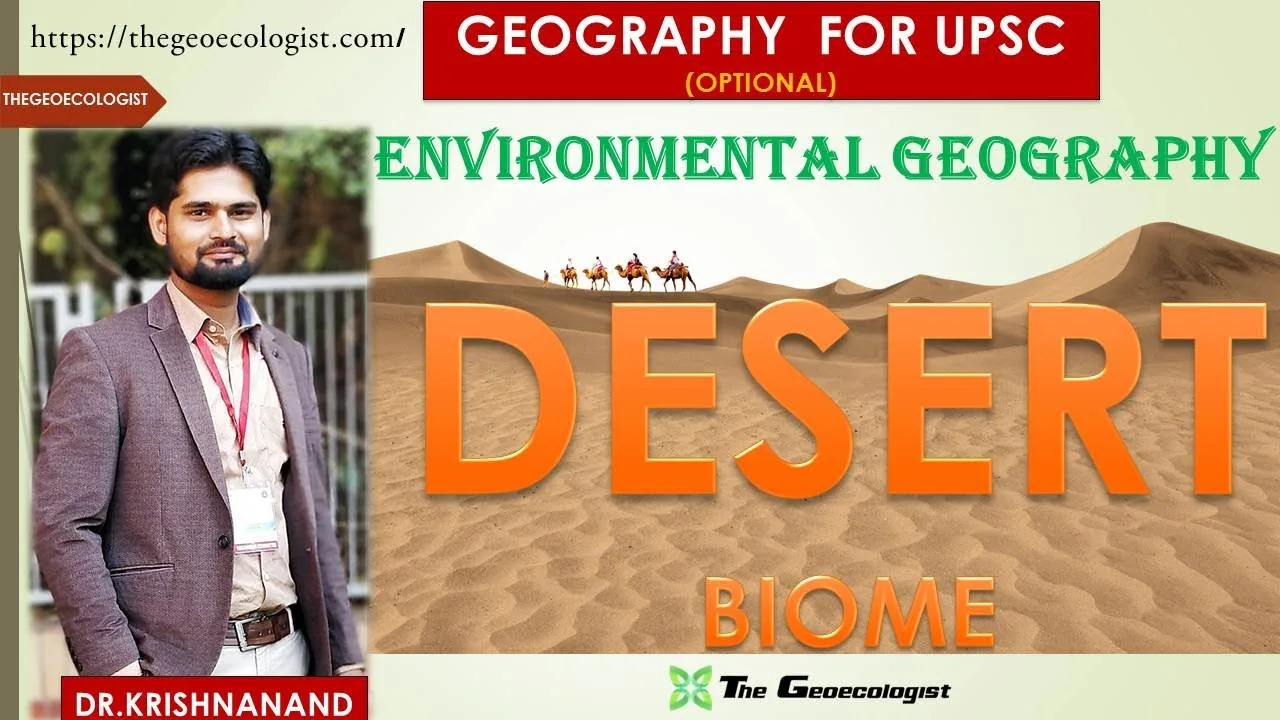
Table of Contents
- Understanding the Desert Biome Characteristics and Ecological Dynamics
- Defining Desert Biome Characteristics through Precipitation and Evaporation
- Classification of Deserts: Hot, Cold, and Coastal Variants
- Biological Adaptations: How Life Thrives in Aridity
- Ecological and Economic Significance
- Conclusion: The Importance of Desert Study in Geography
Understanding the Desert Biome Characteristics and Ecological Dynamics
The desert biome characteristics define one of the most extreme and fascinating ecosystems on Earth, defined primarily by its lack of moisture and intense environmental pressures. While many perceive these regions as lifeless voids, they are actually complex biological systems where life has evolved remarkable adaptations to survive. In this comprehensive analysis, we explore the multifaceted nature of these regions, drawing on the academic insights of Dr. Krishnanand to provide a deep dive into the environmental geography of arid landscapes.
- Aridity: Annual precipitation is typically below 250 mm.
- Temperature Extremes: High diurnal temperature fluctuations are common.
- Specialized Flora: Vegetation is dominated by xerophytic plants.
- Unique Fauna: Animals exhibit specialized physiological and behavioral adaptations.
- Global Impact: Deserts play a critical role in global climate regulation and mineral distribution.
Defining Desert Biome Characteristics through Precipitation and Evaporation
To truly grasp the essence of the desert biome, one must look at the water balance. The primary desert biome characteristics are rooted in the fact that the potential evaporation rate significantly exceeds the annual precipitation. When rainfall is less than 250 mm per year, the landscape enters a state of chronic water scarcity. This lack of moisture is the fundamental driver for all other biological and geological processes in the region.
In these arid zones, the scarcity of water is not just a seasonal occurrence but a defining structural feature. This moisture deficit leads to the formation of specific soil types, often sandy or rocky, which lack the organic matter found in more humid biomes like rainforests. According to Wikipedia, deserts cover approximately one-third of the Earth’s land surface, making them a dominant force in global environmental geography.
Classification of Deserts: Hot, Cold, and Coastal Variants
Not all deserts are scorching hot; understanding the diverse types is essential for a complete view of desert biome characteristics. We can categorize these regions into four distinct types based on their thermal and moisture profiles.
1. Hot Subtropical Deserts
Hot deserts are the most recognizable. These regions, such as the Sahara in Africa or the Thar Desert in India, experience extreme daytime heat that can reach up to 50°C. However, because the air is so dry, desert biome characteristics cannot retain heat effectively, leading to plummeting temperatures at night. This extreme diurnal temperature variation is a hallmark of hot desert biome characteristics.
2. Cold Deserts
Cold deserts, such as the Gobi Desert in Asia or the Great Basin in the USA, present a different set of challenges. While they are arid, their primary constraint is temperature rather than just heat. They experience freezing winters and relatively mild summers, yet they remain extremely dry due to rain shadow effects or high-latitude positioning.
3. Coastal Deserts
Coastal deserts, like the Atacama in South America or the Namib in Africa, are unique. They are often characterized by cool temperatures due to the influence of cold ocean currents. Interestingly, while they receive very little rain, they often experience heavy fog, which provides a vital source of moisture for specialized life forms.
4. Polar Deserts
The largest deserts on Earth are actually the polar regions. Antarctica and the Arctic Basin are classified as deserts because their precipitation levels are incredibly low. The lack of liquid water in these freezing environments represents a unique subset of desert biome characteristics.
Biological Adaptations: How Life Thrives in Aridity
Despite the harshness, life persists through incredible evolutionary ingenuity. The biological response to desert biome characteristics can be divided into two categories: flora (plants) and fauna (animals).
Xerophytic Plant Adaptations
Plants in these regions are known as xerophytes. To combat water loss, they have developed several specialized features:
- Reduced Leaf Surface: Many plants have leaves that have evolved into spines (like cacti) to minimize the surface area through which water can evaporate.
- Succulence: Specialized tissues allow plants to store large quantities of water for use during droughts.
- CAM Photosynthesis: Crassulacean Acid Metabolism is a specialized metabolic pathway where plants open their stomata at night to collect carbon dioxide, significantly reducing water loss through transpiration.
- Extensive Root Systems: Some plants, like the Mesquite, develop incredibly deep taproots to reach underground aquifers, while others use wide, shallow root systems to catch surface moisture quickly.
Animal Survival Strategies
Animals must also contend with the extreme desert biome characteristics to avoid dehydration and overheating. Common strategies include:
- Nocturnal Activity: Many desert animals are nocturnal, staying underground or in shade during the heat of the day and emerging at night to forage.
- Burrowing: Animals like the kangaroo rat or desert fox live in underground burrows where temperatures remain stable and humidity is higher.
- Physiological Efficiency: Camels are famous for their ability to store fat in humps, which can be metabolized for energy and water. Many reptiles have specialized kidneys that excrete dry uric acid to conserve every drop of moisture.
Ecological and Economic Significance
The ecological importance of these regions cannot be overstated. Deserts serve as biodiversity hotspots for highly specialized species that cannot survive anywhere else. Furthermore, the geological makeup of these regions makes them vital for human industry. They are rich in mineral resources including oil, natural gas, phosphates, and rare earth metals. For instance, the extraction of resources in the Middle Eastern deserts is a cornerstone of global energy markets.
However, these ecosystems are increasingly under threat from desertification. Desertification is the process of land degradation in arid, semi-arid, and dry sub-humid areas resulting from various factors, including climatic variations and human activities such as overgrazing and deforestation. This phenomenon is a critical area of study for environmental geographers working to mitigate the impacts of climate change.
Conclusion: The Importance of Desert Study in Geography
In conclusion, the desert biome characteristics—from low precipitation to extreme temperature shifts—create a challenging yet vibrant landscape. For students of Geography, particularly those preparing for the UPSC CSE, understanding these dynamics is essential for grasping the complexities of environmental geography. The ability of life to adapt to such extreme constraints is a testament to the resilience of biological evolution. To further your studies, it is highly recommended to explore the works of Dr. Krishnanand and specialized texts like Simplified Biogeography to master these complex ecological concepts.
Frequently Asked Questions
The primary characteristic is low precipitation, typically less than 250 mm annually, which leads to high evaporation rates.
Xerophytes are plants that have evolved specifically to survive in environments with very little liquid water, such as cacti.
Many desert animals use nocturnal behavior, burrowing underground, or have physiological adaptations like concentrated urine to conserve water.