Blog
Why Mumbai Not Capital: History Behind India’s Capital Choice


Table of Contents
- The Weight of History: Delhi's 600-Year Political Legacy
- Symbolism Over Economics
- Geography of Governance: Centrality vs. Coastality
- Border Security and Administrative Reach
- The Dual-Capital Model: Political vs. Financial Sovereignty
- Economic Statistics: The Mumbai Advantage
- Constitutional Debates and the 1948–49 Decision
- Modern Implications: Two Pillars of the Republic
- Future Trajectory
The question of why mumbai not capital of India often arises given Mumbai’s status as the country’s financial powerhouse and most populous city. While Mumbai drives India’s economy with a GDP contribution of approximately 6.16% (as of 2023 estimates), the political heartbeat of the nation resides in Delhi, a city with a fundamentally different historical and geographical profile. Understanding this decision requires examining centuries of imperial history, British colonial strategy, and the practical realities of governing a subcontinent-sized democracy.
- Historical Legacy: Delhi served as the capital for multiple empires (Delhi Sultanate, Mughal Empire) for over 600 years before independence.
- Geographical Centrality: Delhi’s location allowed better administrative control over northern borders and the Indian heartland.
- British Colonial Decision: The 1911 shift from Calcutta to Delhi was a strategic imperial move, not an economic one.
- Functional Separation: Post-1947, India naturally evolved a dual-capital model: Delhi for politics, Mumbai for finance.
- Infrastructure Readiness: By 1947, Delhi already housed the Viceroy’s House, Secretariat buildings, and administrative machinery.
The Weight of History: Delhi’s 600-Year Political Legacy
To understand why mumbai not capital, one must first appreciate Delhi’s unique historical gravitas. Unlike Mumbai, which rose to prominence primarily during the 18th and 19th centuries under British maritime trade, Delhi has been the seat of power for the Indian subcontinent since the 12th century. The Delhi Sultanate (1206–1526) established the city as the political center of North India, a status consolidated and glorified by the Mughal Empire (1526–1857).
When the British East India Company gained control, they initially governed from Calcutta (Kolkata). However, the 1857 Revolt (First War of Independence) centered on Delhi, where the last Mughal Emperor Bahadur Shah Zafar was proclaimed leader. This symbolic power forced the British to recognize Delhi’s psychological hold over the Indian imagination. In 1911, King George V announced the shift of the British Indian capital from Calcutta to Delhi at the Delhi Durbar. The new imperial capital, New Delhi, designed by Edwin Lutyens and Herbert Baker, was inaugurated in 1931. By the time India gained independence in 1947, Delhi possessed 36 years of modern administrative infrastructure, a legacy Mumbai lacked. — a key consideration for why mumbai not capital.
Symbolism Over Economics
The British choice was deeply symbolic. They were not merely building offices; they were claiming the mantle of the Mughals. The Viceroy’s House (now Rashtrapati Bhavan) sits on Raisina Hill, deliberately positioned to visually dominate the landscape, echoing the Red Fort’s historical dominance. This historical continuity meant that when the Constituent Assembly debated the capital’s location in 1948–49, Delhi was the default, logical choice. The infrastructure for governance—ministries, residences, parliament facilities—already existed. Building an equivalent in Mumbai would have taken decades and diverted scarce post-war resources. — a key consideration for why mumbai not capital.
Geography of Governance: Centrality vs. Coastality

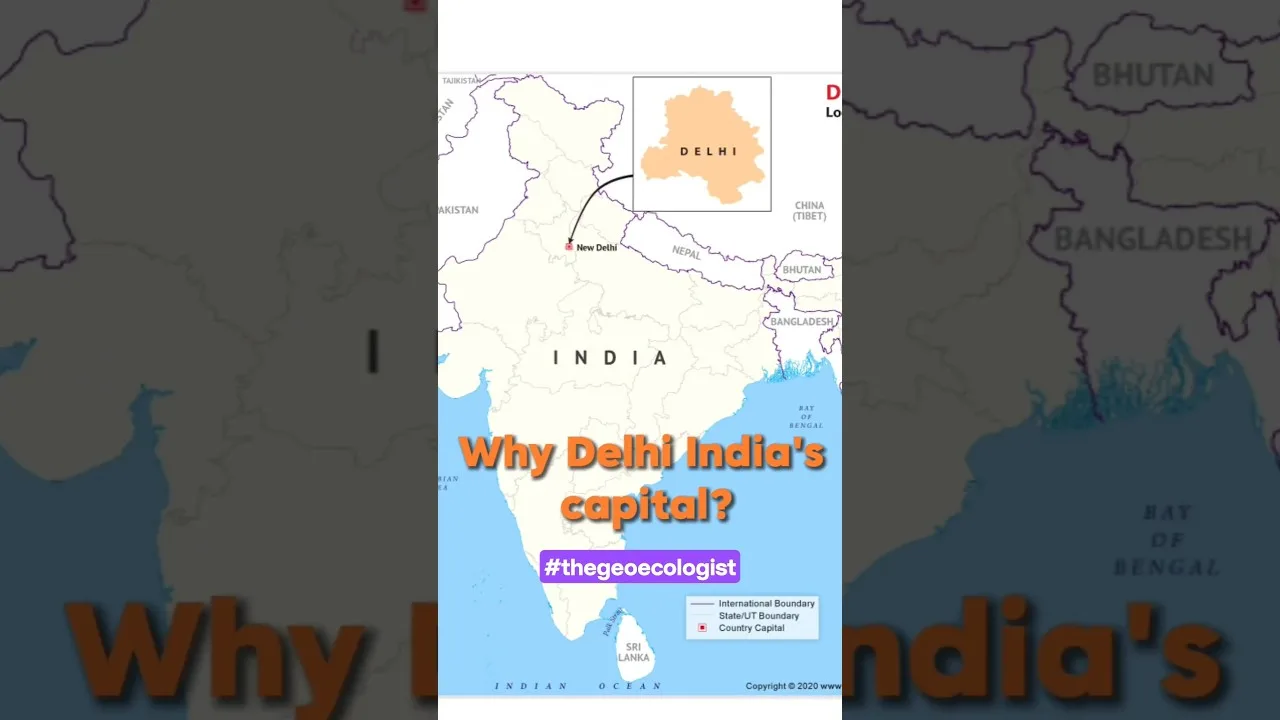
A critical factor in why mumbai not capital is geography. Mumbai sits on a narrow peninsula on the western coast, roughly 1,400 km from the northern borders with Pakistan and China. In 1947, India faced immediate partition violence, the Kashmir conflict, and the integration of 562 princely states—most concentrated in the north and center. A capital on the western extremity would have created severe communication and command delays.
Delhi, by contrast, sits near the geographic center of the historic Indo-Gangetic plain. why mumbai not capital offers relatively equidistant access to Punjab, Kashmir, Uttar Pradesh, Bihar, and the northeastern frontier. The Indian Railways network, the primary mode of long-distance transport in the 1950s, radiated from Delhi. For a nascent state building its military and administrative reach, this centrality was non-negotiable. Even today, the Ministry of Defence and the three service headquarters operate from Delhi to maintain strategic oversight of the Line of Control (LoC) and Line of Actual Control (LAC).
Border Security and Administrative Reach
Consider the 1962 Sino-Indian War and the 1965 and 1971 Indo-Pak wars. In each crisis, the Prime Minister’s Office, the Cabinet Committee on Security, and the Service Chiefs needed immediate, secure communication with forward areas. Delhi’s landlocked position allowed hardened communication lines and physical proximity to the North Block and South Block secretariats. Mumbai’s coastal vulnerability—exposed to naval blockade or amphibious assault—made why mumbai not capital strategically unsuitable as a wartime command center. This security calculus remains relevant; the Nuclear Command Authority and Strategic Forces Command are headquartered in the Delhi-NCR region.
The Dual-Capital Model: Political vs. Financial Sovereignty
Rather than a failure, why mumbai not capital reflects a brilliant, organic division of labor. By the 1930s, Mumbai (then Bombay) was already the undisputed commercial capital. The Bombay Stock Exchange (BSE), founded in 1875, was Asia’s first. The city handled over 60% of India’s maritime trade via the Bombay Port Trust. Major industrial houses—Tata, Godrej, Birla—had their headquarters there. The Reserve Bank of India (RBI) was established in Calcutta in 1935 but moved its central office to Bombay in 1937, cementing the city’s financial primacy.
Post-independence, this specialization deepened. Delhi became the locus of policy formulation: the Planning Commission (now NITI Aayog), the Finance Ministry (North Block), the RBI’s regulatory headquarters, and the Parliament. Mumbai became the engine of execution: corporate headquarters, capital markets, commodity exchanges (MCX, NCDEX), and why mumbai not capital industry (Bollywood). This separation prevents the concentration of political and economic power in a single urban agglomeration—a risk factor for corruption and policy capture observed in many developing nations.
Economic Statistics: The Mumbai Advantage
Mumbai’s freedom from political bureaucracy arguably fueled its growth. The Mumbai Metropolitan Region (MMR) generates approximately ₹6.16 lakh crore (US$74 billion) in GDP (PPP) annually, accounting for 6.16% of India’s total GDP. why mumbai not capital contributes 25% of industrial output, 70% of maritime trade, and 33% of income tax collections. The city hosts the headquarters of the National Stock Exchange (NSE), BSE, RBI, SEBI, and most major banks. Had the political capital moved there, the influx of ministers, bureaucrats, and security apparatus would have strained its already stretched infrastructure—local trains carry 7.5 million passengers daily—and likely distorted its market-driven urban dynamics.
Constitutional Debates and the 1948–49 Decision
The Constituent Assembly formally addressed why mumbai not capital during its sessions. While some members advocated for a more centrally located city like Nagpur (geographic center of undivided India) or even a new planned city, the pragmatic consensus favored Delhi. B.R. Ambedkar, as Chairman of the Drafting Committee, noted the immense cost and time of building a new capital. Jawaharlal Nehru, the first Prime Minister, favored Delhi for its historical resonance and existing infrastructure. The decision was ratified with the adoption of the Constitution on 26 January 1950, designating Delhi as the seat of the Union Government.
Interestingly, Article 1 of the Constitution defines India as a “Union of States” with the territory comprising states, union territories, and “such other territories as may be acquired.” Delhi was initially a Part C state, then a Union Territory in 1956, and finally the National Capital Territory (NCT) in 1991 under the 69th Amendment. This unique status—neither a full state nor a typical UT—reflects its role as the federal capital belonging to the Union, not a regional polity. — a key consideration for why mumbai not capital.
Modern Implications: Two Pillars of the Republic
Today, the Delhi-Mumbai axis defines India’s power structure. The why mumbai not capital question finds its answer in this successful bifurcation. The Delhi-Mumbai Industrial Corridor (DMIC), a $100 billion infrastructure project spanning 1,500 km, physically and economically links the two capitals. High-speed rail (the Mumbai-Ahmedabad bullet train), the Western Dedicated Freight Corridor, and the upcoming Navi Mumbai International Airport are designed to integrate the political and financial hubs.
This model mirrors other federal systems: Washington D.C. vs. New York (USA), Canberra vs. Sydney (Australia), Brasília vs. São Paulo (Brazil), Ottawa vs. Toronto (Canada). In each case, the political capital was deliberately separated from the commercial metropolis to ensure balanced regional development and prevent megacity overload. India’s choice in 1947—driven by history, geography, and administrative pragmatism—anticipated this global best practice by decades.
Future Trajectory
As India aims for a $5 trillion economy, the Delhi-Mumbai partnership will deepen. Delhi’s policy frameworks (PLI schemes, Gati Shakti, Digital India) require Mumbai’s capital markets and entrepreneurial energy for execution. Conversely, Mumbai’s financial institutions need Delhi’s regulatory clarity and diplomatic bandwidth for global integration. The question why mumbai not capital has thus evolved from a historical curiosity into a testament to India’s unique dual-engine governance model—one that leverages historical legacy and geographic logic to drive a diverse, continental democracy forward.
Frequently Asked Questions
Mumbai (then Bombay) was never seriously considered as the political capital after 1911. The British shifted the capital from Calcutta to Delhi in 1911 due to Delhi's historical significance and central location. By 1947, Delhi had 36 years of administrative infrastructure, making it the default choice for independent India.
The primary reasons were Delhi's 600-year legacy as an imperial capital (Delhi Sultanate, Mughal Empire), its central geographic location for administering the vast northern frontier, and the presence of ready-made administrative infrastructure (Viceroy's House, Secretariats) built by the British between 1911–1931.
Mumbai is the capital of Maharashtra state and is officially recognized as the Financial Capital of India. It hosts the Reserve Bank of India, Bombay Stock Exchange, National Stock Exchange, SEBI, and the headquarters of most major Indian corporations and banks.