Blog
UPSC Geography Current Affairs: Complete Guide for Prelims 2021 Preparation

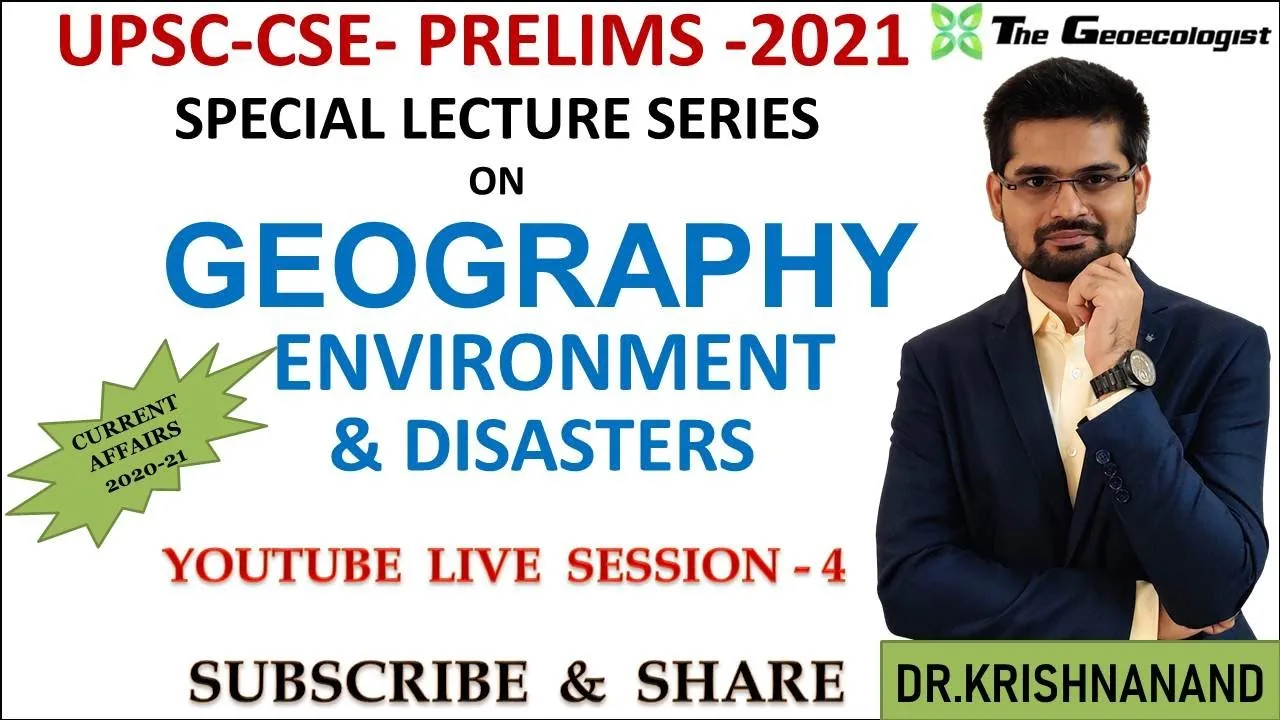
Table of Contents
- Why UPSC Geography Current Affairs Dominates Prelims 2021
- Climate Change and Extreme Weather Events: Core Focus Areas
- Cyclones Tauktae and Yaas: Back-to-Back Landfalls
- IPCC Sixth Assessment Report (AR6): Code Red for Humanity
- COP26 Glasgow: India's Panchamrit Commitments
- Geopolitical Geography: Emerging Flashpoints
- Arctic Council: Melting Ice, Rising Tensions
- South China Sea: Maritime Geography in Contention
- Great Green Wall Initiative: Africa's Ecological Restoration
- Biodiversity Conservation: Policy Milestones 2020-21
- Kunming Declaration: 30×30 Target Adopted
- India's Wetland Conservation: Rules 2020 Overhaul
- Project Cheetah: Historic Reintroduction
- Pollution Control and Waste Management: Regulatory Updates
- Single-Use Plastics Ban: Phased Implementation
- E-Waste Management Rules 2021: Circular Economy Push
- National Clean Air Programme (NCAP): Mid-Term Review
- Disaster Management: Lessons from 2021 Events
- Uttarakhand GLOF (February 2021): Himalayan Vulnerability Exposed
- Super Cyclone Preparedness: NDMA's Evolving Role
- Volcanic Eruptions: Global Case Studies
- International Frameworks: Sendai and Hyogo Legacy
- Sendai Framework (2015-2030): Mid-Term Progress
- Hyogo Framework (2005-2015): Foundational Lessons
- Strategic Preparation Roadmap for UPSC Geography Current Affairs
- Source Hierarchy: What to Read and Skip
- Revision Technique: Interlinking Static-Dynamic
- Practice Protocol: Quiz + PYQ Analysis
- Conclusion: Your UPSC Geography Current Affairs Mastery Plan
Mastering UPSC Geography Current Affairs is essential for aspirants targeting the Civil Services Preliminary Examination 2021. The dynamic nature of geography, environment, and disaster management demands a strategic approach that integrates static concepts with real-time developments. This comprehensive guide distills the key themes from Dr. Krishnanand’s Session 4 lecture, offering a structured roadmap to tackle high-yield topics with precision.
- Climate Change & Extreme Weather: Cyclones Tauktae & Yaas, IPCC AR6 findings, COP26 outcomes, India’s 500 GW renewable target.
- Geopolitical Geography: Arctic Council tensions, South China Sea disputes, Great Green Wall Initiative.
- Biodiversity & Conservation: Kunming Declaration (30×30 target), Wetland Rules 2020, Project Cheetah reintroduction.
- Pollution Control: Single-use plastic ban, E-Waste Rules 2021, NCAP progress in Indian cities.
- Disaster Management: Uttarakhand GLOF 2021, super cyclone preparedness, Sendai Framework implementation.
- Preparation Strategy: NCERTs + standard references + daily quizzes + expert lectures (TheGeoecologist).
Why UPSC Geography Current Affairs Dominates Prelims 2021
The UPSC has consistently increased the weightage of UPSC Geography Current Affairs in recent prelims papers. Questions now test not just factual recall but the ability to interlink geographical phenomena with policy responses. For instance, the 2021 prelims featured direct questions on IPCC AR6, COP26, and the Uttarakhand glacial burst — all covered in Dr. Krishnanand’s session. Aspirants who track these developments through authoritative sources gain a decisive edge.
Climate Change and Extreme Weather Events: Core Focus Areas
Cyclones Tauktae and Yaas: Back-to-Back Landfalls
May 2021 witnessed two severe cyclonic storms hitting India’s coasts within weeks. Cyclone Tauktae (Arabian Sea) intensified into an Extremely Severe Cyclonic Storm, causing widespread damage across Gujarat, Maharashtra, and Karnataka. Cyclone Yaas (Bay of Bengal) followed, affecting Odisha and West Bengal. These events underscore the increasing frequency of rapid intensification due to warmer sea surface temperatures — a direct fingerprint of climate change highlighted in UPSC Geography Current Affairs discussions.
IPCC Sixth Assessment Report (AR6): Code Red for Humanity
Released in August 2021, the IPCC AR6 Working Group I report provided the most definitive evidence yet of human-induced climate change. Key takeaways for aspirants:
- Global surface temperature rose 1.09°C (2011-2020 vs 1850-1900).
- Sea-level rise accelerated to 3.7 mm/yr (2006-2018).
- Glacier mass loss and Arctic sea-ice decline are “virtually certain” to continue.
- Every region faces increasing climate extremes — heatwaves, heavy precipitation, droughts.
For direct access to the full report, visit the official IPCC AR6 page.
COP26 Glasgow: India’s Panchamrit Commitments
The 26th UN Climate Change Conference (October-November 2021) saw Prime Minister Modi announce India’s five nectar elements (Panchamrit):
- 500 GW non-fossil energy capacity by 2030
- 50% energy requirements from renewables by 2030
- Reduction of 1 billion tonnes of projected carbon emissions by 2030
- Carbon intensity reduction of 45% by 2030 (over 2005 levels)
- Net-zero by 2070
These commitments feature prominently in UPSC Geography Current Affairs preparation. The official UNFCCC COP26 portal provides authentic documentation.
Geopolitical Geography: Emerging Flashpoints
Arctic Council: Melting Ice, Rising Tensions
The Arctic is warming at twice the global average rate, opening new shipping routes (Northern Sea Route, Northwest Passage) and exposing vast hydrocarbon reserves. The Arctic Council — comprising eight Arctic states and six indigenous permanent participants — faces renewed geopolitical friction as non-Arctic nations (China, India, Japan, South Korea) seek observer status and resource access. India’s Arctic Policy (2022 draft) emphasizes scientific research, climate protection, and sustainable development. – a key consideration for UPSC Geography Current Affairs.
South China Sea: Maritime Geography in Contention
Overlapping territorial claims by China, Vietnam, Philippines, Malaysia, Brunei, and Taiwan affect one of the world’s busiest trade corridors ($3.37 trillion annual trade). The 2016 PCA ruling rejecting China’s “nine-dash line” remains unimplemented. For UPSC, focus on UNCLOS provisions, freedom of navigation operations (FONOPs), and India’s Act East Policy linkages.
Great Green Wall Initiative: Africa’s Ecological Restoration
Launched in 2007 by the African Union, this 8,000 km mosaic of restored landscapes across the Sahel aims to sequester 250 million tonnes of carbon, restore 100 million hectares, and create 10 million green jobs by 2030. As of 2021, ~18% completion with $14 billion pledged at the One Planet Summit. A stellar case study for UPSC Geography Current Affairs on desertification combat.
Biodiversity Conservation: Policy Milestones 2020-21
Kunming Declaration: 30×30 Target Adopted
At CBD COP15 (Kunming, October 2021), 196 parties adopted the Kunming Declaration committing to protect 30% of land and ocean areas by 2030 (30×30 target). The post-2020 Global Biodiversity Framework, finalized at COP15 Part 2 (Montreal, Dec 2022), formalized this. India, as a megadiverse country, champions “common but differentiated responsibilities” in implementation.
India’s Wetland Conservation: Rules 2020 Overhaul
The Wetlands (Conservation and Management) Rules, 2020 replaced the 2010 version, decentralizing authority to state wetland authorities and introducing a “wise use” principle. As of 2021, India has 47 Ramsar sites (including 4 added in 2021: Sultanpur, Bhindawas, Thol, Wadhwana). The rules prohibit encroachment, industrial effluents, and permanent construction within notified wetlands.
Project Cheetah: Historic Reintroduction
After 70 years of extinction in India, the African cheetah (Acinonyx jubatus jubatus) reintroduction was approved by the Supreme Court in 2020. Kuno National Park (Madhya Pradesh) was selected for the first phase. Eight cheetahs from Namibia arrived in September 2022. This species recovery program tests India’s capacity for large carnivore conservation — a frequent UPSC Geography Current Affairs topic.
Pollution Control and Waste Management: Regulatory Updates
Single-Use Plastics Ban: Phased Implementation
The Plastic Waste Management Amendment Rules, 2021 prohibited identified single-use plastic items (earbuds, balloon sticks, candy sticks, cutlery, trays, wrapping films, PVC banners <100 micron) from July 1, 2022. Extended Producer Responsibility (EPR) guidelines were strengthened. Aspirants should track state-level enforcement reports and CPCB monitoring data.
E-Waste Management Rules 2021: Circular Economy Push
Notified in November 2021, these rules expanded producer responsibility to include collection, recycling, and refurbishment targets. Key features: mandatory registration on CPCB portal, annual returns, environmental compensation for non-compliance, and recognition of informal sector integration. India generated ~3.2 million tonnes of e-waste in 2020 (3rd globally).
National Clean Air Programme (NCAP): Mid-Term Review
Launched in 2019 targeting 20-30% PM2.5/PM10 reduction by 2024 (base 2017) across 132 non-attainment cities. As of 2021, only marginal improvements observed; 2022 CAG report flagged fund underutilization and weak city action plans. The 2024 target was later extended to 2026 with 40% reduction goal.
Disaster Management: Lessons from 2021 Events
Uttarakhand GLOF (February 2021): Himalayan Vulnerability Exposed
A glacial lake outburst flood (GLOF) in the Rishiganga-Dhauliganga basin killed 80+ people and destroyed two hydropower projects. Triggered by a rock-ice avalanche onto a glacier, the event highlighted compounding risks: climate-induced glacier retreat, unstable moraines, and unregulated infrastructure in eco-sensitive zones. The National Disaster Management Authority (NDMA) subsequently issued revised GLOF mitigation guidelines.
Super Cyclone Preparedness: NDMA’s Evolving Role
Cyclones Tauktae and Yaas demonstrated improved early warning (IMD’s impact-based forecasting), timely evacuations (2 million+), and inter-agency coordination. However, post-disaster assessments revealed gaps in critical infrastructure resilience (power, telecom) and long-term rehabilitation. The NDMA’s 2021 guidelines for cyclone-resistant construction are examinable.
Volcanic Eruptions: Global Case Studies
- La Soufrière (St. Vincent, April 2021): Explosive eruptions displaced 20,000; ash impacted Barbados, Caribbean aviation.
- Mount Nyiragongo (DR Congo, May 2021): Lava flows reached Goma outskirts; 32 dead, 500,000 evacuated.
- Cumbre Vieja (La Palma, Sep-Dec 2021): Longest eruption in island’s history; 3,000+ buildings destroyed.
These events illustrate volcanic hazard diversity — pyroclastic flows, lahars, lava flows, ashfall — relevant for UPSC Geography Current Affairs disaster management syllabus.
International Frameworks: Sendai and Hyogo Legacy
Sendai Framework (2015-2030): Mid-Term Progress
Four priorities: understanding risk, strengthening governance, investing in resilience, enhancing preparedness. Seven global targets (A-G) with 2030 deadlines. India’s alignment: National Disaster Management Plan (2019) maps to Sendai priorities. The 2021 UN Global Assessment Report (GAR) warned of systemic risk cascades — pandemics, climate, conflict.
Hyogo Framework (2005-2015): Foundational Lessons
Predecessor to Sendai; emphasized early warning, risk identification, knowledge management. India’s Disaster Management Act (2005) was enacted during Hyogo period. Key takeaway: shift from reactive relief to proactive risk reduction — a paradigm tested in UPSC.
Strategic Preparation Roadmap for UPSC Geography Current Affairs
Source Hierarchy: What to Read and Skip
Prioritize primary sources over compilations:
- Tier 1 (Daily): The Hindu (Science & Environment, Editorial), PIB releases (MoEFCC, MoES, NDMA).
- Tier 2 (Weekly): Down To Earth (CSE), Yojana/Kurukshetra (special issues), IPCC/UNFCCC summaries.
- Tier 3 (Monthly): Vision IAS/Insights PT 365, Dr. Krishnanand’s TheGeoecologist lectures.
- Static Base: NCERT Class 11-12 (India Physical Environment, Fundamentals of Physical Geography), Goh Cheng Leong, Majid Hussain.
Revision Technique: Interlinking Static-Dynamic
Create mind maps connecting current events to static concepts. Example: Uttarakhand GLOF → Glacial geomorphology (cirques, moraines) + Climate change (glacier retreat) + Disaster management (NDMA guidelines) + Hydropower policy (EIA notification 2020 exemptions). This multidimensional approach is the hallmark of high scorers in UPSC Geography Current Affairs.
Practice Protocol: Quiz + PYQ Analysis
- Daily 10-question current affairs quiz (timed).
- Weekly full-length geography/environment sectional test.
- PYQ analysis (2011-2020): Identify recurring themes — wetlands, cyclones, biodiversity conventions, pollution indices.
- Mock test review: Categorize errors (conceptual, factual, careless) and plug gaps.
Conclusion: Your UPSC Geography Current Affairs Mastery Plan
Cracking the geography-environment-disaster management segment in UPSC Prelims 2021 requires more than passive reading. UPSC Geography Current Affairs demands active interlinking of UPSC Geography Current Affairs with static fundamentals, consistent answer-writing practice, and guidance from domain experts like Dr. Krishnanand. TheGeoecologist’s structured sessions, combined with disciplined self-study using the roadmap above, can transform this dynamic syllabus into your highest-scoring section. Stay updated, stay strategic, and success will follow.
For comprehensive study material, e-books, and expert mentorship, visit TheGeoecologist and follow @thegeoecologist on Instagram. Contact: krishna.geography@gmail.com
Frequently Asked Questions
Key topics include IPCC AR6 report, COP26 Glasgow outcomes, Cyclones Tauktae & Yaas, Uttarakhand GLOF 2021, Kunming Declaration 30×30 target, India's Wetland Rules 2020, Project Cheetah, Single-use plastic ban, E-Waste Rules 2021, NCAP progress, and Sendai Framework mid-term review.
Follow a 3-tier source strategy: Daily (The Hindu, PIB), Weekly (Down To Earth, Yojana), Monthly (PT 365 compilations). Interlink each current event with static NCERT concepts. Attempt daily quizzes and weekly sectional tests. Watch Dr. Krishnanand's TheGeoecologist lectures for structured coverage.
Geography and Environment typically account for 15-25 questions (30-50 marks) in UPSC Prelims GS Paper I. Current affairs-linked questions have increased to 60-70% of this segment, making UPSC Geography Current Affairs preparation critical for clearing cutoffs.