
Blog
Sangam Literature: Exploring Ancient Tamil Literary Heritage

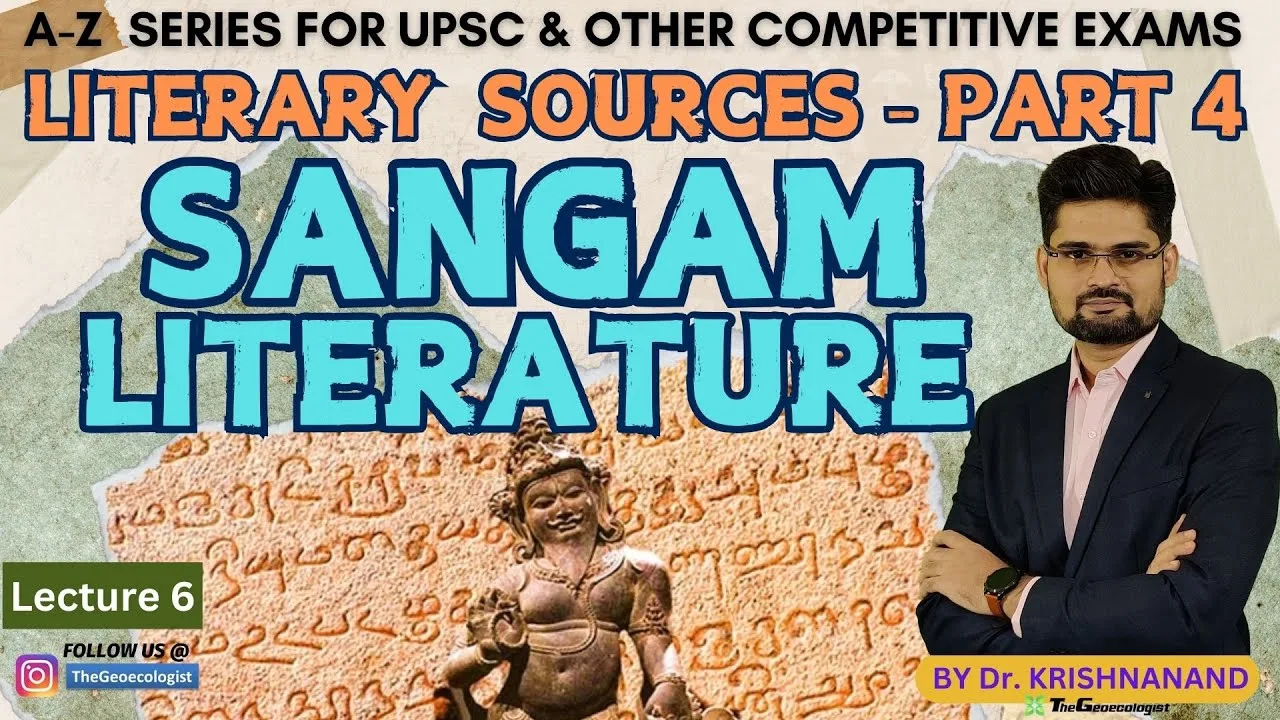
Table of Contents
- Historical Background and the Sangam Assemblies
- Chronology and Dating Debates
- Structure and Classification of the Corpus
- Eṭṭuttokai (The Eight Anthologies)
- Pattuppāṭṭu (The Ten Idylls)
- The Akam-Puram Dichotomy: A Unique Poetic Framework
- Akam: The Interior Landscape of Love
- Puram: The Exterior World of Action
- Women's Voices in Sangam Literature
- Trade, Urbanism, and International Connections
- Religious and Ethical Dimensions
- Rediscovery, Preservation, and Modern Scholarship
- Digital Initiatives and UNESCO Recognition
- Why Sangam Literature Matters Today
- Conclusion
Sangam Literature stands as one of the most remarkable literary traditions of ancient India, offering an unparalleled window into the social, political, and cultural fabric of early Tamil civilization. Flourishing between approximately 300 BCE and 300 CE, this corpus of classical Tamil poetry comprises over 2,300 poems composed by 473 poets, both men and women, reflecting a society deeply rooted in literary expression. Unlike the Sanskrit-dominated literary sources of northern India, Sangam Literature represents a distinct Dravidian tradition that evolved independently, preserving indigenous themes of love, war, governance, and ethics. As the fourth installment in our series on literary sources of ancient India, this article delves into the historical context, major anthologies, thematic richness, and enduring legacy of these texts, which continue to shape Tamil identity and scholarship today.
- Sangam Literature flourished between 300 BCE and 300 CE in ancient Tamilakam (modern Tamil Nadu and Kerala).
- It comprises two major groups: the Eṭṭuttokai (Eight Anthologies) and Pattuppāṭṭu (Ten Idylls).
- Poems are classified into akam (inner/ love) and puram (outer/ war, ethics) themes.
- Over 473 poets contributed, including notable women poets like Avvaiyar.
- These texts are primary sources for reconstructing early historic South Indian polity, trade, and society.
Historical Background and the Sangam Assemblies
The term “Sangam” derives from the Tamil word caṅkam, meaning “assembly” or “academy.” According to traditional accounts preserved in the Irayanar Akapporul (c. 8th century CE), three legendary Sangams were held in the Pandyan capital cities over thousands of years. The first two Sangams, said to have been attended by gods and sages, were lost to catastrophic floods. The third Sangam, centered in Madurai, is historically credible and associated with the extant corpus. While the mythic timeline is symbolic, archaeological evidence from sites like Keezhadi (excavated since 2015) and Arikamedu corroborates the urbanization, literacy, and maritime trade described in the poems. The Sangam Literature period coincides with the early historic phase of South India, marked by the rise of the Chera, Chola, and Pandya dynasties — the Mūvēntar (Three Crowned Kings) — and vibrant Indian Ocean trade with Rome, Egypt, and Southeast Asia.
Chronology and Dating Debates
Scholars such as Kamil Zvelebil and George L. Hart have refined the dating of Sangam Literature using linguistic stratification, references to foreign trade (e.g., Yavana merchants), and cross-references with Greek and Roman texts like the Periplus of the Erythraean Sea (c. 50 CE) and Ptolemy’s Geography (c. 150 CE). The consensus places the core composition between 100 BCE and 250 CE, though some poems may preserve older oral traditions. The Tolkāppiyam, the earliest Tamil grammatical treatise, is often linked to the third Sangam and provides a structural framework for the poetic conventions found in the anthologies.
Structure and Classification of the Corpus
The canonical Sangam Literature corpus is systematically organized into two primary collections, reflecting a sophisticated editorial tradition:
Eṭṭuttokai (The Eight Anthologies)
These anthologies contain 2,371 poems of varying lengths, compiled by different editors:
- Naṟṟiṇai – 400 poems on akam themes
- Kuṟuntokai – 401 short akam poems
- Ainkuṟunūṟu – 500 very short akam poems (five landscapes × 100)
- Patirruppattu – 100 poems praising Chera kings (puram)
- Paripāṭal – 70 poems, partly religious, set to music
- Kalittokai – 150 poems in kali meter, mostly akam
- Akanāṉūṟu – 400 akam poems
- Puṟanāṉūṟu – 400 puram poems on war, kings, ethics
Pattuppāṭṭu (The Ten Idylls)
These are longer narrative poems, often celebrating kings or describing landscapes:
- Tirumurukāṟṟuppaṭai – Guide to Lord Murugan shrines
- Poruṇarāṟṟuppaṭai – Patronage of a chieftain
- Cirupāṇāṟṟuppaṭai – Life of a bard
- Perumpāṇāṟṟuppaṭai – Patronage of a king
- Mullaippāṭṭu – Love in the pastoral landscape
- Maturaikkāñci – Description of Madurai and Pandya rule
- Neṭunalvāṭai – Winter camp of a king
- Kuṟiñcippāṭṭu – Mountain landscape love
- Pattinappālai – Port city of Kaveripumpattinam (Chola capital)
- Malaipaṭukaṭām – Mountain chieftain’s generosity
The Akam-Puram Dichotomy: A Unique Poetic Framework

One of the most distinctive features of Sangam Literature is its rigorous classification into akam (inner) and puram (outer) themes. This binary, codified in the Tolkāppiyam, governs not just subject matter but also poetic conventions, imagery, and even meter.
Akam: The Interior Landscape of Love
Akam poetry deals with the subjective, emotional world of love — both pre-marital (kaḷavu) and marital (kaṟpu). It is highly stylized: poems are dramatic monologues spoken by the heroine (talaivi), her friend (toḻi), the hero (talaivaṉ), or a foster mother. Crucially, akam poems are set in one of five tiṇai (landscapes), each with its associated time, season, flora, fauna, and emotional tone:
| Tiṇai (Landscape) | Theme | Time/Season | Key Imagery |
|---|---|---|---|
| Kuṟiñci (Mountains) | Union of lovers | Midnight, winter | Kurinji flower, elephants, millet |
| Mullai (Pastoral) | Patient waiting | Evening, rainy season | Jasmine, cattle, maize |
| Marutam (Riverine) | Quarrels, infidelity | Dawn, harvest | Lotus, rice fields, buffalo |
| Neytal (Coastal) | Separation, longing | Late night, summer | Water lily, sea, fishing |
| Pālai (Arid) | Hardship, elopement | Noon, drought | Palmyra, thorny shrubs, heat |
This eco-critical framework demonstrates how Sangam Literature intertwines human emotion with the natural world, a worldview that resonates with modern ecological thought.
Puram: The Exterior World of Action
Puram poetry addresses public life: war, kingship, generosity, ethics, and mortality. It is more realistic and historically valuable. Poems like those in Puṟanāṉūṟu eulogize fallen warriors, praise royal patrons, and articulate a code of honor (aṟam) that governed Tamil polity. The concept of vīrakkal (hero stones) commemorating warriors who died in cattle raids or battle finds vivid expression here. Sangam Literature thus serves as a primary source for reconstructing early Tamil statecraft, where the king was both a warrior and a patron of poets.
Women’s Voices in Sangam Literature
Remarkably, Sangam Literature includes at least 27 women poets, such as Avvaiyar, Kakkai Padiniyar, and Nachchellaiyar, who composed both akam and puram verses. Avvaiyar, the most celebrated, served as a court poet and diplomat for the Athiyaman chieftain. Her poems in Naṟṟiṇai and Puṟanāṉūṟu blend wisdom, moral instruction, and political counsel. The presence of women as recognized literary figures in a 2,000-year-old tradition challenges assumptions about gender in ancient India and underscores the relative autonomy of Tamil women in Sangam society, who could own property, choose partners, and participate in public discourse.
Trade, Urbanism, and International Connections
The Pattinappālai and Maturaikkāñci offer detailed descriptions of the port cities of Kaveripumpattinam (Puhar) and Madurai. Roman gold coins, amphorae, and pottery shards excavated at Arikamedu (near Puducherry) and Alagankulam confirm the Yavana (Greco-Roman) trade mentioned in the texts. Pepper, pearls, ivory, textiles, and gemstones were exported; wine, olive oil, and glassware imported. The Periplus of the Erythraean Sea (c. 50 CE) names Poduke (Arikamedu) and Muziris (near Kodungallur) as major ports — names that align with Sangam references. Sangam Literature thus provides indigenous corroboration for the vibrant Indian Ocean trade network documented by classical Western authors.
Religious and Ethical Dimensions
While early Sangam Literature is largely secular, focusing on human experience, it reflects a pluralistic spiritual landscape. The Paripāṭal includes hymns to Murugan (the Tamil god of hills), Vishnu, and the river Vaigai. Hero stones and memorials for warriors indicate a cult of valor. Ethical concepts like aṟam (righteousness), aram (virtue), and maram (valor) permeate puram poetry. The Tirukkural, composed slightly later (c. 5th century CE) by Tiruvalluvar, systematizes these ethics into a universal treatise on virtue, wealth, and love — often considered the culmination of Sangam thought.
Rediscovery, Preservation, and Modern Scholarship
For centuries, Sangam Literature survived only in palm-leaf manuscripts preserved in temples and monastic libraries. The colonial-era scholar U. V. Swaminatha Iyer (1855–1942), known as “Tamil Thatha,” devoted his life to collecting, editing, and publishing these texts. Between 1887 and 1925, he printed the major anthologies with commentaries, rescuing them from oblivion. His work laid the foundation for modern Tamil studies. In the 20th century, scholars like Kamil Zvelebil, George L. Hart, and A. K. Ramanujan brought Sangam Literature to global attention through translations and linguistic analysis. Ramanujan’s Poems of Love and War (1985) remains a landmark English rendering.
Digital Initiatives and UNESCO Recognition
Today, projects like the Tamil Virtual Academy and Project Madurai provide free digital access to Unicode texts of Sangam Literature. In 2023, the Tolkāppiyam and selected Sangam anthologies were inscribed in UNESCO’s Memory of the World Register, acknowledging their documentary heritage value. These efforts ensure that the voices of 473 ancient poets remain accessible to scholars, students, and the global public.
Why Sangam Literature Matters Today
Beyond its historical value, Sangam Literature offers a counter-narrative to the Sanskrit-centric reconstruction of ancient India. It demonstrates that a sophisticated, literate, urban civilization flourished in the deep south contemporaneously with the Mauryas and Satavahanas in the north — with its own language, poetics, political theory, and ethical system. The tiṇai framework anticipates bioregionalism; the prominence of women poets challenges patriarchal historiography; the detailed trade data enriches economic history. For contemporary Tamils worldwide, these texts are not mere artifacts but living cultural memory — recited in schools, invoked in politics, and celebrated in music and cinema.
Conclusion
Sangam Literature remains one of humanity’s great literary achievements — a corpus that combines poetic brilliance with ethnographic precision. Its poems, composed over two millennia ago, speak with startling immediacy about love, loss, courage, and the search for meaning. As we continue our series on literary sources of ancient India, the Sangam corpus reminds us that India’s ancient intellectual heritage is plural, multilingual, and deeply rooted in regional soils. Studying Sangam Literature is not just an academic exercise; it is an act of recovering a worldview where poetry was the primary medium of truth-telling, and where the landscape itself was a participant in the human drama.
Frequently Asked Questions
Sangam Literature is generally dated between 300 BCE and 300 CE, with the core composition occurring between 100 BCE and 250 CE, based on linguistic analysis and cross-references with Greco-Roman trade records.
The canonical Sangam corpus contains over 2,300 poems composed by 473 known poets, including at least 27 women poets such as Avvaiyar.
Sangam Literature is classified into akam (inner themes of love, emotion, and personal experience) and puram (outer themes of war, kingship, ethics, and public life), each governed by strict poetic conventions.