Blog
Origin of State: Theories, Evolution & Political Geography Analysis

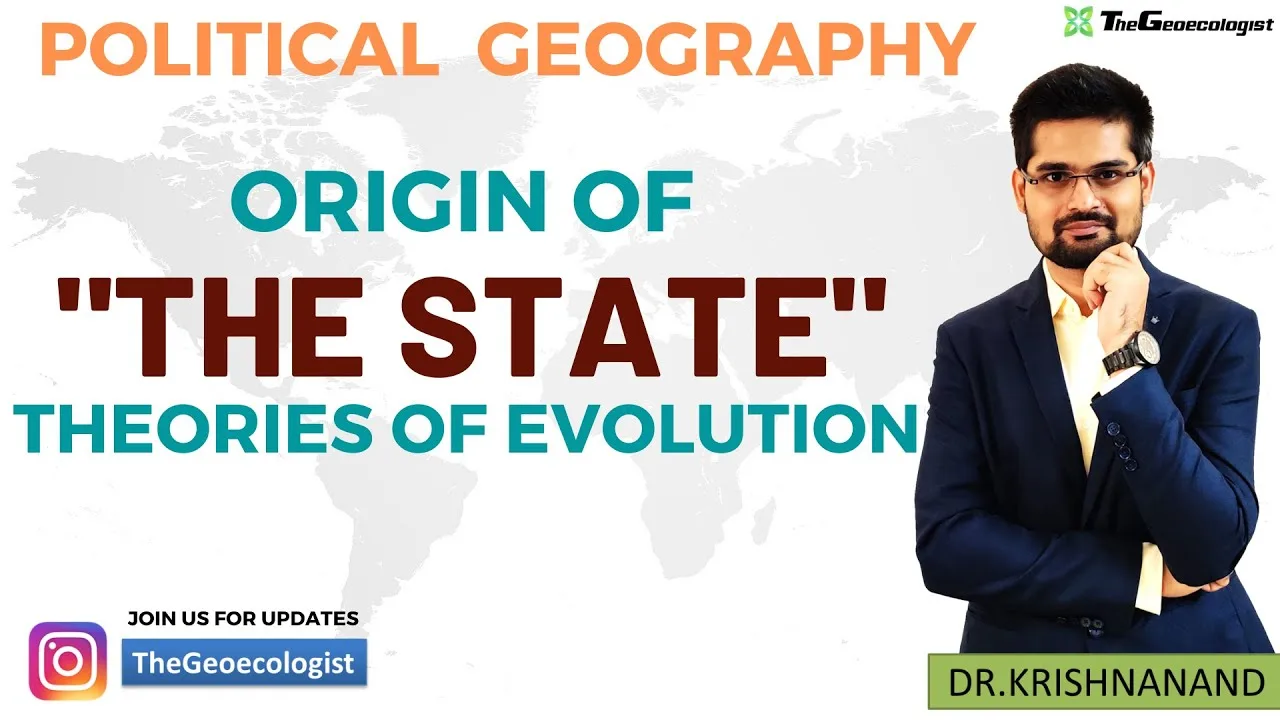
Table of Contents
- Defining the State: Core Elements and Distinctions
- Major Theories Explaining the Origin of State
- Social Contract Theory: Voluntary Consent for Security
- Divine Right Theory: Sacred Mandate for Monarchy
- Force Theory: Conquest and Coercion as State Builders
- Marxist Perspective: Class Struggle and Economic Control
- Geographical Determinants of the Origin of State
- Riverine Civilizations: Hydraulic Hypothesis
- Mountains, Coastlines, and City-States
- Evolution of the State: Four Historical Phases
- Phase 1: Ancient and Classical Eras (c. 3500 BCE – 500 CE)
- Phase 2: Medieval Feudalism (c. 500 – 1500 CE)
- Phase 3: Rise of Modern Nation-States (1648 – 1945)
- Phase 4: Decolonization and Post-Colonial States (1945 – Present)
- Contemporary Challenges to State Sovereignty
- Supranational Integration: The European Union Model
- Globalization and Non-State Actors
- Cyber Governance and Digital Sovereignty
- Climate Change: Existential Threat to Territorial Integrity
- Relevance in Political Geography and Competitive Exams
- Conclusion
The origin of state remains one of the most debated and foundational concepts in political geography, shaping how we understand territorial sovereignty, governance, and international relations today. From the ancient city-states of Mesopotamia to the modern nation-state system codified by the 1648 Treaty of Westphalia, the trajectory of state formation reflects humanity’s enduring quest for organized political authority over defined territories. This comprehensive analysis explores the major theories, geographical determinants, and historical phases that define the origin of state and its evolution, providing essential insights for UPSC aspirants, university students, and scholars of geopolitics.
- The origin of state is explained through multiple theoretical lenses: Social Contract, Divine Right, Force, and Marxist perspectives.
- Geographical features like rivers, mountains, and coastlines critically shaped early state boundaries and political control.
- The 1648 Treaty of Westphalia established the modern sovereign state system based on territorial integrity and non-interference.
- Decolonization after 1945 created numerous post-colonial states, many inheriting arbitrary borders drawn by colonial powers.
- Contemporary challenges—globalization, supranational organizations, cyber governance, and climate change—are redefining state sovereignty in the 21st century.
Defining the State: Core Elements and Distinctions
Before examining the origin of state, we must distinguish the state from related concepts. In political geography, a state is a sovereign political entity possessing four essential attributes defined by the 1933 Montevideo Convention: a permanent population, a defined territory, a government, and the capacity to enter into relations with other states. Crucially, a nation refers to a cultural community sharing common heritage, language, or ethnicity—such as the Kurds or Palestinians—while a nation-state represents the ideal alignment of political boundaries with cultural boundaries, exemplified by Japan or Iceland. The origin of state as a legal construct derives its legitimacy from sovereignty—the supreme authority to enforce laws within its territory without external interference—a principle that evolved significantly across historical epochs.
Major Theories Explaining the Origin of State
Political philosophers and geographers have proposed several frameworks to explain the origin of state. Each theory reflects the intellectual climate of its era and offers distinct insights into why humans transitioned from stateless societies to centralized political authority.
Social Contract Theory: Voluntary Consent for Security
The Social Contract theory, articulated by Thomas Hobbes (Leviathan, 1651), John Locke (Two Treatises of Government, 1689), and Jean-Jacques Rousseau (The Social Contract, 1762), posits that the origin of state lies in a voluntary agreement among individuals. In Hobbes’s view, the state of nature was “solitary, poor, nasty, brutish, and short,” compelling rational individuals to surrender absolute freedom to a sovereign in exchange for security. Locke emphasized protection of natural rights—life, liberty, and property—while Rousseau envisioned a collective “general will” expressing popular sovereignty. This theory profoundly influenced modern constitutional democracies and the origin of state legitimacy based on consent of the governed.
Divine Right Theory: Sacred Mandate for Monarchy
Dominant in medieval Europe, the Divine Right theory asserted that monarchs derived authority directly from God, making them accountable only to divine judgment. Bishop Jacques-Bénigne Bossuet, court preacher to Louis XIV of France, famously declared: “The state of monarchy is the supremest thing upon earth; for kings are not only God’s lieutenants upon earth, but even by God himself they are called gods.” This theory justified absolute monarchy and delayed the origin of state concepts based on popular sovereignty until the Enlightenment and revolutions of the 17th–18th centuries.
Force Theory: Conquest and Coercion as State Builders
Advocated by scholars like Franz Oppenheimer (The State, 1908) and Ludwig Gumplowicz, the Force theory argues that the origin of state stems from conquest—powerful groups imposing control over weaker populations to extract tribute and labor. Historical examples abound: the Akkadian Empire (c. 2334 BCE) under Sargon of Akkad, the Roman Empire’s expansion across the Mediterranean, and the Mongol Empire under Genghis Khan. This perspective aligns with archaeological evidence showing early states emerging in regions with high population density and resource competition, where coercive hierarchies offered competitive advantages.
Marxist Perspective: Class Struggle and Economic Control
Friedrich Engels, in The Origin of the Family, Private Property and the State (1884), located the origin of state in the emergence of private property and class antagonisms. The state, in this view, is “a special coercive force” created by the ruling class to maintain economic dominance and suppress dissent. Vladimir Lenin later refined this in State and Revolution (1917), describing the state as “an organ of class rule, an organ for the oppression of one class by another.” This framework remains influential in analyzing post-colonial states where elite capture of state apparatus perpetuates inequality.
Geographical Determinants of the Origin of State
Political geography emphasizes that the origin of state cannot be understood without examining physical geography. Environmental factors provided both constraints and opportunities for early state formation.
Riverine Civilizations: Hydraulic Hypothesis
Karl Wittfogel’s “hydraulic hypothesis” (1957) linked the origin of state to large-scale irrigation management in arid river valleys. The Nile in Egypt, Tigris-Euphrates in Mesopotamia, Indus in South Asia, and Yellow River in China all witnessed early state emergence. Centralized bureaucracies arose to coordinate labor for canal construction, flood control, and grain redistribution—functions requiring hierarchical authority. Egypt’s Old Kingdom (c. 2686–2181 BCE) exemplifies how the Nile’s predictable flooding enabled a unified state under pharaonic rule for millennia.
Mountains, Coastlines, and City-States
In contrast, Greece’s mountainous terrain and indented coastline fostered the origin of state as independent polis (city-states) like Athens, Sparta, and Corinth rather than a unified empire. Geographic fragmentation encouraged maritime trade, colonization, and distinct political experiments—democracy in Athens, oligarchy in Sparta. Similarly, the Italian peninsula’s geography enabled medieval city-states (Venice, Genoa, Florence) to thrive as commercial republics. These examples demonstrate how topography shapes the scale and form of the origin of state.
Evolution of the State: Four Historical Phases
The origin of state marks only the beginning; its evolution traces a trajectory from kinship-based polities to the contemporary international system.
Phase 1: Ancient and Classical Eras (c. 3500 BCE – 500 CE)
The earliest states emerged in Mesopotamia (Uruk, Ur) and Egypt as temple-centered theocracies. The origin of state here fused religious and political authority. By 600 BCE, the Persian Achaemenid Empire pioneered imperial administration across three continents. In South Asia, the Mauryan Empire (322–185 BCE) under Chandragupta and Ashoka established a centralized bureaucracy described in Kautilya’s Arthashastra. Rome’s evolution from city-state (753 BCE) to Republic (509 BCE) to Empire (27 BCE) introduced legal concepts—jus gentium, citizenship—that still underpin modern statehood.
Phase 2: Medieval Feudalism (c. 500 – 1500 CE)
After Rome’s fall, the origin of state fragmented into feudalism—a decentralized system where lords exercised sovereign-like powers over fiefdoms in exchange for military service. The Catholic Church claimed universal spiritual authority, often clashing with monarchs (Investiture Controversy, 1076–1122). In the Islamic world, the Caliphate represented a distinct model of religious-political unity, while China’s Tang and Song dynasties maintained sophisticated bureaucratic states. This era shows the origin of state as a contested, layered sovereignty rather than a monopoly.
Phase 3: Rise of Modern Nation-States (1648 – 1945)
The Treaty of Westphalia (1648), ending the Thirty Years’ War, is the cornerstone of the modern state system. It enshrined Westphalian sovereignty: territorial integrity, legal equality of states, and non-interference in domestic affairs. The origin of state as a sovereign, territorial entity became the global norm. The 18th–19th centuries saw nationalism drive unification (Germany 1871, Italy 1871) and colonial expansion—European powers imposed the state form on Africa and Asia through the 1884–85 Berlin Conference. By 1914, the state system was truly global, though colonial territories lacked sovereignty.
Phase 4: Decolonization and Post-Colonial States (1945 – Present)
Post-WWII decolonization produced over 100 new states, swelling UN membership from 51 (1945) to 193 (2023). The origin of state for these nations was often imposed: colonial borders drawn at the Berlin Conference ignored ethnic, linguistic, and geographic realities. Africa’s 1964 OAU Cairo Declaration accepted colonial borders uti possidetis juris to prevent irredentist wars, but resulted in weak states struggling with legitimacy, as seen in the Congo Crisis (1960–65) or Somali irredentism. The origin of state in the Global South thus carries a dual legacy: legal sovereignty without always matching Weberian monopoly on violence.
Contemporary Challenges to State Sovereignty
Today, the origin of state concept faces unprecedented pressures from above, below, and across borders.
Supranational Integration: The European Union Model
The EU represents the most advanced pooling of sovereignty. Member states retain formal sovereignty but transfer competencies—trade, competition law, monetary policy (for eurozone)—to supranational institutions. The 2009 Lisbon Treaty strengthened EU legal personality, allowing it to sign international treaties. This challenges the Westphalian origin of state as the sole locus of authority, creating a “post-Westphalian” order.
Globalization and Non-State Actors
Multinational corporations (MNCs) with revenues exceeding many states’ GDPs (Walmart: $611B in 2023 vs. Pakistan’s GDP: $340B), global financial markets, and digital platforms (Google, Meta) operate across borders, constraining state policy autonomy. Tax avoidance via profit shifting erodes fiscal sovereignty. The origin of state as economic manager is contested by capital mobility.
Cyber Governance and Digital Sovereignty
Cyberspace lacks clear territorial boundaries, complicating the origin of state principle of territorial jurisdiction. The 2013 Snowden revelations exposed mass surveillance crossing borders. States now pursue “digital sovereignty”—EU’s GDPR (2018), China’s Great Firewall, India’s data localization laws—attempting to reassert control. The UN Group of Governmental Experts (GGE) seeks norms for state behavior in cyberspace, but attribution remains difficult.
Climate Change: Existential Threat to Territorial Integrity
Rising seas threaten the physical territory of low-lying states—Kiribati, Tuvalu, Marshall Islands. The origin of state requires defined territory; if territory disappears, does statehood persist? The 2021 IPCC report projects 0.28–0.55m sea-level rise by 2100. Pacific Island nations explore “deterritorialized statehood” or migration with sovereignty preserved—a novel challenge for international law.
Relevance in Political Geography and Competitive Exams
For UPSC and university curricula, the origin of state is a high-yield topic. Examiners test:
- Comparative analysis of state origin theories (Social Contract vs. Force vs. Marxist)
- Westphalian sovereignty: principles, evolution, and critiques
- Geopolitical theories: Mackinder’s Heartland (1904), Spykman’s Rimland (1942), and their relevance to state strategy
- Decolonization case studies: India-Pakistan partition (1947), African borders, South Sudan (2011)
- Contemporary issues: R2P (Responsibility to Protect), humanitarian intervention vs. sovereignty
Academic political geography, as advanced by scholars like John Agnew (Geopolitics: Re-visioning World Politics), Stuart Elden (The Birth of Territory), and Neil Smith, examines how spatial processes—capital accumulation, military projection, border-making—constitute the origin of state as an ongoing socio-spatial production rather than a historical event.
Conclusion
The origin of state is not a single moment but a layered, contested process spanning millennia. From hydraulic despotisms of antiquity to the algorithmic governance of the digital age, the state has continuously adapted to geographical, technological, and ideological shifts. The Westphalian template—territorial, sovereign, exclusive—remains the dominant organizing principle of world politics, yet it faces erosion from supranational integration, global markets, cyber flows, and ecological crisis. For students of political geography, understanding the origin of state provides the analytical toolkit to navigate these transformations. As the international system enters what some call a “post-Westphalian” or “neo-medieval” phase—with overlapping authorities, fragmented sovereignty, and non-territorial actors—the origin of state remains the essential reference point for diagnosing both continuity and rupture in global governance.
For deeper study, watch Dr. Krishnanand’s detailed lecture on the origin of state and evolution of political geography. Follow @thegeoecologist on Instagram for daily geographic insights, and explore comprehensive courses at TheGeoecologist Website.
Frequently Asked Questions
The four main theories are: Social Contract Theory (Hobbes, Locke, Rousseau), Divine Right Theory (medieval monarchies), Force Theory (conquest and coercion), and Marxist Perspective (class struggle and economic control). Each offers a distinct explanation for why centralized political authority emerged.
The Treaty of Westphalia established three core principles: territorial sovereignty, legal equality of states, and non-interference in domestic affairs. It ended the Thirty Years' War and created the Westphalian state system that remains the foundation of international law and the UN Charter today.
Key challenges include: supranational organizations (EU, UN) pooling sovereignty; globalization and multinational corporations eroding economic control; cyber governance issues where territorial jurisdiction is ambiguous; and climate change threatening the physical territory of low-lying island states, raising questions about statehood without territory.