Blog
NTA UGC NET Oceanography: The Complete Study Guide for Aspirants


Key Takeaways
- NTA UGC NET Oceanography is a high-weightage unit in the Geography paper, and structured preparation is essential.
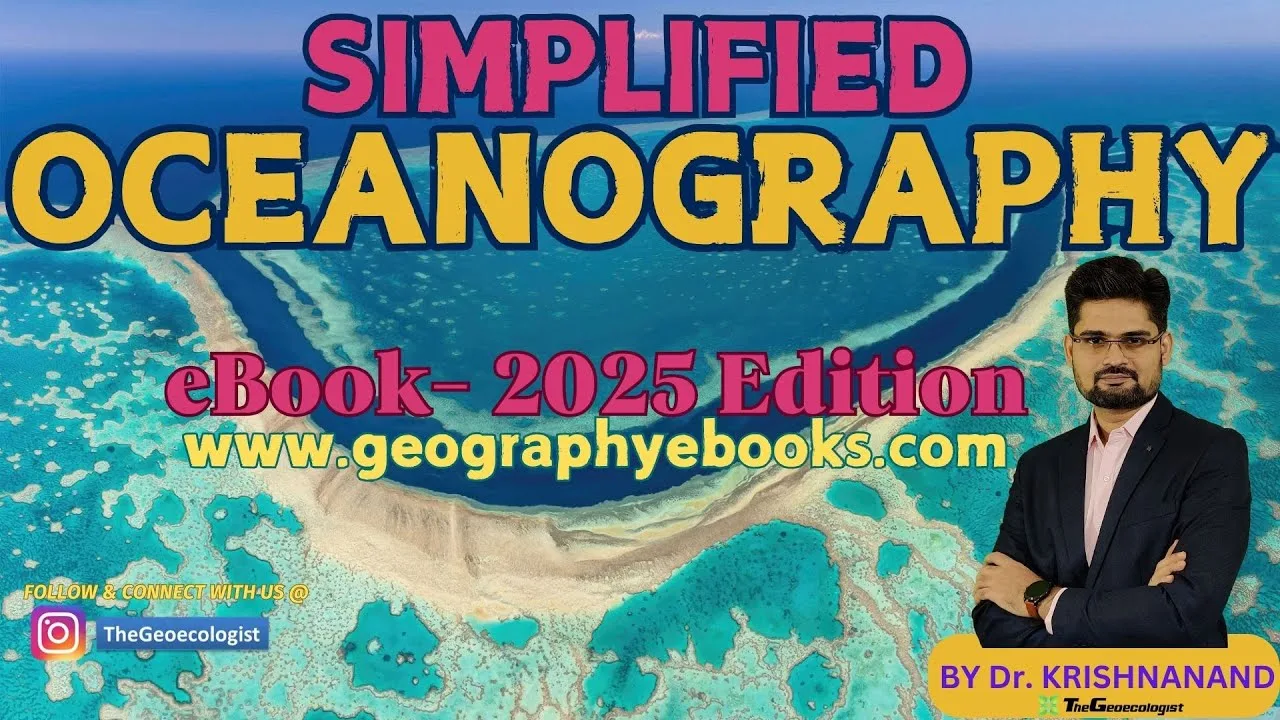
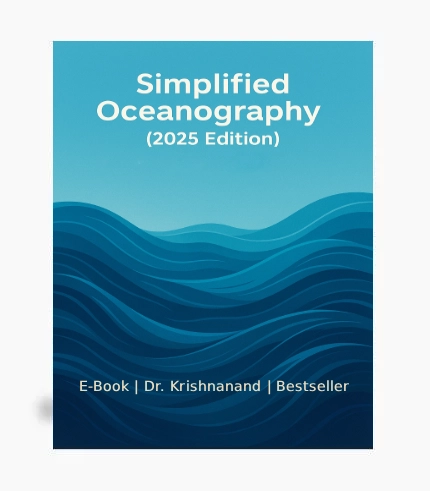
- Simplified Oceanography (2025 Edition) by Dr. Krishnanand aligns with the CBCS syllabus and covers every sub-topic tested in the exam.
- Point-wise highlighted descriptions, diagrams, and maps make complex oceanographic concepts easier to retain.
- This e-book is priced at ₹249 and is widely regarded as a bestseller among UPSC CSE aspirants and geography students.
- Chapter-wise coverage of Atlantic, Indian, and Pacific Ocean bottom topography ensures comprehensive exam readiness.
If you are preparing for the NTA UGC NET Oceanography section, you already know that Unit 3 can make or break your Geography paper. The sheer volume of topics — from ocean bottom topography to salinity and temperature patterns — overwhelms most aspirants. Without a structured, syllabus-aligned resource, students often waste months juggling scattered notes and outdated textbooks. The good news is that a single well-designed e-book can transform your preparation strategy.
Understanding the Scope of Oceanography in the NTA UGC NET Syllabus
Oceanography is not just a supplementary topic; it is a core component of the NTA UGC NET Oceanography syllabus under Geography Paper II. The National Testing Agency expects candidates to demonstrate knowledge of marine phenomena, seafloor features, ocean currents, and ecological systems. According to the official NTA syllabus framework, Unit 3 carries significant marks, often contributing 15–20 questions directly or indirectly to the examination Oceanography as a discipline spans physical, chemical, biological, and geological sub-fields, all of which are tested in the exam.
Candidates preparing for NTA UGC NET Oceanography need resources that break down each sub-topic into digestible segments. The e-book Simplified Oceanography (2025 Edition) by Dr. Krishnanand was specifically designed with this requirement in mind, ensuring that every chapter maps directly to the prescribed CBCS syllabus.
Why Oceanography Is a High-Yield Unit for NTA UGC NET
Many aspirants underestimate the importance of Oceanography in the NTA UGC NET Oceanography paper. However, historical question papers reveal a consistent pattern: questions on ocean bottom topography, salinity gradients, and temperature zones appear almost every year. For instance, the Atlantic, Indian, and Pacific Ocean floor features have been recurring topics in at least three out of every five previous year papers.
Scoring well in this unit requires more than rote memorization. Candidates must understand the interplay between tectonic activity, ocean currents, and marine ecosystems. A resource like Simplified Oceanography (2025 Edition) addresses this by presenting complex data through point-wise descriptions and annotated diagrams, helping aspirants visualize and remember critical information for the exam.
How to Evaluate Study Material for NTA UGC NET Oceanography
Not every oceanography book qualifies as NTA UGC NET Oceanography preparation material. Before investing time or money, aspirants should evaluate resources against three criteria:
- Syllabus Alignment: Does the book cover every topic listed in the official CBCS syllabus?
- Clarity of Explanation: Are complex concepts simplified without losing academic rigor?
- Visual Aids: Are maps, diagrams, and charts included to reinforce understanding?
Simplified Oceanography (2025 Edition) meets all three criteria. Dr. Krishnanand has structured the content so that each chapter begins with foundational concepts and progresses to advanced topics. The point-wise highlighted descriptions ensure that key facts are immediately visible during revision, which is a crucial advantage for time-constrained aspirants preparing for NTA UGC NET Oceanography.
Simplified Oceanography by Dr. Krishnanand: A Purpose-Built Resource
Simplified Oceanography (2025 Edition) by Dr. Krishnanand stands out as one of the most targeted resources available for NTA UGC NET Oceanography preparation. The book is on the prescribed CBCS syllabus in geography, which means every chapter directly corresponds to what the examination expects candidates to know.
The e-book is priced at ₹249, making it one of the most affordable comprehensive resources on the market. Despite its low price point, the content quality rivals much expensive textbooks. The 2025 edition has been updated to reflect the latest examination patterns and syllabus modifications, ensuring that aspirants are studying relevant material.
What makes this book particularly effective for NTA UGC NET Oceanography preparation is its emphasis on visual learning. Diagrams, maps, and images are strategically placed throughout the text to illustrate concepts that are otherwise difficult to grasp from plain text alone. This multi-modal approach caters to different learning styles and significantly improves retention.
Chapter-Wise Coverage and Content Breakdown
The Simplified Oceanography (2025 Edition) e-book is organized into well-structured chapters, each addressing a specific area of the NTA UGC NET Oceanography syllabus:
- Chapter 1: Introduction to Oceanography (Pages 5–25) covers the scope and relevance of the field, providing a solid foundation for advanced topics.
- Chapter 2: Atlantic Ocean Bottom Topography (Pages 26–36) explores the geological features and complex seafloor structures of the Atlantic basin.
- Chapter 3: Indian Ocean Bottom Topography (Pages 37–46) examines unique characteristics including trenches and mid-ocean ridges specific to the Indian Ocean.
- Chapter 4: Pacific Ocean Bottom Topography (Pages 47–58) covers the vast Pacific seafloor, including deep-sea trenches and volcanic islands.
- Chapter 5: Ocean’s Temperature (Pages 59–74) explains factors influencing temperature variations and their impact on marine ecosystems and climate.
- Chapter 6: Ocean’s Salinity continues the detailed exploration of chemical oceanography fundamentals.
This systematic chapter-wise approach ensures that candidates preparing for NTA UGC NET Oceanography can study methodically, topic by topic, without missing any critical area of the syllabus.
Practical Usage Tips for Aspirants
Having the right resource is only half the battle. Here is how aspirants can maximize the value of Simplified Oceanography (2025 Edition) for their NTA UGC NET Oceanography preparation:
- First Pass: Read each chapter end-to-end to build conceptual understanding. Focus on the diagrams and maps to visualize oceanographic features.
- Second Pass: Use the point-wise highlighted descriptions for quick revision. These summaries are ideal for last-minute preparation.
- Practice Integration: After completing each chapter, solve previous year questions related to that topic to test retention.
- Group Study: Use the e-book as a reference during study groups, explaining concepts using the visual aids provided.
The e-book format makes it accessible on tablets, laptops, and smartphones, allowing aspirants to study anywhere — whether commuting, during breaks, or at home. This flexibility is a significant advantage for NTA UGC NET Oceanography preparation alongside other subjects.
Who Should Use This E-Book
Simplified Oceanography (2025 Edition) is designed for a broad audience. UPSC CSE aspirants who need a strong foundation in oceanography will find the content comprehensive yet accessible. Undergraduate geography students following the CBCS syllabus will benefit from the structured chapter-wise approach. Even geography enthusiasts who want to understand the dynamics of Earth’s oceans will appreciate the clear, concise explanations.
For anyone specifically targeting NTA UGC NET Oceanography, this e-book eliminates the guesswork from preparation. By aligning every chapter with the prescribed syllabus and providing exam-relevant visual aids, it removes the common obstacles that prevent aspirants from scoring well in this unit. At ₹249, it offers exceptional value for the depth and quality of content delivered.
Frequently Asked Questions
Q1: Is Simplified Oceanography (2025 Edition) sufficient for NTA UGC NET Oceanography preparation?
Yes, the e-book covers the entire prescribed CBCS syllabus and includes point-wise descriptions, diagrams, and maps. When combined with previous year question papers, it provides comprehensive coverage of the NTA UGC NET Oceanography syllabus.
Q2: Does the e-book include solutions to previous year questions?
The e-book focuses on conceptual clarity and syllabus-aligned content. While it does not include a dedicated question bank, the structured chapters and highlighted key points make it easy to identify and practice frequently tested topics for NTA UGC NET Oceanography.
Q3: Can beginners with no prior oceanography knowledge use this e-book?
Absolutely. Chapter 1 introduces the fundamentals of oceanography, and each subsequent chapter builds on previous concepts. The simplified language and visual aids make it accessible even to readers encountering oceanography for the first time, including those preparing for NTA UGC NET Oceanography.
Our Recommendation
📖 Part of our complete guide: Evolution of Geographical Thought: A Comprehensive Guide for UPSC Aspirants and Geography Enthusiasts
Frequently Asked Questions
Is Simplified Oceanography (2025 Edition) aligned with the NTA UGC NET syllabus?
Yes, the e-book is on the prescribed CBCS syllabus in geography and covers all major topics tested under NTA UGC NET Oceanography, including ocean bottom topography, temperature, and salinity.
What makes Simplified Oceanography different from other oceanography textbooks?
It features point-wise highlighted descriptions, diagrams, maps, and images that simplify complex concepts, specifically designed for UPSC CSE aspirants, undergraduates, and geography enthusiasts preparing for competitive exams.
Can undergraduate students use this e-book for their semester exams?
Yes, the book follows the CBCS syllabus and provides comprehensive coverage of oceanographic topics, making it suitable for undergraduate geography students as well as competitive exam aspirants.