Blog
National Space Day ISRO: Celebrating India’s Stellar Journey to the Stars

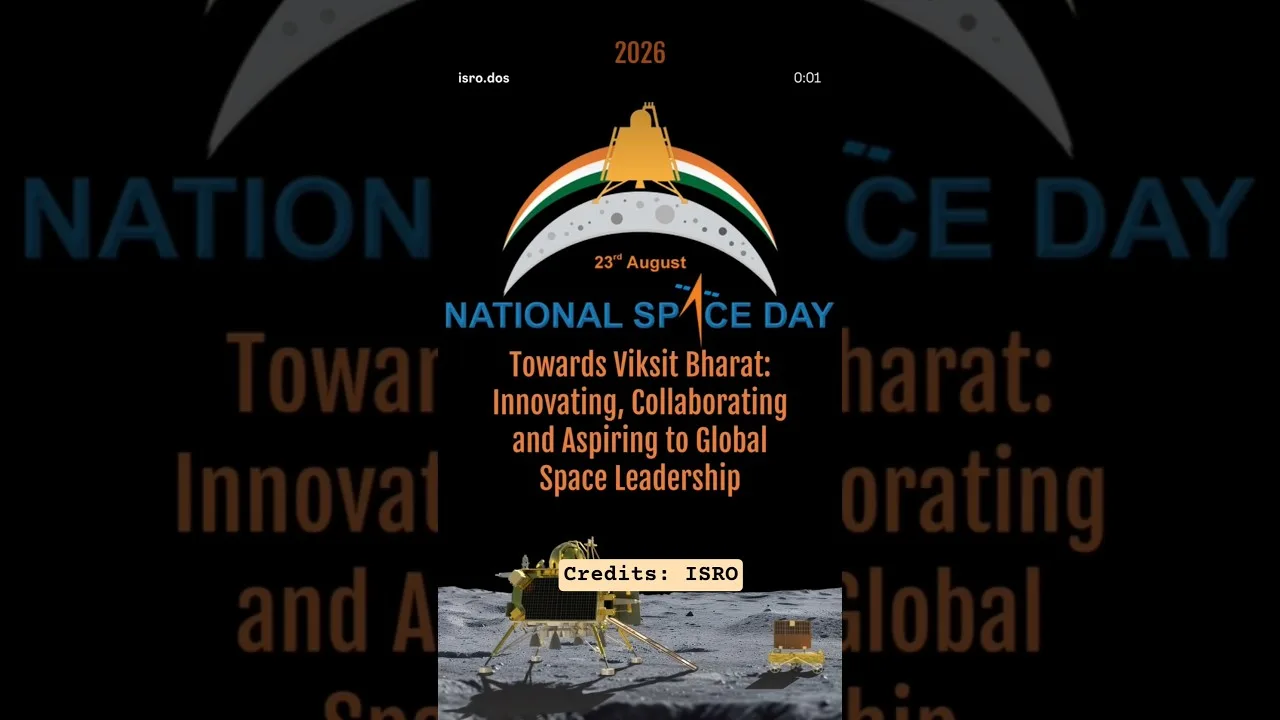
Table of Contents
- The Genesis of National Space Day ISRO
- Historical Milestones Leading to National Space Day ISRO
- The Early Years: Building the Foundation (1960s-1980s)
- The PSLV Era: Reliability and Commercial Success (1990s-2000s)
- Interplanetary Breakthroughs: Chandrayaan and Mangalyaan
- Chandrayaan-3: The Catalyst for National Space Day ISRO
- Mission Overview and Objectives
- The Historic Landing
- Scientific Significance
- Aditya-L1: India's First Solar Mission
- Upcoming Missions: The Road Ahead for National Space Day ISRO
- Gaganyaan: India's Human Spaceflight Program
- Chandrayaan-4: Lunar Sample Return
- Shukrayaan: Venus Orbiter Mission
- Space Station and Beyond
- ISRO's Global Impact and Commercial Success
- Educational and Societal Impact of National Space Day ISRO
- Inspiring the Next Generation
- Applications Benefiting Society
- Challenges and Future Directions
- Celebrating National Space Day ISRO Across India
- Conclusion
National Space Day ISRO celebrations mark a historic milestone in India’s space odyssey, commemorating the nation’s remarkable achievements in space exploration and technology. On August 23, 2023, India etched its name in golden letters in the annals of space history when the Chandrayaan-3 mission successfully achieved a soft landing on the lunar south pole, making India the first nation to accomplish this feat and the fourth country overall to land on the Moon. This watershed moment prompted the Government of India to declare August 23 as National Space Day ISRO annually, celebrating the spirit of Atmanirbharata (self-reliance) and scientific excellence that defines the Indian Space Research Organisation.
- National Space Day ISRO is observed annually on August 23 to commemorate Chandrayaan-3’s historic lunar landing
- India became the first nation to land on the lunar south pole and the fourth country to achieve a soft landing on the Moon
- The day celebrates ISRO’s journey from humble beginnings to becoming a global space power
- Key missions include Aryabhata, Chandrayaan-1, Mangalyaan, Chandrayaan-3, and Aditya-L1
- Future missions include Gaganyaan (human spaceflight), Chandrayaan-4, and Shukrayaan (Venus mission)
The Genesis of National Space Day ISRO
The declaration of National Space Day ISRO by Prime Minister Narendra Modi on August 26, 2023, came as a fitting tribute to the scientists, engineers, and visionaries who transformed India’s space dreams into reality. The date August 23 was chosen specifically to honor the Chandrayaan-3 Vikram lander’s touchdown on the Moon’s surface at 6:04 PM IST. This achievement was not merely a technological triumph but a testament to India’s perseverance after the near-success of Chandrayaan-2 in 2019.
The Indian Space Research Organisation has come a long way since its inception in 1969 under the visionary leadership of Dr. Vikram Sarabhai. From launching sounding rockets from Thumba Equatorial Rocket Launching Station (TERLS) in Kerala to operating a full-fledged space program with launch vehicles, satellites, and interplanetary missions, ISRO’s journey embodies the essence of Atmanirbhar Bharat.
Historical Milestones Leading to National Space Day ISRO
The Early Years: Building the Foundation (1960s-1980s)
India’s space program began with the establishment of the Indian National Committee for Space Research (INCOSPAR) in 1962, which later evolved into ISRO in 1969. The launch of Aryabhata, India’s first satellite, on April 19, 1975, from the Soviet Union’s Kapustin Yar, marked the country’s entry into the space age. The Satellite Launch Vehicle-3 (SLV-3) successfully placed Rohini satellite RS-1 in orbit on July 18, 1980, making India the sixth nation to possess indigenous launch capability.
The PSLV Era: Reliability and Commercial Success (1990s-2000s)
The Polar Satellite Launch Vehicle (PSLV), first launched in 1993, became ISRO’s workhorse with an enviable success rate. By 2024, PSLV has completed over 58 successful missions, launching satellites for more than 70 countries. The PSLV-C37 mission on February 15, 2017, created a world record by deploying 104 satellites in a single launch, showcasing ISRO’s commercial prowess and cost-effectiveness.
Interplanetary Breakthroughs: Chandrayaan and Mangalyaan
Chandrayaan-1 (2008-2009), India’s first lunar mission, discovered water molecules on the Moon’s surface using NASA’s Moon Mineralogy Mapper (M3) instrument. This discovery revolutionized lunar science and paved the way for future exploration. The Mars Orbiter Mission (Mangalyaan), launched on November 5, 2013, made India the first Asian nation to reach Mars orbit and the first in the world to do so in its maiden attempt, at a fraction of the cost of comparable missions.
Chandrayaan-3: The Catalyst for National Space Day ISRO

Mission Overview and Objectives
Launched on July 14, 2023, from Satish Dhawan Space Centre, Sriharikota, aboard the LVM3-M4 vehicle, Chandrayaan-3 consisted of a propulsion module, the Vikram lander, and the Pragyan rover. The mission’s primary objectives were to demonstrate safe and soft landing on the lunar surface, demonstrate rover mobility on the Moon, and conduct in-situ scientific experiments.
The Historic Landing
On August 23, 2023, at 6:04 PM IST, the Vikram lander executed a flawless powered descent and touched down at 69.37°S latitude and 32.35°E longitude — the lunar south pole region. This achievement made National Space Day ISRO a reality. The Pragyan rover subsequently rolled out and traversed over 100 meters on the lunar surface, conducting experiments with its Alpha Particle X-ray Spectrometer (APXS) and Laser Induced Breakdown Spectroscope (LIBS), confirming the presence of sulfur, aluminum, calcium, iron, chromium, titanium, manganese, silicon, and oxygen.
Scientific Significance
The lunar south pole region is of immense scientific interest due to permanently shadowed craters that may harbor water ice — a critical resource for future lunar habitation and deep space exploration. Chandrayaan-3’s findings contribute valuable data to the global understanding of lunar geology and resource potential.
Aditya-L1: India’s First Solar Mission
Hot on the heels of Chandrayaan-3’s success, ISRO launched Aditya-L1 on September 2, 2023 — India’s first dedicated solar observatory mission. Positioned at the Sun-Earth Lagrange Point 1 (L1), approximately 1.5 million kilometers from Earth, Aditya-L1 carries seven payloads to study the solar corona, photosphere, chromosphere, and solar wind. This mission demonstrates ISRO’s expanding capabilities beyond lunar and planetary exploration into heliophysics.
Upcoming Missions: The Road Ahead for National Space Day ISRO
Gaganyaan: India’s Human Spaceflight Program
The Gaganyaan mission aims to send Indian astronauts (Gagannauts) to low Earth orbit by 2025-2026. The program includes two uncrewed test flights (G1 and G2) followed by the crewed mission (H1). The Crew Escape System (CES) and Crew Module have undergone successful testing. Four Indian Air Force test pilots have completed training in Russia and India. Gaganyaan will make India the fourth nation with independent human spaceflight capability.
Chandrayaan-4: Lunar Sample Return
Planned for 2028, Chandrayaan-4 will be a lunar sample return mission, demonstrating end-to-end capabilities for landing, sample collection, ascent, and return to Earth. This mission is a crucial stepping stone for future human lunar missions and potential collaboration with international partners.
Shukrayaan: Venus Orbiter Mission
Shukrayaan-1, targeted for launch in 2028, will study Venus’s surface, subsurface, atmospheric chemistry, and solar wind interaction. Understanding Venus’s runaway greenhouse effect provides critical insights into planetary climate evolution and Earth’s future.
Space Station and Beyond
India has announced plans to establish the Bharatiya Antariksh Station (Indian Space Station) by 2035 and aims to send an Indian astronaut to the Moon by 2040. These ambitious goals reflect the long-term vision celebrated by National Space Day ISRO.
ISRO’s Global Impact and Commercial Success
Through its commercial arm NewSpace India Limited (NSIL) and the Indian National Space Promotion and Authorization Center (IN-SPACe), ISRO has fostered a thriving private space ecosystem. As of 2024, over 200 space startups operate in India, attracting significant investment. ISRO’s cost-effective launch services have earned global recognition — the Mars Orbiter Mission cost approximately $74 million, less than the budget of the Hollywood film “Gravity” ($100 million).
The Indian Space Research Organisation continues to collaborate with international space agencies including NASA, ESA, JAXA, and Roscosmos on various missions. The NASA-ISRO Synthetic Aperture Radar (NISAR) mission, scheduled for 2024, exemplifies this cooperation.
Educational and Societal Impact of National Space Day ISRO
Inspiring the Next Generation
National Space Day ISRO serves as a powerful inspiration for millions of Indian students. ISRO’s outreach programs, including the Young Scientist Programme (YUVIKA), Space Quiz competitions, and museum exhibitions, engage youth across the country. The day is celebrated in schools and colleges with lectures, model-making competitions, and interactive sessions with scientists.
Applications Benefiting Society
ISRO’s satellites provide critical services to the nation: communication (GSAT series), navigation (NavIC/IRNSS), earth observation (Resourcesat, Cartosat, Oceansat), and meteorology (INSAT-3D/3DR). These enable telemedicine, tele-education, disaster management, agricultural forecasting, fisheries guidance, and urban planning — directly impacting citizens’ lives.
Challenges and Future Directions
Despite remarkable achievements, challenges remain. Developing heavy-lift launch capability (beyond LVM3’s 4-ton GTO capacity), mastering cryogenic engine technology for upper stages, reducing launch costs further through reusability (RLV-TD program), and building deep space communication infrastructure are ongoing priorities. The National Space Day ISRO celebrations also highlight the need for sustained investment in R&D, talent retention, and regulatory frameworks for the burgeoning private space sector.
Celebrating National Space Day ISRO Across India
The inaugural National Space Day ISRO on August 23, 2024, witnessed nationwide celebrations. The main event at Bharat Mandapam, New Delhi, featured exhibitions, panel discussions, and award ceremonies. ISRO centers across the country — Sriharikota, Bengaluru, Thiruvananthapuram, Ahmedabad, Hyderabad — hosted open houses, allowing the public to witness space technology firsthand. Digital campaigns with hashtags #NationalSpaceDay, #ISRO, and #JaiHind trended globally, uniting Indians in pride.
Conclusion
National Space Day ISRO is more than a commemoration of a single mission’s success; it is a celebration of India’s scientific temperament, engineering excellence, and the collective dream of 1.4 billion Indians. From the humble beginnings at Thumba to the lunar south pole, from Aryabhata to Aditya-L1, from launching apples on bullock carts to launching 104 satellites at once — the journey reflects a nation’s unwavering commitment to exploring the unknown. As India sets its sights on human spaceflight, a space station, and lunar habitation, National Space Day ISRO will continue to inspire generations to look up at the stars and say, “We belong there.” The sky is not the limit; it is just the beginning.
Frequently Asked Questions
National Space Day ISRO is celebrated annually on August 23, commemorating the successful soft landing of Chandrayaan-3's Vikram lander on the Moon's south pole on August 23, 2023.
The Government of India declared August 23 as National Space Day ISRO to honor the historic achievement of Chandrayaan-3, which made India the first nation to land on the lunar south pole and the fourth country to achieve a soft landing on the Moon.
ISRO's major upcoming missions include Gaganyaan (human spaceflight by 2025-26), Chandrayaan-4 (lunar sample return by 2028), Shukrayaan (Venus orbiter by 2028), the Bharatiya Antariksh Station (Indian Space Station by 2035), and a crewed lunar mission by 2040.