Blog
Direct PhD after Graduation: DU’s New Research Path

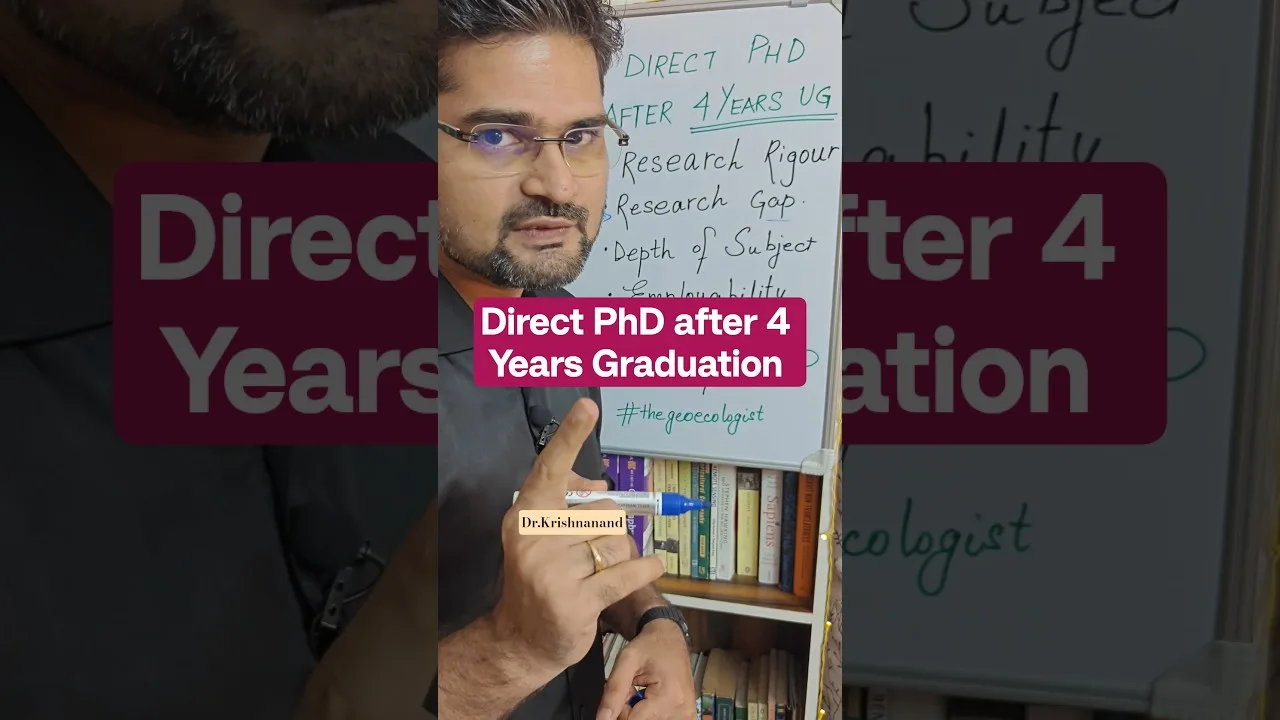
Table of Contents
- Direct PhD after Graduation: Understanding the Policy
- Historical Context of Doctoral Admissions in India
- Key Features of DU’s New Directive
- The Rigor Debate: Does a Master’s Matter?
- Research Methodology and Subject Depth
- Academic Maturity and Preparedness
- International Comparisons: Lessons from Abroad
- United States and the PhD Track
- European Bologna Process
- Impact on Students and Supervisors
- Student Perspectives
- Supervisor Workload and Mentorship
- Recommendations for a Balanced Pathway
- Conclusion
Direct PhD after Graduation has become a hot topic after Delhi University announced that students with a four‑year undergraduate degree can now apply directly for a doctoral programme. This policy shift aims to reduce the time spent in higher education and attract talented graduates early into research. However, academics warn that bypassing the traditional Master’s stage may compromise research rigour, methodological training, and subject depth. In Direct PhD after Graduation we examine the implications of Direct PhD after Graduation for students, supervisors, and the broader research ecosystem.
- Delhi University’s new rule allows direct entry to PhD after a four‑year UG degree.
- The move shortens the traditional path by eliminating the compulsory Master’s year.
- Critics argue that research rigour and methodological training may suffer without a Master’s.
- Supporters highlight increased accessibility and faster entry into research careers.
- International models show mixed results when Master’s is omitted from the PhD track.
Direct PhD after Graduation: Understanding the Policy
The University Grants Commission (UGC) has long mandated a Master’s degree as a prerequisite for doctoral registration in most disciplines. In 2023, Delhi University issued a notification permitting candidates who have completed a four‑year undergraduate programme (such as B.Tech, B.E., or B.Sc. (Hons)) to apply for PhD admission without an intervening Master’s. The decision was framed as a response to the National Education Policy (NEP) 2020, which encourages flexibility and multiple entry‑exit points in higher education. – a key consideration for Direct PhD after Graduation.
Historical Context of Doctoral Admissions in India
Historically, Indian universities required a two‑year Master’s after a three‑year bachelor’s before PhD enrolment. Over the past decade, several institutions experimented with integrated BS‑MS or B.Tech‑M.Tech pathways, but the Master’s remained a de facto gatekeeper. Delhi University’s shift is notable because Direct PhD after Graduation is one of the largest central universities in the country, influencing policy debates nationwide.
Key Features of DU’s New Directive
- Eligibility: Candidates with a minimum 75% aggregate or equivalent CGPA in a four‑year UG programme.
- Selection: Entrance test followed by interview; research proposal evaluation remains mandatory.
- Supervision: Allocated supervisors must submit a mentorship plan detailing how methodological gaps will be bridged.
- Coursework: Students must complete two compulsory research‑methodology papers in the first semester.
- Monitoring: Biannual progress reviews by a doctoral committee to ensure timely skill development.
The Rigor Debate: Does a Master’s Matter?
The central question surrounding Direct PhD after Graduation is whether the absence of a Master’s degree undermines the essential components of doctoral training. A Master’s programme traditionally provides:
- Advanced theoretical grounding in the discipline.
- Specialised knowledge through elective courses and seminars.
- Hands‑on training in research methodologies, data analysis, and academic writing.
- Time to develop academic maturity, including critical thinking and independent problem‑solving.
Research Methodology and Subject Depth
Without a Master’s, students may enter PhD with limited exposure to advanced statistical techniques, qualitative analysis frameworks, or laboratory protocols. A 2022 study published in Higher Education Research & Development found that PhD candidates who skipped a formal Master’s required, on average, an additional six months to achieve parity in methodological competence with their peers who held a Master’s degree. Delhi University’s mandatory methodology courses aim to mitigate this gap, but critics argue that condensed coursework cannot replicate the depth achieved over two years. – a key consideration for Direct PhD after Graduation.
Academic Maturity and Preparedness
Academic maturity encompasses the ability to formulate research questions, tolerate ambiguity, and engage in scholarly discourse. The Master’s year often serves as a socialisation period where students learn to navigate academic conferences, respond to reviewer feedback, and collaborate within research groups. Supervisors at Delhi University have reported that some direct‑entry PhD scholars initially struggle with time management and the expectations of independent inquiry, necessitating extra mentorship.
International Comparisons: Lessons from Abroad
Examining global practices helps assess whether Direct PhD after Graduation is a viable model or a risky shortcut.
United States and the PhD Track
In the United States, the PhD is typically entered directly after a four‑year bachelor’s degree. The first two years of the doctoral programme are devoted to coursework and qualifying examinations, effectively serving the function of a Master’s. This structure ensures that candidates acquire the necessary theoretical and methodological foundations before embarking on independent research. The U.S. model demonstrates that a Master’s‑equivalent phase can be embedded within the PhD itself, rather than omitted.
European Bologna Process
Many European countries follow the Bologna Process, which standardises a three‑year bachelor’s, a one‑ or two‑year Master’s, and then a PhD. Some nations, such as the United Kingdom, allow direct PhD entry after a bachelor’s with honours, but candidates must complete a Master of Research (MRes) or equivalent taught component during the first year of doctoral study. These hybrid approaches preserve rigor while offering flexibility.
Impact on Students and Supervisors
The policy change affects various stakeholders in distinct ways.
Student Perspectives
Surveys conducted among Delhi University undergraduates in early 2024 revealed mixed feelings. Approximately 42% welcomed the opportunity to save a year and reduce tuition costs, while 38% expressed concern about feeling underprepared for research work. The remaining 20% were undecided, citing a need for clearer guidance on bridging methodological gaps.
Supervisor Workload and Mentorship
Supervisors now bear additional responsibility for ensuring that direct‑entry scholars attain required competencies. This often translates into more frequent meetings, tailored reading lists, and optional workshop attendance. Department heads have noted a modest increase in supervisory workload, estimated at 10‑15% per student, prompting calls for formal recognition of mentorship effort in performance appraisals.
Recommendations for a Balanced Pathway
To harness the benefits of Direct PhD after Graduation while safeguarding academic standards, the following measures are suggested:
- Mandatory Bridge Programme: A compulsory six‑week intensive research‑methodology boot‑camp before formal registration.
- Enhanced Coursework: Increase the number of required core papers from two to four, covering quantitative methods, qualitative approaches, ethics, and academic writing.
- Progress‑Based Milestones: Require students to pass a mid‑term comprehensive examination that assesses both subject knowledge and research skills before advancing to full‑time thesis work.
- Mentor Recognition: Introduce a mentorship credit system that counts supervisory effort toward promotion and appraisal criteria.
- Feedback Loops: Establish a student‑feedback mechanism to continuously refine the bridge programme based on scholar experiences.
Conclusion
Direct PhD after Graduation represents a bold experiment in aligning India’s higher education framework with the aspirations of the National Education Policy 2020. While the policy promises reduced time‑to‑degree and greater access to research careers, Direct PhD after Graduation also raises legitimate concerns about research rigour, methodological preparedness, and academic maturity. By drawing lessons from international models and implementing structured support mechanisms, Delhi University can transform this initiative from a mere time‑saving shortcut into a genuinely enriched pathway to doctoral excellence. The ongoing dialogue among policymakers, faculty, and students will be crucial in shaping a system that balances efficiency with the depth that defines world‑class research.
Frequently Asked Questions
Direct PhD after Graduation allows students with a four‑year undergraduate degree to apply for a doctoral programme without first completing a Master’s degree.
The university mandates two compulsory research‑methodology courses, requires a detailed mentorship plan from supervisors, and conducts biannual progress reviews to ensure scholars develop necessary skills.
Yes, in the United States students typically enter PhD after a four‑year bachelor’s, with the first two years of coursework serving as a Master’s‑equivalent phase; some European systems also offer direct entry with a compulsory research component during the initial doctoral year.