

Blog
Israel Air Defense Systems: Iron Dome, David’s Sling & Arrow Explained

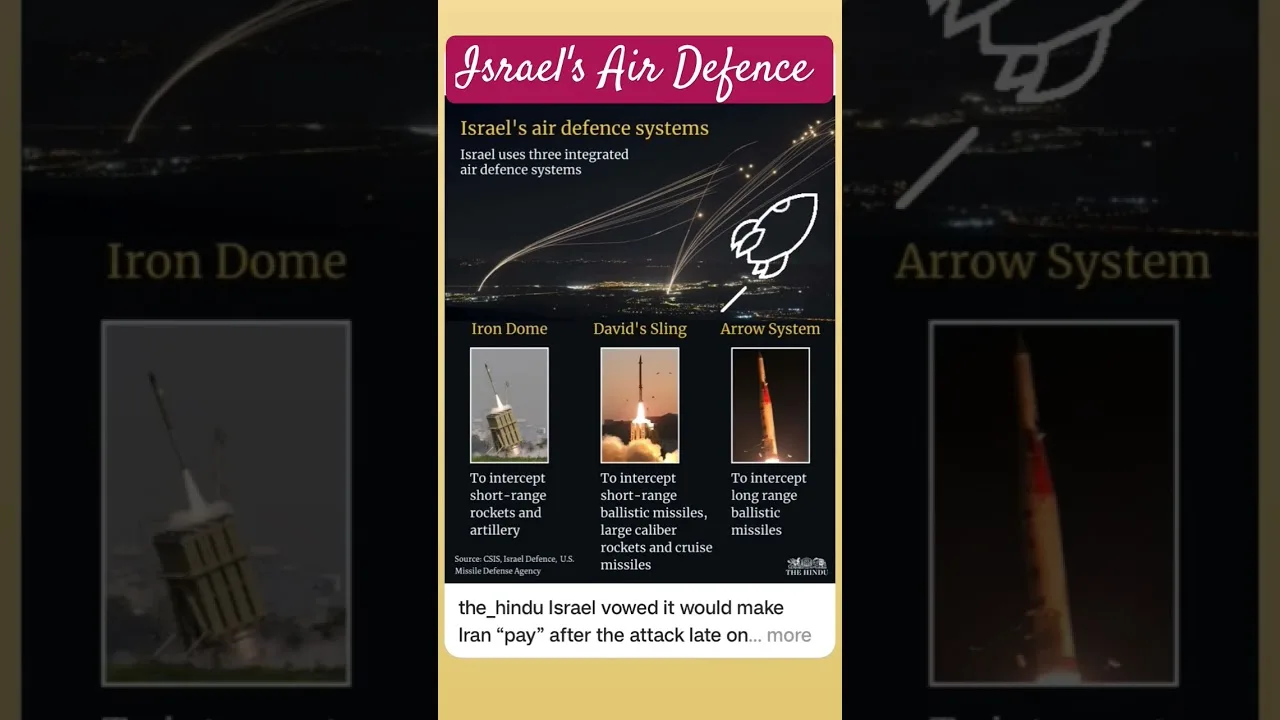
Table of Contents
- Origins and Strategic Imperative Behind Israel Air Defense Systems
- Iron Dome: The Bottom Layer of Israel Air Defense Systems
- Technical Specifications and Capabilities
- Operational Performance and Statistics
- Limitations and Upgrades
- David's Sling: The Middle Layer of Israel Air Defense Systems
- Development History and Partnership
- Interceptor Design and Engagement Envelope
- Combat Debut and Effectiveness
- Arrow 2 and Arrow 3: The Upper Layer of Israel Air Defense Systems
- Arrow 2: Endo-Atmospheric High-Altitude Interceptor
- Arrow 3: Exo-Atmospheric Hit-to-Kill Interceptor
- Strategic Significance Against Iranian Threats
- Integration, Command & Control: The Nervous System of Israel Air Defense Systems
- Comparative Analysis: How Israel Air Defense Systems Stack Up Globally
- Economic and Industrial Dimensions
- Future Trajectory: Lasers, AI, and Space-Based Sensors
- Challenges and Vulnerabilities
- Conclusion: A Model for Integrated Air and Missile Defense
Israel air defense systems represent one of the most sophisticated multi-layered missile defense architectures in the world today. Since the early 2000s, the Jewish state has invested billions of dollars and decades of engineering talent into building a comprehensive shield capable of neutralizing threats ranging from rudimentary short-range rockets to advanced intercontinental ballistic missiles. Israel air defense systems provides an exhaustive examination of the three pillars that form the backbone of Israel’s aerial protection: Iron Dome, David’s Sling, and the Arrow 2 and Arrow 3 interceptors.
- Iron Dome serves as the bottom layer, designed to intercept short-range surface-to-surface rockets, artillery shells, and mortars with ranges up to 70 kilometers.
- David’s Sling occupies the middle layer, optimized for short-to-medium and medium-to-long-range surface-to-surface missiles, including cruise missiles and large-caliber rockets.
- Arrow 2 and Arrow 3 form the upper tier, tasked with exo-atmospheric and endo-atmospheric interception of medium-to-long-range and long-range ballistic missiles.
- The three systems operate as an integrated, network-centric architecture managed by the Israeli Air Force’s Air Defense Command.
- Joint development with the United States through the Missile Defense Agency (MDA) has been critical for funding, testing, and technological exchange.
Origins and Strategic Imperative Behind Israel Air Defense Systems
The genesis of Israel air defense systems traces back to the 1991 Gulf War, when Iraqi Scud missiles struck Israeli cities with no effective interception capability. The trauma of that conflict catalyzed a national commitment to indigenous missile defense. By 1998, Israel and the United States signed a memorandum of understanding to co-develop the Arrow program, marking the first major milestone. Subsequent conflicts—particularly the 2006 Second Lebanon War, during which Hezbollah fired approximately 4,000 rockets into northern Israel—underscored the urgent need for a short-range solution, accelerating Iron Dome’s development. Today, the layered approach reflects a doctrine of “defense in depth,” ensuring that if one layer misses, the next stands ready to engage.
Iron Dome: The Bottom Layer of Israel Air Defense Systems
Technical Specifications and Capabilities
Iron Dome, developed by Rafael Advanced Defense Systems with significant contributions from Elta Systems (a subsidiary of Israel Aerospace Industries), became operational in March 2011. Each battery comprises a detection and tracking radar (EL/M-2084), a battle management and weapon control (BMC) unit, and three to four launchers, each carrying 20 Tamir interceptor missiles. The system is designed to discriminate between threats headed for populated areas or strategic assets and those destined for open terrain, engaging only the former to conserve interceptors. – a key consideration for Israel air defense systems.
Operational Performance and Statistics
During Operation Guardian of the Walls in May 2021, Iron Dome achieved an interception success rate of approximately 90% against more than 4,300 rockets fired from Gaza. In the October 2023 Hamas surprise attack and subsequent war, the system faced unprecedented saturation, with over 9,500 projectiles launched in the first month alone. Despite the volume, Israeli officials reported interception rates consistently above 85%, though the sheer quantity strained interceptor inventories and prompted urgent U.S. resupply shipments. Each Tamir interceptor costs an estimated $40,000–$50,000, while the rockets they destroy often cost a few hundred dollars, creating a persistent cost-asymmetry challenge.
Limitations and Upgrades
Iron Dome’s effective ceiling is roughly 10 kilometers, and its range tops out at 70 kilometers, leaving gaps against longer-range threats. To address this, Rafael has fielded the Iron Dome C-RAM (Counter-Rocket, Artillery, and Mortar) variant for forward-deployed forces and is developing a naval version, C-Dome, for Sa’ar 6-class corvettes. Software updates now allow the system to engage low-flying drones and precision-guided munitions, expanding its utility beyond traditional rocket threats.
David’s Sling: The Middle Layer of Israel Air Defense Systems

Development History and Partnership
Originally dubbed “Magic Wand,” David’s Sling was renamed in 2014 to evoke the biblical David’s victory over Goliath. The program is a joint venture between Rafael and Raytheon (now RTX Corporation), with the Missile Defense Agency providing over $1.5 billion in funding since 2006. The system declared initial operational capability in April 2017 and reached full operational status in 2018.
Interceptor Design and Engagement Envelope
The Stunner interceptor, also known as SkyCeptor, is a two-stage, hit-to-kill missile featuring a dual-pulse solid rocket motor and an advanced multi-spectral seeker (imaging infrared and semi-active radar homing). Israel air defense systems can engage targets at ranges of 40–300 kilometers and altitudes up to 15 kilometers, covering the critical gap between Iron Dome’s ceiling and Arrow’s floor. David’s Sling is designed to defeat tactical ballistic missiles (e.g., Syrian Fateh-110, Iranian Fateh-313), large-caliber rockets (e.g., Hezbollah’s Khaibar-1, Fajr-5), and subsonic/supersonic cruise missiles.
Combat Debut and Effectiveness
David’s Sling recorded its first operational interception on July 23, 2018, downing two Syrian SS-21 Tochka ballistic missiles that strayed toward Israeli territory. During the 2023–2024 Israel-Hamas war, the system was activated multiple times against longer-range rockets fired from Gaza toward central Israel, including the Tel Aviv metropolitan area. Israeli defense officials credit David’s Sling with preventing significant casualties and infrastructure damage, though exact interception counts remain classified.
Arrow 2 and Arrow 3: The Upper Layer of Israel Air Defense Systems
Arrow 2: Endo-Atmospheric High-Altitude Interceptor
Arrow 2 (Hetz 2), developed by Israel Aerospace Industries (IAI) with Boeing as the primary U.S. contractor, entered service in 2000. Israel air defense systems utilizes a two-stage solid-fueled booster and a kill vehicle with an infrared seeker for terminal guidance. Arrow 2 operates within the atmosphere at altitudes up to 50 kilometers, optimized for medium-to-long-range ballistic missiles such as the Iranian Shahab-3 and Syrian Scud-D. The system’s Green Pine radar (EL/M-2080) provides detection ranges exceeding 500 kilometers, enabling early tracking and fire-control solutions.
Arrow 3: Exo-Atmospheric Hit-to-Kill Interceptor
Arrow 3 (Hetz 3), declared operational in January 2017, represents a technological leap. Its kill vehicle is a highly maneuverable, liquid-fueled, divert-and-attitude-control-system (DACS) equipped interceptor capable of exo-atmospheric interception at altitudes above 100 kilometers. By destroying warheads in space, Arrow 3 eliminates the risk of debris falling on populated areas and can engage multiple independently targetable reentry vehicles (MIRVs). The system integrates with the Super Green Pine radar (EL/M-2080S) and the Golden Citron battle management center, providing a detection range of over 1,000 kilometers.
Strategic Significance Against Iranian Threats
The Arrow tier is explicitly designed to counter Iran’s growing ballistic missile arsenal, which includes the Khorramshahr (2,000 km range), Sejjil (2,500 km), and the recently unveiled Kheibar Shekan (1,450 km). In November 2023, Arrow 3 achieved its first combat interception, downing a Houthi-fired ballistic missile launched from Yemen toward Eilat—a range of approximately 1,600 kilometers. This marked the first-ever exo-atmospheric combat interception in history, validating decades of investment. The United States has also expressed interest in procuring Arrow 3 for its own homeland defense architecture, with Germany signing a €3.5 billion agreement in 2023 to acquire the system for NATO integration.
Integration, Command & Control: The Nervous System of Israel Air Defense Systems
The true power of Israel air defense systems lies not in any single battery but in their seamless integration via the Israeli Air Force’s Air Defense Command (ADC). The ADC operates a unified air picture fused from Green Pine, Super Green Pine, EL/M-2084, and civilian air traffic control radars. The Golden Citron (Etrog) battle management system allocates targets to the optimal interceptor based on range, altitude, threat type, and interceptor availability. This network-centric architecture enables “shoot-look-shoot” doctrines, where a missed engagement by one layer can be immediately reassigned to the next.
Furthermore, Israel’s missile defense is linked to U.S. early-warning assets, including Space-Based Infrared System (SBIRS) satellites and AN/TPY-2 X-band radars deployed in the Negev. This bilateral data-sharing arrangement provides seconds to minutes of additional warning time, critical for Arrow engagements. The 2016 Memorandum of Understanding between the U.S. and Israel commits $5 billion in missile defense funding over ten years (2019–2028), ensuring continued interoperability and co-development.
Comparative Analysis: How Israel Air Defense Systems Stack Up Globally
When benchmarked against peer systems, Israel air defense systems occupy a unique niche. The U.S. Patriot PAC-3 MSE and THAAD systems offer comparable upper-tier capabilities but lack an indigenous short-range counterpart equivalent to Iron Dome. Russia’s S-400 Triumf and S-500 Prometey provide long-range area defense but have not demonstrated combat interception rates against saturation rocket attacks. China’s HQ-19 and HQ-29 are developing exo-atmospheric capabilities but remain untested in combat. Israel’s distinction is the operational maturity of all three layers simultaneously, proven across multiple conflicts since 2011.
Economic and Industrial Dimensions
The missile defense industry has become a major export engine for Israel. Rafael’s Iron Dome has been purchased by the United States (two batteries for the U.S. Army), Azerbaijan, India (for air force base protection), and Romania. IAI’s Barak-8 (naval medium-range) and Arrow 3 (Germany) deals exceed $5 billion in combined value. Raytheon’s participation in David’s Sling creates a transatlantic supply chain, with Stunner interceptors manufactured in both Tucson, Arizona, and Haifa. These partnerships deepen strategic ties while offsetting development costs for Israeli taxpayers.
Future Trajectory: Lasers, AI, and Space-Based Sensors
The next frontier for Israel air defense systems is directed energy. The “Iron Beam” high-energy laser weapon system (100 kW class), developed by Rafael with Elbit Systems, completed successful interception trials in April 2022 against rockets, mortars, and drones. Laser interceptors promise near-zero marginal cost per shot, addressing the cost-asymmetry problem. The Israeli Ministry of Defense aims to field operational laser batteries by 2025–2026, initially augmenting Iron Dome batteries.
Artificial intelligence is being integrated into target discrimination, threat prioritization, and resource allocation algorithms. The ADC is experimenting with predictive analytics that correlate launch signatures with historical patterns to pre-position interceptors. Meanwhile, Israel’s Ofek-16 and future Ofek-13 reconnaissance satellites enhance indigenous space-based early warning, reducing reliance on U.S. SBIRS data.
Challenges and Vulnerabilities
Despite their sophistication, Israel air defense systems face mounting challenges. Saturation attacks—simultaneous launches of hundreds of inexpensive rockets, drones, and precision-guided munitions—can overwhelm finite interceptor magazines. Hezbollah’s estimated arsenal of 150,000+ projectiles, including precision-guided missiles capable of striking critical infrastructure, represents a stress scenario far exceeding Gaza-era engagements. Electronic warfare, cyber intrusion, and hypersonic glide vehicles (which Iran claims to be developing) could degrade radar tracking and fire-control solutions. Continuous investment in magazine depth, sensor resilience, and layered redundancy remains imperative.
Conclusion: A Model for Integrated Air and Missile Defense
Israel air defense systems exemplify how a small nation, through strategic foresight, international partnership, and relentless innovation, can construct a world-class missile defense architecture. The triad of Iron Dome, David’s Sling, and Arrow 2/3 provides overlapping coverage across the full spectrum of aerial threats, from $500 rockets to $10 million ballistic missiles. Combat-proven across more than a decade of conflict, these systems have saved countless lives and preserved strategic decision-making space for Israel’s leadership. As threats evolve—cheaper drones, smarter missiles, hypersonic weapons—so too must the shield. The ongoing integration of laser weapons, AI-driven battle management, and space-based sensors ensures that Israel air defense systems will remain at the technological vanguard for years to come.
For readers interested in deeper technical specifications, the Iron Dome Wikipedia page offers detailed subsystem breakdowns. The David’s Sling Wikipedia entry covers Stunner interceptor kinematics and test history. Finally, the Arrow missile family Wikipedia article provides comprehensive data on Arrow 2 and Arrow 3 development milestones.
Frequently Asked Questions
The three layers are Iron Dome (short-range rockets, bottom layer), David's Sling (short-to-medium and medium-to-long-range missiles, middle layer), and Arrow 2/Arrow 3 (medium-to-long-range and long-range ballistic missiles, upper layer).
Iron Dome has demonstrated interception success rates of 85–90% in multiple conflicts, including Operation Guardian of the Walls (2021) and the 2023–2024 Israel-Hamas war, where it engaged over 9,500 projectiles in the first month.
Arrow 3 is the world's first operational exo-atmospheric hit-to-kill interceptor to achieve a combat interception in space, downing a Houthi ballistic missile over the Red Sea in November 2023 at altitudes above 100 kilometers.
