Blog
Industries of Bihar: A Comprehensive Industrial Analysis

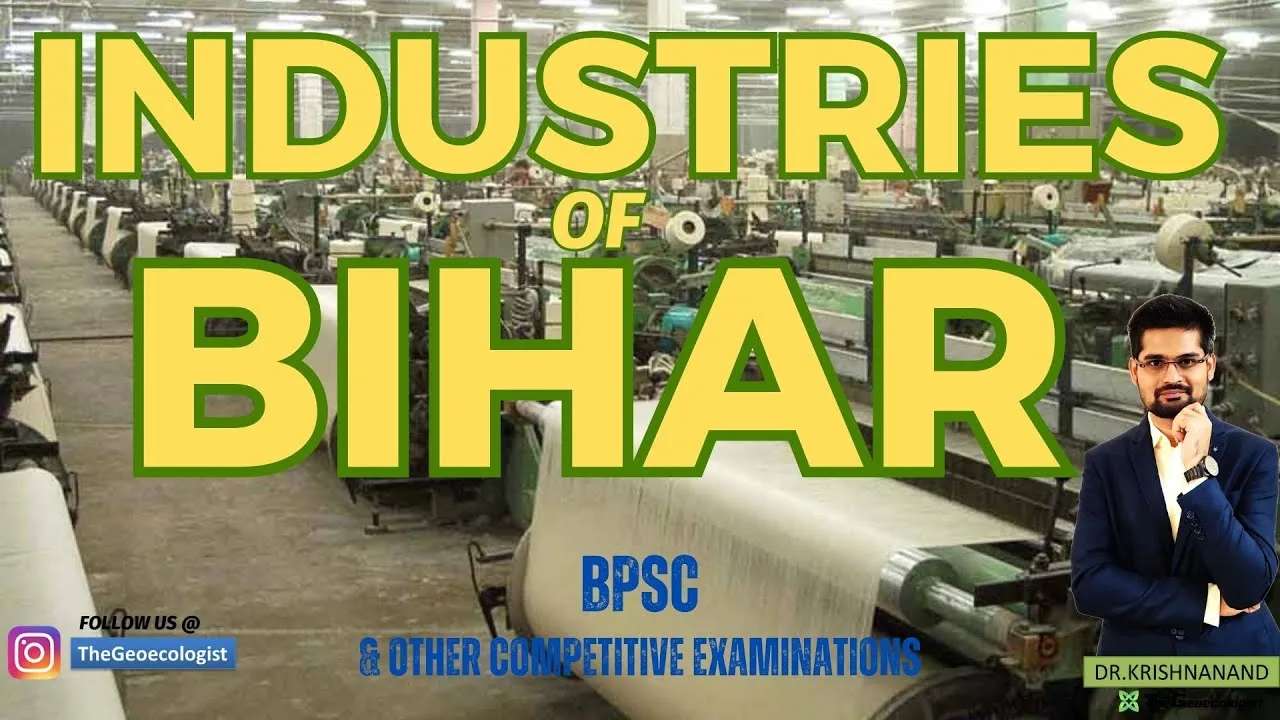
Table of Contents
- Understanding the Industries of Bihar: A Strategic Overview
- Historical Evolution of Bihar's Industrial Landscape
- Major Sectors within the Industries of Bihar
- Key Industrial Regions and Specialization
- Challenges Hindering the Growth of Industries of Bihar
- Government Policies and Future Economic Prospects
- Strategic Importance for BPSC Aspirants
- Enhancing Your Preparation with TheGeoecologist
- Conclusion
Understanding the Industries of Bihar: A Strategic Overview
The Industries of Bihar represent a vital pillar of the state’s economic evolution, transitioning from traditional agrarian roots to a modernizing industrial landscape. For BPSC aspirants and economic analysts, understanding the specific sectors, regional clusters, and developmental hurdles within the Industries of Bihar is essential for mastering the geography and economy of the region. This comprehensive guide explores the historical context, current major sectors, and the future trajectory of the state’s industrial capacity.
- Key Takeaways:
- The Industries of Bihar are primarily driven by agro-based sectors like sugar and silk.
- Major industrial hubs include Barauni, Patna, and Bhagalpur.
- The Barauni Oil Refinery remains a cornerstone of the state’s heavy industry.
- Challenges include infrastructure gaps and seasonal flooding.
- Government policies like the Industrial Investment Promotion Policy aim to boost growth.
Historical Evolution of Bihar’s Industrial Landscape
Historically, the Industries of Bihar were deeply intertwined with the state’s fertile alluvial soil. Long before modern manufacturing, the region was a global center for handloom and silk production. The legacy of Tussar silk from Bhagalpur remains a testament to this ancient industrial prowess. Following India’s independence, the focus shifted toward heavy industries to support national development. The establishment of the Barauni Oil Refinery in 1964 marked a significant milestone, shifting the state’s focus from purely artisanal crafts to large-scale petrochemical and energy production. However, the journey of the Industries of Bihar has not been without interruptions, as socio-political shifts and economic transitions have shaped its current state.
Major Sectors within the Industries of Bihar
To categorize the Industries of Bihar effectively, we must look at them through three distinct lenses: Agro-based, Manufacturing, and Emerging sectors.
1. Agro-Based Industries: The Backbone of the Economy
Given Bihar’s high agricultural productivity, agro-processing is a dominant force. The sugar industry, for instance, is a primary driver. With numerous mills operating in West Champaran, Sitamarhi, and Gopalganj, the sugar sector is a vital component of the Industries of Bihar. Additionally, the textile sector, particularly the silk industry in Bhagalpur, provides employment to thousands. Bhagalpur’s reputation as the ‘Silk City’ is globally recognized, making it a specialized node in the state’s industrial network. You can learn more about the history of silk production on Wikipedia.
2. Manufacturing and Heavy Industries
The heavy industrial sector is characterized by large-scale units that provide the energy and materials necessary for regional development. The Barauni Oil Refinery is the most significant entity here, processing crude oil and producing essential petrochemicals. Historically, the Dalmianagar region was a powerhouse for cement and paper manufacturing. While some of these large-scale units faced declines due to economic shifts, they remain essential case studies for understanding the industrial history of the region. The presence of these heavy units defines the scale and complexity of the Industries of Bihar.
3. Emerging and Specialized Sectors
Modernization is bringing new life to the Industries of Bihar. Food processing is seeing massive investment as the state leverages its surplus production of fruits and vegetables. Furthermore, Patna and Bhagalpur are witnessing a shift toward IT and electronics, aiming to create a digital economy that can compete with larger metropolitan hubs. This diversification is crucial for mitigating the risks associated with traditional agriculture.
Key Industrial Regions and Specialization
The distribution of the Industries of Bihar is not uniform; it is concentrated in specific geographical clusters based on resource availability and transport connectivity.
- Patna Industrial Region: As the capital, Patna serves as a hub for diverse small-scale industries, including leatherwork and specialized handicrafts.
- Barauni Region: This is the energy heart of the state, dominated by oil refining and fertilizer production.
- Munger Region: Known for its unique specialization in tobacco and historical manufacturing of small arms/firearms.
- Muzaffarpur Region: A leader in agro-processing, particularly focusing on the processing and distribution of lychees.
- Bhagalpur Region: The center for the silk industry, representing the state’s high-value traditional manufacturing.
Challenges Hindering the Growth of Industries of Bihar
Despite the potential, the Industries of Bihar face significant structural and environmental challenges. One of the primary issues is the infrastructure deficit. Inconsistent power supply and inadequate road networks in rural areas increase the cost of production and logistics. Furthermore, the state suffers from the annual impact of floods, particularly in the northern regions, which can destroy industrial assets and disrupt supply chains. Additionally, the migration of skilled labor to other states remains a concern, as the local workforce often seeks better opportunities elsewhere, leading to a ‘brain drain’ in the industrial sector.
Government Policies and Future Economic Prospects
To revitalize the Industries of Bihar, the state government has introduced various initiatives. The Bihar Industrial Investment Promotion Policy (2016) is a landmark scheme designed to attract private investment through tax incentives, subsidies, and streamlined land allocation. The development of Special Economic Zones (SEZs) and the expansion of the Bihar Growth Corridor are key strategies to modernize the industrial base. If these policies are implemented effectively, the Industries of Bihar could become a significant driver of employment and GDP growth in Eastern India.
Strategic Importance for BPSC Aspirants
For students preparing for the Bihar Public Service Commission (BPSC) exams, the topic of Industries of Bihar is highly critical. Aspirants should focus on:
- Identifying specific industrial locations (e.g., Barauni for oil, Bhagalpur for silk).
- Understanding the impact of geography on industrial placement.
- Analyzing the role of government policies in regional development.
- Studying the socio-economic impact of industrialization on the local population.
Enhancing Your Preparation with TheGeoecologist
Mastering the complexities of the Industries of Bihar requires structured learning. Dr. Krishnanand, the founder of TheGeoecologist, provides specialized resources for BPSC aspirants. His bilingual (Hindi-English) video lectures simplify complex geographical concepts, making them accessible to all. For those seeking comprehensive study material, the ‘Geography of Bihar’ eBook offers detailed maps, case studies, and concise notes specifically tailored to the BPSC syllabus. To access these premium resources, visit TheGeoecologist.
Conclusion
In conclusion, the Industries of Bihar are in a state of transition. While traditional sectors like silk and sugar continue to provide a foundation, the rise of petrochemicals and food processing offers a glimpse into a modernized future. By addressing infrastructural and environmental challenges through proactive policy-making, Bihar can unlock its full industrial potential. For students and researchers, staying updated on these industrial shifts is essential for academic and professional success in the state’s evolving economy.
Frequently Asked Questions
Agro-based industries, such as sugar and silk (Tussar silk), are traditionally the most significant, though petrochemicals in Barauni are vital for heavy industry.
Bhagalpur is famously known as the 'Silk City' due to its world-renowned Tussar silk production.
The primary challenges include infrastructure deficits, periodic flooding, and the migration of skilled labor to other states.