Blog
Human Impact Hydrological Cycle: Complete Guide to Anthropogenic Water Cycle Disruption

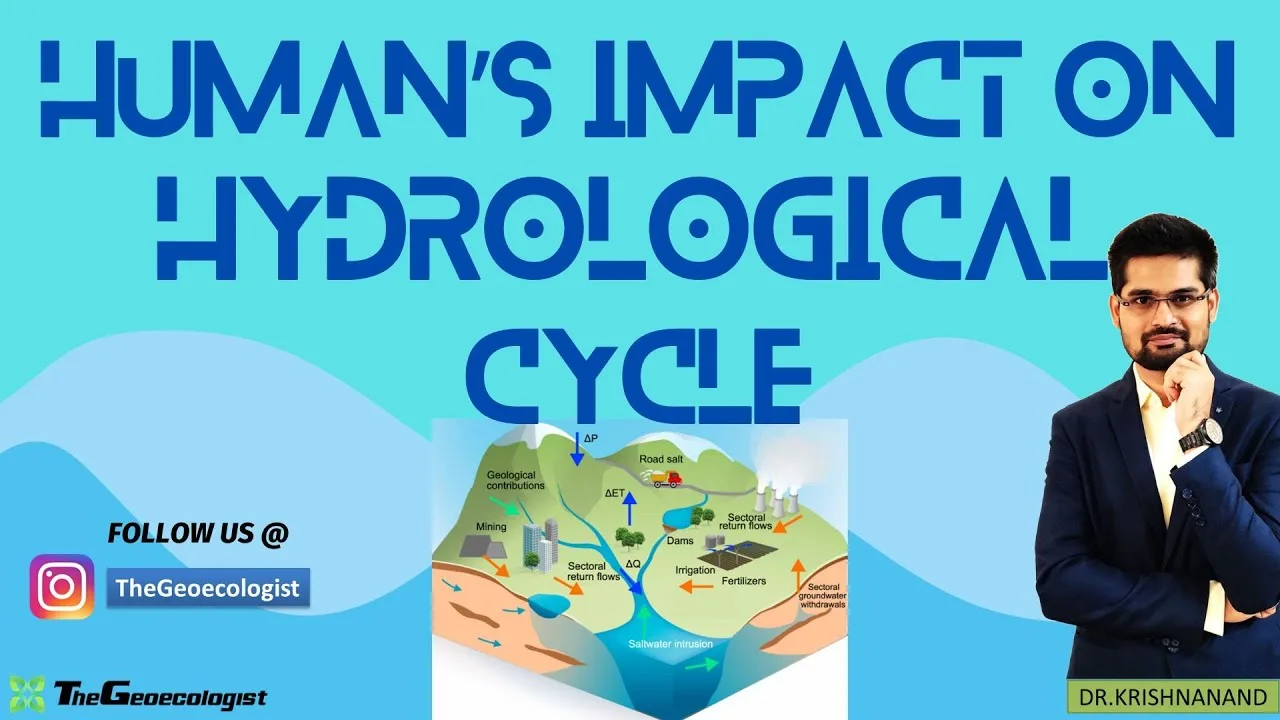
Table of Contents
- Understanding the Natural Hydrological Cycle: Foundation for Assessing Human Impact
- Key Components and Their Natural Functions
- Major Anthropogenic Drivers Altering the Hydrological Cycle
- Deforestation and Land-Use Change: Disrupting Evapotranspiration and Infiltration
- Urbanization and Impervious Surfaces: Accelerating Runoff, Depleting Aquifers
- Agricultural Intensification: Groundwater Mining and Nutrient Pollution
- Climate Change: Amplifying Hydrological Extremes Globally
- Pollution and Contamination: Degrading Water Quality Across the Cycle
- Disaster Management Implications: Cascading Risks from Hydrological Disruption
- Compound Flood-Drought Cycles and Infrastructure Vulnerability
- Landslide and Slope Stability Risks in Mountain Regions
- Transboundary Water Conflicts and Hydro-Diplomacy
- Academic and Competitive Exam Relevance: UPSC, Geography, and Beyond
- UPSC Civil Services Examination: Strategic Coverage Across Papers
- University Geography and Environmental Science Curricula
- Sustainable Management Strategies: Restoring Hydrological Balance
- Integrated Water Resources Management (IWRM) Framework
- Nature-Based Solutions (NbS) for Hydrological Restoration
- Technological Innovations: Monitoring, Modeling, and Efficiency
- Conclusion: Toward Water Security in the Anthropocene
- Frequently Asked Questions
- What are the primary components of the hydrological cycle most affected by human activities?
- How does climate change interact with direct human modifications of the water cycle?
- What are the most effective nature-based solutions for restoring hydrological balance?
The human impact hydrological cycle represents one of the most pressing environmental challenges of the 21st century, fundamentally altering the natural movement of water between atmosphere, land, and oceans. As anthropogenic activities intensify globally, understanding these disruptions becomes critical for sustainable water management, disaster resilience, and academic excellence in geography and environmental sciences.
- Human impact hydrological cycle disruptions affect all major components: evaporation, condensation, precipitation, infiltration, and runoff
- Deforestation reduces transpiration by up to 50% in affected regions, increasing surface runoff and flood risks
- Urbanization creates impervious surfaces covering 30-50% of urban land, drastically reducing groundwater recharge
- Agricultural irrigation accounts for 70% of global freshwater withdrawals, depleting aquifers faster than natural recharge
- Climate change amplifies hydrological extremes, with IPCC AR6 confirming intensification of both droughts and floods
- Water quality degradation from pollution affects 2.2 billion people lacking safely managed drinking water (WHO/UNICEF 2023)
- Integrated Water Resources Management (IWRM) offers framework for balancing human needs with ecosystem requirements
Understanding the Natural Hydrological Cycle: Foundation for Assessing Human Impact
The hydrological cycle—Earth’s continuous water circulation system—operates through five primary processes: evaporation from oceans and land surfaces, transpiration from vegetation (collectively evapotranspiration), condensation forming clouds, precipitation returning water to surface, and infiltration/runoff distributing water across landscapes. This dynamic equilibrium, maintained over millennia, regulates global climate, supports ecosystems, and provides freshwater for all terrestrial life. The water cycle moves approximately 505,000 km³ of water annually, with oceans contributing 86% of global evaporation and receiving 78% of precipitation. Any human impact hydrological cycle alteration cascades through this interconnected system, creating feedback loops that amplify initial disturbances.
Key Components and Their Natural Functions
Evapotranspiration combines evaporation (physical process) and transpiration (biological process through plant stomata), contributing roughly 65% of land-based precipitation through moisture recycling. Forests play disproportionate roles: the Amazon rainforest alone generates 50-80% of its own rainfall through transpiration-driven moisture recycling. Infiltration replenishes aquifers that store 30% of global freshwater, providing baseflow to rivers during dry periods. Surface runoff shapes landscapes, transports nutrients, and connects terrestrial and aquatic ecosystems. Understanding these baseline processes is essential for quantifying human impact hydrological cycle modifications.
Major Anthropogenic Drivers Altering the Hydrological Cycle
Deforestation and Land-Use Change: Disrupting Evapotranspiration and Infiltration
Deforestation represents one of the most direct human impact hydrological cycle interventions. Global forest loss averages 10 million hectares annually (FAO 2020), converting deep-rooted perennial vegetation to shallow-rooted crops or bare soil. This reduces annual evapotranspiration by 200-400 mm in tropical regions, decreasing atmospheric moisture recycling and downwind precipitation. The Western Ghats case study illustrates this: 35% forest cover loss since 1920 correlates with 15-20% monsoon rainfall reduction in peninsular India. Soil compaction from logging machinery reduces infiltration capacity by 70-90%, converting subsurface flow to destructive surface runoff. Reforestation and agroforestry can partially restore hydrological functions, but recovery of deep soil moisture and groundwater connectivity requires decades.
Urbanization and Impervious Surfaces: Accelerating Runoff, Depleting Aquifers
Urban expansion creates the most visible human impact hydrological cycle transformation. Global urban land area tripled from 1970-2020, with impervious surfaces (roads, rooftops, parking lots) covering 30-50% of urban footprints. This reduces infiltration to 10-20% of pre-development levels, increasing peak runoff flows by 2-5 times and reducing lag times from hours to minutes. Cities like Mumbai (2005 floods: 944 mm in 24 hours) and Chennai (2015 floods: 494 mm in 24 hours) exemplify catastrophic urban flooding from combined impervious surfaces, inadequate drainage, and wetland encroachment. Simultaneously, groundwater recharge plummets, creating “urban groundwater droughts” even in humid regions. Sustainable Urban Drainage Systems (SuDS), green roofs, and permeable pavements can mitigate 50-80% of runoff increases, but implementation remains limited globally.
Agricultural Intensification: Groundwater Mining and Nutrient Pollution
Agriculture drives the largest human impact hydrological cycle modification by volume. Irrigated agriculture covers 20% of cultivated land but produces 40% of global food, withdrawing 2,700 km³/year (70% of total freshwater withdrawals). In India’s Punjab—the “breadbasket” producing 20% of India’s wheat and 10% of rice—groundwater levels decline 0.5-1.0 m/year across 80% of the state, with NASA GRACE satellites confirming 29 km³/year depletion (2002-2008). Flood irrigation efficiencies of 35-50% waste enormous volumes through unproductive evaporation. Simultaneously, nitrogen and phosphorus fertilizer runoff (115 Tg N/year globally) causes eutrophication in 415 coastal dead zones worldwide. Drip irrigation (90% efficiency), precision agriculture, and crop diversification offer solutions but require policy support and farmer capacity building.
Climate Change: Amplifying Hydrological Extremes Globally
Climate change acts as a threat multiplier for human impact hydrological cycle disruptions. IPCC AR6 (2021) confirms human-induced warming has increased atmospheric moisture-holding capacity by 7% per °C (Clausius-Clapeyron relation), intensifying precipitation extremes. Global land monsoon precipitation increased 1980-2020, but with high spatial variability: South Asian monsoon shows 10% increase in extreme rainfall events but 6% decrease in moderate rainfall days. Glacier retreat in Hindu Kush Himalaya (“Third Pole”) threatens seasonal water security for 1.9 billion people downstream. Simultaneously, drought frequency and severity increase: 2022 European drought was worst in 500 years, reducing Rhine river flow to near-record lows. These changes disproportionately affect vulnerable populations lacking adaptive infrastructure.
Pollution and Contamination: Degrading Water Quality Across the Cycle
Pollution represents a pervasive human impact hydrological cycle degradation affecting all compartments. Industrial discharge introduces heavy metals, persistent organic pollutants, and emerging contaminants (pharmaceuticals, microplastics) into surface and groundwater. The Ganga River receives 2,900 MLD of sewage (70% untreated) and 300 MLD of industrial effluent daily despite Namami Gange programme investments. Plastic pollution—11 million tonnes entering oceans annually—now contaminates precipitation (microplastics detected in Himalayan snow and Arctic ice). Groundwater arsenic contamination affects 140 million people across 50 countries, with Bangladesh’s 35-77 million exposed exceeding WHO guidelines. Wastewater treatment coverage remains below 50% globally, creating a vicious cycle where pollution reduces usable freshwater, driving further extraction.
Disaster Management Implications: Cascading Risks from Hydrological Disruption

Compound Flood-Drought Cycles and Infrastructure Vulnerability
The human impact hydrological cycle creates compound disaster risks where flood and drought vulnerabilities coexist. Urbanization in floodplains increases exposure: 2.2 billion people live in flood-prone areas (World Bank 2020), with annual flood damages exceeding $100 billion globally. Simultaneously, groundwater depletion reduces droughts depletion eliminates drought buffers: Cape Town’s “Day Zero” (2018) and Chennai’s 2019 water crisis exemplify cities running dry despite adequate rainfall. Critical infrastructure—thermal power plants (cooling water), inland navigation, hydropower—faces increasing disruption. The 2022 European drought reduced French nuclear output by 15% and Rhine shipping capacity by 75%. Disaster risk reduction requires shifting from structural measures (dams, levees) to nature-based solutions: floodplain restoration, wetland conservation, and aquifer recharge.
Landslide and Slope Stability Risks in Mountain Regions
Erratic precipitation patterns from human impact hydrological cycle changes increase landslide frequency in mountainous regions. The 2021 Uttarakhand flash flood (triggered by rock-ice avalanche onto glacier) and 2023 Himachal Pradesh monsoon disasters (400+ deaths, ₹10,000+ crore damage) illustrate climate-land use interactions. Deforestation for infrastructure (roads, hydropower) reduces root cohesion, while intense rainfall events exceed soil infiltration capacity, generating pore water pressure that triggers failures. Early warning systems based on rainfall thresholds (e.g., 200 mm/24 hours for Himalaya) save lives but require community engagement. Sustainable mountain development demands integrating hydrological modeling with land-use planning.
Transboundary Water Conflicts and Hydro-Diplomacy
Diminishing per capita water availability—from 5,177 m³/year (1951) to 1,486 m³/year (2021) in India—intensifies competition across sectors and boundaries. The human impact hydrological cycle underpins major disputes: Indus Waters Treaty (India-Pakistan) faces climate stress; Nile Basin tensions (GERD dam) involve 11 riparian states; Mekong dams threaten downstream fisheries supporting 60 million people. UN Water Convention (1992) and UN Watercourses Convention (1997) provide legal frameworks, but only 24 countries have ratified both. Hydro-diplomacy increasingly requires joint monitoring, data sharing, and benefit-sharing mechanisms beyond volumetric allocation. The Sava River Basin Commission (Slovenia, Croatia, Bosnia, Serbia) demonstrates successful post-conflict cooperation.
Academic and Competitive Exam Relevance: UPSC, Geography, and Beyond
UPSC Civil Services Examination: Strategic Coverage Across Papers
The human impact hydrological cycle features prominently across UPSC syllabi. Geography Optional Paper I (Physical Geography) covers hydrological cycle, groundwater, and human-environment interaction. Paper II (Human Geography) examines water resources, regional planning, and sustainable development. General Studies Paper I (Geography) includes water resources distribution, floods/droughts, and climate change impacts. GS Paper III (Environment, Disaster Management) explicitly covers water conservation, disaster management, and climate adaptation. Essay papers frequently feature water security themes (2016: “Water disputes between states in federal India”; 2020: “Water scarcity: a threat to national security”). Dr. Krishnanand’s TheGeoecologist lectures provide structured coverage aligning with these requirements, bridging theoretical concepts with contemporary case studies essential for answer enrichment.
University Geography and Environmental Science Curricula
Beyond competitive exams, human impact hydrological cycle concepts form core curriculum in BSc/MSc Geography, Environmental Science, and Water Resources Engineering programs. UGC-CBCS syllabi include units on hydrological processes, watershed management, and anthropogenic impacts. Research applications span isotope hydrology (tracing water pathways), remote sensing (GRACE, SMAP satellites for groundwater/soil moisture), and hydrological modeling (SWAT, MODFLOW, MIKE SHE). Emerging fields like socio-hydrology and hydro-social cycle analysis integrate human decision-making into hydrological models, reflecting paradigm shifts from purely physical to coupled human-water systems.
Sustainable Management Strategies: Restoring Hydrological Balance
Integrated Water Resources Management (IWRM) Framework
IWRM—promoted by Global Water Partnership since 2000—provides the overarching framework for addressing human impact hydrological cycle disruptions. Its four pillars: enabling environment (policies, laws), institutional roles (basin organizations, user associations), management instruments (assessment, allocation, demand management), and financing. India’s National Water Policy (2012) and Jal Shakti Ministry (2019) embody IWRM principles, but implementation gaps persist. Successful examples include Australia’s Murray-Darling Basin Plan (water markets, environmental flows) and Singapore’s “Four National Taps” (local catchment, imported, NEWater, desalination) achieving water security despite zero groundwater. IWRM requires adaptive governance accommodating climate uncertainty.
Nature-Based Solutions (NbS) for Hydrological Restoration
NbS leverage natural processes to address human impact hydrological cycle challenges cost-effectively. Forest landscape restoration (Bonn Challenge: 350 Mha by 2030) restores evapotranspiration and infiltration. Wetland conservation (Ramsar Convention: 2,400+ sites, 250 Mha) provides flood attenuation, groundwater recharge, and water purification. China’s “Sponge Cities” programme (30 pilot cities) mandates 70% runoff retention through green infrastructure. India’s Atal Bhujal Yojana (₹6,000 crore, 7 states) promotes community-led groundwater management. UN Decade on Ecosystem Restoration (2021-2030) accelerates NbS adoption. Economic returns average 10:1 benefit-cost ratio for watershed protection vs. engineered alternatives.
Technological Innovations: Monitoring, Modeling, and Efficiency
Technology transforms human impact hydrological cycle management. GRACE-FO satellites (launched 2018) track monthly terrestrial water storage changes at 300 km resolution, revealing groundwater depletion invisible to ground monitoring. SMAP (Soil Moisture Active Passive) provides 9 km soil moisture data for agricultural drought early warning. IoT-enabled smart irrigation reduces water use 20-50% while maintaining yields. AI/ML models forecast floods 5-7 days ahead (Google Flood Hub covers 80 countries). Blockchain pilots (Australia, Chile) enable transparent water trading. However, technology access gaps persist: 60% of African countries lack operational hydrological monitoring networks (WMO 2021).
Conclusion: Toward Water Security in the Anthropocene
The human impact hydrological cycle has pushed Earth’s freshwater systems beyond safe planetary boundaries (Rockström et al. 2009, updated 2023). Blue water (rivers, lakes, aquifers) and green water (soil moisture) boundaries are both transgressed, risking irreversible ecosystem shifts. Yet solutions exist: IWRM governance, NbS implementation, technological innovation, and behavioral change can restore hydrological resilience. The UN 2023 Water Conference (first since 1977) generated 700+ commitments under the Water Action Agenda. For students, researchers, and policymakers, mastering human impact hydrological cycle science is not merely academic—it’s essential for navigating the defining resource challenge of our era. As Dr. Krishnanand emphasizes through TheGeoecologist platform, bridging theoretical understanding with actionable solutions empowers the next generation to secure water for all.
Frequently Asked Questions
What are the primary components of the hydrological cycle most affected by human activities?
Human activities significantly alter all five major components: evaporation (through reservoir creation and land cover change), transpiration (via deforestation and crop replacement), condensation/precipitation (through climate change and aerosol emissions), infiltration (via urbanization and soil compaction), and runoff (through drainage modification and channelization). The human impact hydrological cycle is most visibly manifested in reduced infiltration and accelerated runoff in urban areas, and depleted groundwater from agricultural over-extraction.
How does climate change interact with direct human modifications of the water cycle?
Climate change acts as a threat multiplier for human impact hydrological cycle disruptions. Warming intensifies the hydrological cycle (7% more atmospheric moisture per °C), increasing extreme precipitation and drought severity. This compounds direct human impacts: urban drainage systems designed for historical rainfall frequencies fail under intensified storms; groundwater depleted by irrigation cannot buffer climate-induced droughts; and glacial melt initially increases then permanently reduces river flows. Adaptation requires integrating climate projections into water infrastructure design and allocation policies.
What are the most effective nature-based solutions for restoring hydrological balance?
High-impact NbS for human impact hydrological cycle restoration include: (1) Forest landscape restoration in upstream watersheds to regulate flow regimes and enhance infiltration; (2) Wetland and floodplain reconnection to attenuate floods, recharge aquifers, and filter pollutants; (3) Urban green infrastructure (bioswales, rain gardens, permeable pavements) to restore urban water cycles; (4) Regenerative agriculture (cover crops, no-till, agroforestry) to improve soil water holding capacity; (5) Coastal mangrove restoration to buffer storm surges and saltwater intrusion. Effectiveness depends on landscape context, scale, and long-term stewardship.
Frequently Asked Questions
Human activities significantly alter all five major components: evaporation (through reservoir creation and land cover change), transpiration (via deforestation and crop replacement), condensation/precipitation (through climate change and aerosol emissions), infiltration (via urbanization and soil compaction), and runoff (through drainage modification and channelization). The human impact hydrological cycle is most visibly manifested in reduced infiltration and accelerated runoff in urban areas, and depleted groundwater from agricultural over-extraction.
Climate change acts as a threat multiplier for human impact hydrological cycle disruptions. Warming intensifies the hydrological cycle (7% more atmospheric moisture per °C), increasing extreme precipitation and drought severity. This compounds direct human impacts: urban drainage systems designed for historical rainfall frequencies fail under intensified storms; groundwater depleted by irrigation cannot buffer climate-induced droughts; and glacial melt initially increases then permanently reduces river flows. Adaptation requires integrating climate projections into water infrastructure design and allocation policies.
High-impact NbS for human impact hydrological cycle restoration include: (1) Forest landscape restoration in upstream watersheds to regulate flow regimes and enhance infiltration; (2) Wetland and floodplain reconnection to attenuate floods, recharge aquifers, and filter pollutants; (3) Urban green infrastructure (bioswales, rain gardens, permeable pavements) to restore urban water cycles; (4) Regenerative agriculture (cover crops, no-till, agroforestry) to improve soil water holding capacity; (5) Coastal mangrove restoration to buffer storm surges and saltwater intrusion. Effectiveness depends on landscape context, scale, and long-term stewardship.