Blog
Human Geography UGC NET: Simplified Models, Theories & Laws in Human Geography (2025 Edition) Review

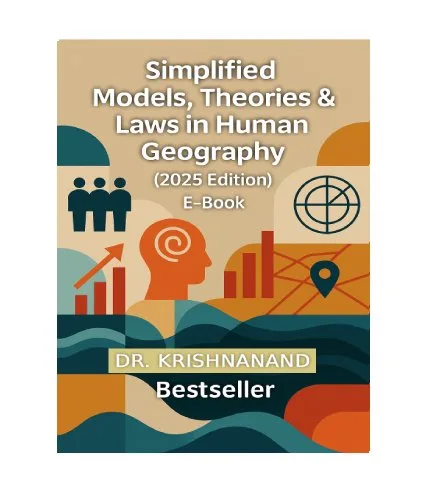
Human Geography UGC NET aspirants often struggle to find concise, reliable notes that cover the vast syllabus effectively while staying aligned with the latest exam trends. The sheer volume of theories, models, and laws in human geography can overwhelm even the most dedicated candidates, leading to fragmented preparation and missed scoring opportunities. This article examines how a well-structured e-book can transform your study approach, offering clarity, depth, and exam‑focused insights that directly address the pain points voiced by thousands of UGC NET geography seekers.
- Identify the core challenges faced by Human Geography UGC NET candidates when selecting study material.
- Learn what makes a geography resource truly aligned with the UGC NET syllabus and CBCS framework.
- Discover the specific features of Simplified Models, Theories & Laws in Human Geography (2025 Edition) that support rapid comprehension and retention.
- Get practical tips for integrating this e‑book into a daily study routine for maximum efficiency.
- Understand how this product compares to alternative notes, guides, and reference books in the market.
Human Geography UGC NET: Why Quality Study Material Matters
For any Human Geography UGC NET candidate, the quality of study material directly influences performance. The exam tests not only factual recall but also the ability to apply concepts such as Malthusian theory, demographic transition, and central place theory to case‑based questions. Generic textbooks often bury these models in lengthy narratives, making quick revision difficult. A targeted resource that highlights each theory with point‑wise explanations, diagrams, and real‑world examples enables aspirants to grasp complex ideas in minutes rather than hours. When the material mirrors the exact language and weighting of the UGC NET syllabus, study time becomes far more efficient, reducing anxiety and boosting confidence before the exam day.
Understanding the UGC NET Geography Syllabus and Exam Pattern
The UGC NET Geography paper consists of 150 multiple‑choice questions divided into two papers, with Paper II focusing heavily on human geography topics. According to the latest notification, approximately 35‑40% of the questions in Paper II draw from models, theories, and laws—population theories, migration models, urban land use patterns, and cultural geography concepts. The CBCS (Choice Based Credit System) undergraduate curriculum also emphasizes these areas, creating a natural overlap that candidates can leverage. Knowing this, a study guide that systematically breaks down each model into its assumptions, formulas, limitations, and real‑world applications provides a strategic advantage. It allows candidates to anticipate the type of questions likely to appear and practice answer elimination techniques effectively.
Key Features of Simplified Models, Theories & Laws in Human Geography (2025 Edition)
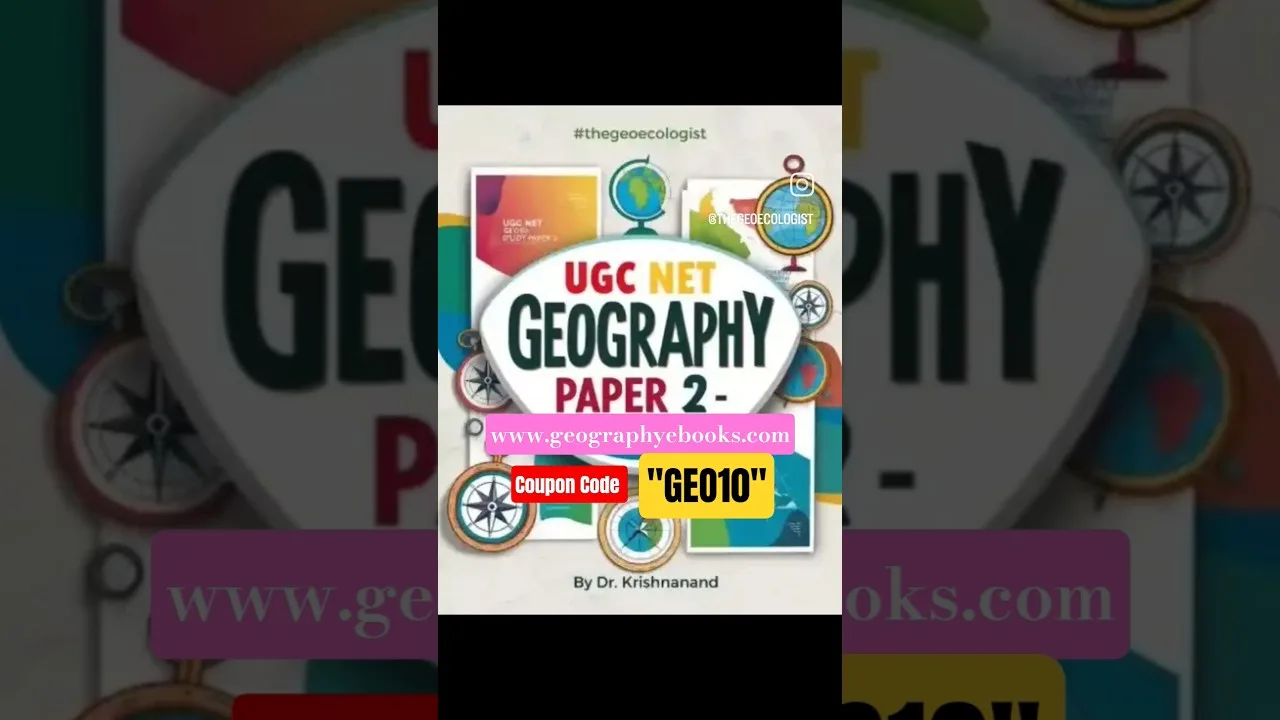
This e‑book, authored by Dr. Krishnanand, is explicitly designed for the 2025 exam cycle and adheres to the prescribed CBCS syllabus in geography. Its standout features include:
- Point‑wise highlighted descriptions that isolate each theory’s core propositions, making revision swift.
- Integrated diagrams, maps, and images that visually reinforce concepts such as the Demographic Transition Model and Rank‑Size Rule.
- Chapter‑wise coverage ranging from Introduction to Human Geography to advanced topics like Globalization and Cultural Landscapes.
- Content updated to reflect recent data (e.g., 2023 World Population Prospects) and contemporary case studies relevant to Indian geography.
- A compact format suitable for reading on tablets, laptops, or smartphones, enabling study on the go.
These attributes directly address the common complaint among Human Geography UGC NET aspirants that existing notes are either too verbose or lack visual aids, thereby hindering quick recall during the exam.
How This E-Book Aligns with CBCS and UGC NET Requirements
The CBCS framework stresses outcome‑based learning, where students must demonstrate the ability to apply theoretical knowledge to practical scenarios. Simplified Models, Theories & Laws in Human Geography (2025 Edition) mirrors this approach by concluding each chapter with application‑based questions and short case studies that encourage critical thinking. Moreover, the e‑book’s organization follows the logical progression of the UGC NET syllabus: starting with foundational concepts, moving through population theories, economic geography, social geography, and ending with contemporary issues. This alignment ensures that when a candidate reads a chapter on, say, the Marxian Population Theory, they are simultaneously preparing for the exact sub‑topics listed in the UGC NET notification. Such synergy reduces the need to cross‑reference multiple sources and streamlines the revision process.
Practical Tips for Using the E-Book in Your Study Routine
To maximize the benefits of this resource, consider the following actionable steps:
- Begin with a diagnostic quiz (available on many UGC NET prep sites) to identify weak areas in human geography.
- Allocate dedicated 45‑minute blocks to read one chapter, focusing first on the highlighted points and then reviewing the diagrams.
- After each chapter, create a one‑page summary sheet that lists the theory, its assumptions, key formulas, and a real‑world example.
- Use the end‑of‑chapter questions as mini‑tests; mark any incorrect answers and revisit the relevant section.
- In the final two weeks before the exam, run through all summary sheets and practice with previous year papers, applying the theories to solve case‑based questions.
By treating the e‑book as an active learning tool rather than a passive reference, candidates convert reading time into measurable score improvements.
Comparing Alternative Resources for Human Geography UGC NET Preparation
Several alternatives exist in the market, ranging from traditional textbooks like “Human Geography” by Majid Husain to various coaching institute notes and free PDF compilations. While Husain’s book offers deep theoretical depth, its length (over 600 pages) makes rapid revision challenging for time‑pressed aspirants. Coaching notes often provide concise points but may lack the visual diagrams and updated data that enhance comprehension. Free PDFs, though accessible, frequently suffer from outdated content, poor formatting, and occasional copyright issues. In contrast, Simplified Models, Theories & Laws in Human Geography (2025 Edition) strikes a balance: it is concise enough for quick review (approximately 180 pages), enriched with visual aids, updated to 2025 standards, and priced at ₹249—offering clear value for money. For candidates seeking a single, reliable source that covers the entire human geography segment of the UGC NET syllabus without unnecessary fluff, this e‑book presents a compelling option.
Final Verdict: Is This E-Book Worth the Investment?
Based on the analysis of syllabus alignment, pedagogical design, user‑friendly features, and cost effectiveness, Simplified Models, Theories & Laws in Human Geography (2025 Edition) emerges as a strong choice for Human Geography UGC NET aspirants. It directly tackles the pain points of scattered information, excessive verbosity, and lack of visual support that plague many study materials. By delivering clear, point‑wise explanations complemented by diagrams and current data, the e‑book enables efficient learning and confident recall during the exam. For anyone aiming to maximize their score in the human geography section of Paper II while minimizing study overload, investing in this resource is a prudent step toward achieving their UGC NET goals.
Further reading: Human Geography UGC NET on Wikipedia
Our Recommendation
📖 Part of our complete guide: Evolution of Geographical Thought: A Comprehensive Guide for UPSC Aspirants and Geography Enthusiasts
Frequently Asked Questions
Is Simplified Models, Theories & Laws in Human Geography (2025 Edition) suitable for beginners?
Yes, the e-book uses point‑wise explanations and diagrams that make complex theories accessible even to those new to human geography.
Does this e-book cover the entire UGC NET Geography syllabus for human geography?
It covers all major models, theories, and laws prescribed in the CBCS syllabus and frequently tested in UGC NET Paper II human geography sections.
How can I access the e‑book after purchase?
After completing the payment on geographyebooks.com, you receive an instant download link for the PDF, which can be opened on any device.