
Blog
How Rockets Reach Space: Complete Guide to Launch Physics and Technology

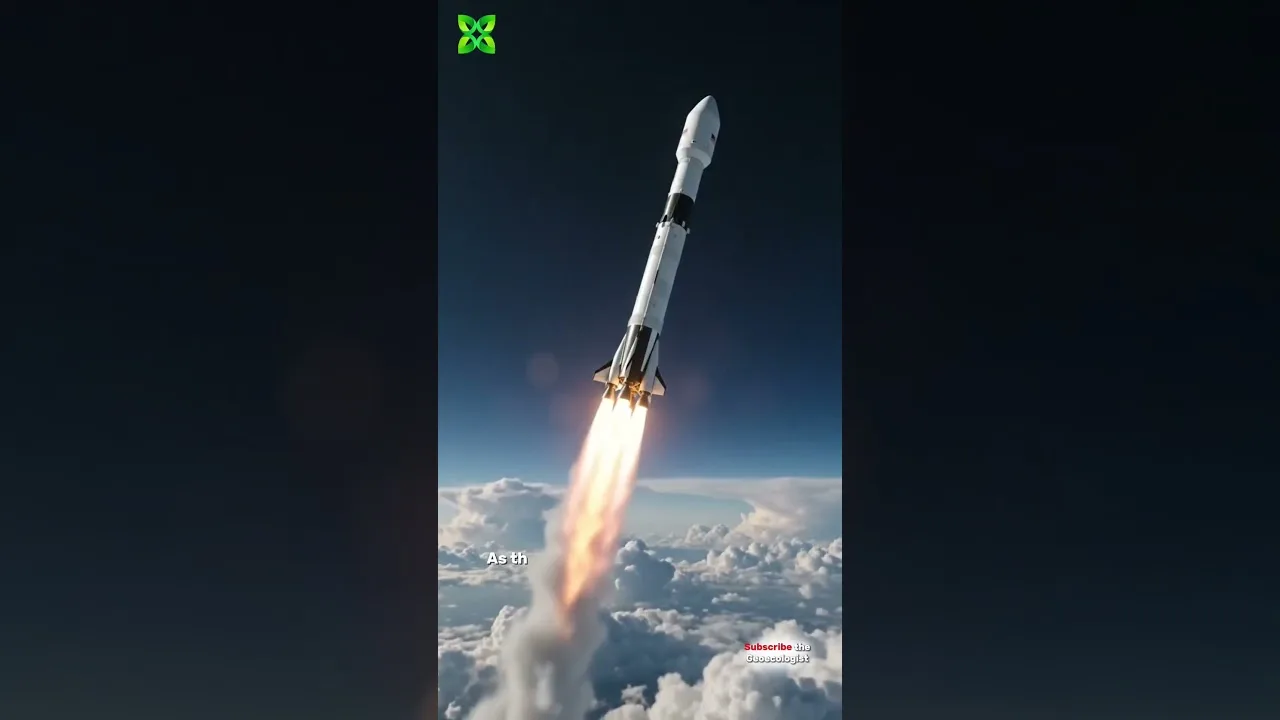
Table of Contents
- The Fundamental Physics: How Rockets Reach Space Through Thrust
- Newton's Third Law and the Rocket Equation
- Overcoming Earth's Gravity and Atmospheric Drag
- Stages of a Rocket Launch: Step-by-Step Journey to Orbit
- Stage 1: Liftoff and Powered Ascent
- Stage 2: Stage Separation and Second-Stage Ignition
- Stage 3: Orbital Insertion and Payload Deployment
- Key Components Enabling How Rockets Reach Space
- Propulsion Systems: From Kerosene to Methane
- Guidance, Navigation, and Control (GNC)
- Avionics and Flight Software
- Major Launch Programs and Their Approaches
- NASA's Space Launch System (SLS) and Artemis Program
- SpaceX Falcon 9 and Starship: Revolutionizing Reusability
- ISRO's PSLV, GSLV, and LVM3: India's Reliable Workhorses
- International Partners: Ariane, Soyuz, Long March, H3
- Launch Sites and Orbital Mechanics
- Geographic Advantages: Equatorial vs. High-Latitude Sites
- Launch Windows and Orbital Mechanics
- The Future: How Rockets Reach Space in the Next Decade
- Full Reusability and Rapid Turnaround
- Alternative Launch Concepts
- Small Satellite Launch Revolution
- Environmental Considerations and Sustainability
- Conclusion: The Continuing Evolution of Space Access
Understanding how rockets reach space requires exploring the fascinating intersection of physics, engineering, and precise timing. From the thunderous liftoff at Cape Canaveral to the silent glide into orbit, every successful mission represents decades of scientific advancement. This comprehensive guide breaks down the complete journey from launch pad to outer space, examining the fundamental principles that make spaceflight possible.
- Rockets operate on Newton’s Third Law — expelling mass at high velocity generates equal and opposite thrust
- Multi-stage design sheds dead weight to achieve the 28,000 km/h orbital velocity required
- Gravity turn maneuver gradually shifts trajectory from vertical to horizontal for efficient orbit insertion
- Precise guidance systems execute millisecond-perfect burns for target orbit achievement
- Modern reusability (SpaceX Falcon 9, Starship) dramatically reduces cost per kilogram to orbit
The Fundamental Physics: How Rockets Reach Space Through Thrust
The core principle behind how rockets reach space remains Sir Isaac Newton’s Third Law of Motion: for every action, there is an equal and opposite reaction. Unlike aircraft that push against air, rockets carry both fuel and oxidizer, enabling operation in the vacuum of space. The rocket engine combusts propellant at extreme pressure and temperature, expelling exhaust gases through a carefully shaped nozzle at velocities exceeding 3,000 meters per second.
Newton’s Third Law and the Rocket Equation
Konstantin Tsiolkovsky’s 1903 rocket equation mathematically describes the relationship between velocity change (delta-v), exhaust velocity, and mass ratio. The equation reveals a harsh reality: reaching low Earth orbit requires approximately 9.3–10 km/s of delta-v, demanding that 85–90% of a rocket’s initial mass be propellant. This tyranny of the rocket equation drives the multi-stage architecture essential to how rockets reach space efficiently.
Overcoming Earth’s Gravity and Atmospheric Drag
Earth’s gravity well presents the primary challenge. At the surface, gravitational acceleration is 9.81 m/s², meaning a rocket must generate thrust exceeding its weight just to hover. During the first minutes of flight, gravity losses — the delta-v spent fighting gravity rather than gaining horizontal velocity — consume roughly 1.0–1.5 km/s of the total budget. Atmospheric drag adds another 0.1–0.3 km/s penalty, concentrated in the dense lower atmosphere. The gravity turn maneuver, initiated shortly after clearing the launch tower, gradually pitches the vehicle over to build horizontal velocity while minimizing both gravity and drag losses. – a key consideration for how rockets reach space.
Stages of a Rocket Launch: Step-by-Step Journey to Orbit
The multi-stage approach solves the mass ratio problem by discarding empty tanks and engines once their propellant is exhausted. Each stage is optimized for its operating environment, from sea-level pressure to vacuum. – a key consideration for how rockets reach space.
Stage 1: Liftoff and Powered Ascent
At T-0, hold-down clamps release only after engine health checks confirm nominal thrust. The vehicle clears the tower in seconds, then executes a programmed pitch maneuver. First-stage engines (like the Falcon 9’s nine Merlin 1D engines producing 7,607 kN combined thrust at sea level) burn for approximately 150–180 seconds. During this phase, the rocket accelerates from 0 to roughly 2–3 km/s while climbing through the thickest atmosphere. Maximum dynamic pressure (Max Q) occurs around 60–90 seconds, where aerodynamic stress peaks — engines often throttle down temporarily to protect the vehicle. – a key consideration for how rockets reach space.
Stage 2: Stage Separation and Second-Stage Ignition
At main engine cutoff (MECO), the first stage separates via pneumatic pushers or explosive bolts. The second stage’s vacuum-optimized engine (single Merlin Vacuum on Falcon 9, RL10 on Atlas V Centaur, or Vinci on Ariane 6) ignites. This stage operates in near-vacuum, allowing larger nozzle expansion ratios for higher specific impulse (348–465 seconds vs. 280–310 seconds at sea level). The second stage typically performs one or two burns: the first to reach a parking orbit, the second for final orbital insertion or trans-lunar injection. – a key consideration for how rockets reach space.
Stage 3: Orbital Insertion and Payload Deployment
Precise orbital insertion requires hitting a narrow target box in position and velocity space. Modern guidance systems use inertial measurement units (IMUs) augmented by GPS, achieving insertion accuracy within meters and meters per second. The payload fairing — which protected satellites during ascent — separates once atmospheric heating drops below critical thresholds (typically above 100 km altitude). Deployment mechanisms (spring-loaded adapters, clamp bands) release the spacecraft into its mission orbit. – a key consideration for how rockets reach space.
Key Components Enabling How Rockets Reach Space

Propulsion Systems: From Kerosene to Methane
Propellant choice fundamentally shapes vehicle design. RP-1/LOX (kerosene/liquid oxygen) offers high density (1.03 g/cm³) and storability, powering Falcon 9, Soyuz, and Atlas V first stages. LH2/LOX (liquid hydrogen/liquid oxygen) provides the highest specific impulse (~450 s vacuum) but extremely low density (0.07 g/cm³), necessitating massive tanks — used on Delta IV, SLS core stage, and Centaur upper stages. The emerging CH4/LOX (liquid methane/liquid oxygen) combination, pioneered by SpaceX Raptor and Blue Origin BE-4 engines, balances density (0.82 g/cm³), performance (~380 s vacuum), and reusability (minimal coking). Solid rocket boosters (SRBs) on SLS, Ariane 5, and Vega provide high thrust at low cost but cannot be throttled or shut down once ignited. – a key consideration for how rockets reach space.
Guidance, Navigation, and Control (GNC)
Modern GNC systems execute the complex trajectory shaping required for how rockets reach space. Inertial navigation platforms (ring laser gyros or fiber optic gyros) measure acceleration and rotation without external references. Kalman filters fuse IMU data with GPS updates for state estimation. The guidance algorithm (typically predictor-corrector or model predictive control) continuously computes steering commands to satisfy terminal constraints while respecting structural loads, thermal limits, and control authority. Thrust vector control (TVC) — gimballing engines up to ±10–15° — provides pitch, yaw, and roll authority during powered flight.
Avionics and Flight Software
Radiation-hardened, fault-tolerant flight computers (often triple-modular redundant) run real-time operating systems with deterministic timing. SpaceX’s Falcon 9 uses three voting computers per stage, each with dual-core x86 processors running Linux. The flight software manages sequencing, health monitoring, abort logic, and communication with ground systems. Over-the-air updates enable rapid iteration — a key advantage in modern launch operations.
Major Launch Programs and Their Approaches
NASA’s Space Launch System (SLS) and Artemis Program
NASA’s SLS represents the most powerful rocket since Saturn V, generating 39.1 MN thrust at liftoff (Block 1). The Artemis program aims to return humans to the Moon by 2026, with SLS launching Orion spacecraft on trans-lunar trajectories. The core stage uses four RS-25 engines (reused from Space Shuttle) alongside two five-segment SRBs. Upper stage evolution from ICPS to Exploration Upper Stage will increase trans-lunar injection capacity from 27 to 38+ metric tons.
SpaceX Falcon 9 and Starship: Revolutionizing Reusability
SpaceX transformed launch economics through first-stage recovery. Falcon 9 boosters perform boostback, entry, and landing burns to return to drone ships or landing zones — over 300 successful landings as of 2024. The Starship system, currently in orbital flight testing, targets full reusability of both stages with 150+ metric ton LEO capacity. Its stainless steel structure, Raptor engines (full-flow staged combustion), and in-orbit refueling architecture represent a paradigm shift in how rockets reach space sustainably.
ISRO’s PSLV, GSLV, and LVM3: India’s Reliable Workhorses
The Indian Space Research Organisation has achieved remarkable cost efficiency. The PSLV (Polar Satellite Launch Vehicle) boasts 58 consecutive successful flights, specializing in sun-synchronous orbits. The LVM3 (Launch Vehicle Mark-3), with its S200 solid boosters, L110 liquid core, and C25 cryogenic upper stage, launched Chandrayaan-3 to the Moon in 2023 and will carry Gaganyaan crewed missions. ISRO’s indigenous cryogenic engine development (CE-20, CE-7.5) demonstrates mastery of the complex hydrogen technology critical for upper stages.
International Partners: Ariane, Soyuz, Long March, H3
Arianespace’s Ariane 6 (inaugural flight 2024) replaces Ariane 5 with modular PPH/ P120C configurations. Russia’s Soyuz-2 family continues flying from Baikonur, Plesetsk, and Vostochny. China’s Long March 5/6/7/8 series supports Tiangong space station and lunar ambitions. Japan’s H3 rocket (successful 2024 flight) aims to halve launch costs versus H-IIA. Each program contributes unique solutions to the universal challenge of how rockets reach space reliably.
Launch Sites and Orbital Mechanics
Geographic Advantages: Equatorial vs. High-Latitude Sites
Launch site latitude fundamentally constrains accessible orbits. Equatorial sites (Kourou at 5°N, Cape Canaveral at 28.5°N) benefit from Earth’s rotational velocity (465 m/s at equator, 410 m/s at Cape), providing free delta-v for prograde orbits. High-latitude sites (Baikonur 45.6°N, Plesetsk 62.8°N, Vostochny 51.8°N) excel at high-inclination and polar orbits but cannot efficiently reach low-inclination orbits without costly plane changes. The Guiana Space Centre’s equatorial location gives Ariane 6 a ~15% payload advantage for geostationary transfer orbit versus Cape Canaveral.
Launch Windows and Orbital Mechanics
Interplanetary missions require precise launch windows dictated by planetary alignment. Mars windows occur every 26 months (Hohmann transfer windows), with 2024, 2026, 2028 opportunities. Lunar missions have near-daily windows but with varying lighting conditions at landing sites. Rendezvous missions (ISS crew/cargo) require instantaneous or near-instantaneous windows to match the station’s orbital plane and phasing. Weather constraints (wind shear, lightning, cloud ceilings) scrub 10–30% of attempts depending on season and location.
The Future: How Rockets Reach Space in the Next Decade
Full Reusability and Rapid Turnaround
Starship targets airline-like operations: orbital refueling, 24-hour pad turnaround, and <$10M marginal cost per flight. Blue Origin's New Glenn (maiden flight 2024) aims for 25-flight first-stage reuse. Rocket Lab's Neutron and Relativity Space's Terran R pursue medium-lift reusability. This shift from expendable to reusable architectures could reduce $/kg to LEO from ~$2,500 (Falcon 9) to <$200, fundamentally altering space economics.
Alternative Launch Concepts
Air launch (Virgin Orbit’s LauncherOne, Stratolaunch’s Talon-A) offers azimuth flexibility and weather avoidance but limited payload capacity (<500 kg). SpinLaunch's kinetic launch system (suborbital accelerator) targets 200 kg payloads with 4x lower fuel consumption. Space elevators and launch loops remain theoretical, requiring materials (carbon nanotubes, graphene) with tensile strengths beyond current production capabilities. Nuclear thermal propulsion (NASA DRACO program, 2027 demo) promises 2x specific impulse for deep space but not for Earth launch.
Small Satellite Launch Revolution
Dedicated small launchers (Firefly Alpha, ABL RS1, Isar Spectrum, PLD Space Miura 5) target the booming smallsat market. Responsive launch — payload integration to liftoff in days/hours — enables tactical space capabilities. The U.S. Space Force’s TacRS (Tactically Responsive Space) program demonstrated 27-hour call-up to launch in 2023 (Victus Nox mission on Firefly Alpha).
Environmental Considerations and Sustainability
Rocket emissions vary significantly by propellant. Kerosene/LOX produces CO2, soot (black carbon), and water vapor — soot in the stratosphere persists 2–5 years with radiative forcing concerns. Hydrogen/LOX emits only water vapor (a greenhouse gas at high altitude). Methane/LOX burns cleaner than kerosene. Solid motors emit alumina particles and HCl. The 2022 UN Ozone Secretariat assessment noted rocket emissions currently negligible globally but potentially significant if launch rates increase 10x. Reusability reduces manufacturing emissions per flight. SpaceX’s Starship methane choice partly reflects cleaner combustion and in-situ resource utilization potential on Mars (Sabatier reaction).
Conclusion: The Continuing Evolution of Space Access
The journey of how rockets reach space spans from Tsiolkovsky’s theoretical papers to Starship’s orbital flight tests. Each generation builds on Newton’s immutable laws while pushing materials, propulsion, and guidance to new frontiers. The transition from expendable to reusable vehicles marks the most significant inflection point since Sputnik, promising to democratize space access. As launch costs plummet and cadence accelerates, the next decade will see orbital infrastructure, lunar bases, and Mars precursor missions transition from vision to reality — all powered by the same fundamental physics that first lifted humanity above the atmosphere.
For authoritative technical data on launch vehicles and mission profiles, consult NASA’s official website and the Wikipedia launch vehicle portal.
Frequently Asked Questions
A rocket must achieve approximately 7.8 km/s (28,000 km/h or 17,500 mph) horizontal velocity to maintain a stable low Earth orbit, plus additional delta-v to overcome gravity and drag losses during ascent.
The rocket equation makes single-stage-to-orbit extremely difficult with chemical propulsion. Staging discards empty tank mass, dramatically improving mass ratio and allowing each stage's engines to be optimized for their operating environment (sea level vs. vacuum).
After stage separation, the booster performs a boostback burn, re-entry burn, and landing burn using its Merlin engines. Grid fins provide aerodynamic control during descent. The booster lands vertically on a drone ship or landing pad, then undergoes inspection and refurbishment for reuse — some boosters have flown 20+ times.