Blog
Environmental Management Guide for UPSC

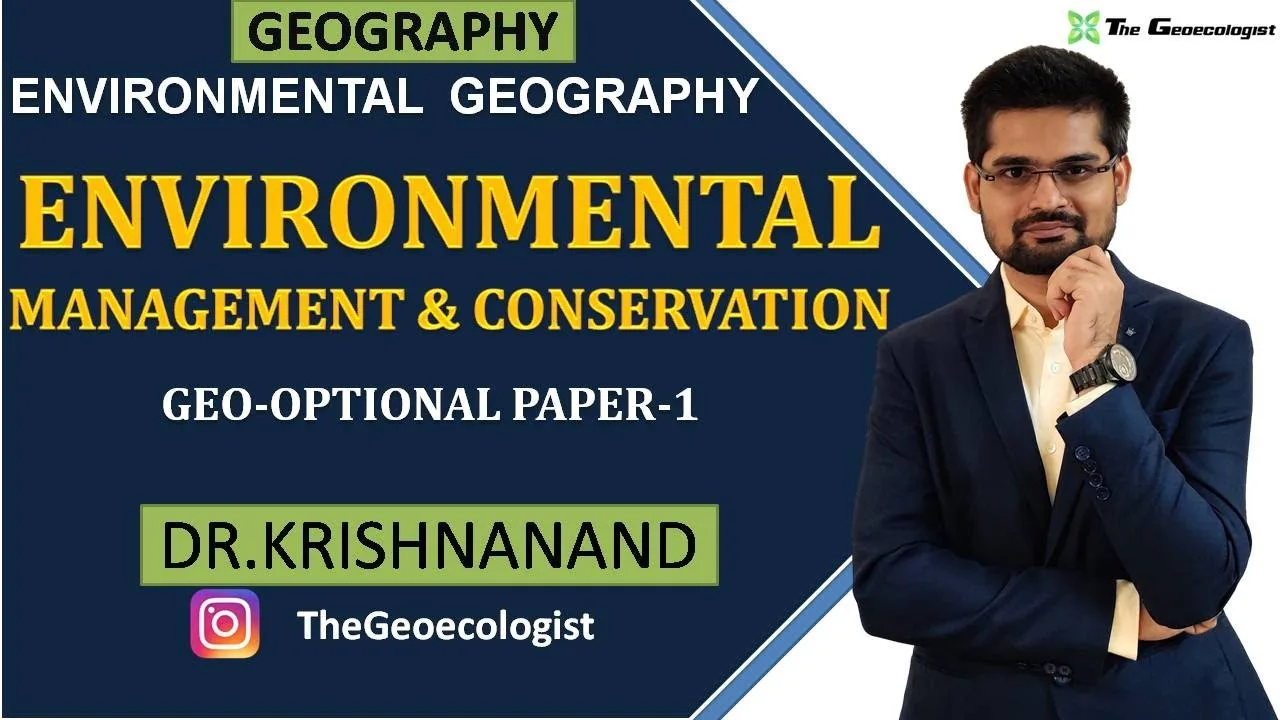
Table of Contents
- Environmental Management: Core Principles and Objectives
- Conservation Strategies: Protecting Earth’s Natural Wealth
- In‑situ Conservation
- Ex‑situ Conservation
- Community‑Based Conservation
- Role of Environmental Geography in Management & Conservation
- UPSC Relevance: Important Topics and Case Studies
- Dr. Krishnanand’s Contribution to Environmental Geography
- Conclusion and Call to Action
Environmental Management is a pivotal discipline that integrates scientific, economic, and social perspectives to regulate human impact on nature while fostering sustainable development. In the context of competitive exams like UPSC, a clear grasp of Environmental Management and Conservation concepts is indispensable for scoring well in geography and general studies papers. This article distills the key insights from Dr. Krishnanand’s 13th lecture on Environmental Management and Conservation, offering a simplified yet comprehensive guide for undergraduate geography students and UPSC aspirants.
- Environmental Management focuses on pollution control, natural resource management, sustainable development policies, wildlife protection, and climate change mitigation.
- Conservation strategies include in-situ (national parks, wildlife sanctuaries), ex-situ (zoos, botanical gardens, seed banks), and community-based approaches.
- Environmental Geography bridges physical and human geography, employing geospatial tools like GIS and remote sensing for monitoring and policy‑making.
- UPSC frequently tests knowledge of international treaties (Paris Agreement, CBD), national initiatives (National Action Plan on Climate Change, Namami Gange), and landmark movements (Chipko, Joint Forest Management).
- Dr. Krishnanand’s TheGeoecologist platform simplifies these topics through exam‑oriented lectures, e‑books, and free YouTube videos.
Environmental Management: Core Principles and Objectives
At its heart, Environmental Management seeks to balance ecological integrity with human development needs. The Environmental Management framework involves systematic planning, implementation, and monitoring of actions that reduce adverse environmental impacts. Core objectives include preserving biodiversity, ensuring sustainable resource use, minimizing pollution, building climate resilience, and enhancing public awareness.
Statistics underscore the urgency: according to the UN Environment Programme, over one million species face extinction risk, and air pollution contributes to approximately 7 million premature deaths yearly. Effective Environmental Management policies can curb these trends by enforcing emission standards, promoting renewable energy, and protecting critical habitats.
Key components of an effective Environmental Management System (EMS) are:
- Policy formulation: Setting clear environmental goals aligned with legislation such as the Environment Protection Act, 1986.
- Planning: Identifying significant environmental aspects, legal requirements, and establishing objectives and targets.
- Implementation: Allocating resources, training personnel, and operationalizing controls.
- Monitoring and measurement: Tracking performance against objectives using indicators and audits.
- Review and improvement: Conducting management reviews to continually enhance the EMS.
By embedding these components, organizations and governments can achieve measurable improvements in environmental performance while supporting socio‑economic development.
Conservation Strategies: Protecting Earth’s Natural Wealth
In‑situ Conservation
In‑situ conservation protects species within their natural habitats. Examples include national parks, wildlife sanctuaries, and biosphere reserves. Biodiversity hotspots such as Kaziranga National Park in Assam safeguard the greater one‑horned rhinoceros, while the Sundarbans mangrove forest protects the Bengal tiger. These protected areas not only conserve flora and fauna but also maintain ecosystem services like carbon sequestration and water regulation.
Ex‑situ Conservation
When habitats are degraded, ex‑situ methods become vital. Zoological gardens, botanical gardens, and seed banks preserve genetic material outside natural settings. The Svalbard Global Seed Vault in Norway stores over one million seed samples, ensuring crop diversity for future food security. Similarly, captive breeding programs have helped revive species like the California condor and the Arabian oryx.
Community‑Based Conservation
Engaging local communities enhances conservation outcomes. Joint Forest Management (JFM) in India, initiated in the early 1990s, grants villages rights to manage and benefit from forest resources, leading to improved forest cover and livelihoods. In Namibia, communal conservancies have increased wildlife populations while generating tourism revenue for residents.
Role of Environmental Geography in Management & Conservation
Environmental Geography serves as the analytical backbone of Environmental Management. It examines human‑environment interactions, spatial patterns of resource use, and the socio‑economic drivers of environmental change. Modern geospatial technologies—Geographic Information Systems (GIS), remote sensing, and Global Positioning Systems (GPS)—enable real‑time monitoring of deforestation, urban expansion, and climate impacts.
For instance, satellite‑based NDVI (Normalized Difference Vegetation Index) assessments have revealed a 10% increase in green cover across India’s agro‑forestry zones between 2010 and 2020, reflecting the success of afforestation schemes. GIS‑based vulnerability mapping aids policymakers in identifying flood‑prone regions and designing resilient infrastructure.
Furthermore, environmental geographers contribute to policy formulation by integrating scientific data with stakeholder perspectives, ensuring that land‑use plans are both ecologically sound and socially equitable.
UPSC Relevance: Important Topics and Case Studies
UPSC aspirants must master a blend of static concepts and current developments in Environmental Management. Frequently asked areas include:
- International treaties: Paris Agreement (2015), Convention on Biological Diversity (CBD, 1992), Kyoto Protocol, and Ramsar Convention on Wetlands.
- National initiatives: National Action Plan on Climate Change (NAPCC, 2008), Namami Gange Programme (2014), Green India Mission, and Swachh Bharat Abhiyan.
- Legislative frameworks: Wildlife Protection Act (1972), Forest Conservation Act (1980), Environmental (Protection) Act (1986), and Air (Prevention and Control of Pollution) Act (1981).
- Movements and case studies: Chipko Movement (1970s), Narmada Bachao Andolan, Joint Forest Management, and the success story of Project Tiger.
- Emerging issues: Climate‑resilient agriculture, circular economy, e‑waste management, and the role of indigenous knowledge in conservation.
Analyzing previous year question papers shows that 12‑15% of the geography and environment section draws directly from these topics. A thorough understanding of Environmental Management principles, coupled with the ability to relate them to contemporary events, significantly boosts answer quality.
Dr. Krishnanand’s Contribution to Environmental Geography
Through his platform TheGeoecologist, Dr. Krishnanand has democratized access to high‑quality environmental education. His YouTube lectures break down complex topics into digestible segments, enriched with real‑world examples, diagrams, and exam‑specific tips. The 13th lecture on Environmental Management and Conservation exemplifies this approach, offering:
- Simplified, exam‑oriented explanations that align with UPSC syllabus requirements.
- Integration of case studies (e.g., Kaziranga, Svalbard Seed Vault) and current affairs (e.g., latest IPCC reports).
- Free accessibility, ensuring that students from diverse backgrounds can benefit.
Supplementary resources include:
- E‑books on environmental studies available at MithilaCraft.
- Regular updates on Instagram (@thegeoecologist) highlighting quick facts and revision pointers.
- An active YouTube channel (THEGEOECOLOGIST) where subscribers receive notifications for new lectures.
By leveraging these materials, aspirants can reinforce conceptual clarity, improve retention, and develop the analytical skills needed to tackle application‑based questions.
Conclusion and Call to Action
Environmental Management and Conservation are not merely academic subjects; they are essential pathways to sustainable development and planetary health. Dr. Krishnanand’s simplified yet thorough treatment equips learners with the knowledge to excel in examinations and to contribute meaningfully to environmental stewardship.
For deeper insights, watch the 13th lecture in Dr. Krishnanand’s series on YouTube, explore the e‑books on MithilaCraft, and follow @thegeoecologist for daily updates. Embrace the principles of Environmental Management today—because a greener future begins with informed action.
Frequently Asked Questions
The primary goal of Environmental Management is to balance ecological integrity with human development needs by regulating pollution, ensuring sustainable resource use, protecting biodiversity, and building climate resilience.
In‑situ conservation protects species within their natural habitats (e.g., national parks), while ex‑situ conservation preserves genetic material outside natural settings, such as in zoos, botanical gardens, or seed banks.
Environmental Management forms a significant portion of the UPSC geography and environment syllabus, with frequent questions on policies, treaties, case studies, and conservation strategies, making it essential for scoring well.