Blog
Concepts and Principles of Landform Development by G. K. Gilbert |Geomorphic Theory of G.K Gilbert

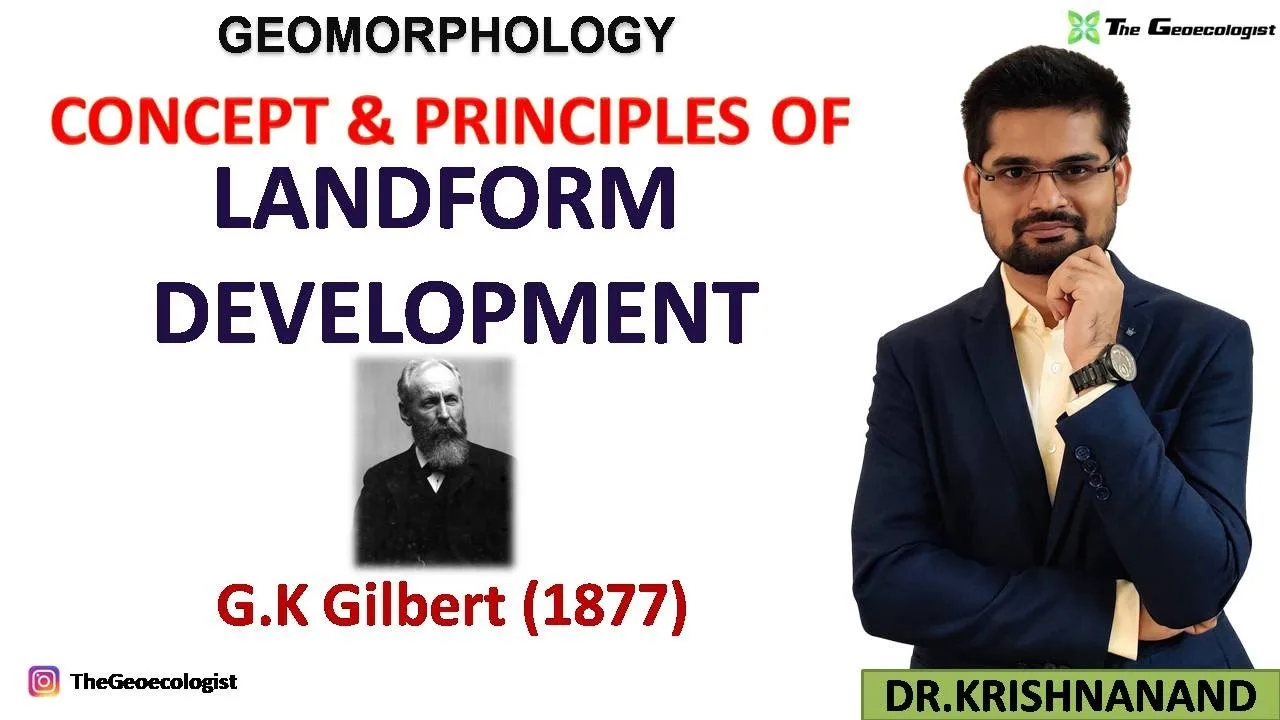
Concepts and Principles of Landform Development by G. K. Gilbert |Geomorphic Theory of G.K Gilbert
Concepts and Principles of Landform Development by G. K. Gilbert
Introduction
Grove Karl Gilbert (1843–1918) was a pioneering American geologist whose contributions laid the foundation for modern geomorphology. His work introduced fundamental theories on landform development, emphasizing concepts such as dynamic equilibrium, graded streams, and basin-range structure. These principles remain highly relevant in geographical studies and are particularly important for UPSC Geography Optional aspirants.
For a deeper understanding, students can refer to the Simplified Geomorphology E-Book (PDF) available at:
👉 https://mithilacraft.com/product/simplified-geomorphology-ebook/
Key Concepts of G. K. Gilbert’s Geomorphic Theory
1. Dynamic Equilibrium in Landform Development
Gilbert proposed that landforms are in a state of dynamic equilibrium, meaning they adjust their structure in response to external forces (like erosion and tectonics) to maintain stability. This concept explains how:
- Rivers adjust their gradient to balance sediment transport.
- Slopes stabilize to resist erosion and weathering.
This principle is widely applied in fluvial geomorphology and slope studies.
2. Theory of Graded Streams
Gilbert’s graded stream theory postulates that a river achieves a balanced profile where erosion and deposition are in equilibrium. Key aspects include:
- The river adjusts its slope, velocity, and discharge to maintain sediment transport efficiency.
- Changes in base level (e.g., sea-level rise) disrupt equilibrium, forcing the river to readjust.
This theory helps explain why rivers develop meanders, floodplains, and terraces over time.
3. Structure, Process, and Stage in Geomorphology
Gilbert emphasized the interconnectedness of:
- Structure (rock composition and tectonic setting),
- Process (erosional and depositional forces), and
- Stage (evolutionary phase of a landform).
For example, young rivers (early stage) exhibit steep gradients, while mature rivers develop broad floodplains (later stage).
4. Basin and Range Structure
Through his studies in the American West, Gilbert explained the formation of horst and graben structures, where tectonic forces create alternating mountain ranges (horsts) and valleys (grabens). This model is crucial for understanding rift valley formation.
Relevance for UPSC Geography Optional
Gilbert’s theories are essential for:
- Understanding fluvial and tectonic landforms.
- Analyzing geomorphic cycles (Davis vs. Penck debates).
- Interpreting natural hazards related to river dynamics and slope stability.
For structured learning, Dr. Krishnanand’s video lecture (available on THEGEOECOLOGIST YouTube channel) simplifies these concepts for UPSC aspirants.
🔹 Watch Here: https://www.youtube.com/c/THEGEOECOLOGIST
Conclusion
G. K. Gilbert’s work remains foundational in geomorphology, offering insights into landform dynamics, river behavior, and tectonic influences. His concepts of dynamic equilibrium and graded streams are particularly useful for competitive exams like UPSC (Geography Optional).
For a comprehensive study, download the Simplified Geomorphology E-Book:
📥 https://mithilacraft.com/product/simplified-geomorphology-ebook/
📌 Subscribe to THEGEOECOLOGIST for more Geography lectures!
📌 Follow on Instagram: https://www.instagram.com/thegeoecologist/
GeographyOptional #GKGilbert #DynamicEquilibrium #UPSC #Geomorphology #TheGeoecologist
To Download E-Books & Study Material Visit The Shop Page