Blog
Buddhist Literature: Complete Guide to Ancient Indian Texts & Tripitaka

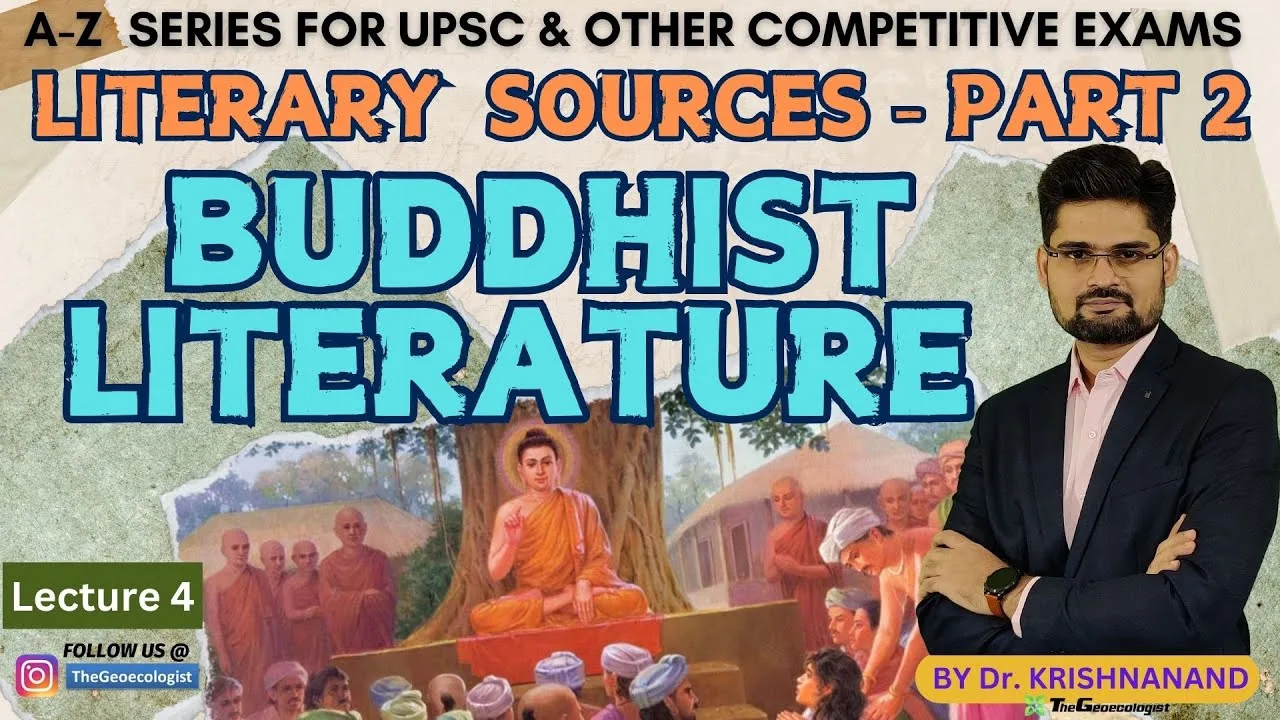
Table of Contents
- Origins and Historical Development of Buddhist Literature
- The Tripitaka: Three Baskets of Buddhist Canon
- Vinaya Pitaka: The Basket of Discipline
- Sutta Pitaka: The Basket of Discourses
- Abhidhamma Pitaka: The Basket of Higher Doctrine
- The Jataka Tales: Stories of Previous Lives
- Buddhist Monastic Universities: Nalanda, Vikramashila, and Preservation
- Influence on Indian Culture, Art, and Philosophy
- Regional Variations: Pali Canon vs. Sanskrit and Chinese Texts
- Buddhist Literature Beyond India: Transmission to Asia
- Modern Relevance and Digital Preservation
- Conclusion
Buddhist literature represents one of humanity’s most extensive and philosophically sophisticated textual traditions, spanning over 2,500 years and encompassing thousands of manuscripts preserved across Asia. Originating from the oral teachings of Siddhartha Gautama (c. 563–483 BCE) in the northeastern Indian subcontinent, this vast corpus includes the canonical Tripitaka, the narrative Jataka tales, philosophical treatises of the Abhidhamma, and countless commentaries composed in Pali, Sanskrit, Tibetan, and Chinese. The preservation and transmission of Buddhist literature was spearheaded by monastic institutions such as Nalanda (established 427 CE) and Vikramashila (c. 783 CE), which functioned as the world’s first residential universities. Today, these texts remain foundational to understanding Indian philosophy, ethics, art history, and the cultural history of Asia.
- Buddhist literature originated as oral tradition in the 6th century BCE before being committed to writing at the Fourth Buddhist Council (c. 29 BCE) in Sri Lanka.
- The Tripitaka (Three Baskets) comprises the Vinaya Pitaka (monastic code), Sutta Pitaka (discourses), and Abhidhamma Pitaka (philosophical analysis).
- The Jataka tales contain 547 stories of the Buddha’s previous births, serving as moral education and historical windows into ancient Indian society.
- Monastic universities like Nalanda housed over 9 million manuscripts and attracted scholars from China, Korea, Japan, Tibet, and Southeast Asia.
- Buddhist texts directly influenced Indian art (Ajanta, Sanchi), governance (Ashoka’s edicts), and later philosophical schools including Madhyamaka and Yogacara.
Origins and Historical Development of Buddhist Literature
The genesis of Buddhist literature is inseparable from the life of the historical Buddha, Siddhartha Gautama, who taught in the Magadha region (modern-day Bihar) during the 6th–5th centuries BCE. Following the Buddha’s parinirvana (final passing) at Kushinagar c. 483 BCE, his disciples convened the First Buddhist Council at Rajagriha under the patronage of King Ajatashatru. This council, traditionally dated to c. 483 BCE, established the oral canon through communal recitation (sangiti) led by Mahakasyapa, Ananda, and Upali. For nearly four centuries, the teachings were preserved exclusively through mnemonic techniques — monks memorized texts using standardized meters, repetition, and group recitation to ensure fidelity.
The transition from oral to written Buddhist literature occurred at the Fourth Buddhist Council in Sri Lanka (c. 29 BCE) during the reign of King Vattagamani Abhaya. Fearing loss of the doctrine due to famine and political instability, the Theravada sangha inscribed the entire Pali Canon onto ola-leaf manuscripts at the Aluvihare Rock Temple. This monumental effort produced the Tipitaka (Pali for Tripitaka), the oldest complete surviving Buddhist canon. Parallel Sanskrit recensions developed in northern India, preserved by Sarvastivada, Dharmaguptaka, and Mahasanghika schools, later translated into Chinese (from 2nd century CE) and Tibetan (from 8th century CE).
The Tripitaka: Three Baskets of Buddhist Canon
The Tripitaka (Sanskrit: tripiṭaka, “three baskets”) constitutes the structural backbone of all Buddhist literature. Each “basket” addresses a distinct dimension of the Buddhist path: discipline, discourse, and philosophy. The Pali Canon preserved by the Theravada tradition in Sri Lanka and Southeast Asia remains the most complete early version, comprising approximately 45 volumes in modern printed editions.
Vinaya Pitaka: The Basket of Discipline
The Vinaya Pitaka governs monastic life (sangha) through 227 rules for bhikkhus (monks) and 311 for bhikkhunis (nuns) in the Theravada tradition. Divided into three sections — Suttavibhanga (rule analysis), Khandhaka (procedural chapters), and Parivara (summary) — Buddhist literature covers ordination procedures, communal ceremonies (uposatha, pavarana), dispute resolution, and regulations on food, clothing, medicine, and dwellings. The Vinaya’s legalistic sophistication influenced later Indian jurisprudence and provides historians with unparalleled data on ancient Indian social customs, economic life, and institutional organization. The Mulasarvastivada Vinaya (preserved in Tibetan and Chinese) contains additional narratives illustrating karmic causality behind each rule.
Sutta Pitaka: The Basket of Discourses
The Sutta Pitaka contains over 10,000 discourses attributed to the Buddha and his chief disciples, organized into five nikayas (collections): Digha (long), Majjhima (middle-length), Samyutta (connected), Anguttara (numerical), and Khuddaka (minor). These texts cover the full spectrum of Buddhist teaching — the Four Noble Truths, Noble Eightfold Path, dependent origination (paticcasamuppada), karma, rebirth, meditation (samatha and vipassana), and ethics. Key suttas include the Dhammacakkappavattana Sutta (First Discourse at Sarnath), Satipatthana Sutta (Foundations of Mindfulness), and Mahaparinibbana Sutta (the Buddha’s final days). The Sutta Pitaka’s literary forms — dialogues, verses, parables, and similes — demonstrate sophisticated pedagogical strategies for diverse audiences. – a key consideration for Buddhist literature.
Abhidhamma Pitaka: The Basket of Higher Doctrine
The Abhidhamma Pitaka represents a systematic philosophical analysis of mind and reality, organizing the Buddha’s teachings into a rigorous theoretical framework. Its seven books — Dhammasangani (Enumeration of Phenomena), Vibhanga (Analysis), Dhatukatha (Discussion of Elements), Puggalapannatti (Designation of Persons), Kathavatthu (Points of Controversy), Yamaka (Pairs), and Patthana (Conditional Relations) — deconstruct experience into ultimate realities (dhammas): consciousness (citta), mental factors (cetasikas), material phenomena (rupa), and nibbana. The Patthana alone details 24 conditional relations (paccaya) governing causal interaction. This scholastic enterprise, finalized by c. 250 BCE, laid groundwork for later Mahayana philosophical systems including Madhyamaka (Nagarjuna, c. 150–250 CE) and Yogacara (Asanga, Vasubandhu, 4th–5th century CE).
The Jataka Tales: Stories of Previous Lives

The Jataka tales (Sanskrit: jātaka, “birth stories”) comprise 547 narratives in the Pali Canon’s Khuddaka Nikaya, each recounting a previous existence of the Bodhisattva (Buddha-to-be) cultivating perfections (paramis) such as generosity (dana), morality (sila), renunciation (nekkhamma), wisdom (panna), energy (viriya), patience (khanti), truthfulness (sacca), determination (adhitthana), loving-kindness (metta), and equanimity (upekkha). These stories, composed in mixed prose and verse (gatha), served dual purposes: moral instruction for lay audiences and doctrinal illustration of karmic continuity.
Famous jatakas include the Vessantara Jataka (no. 547, the perfection of giving), Mahajanaka Jataka (perseverance), and Sama Jataka (filial devotion). The tales feature humans, animals, deities, and mythical beings, reflecting the cosmological framework of Buddhist samsara. Artistically, jataka scenes dominate the narrative reliefs at Sanchi (1st century BCE), Bharhut (2nd century BCE), and the Ajanta caves (2nd century BCE–5th century CE), providing visual documentation of ancient Indian costume, architecture, flora, fauna, and social customs. The Jataka corpus also influenced world literature — migrating westward as the Panchatantra, Kalila wa Dimna, and eventually Aesop’s Fables and the Thousand and One Nights.
Buddhist Monastic Universities: Nalanda, Vikramashila, and Preservation
The survival of Buddhist literature owes immeasurably to the great monastic universities (mahaviharas) of ancient India. Nalanda, founded in 427 CE under Gupta emperor Kumaragupta I, flourished for seven centuries until its destruction by Bakhtiyar Khilji’s forces c. 1193 CE. At its zenith (7th century CE), Nalanda housed over 10,000 monks and 1,500 teachers across 108 lecture halls, with a nine-story library (Dharmaganja) containing an estimated 9 million manuscripts. The Chinese pilgrim Xuanzang (602–664 CE) studied there for five years, translating 657 Sanskrit texts into Chinese. Subjects included Buddhist philosophy, logic (hetuvidya), grammar, medicine, astronomy, and mathematics.
Vikramashila, established c. 783 CE by Pala emperor Dharmapala in present-day Bihar, specialized in Vajrayana (Tantric) Buddhism and logic. Its curriculum emphasized the Pramanavarttika of Dharmakirti and the Guhyasamaja Tantra. Atisha Dipankara (982–1054 CE), pivotal in transmitting Buddhism to Tibet, served as abbot. Other major centers included Odantapuri, Somapura (Paharpur, Bangladesh), and Jagaddala. These institutions maintained scriptoria where scribes copied texts on palm-leaf (talapatra) and birch-bark (bhurja) manuscripts using standardized scripts (Brahmi, Gupta, Sharada, Devanagari). Colophons record patronage by kings, merchants, and lay devotees, revealing the socioeconomic networks sustaining textual transmission.
For authoritative details on Nalanda’s archaeological remains and manuscript discoveries, see the Nalanda Wikipedia entry.
Influence on Indian Culture, Art, and Philosophy
The cultural footprint of Buddhist literature extends far beyond monastery walls. Emperor Ashoka (r. 268–232 BCE), after the Kalinga War, inscribed Buddhist ethical principles on pillars and rock edicts across the subcontinent — the earliest datable Indian inscriptions. His edicts reference specific suttas (e.g., Brahmajala Sutta, Samannaphala Sutta) and promote dhamma (dharma) as social policy: non-violence, religious tolerance, welfare measures, and humane treatment of prisoners.
In visual art, jataka narratives and Buddha’s life events (lalitavistara) adorn stupa railings (Sanchi, Bharhut), cave temples (Ajanta, Ellora, Karla), and free-standing sculptures (Mathura, Gandhara). The Ajanta murals (2nd century BCE–5th century CE), depicting over 30 jatakas, represent a pinnacle of Indian narrative painting. Architecturally, the stupa (reliquary mound) evolved from simple hemispherical forms (Sanchi Stupa 1, 3rd century BCE) to elaborate mandala-like complexes (Borobudur, 9th century CE), each encoding Buddhist cosmology from Buddhist literature.
Philosophically, Buddhist debates with Nyaya, Vaisheshika, Samkhya, Mimamsa, and Vedanta schools sharpened Indian epistemology (pramana), metaphysics (anatman, sunyata), and logic. Nagarjuna’s Mulamadhyamakakarika (c. 150 CE), grounded in the Prajnaparamita sutras of Mahayana Buddhist literature, introduced the doctrine of emptiness (sunyata) and the two truths (conventional and ultimate), reshaping all subsequent Indian philosophy. Vasubandhu’s Abhidharmakosha (4th century CE) systematized Sarvastivada Abhidharma, becoming a core textbook in Tibetan monastic education to this day.
Regional Variations: Pali Canon vs. Sanskrit and Chinese Texts
Buddhist literature diversified across linguistic and sectarian lines. The Theravada tradition preserved the Pali Canon (Tipitaka) in Sri Lanka, Burma, Thailand, Laos, and Cambodia. In contrast, northern Indian schools (Sarvastivada, Mahasanghika, Dharmaguptaka) transmitted Sanskrit canons, largely lost in India but preserved in Chinese translation (the Chinese Buddhist Canon, Taishō Tripiṭaka, 55 volumes, 2,184 texts) and Tibetan translation (the Kangyur and Tengyur, 108+ and 225+ volumes respectively).
Mahayana sutras — Prajnaparamita (Perfection of Wisdom), Lotus Sutra, Avatamsaka, Vimalakirti, Nirvana — emerged c. 1st century BCE–2nd century CE, claiming to represent the Buddha’s higher teachings. These texts introduced the bodhisattva ideal, Buddha-nature (tathagatagarbha), and pure land cosmologies. The Heart Sutra (c. 350 CE), a condensation of Prajnaparamita thought, remains the most recited Buddhist text worldwide. Vajrayana (Tantric) literature — kriya, charya, yoga, and anuttarayoga tantras — developed from 6th century CE onward, integrating mantra, mudra, mandala, and deity yoga.
For a comprehensive overview of the Chinese Buddhist Canon’s structure and history, consult the Chinese Buddhist Canon Wikipedia page.
Buddhist Literature Beyond India: Transmission to Asia
The diffusion of Buddhist literature followed trade routes and royal patronage. Sri Lanka received the Pali Canon via Mahinda (Ashoka’s son) c. 250 BCE; the Mahavamsa (5th century CE) chronicles this transmission. Southeast Asia (Burma, Thailand, Cambodia, Laos) adopted Theravada texts and Pali scholarship from Sri Lanka (11th–13th centuries CE). Central Asia (Khotan, Kucha, Turfan) yielded vast manuscript caches in Sanskrit, Khotanese, Tocharian, and Sogdian, documenting the Silk Road transmission to China.
China’s translation project, spanning 2nd–11th centuries CE, involved over 200 translators (Kumarajiva, Xuanzang, Yijing, Paramartha) and produced a canon larger than the Pali and Tibetan combined. Korea (Goryeo Daejanggyeong, 13th century, 81,000 woodblocks) and Japan (Taishō Tripiṭaka, 1924–1934) preserved and systematized Chinese editions. Tibet’s imperial period (7th–9th centuries) saw massive translation under Trisong Detsen, Padmasambhava, and Shantarakshita, creating a Tibetan canon that preserves Indian texts lost elsewhere. The 14th Dalai Lama has emphasized that “Tibetan Buddhism is essentially the Nalanda tradition,” underscoring the continuity of Buddhist literature across Himalayan cultures.
Modern Relevance and Digital Preservation
In the 21st century, Buddhist literature thrives through digital initiatives. The Pali Text Society (founded 1881) pioneered critical editions; today, SuttaCentral offers free, searchable translations of early Buddhist texts in 40+ languages. The Buddhist Digital Resource Center (BDRC) has digitized over 15 million pages of Tibetan manuscripts. The Digital Sanskrit Buddhist Canon (DSBC) project at the University of the West reconstructs Sanskrit texts from Tibetan and Chinese witnesses. Machine learning now aids manuscript recognition (e.g., the DeepPalm project for palm-leaf OCR).
Contemporary applications extend beyond academia. Mindfulness-Based Stress Reduction (MBSR, Jon Kabat-Zinn, 1979) draws directly from the Satipatthana Sutta. Buddhist ethics inform environmental activism (Engaged Buddhism, Thich Nhat Hanh), conflict resolution, and neuro-scientific research on meditation (Richard Davidson, Antoine Lutz). The global Buddhist population (~500 million) engages daily with Buddhist literature through chanting, study groups, and digital apps — ensuring this ancient textual heritage remains a living, evolving tradition.
Conclusion
From the oral recitations at Rajagriha to algorithmic searches on SuttaCentral, Buddhist literature has traversed millennia, languages, and technologies while preserving its core insight: that human suffering arises from craving and ignorance, and that liberation is attainable through ethical conduct, mental cultivation, and wisdom. The Tripitaka’s three baskets, the Jataka’s 547 moral narratives, the philosophical rigor of Abhidhamma, and the visionary expansiveness of Mahayana sutras together constitute a civilizational achievement comparable to the Greek philosophical corpus or the Chinese classics. As digital humanities unlock new layers of manuscript evidence and cross-cultural comparison, Buddhist literature continues to offer not merely historical data but practical guidance for navigating the perennial challenges of existence. Its preservation — from palm-leaf to pixel — stands as testament to the enduring human commitment to wisdom, compassion, and the transmission of knowledge across generations.
Frequently Asked Questions
The Tripitaka consists of the Vinaya Pitaka (monastic discipline), Sutta Pitaka (Buddha's discourses), and Abhidhamma Pitaka (philosophical analysis of mind and reality).
The Pali Canon's Khuddaka Nikaya contains 547 Jataka tales, each recounting a previous life of the Bodhisattva cultivating the ten perfections (paramis).
Nalanda (427–1193 CE) housed a nine-story library with an estimated 9 million manuscripts, trained scholars like Xuanzang, and served as the primary center for copying, studying, and transmitting Buddhist texts across Asia.