Blog
Brahmanical Literature: Guide to Ancient Indian Literary Sources

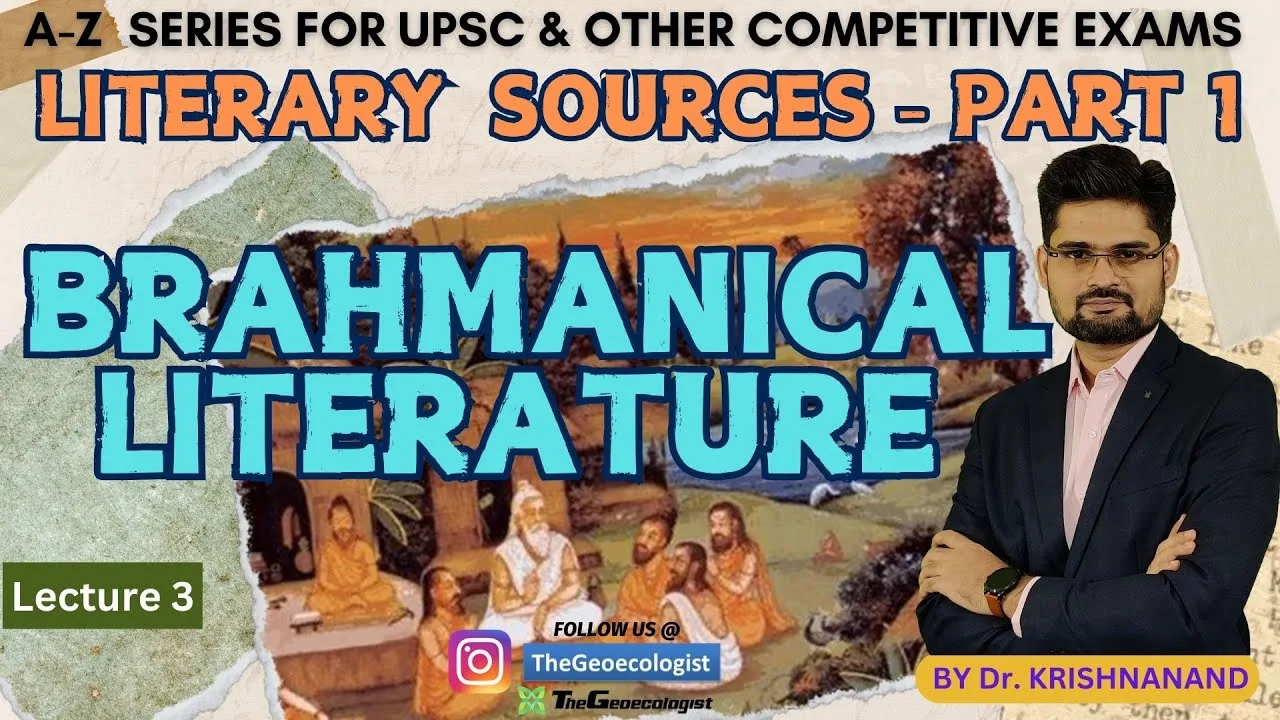
https://www.youtube.com/watch?v=d9n64xle4ro
Table of Contents
- The Vedas: Bedrock of Brahmanical Literature
- Rigveda: The Hymnal Foundation
- Samaveda: The Melodic Veda
- Yajurveda: The Ritual Manual
- Atharvaveda: The Veda of Everyday Life
- The Upanishads: Philosophical Apex of Brahmanical Literature
- Core Metaphysical Concepts
- Dialogue and Pedagogy
- The Smritis: Codified Norms in Brahmanical Literature
- Manusmriti: The Archetypal Law Code
- Other Key Smritis
- Historical Context and Transmission
- Cultural Significance and Global Influence
- Why Brahmanical Literature Matters Today
- Frequently Asked Questions
- What is the difference between Shruti and Smriti in Brahmanical literature?
- How were the Vedas preserved before writing?
- Are the Upanishads part of the Vedas?
Brahmanical literature represents the foundational corpus of textual tradition that shaped the intellectual, spiritual, and social frameworks of ancient India. Comprising the Vedas, Upanishads, and Smritis, this vast body of work offers unparalleled insights into the ritualistic practices, philosophical inquiries, and legal codifications that defined early Indian civilization. Scholars and enthusiasts alike turn to these texts to understand the origins of Hindu philosophy, the evolution of Sanskrit literature, and the historical development of the varna system.
- Brahmanical literature encompasses the Vedas, Upanishads, and Smritis as its three primary pillars.
- The four Vedas—Rigveda, Samaveda, Yajurveda, and Atharvaveda—date back to 1500–500 BCE and were transmitted orally for millennia.
- Upanishads mark a philosophical shift from ritualism to metaphysical inquiry, introducing concepts like brahman, atman, and moksha.
- Smritis such as the Manusmriti codified social laws, ethical duties, and governance principles for ancient society.
- These texts remain vital for understanding the continuity and adaptability of Indian intellectual traditions.
The Vedas: Bedrock of Brahmanical Literature
The Vedas constitute the oldest layer of Brahmanical literature and are regarded as apauruṣeya (not of human origin). Composed in Vedic Sanskrit, they were preserved through an extraordinary oral tradition involving precise mnemonic techniques before being committed to writing around the early first millennium CE. The four Vedas collectively form the śruti (that which is heard) canon, distinguishing them from the later smṛti (that which is remembered) texts.
Rigveda: The Hymnal Foundation
The Rigveda, dated to approximately 1500–1200 BCE, is the earliest and most extensive Vedic text. Brahmanical literature comprises 1,028 hymns (sūktas) organized into ten books (maṇḍalas), dedicated to deities such as Agni (fire), Indra (rain and war), Varuna (cosmic order), and Surya (sun). Beyond its liturgical function, the Rigveda contains profound philosophical speculations, most notably in the Nasadiya Sukta (Hymn of Creation), which questions the origins of the universe. The text also reflects early Indo-Aryan society, mentioning the Sarasvati river, tribal conflicts, and pastoral life.
Samaveda: The Melodic Veda
The Samaveda (“Veda of melodies”) consists primarily of verses drawn from the Rigveda set to musical notation for liturgical chanting. Its 1,875 verses are arranged to facilitate the udgātṛ priest’s role in Soma sacrifices. The Samaveda’s emphasis on pitch, rhythm, and melody laid the groundwork for Indian classical music traditions. Two major recensions (śākhās) survive: the Kauthuma and Jaiminiya. – a key consideration for Brahmanical literature.
Yajurveda: The Ritual Manual
The Yajurveda serves as a procedural guide for sacrificial rites (yajñas), providing prose mantras (yajus) muttered by the adhvaryu priest. Brahmanical literature exists in two primary versions: the Śukla (White) Yajurveda, which separates mantras from Brahmana commentary, and the Kṛṣṇa (Black) Yajurveda, which intermingles them. The text details complex rituals like the Aśvamedha (horse sacrifice) and Rājasūya (royal consecration), reflecting the intertwining of religion and polity in Vedic society.
Atharvaveda: The Veda of Everyday Life
Distinct from the other three, the Atharvaveda (circa 1200–900 BCE) incorporates spells, charms, and incantations for healing, protection, and domestic welfare. Its 730 hymns address concerns like disease, snakebites, marital harmony, and success in agriculture. The Atharvaveda also contains early references to medicine, astronomy, and statecraft, foreshadowing later śāstra traditions. Its inclusion in the Vedic canon was initially contested but later accepted as the fourth Veda. – a key consideration for Brahmanical literature.
For a deeper exploration of the Vedic corpus, see the Wikipedia entry on the Vedas, which provides comprehensive details on dating, recensions, and scholarly debates.
The Upanishads: Philosophical Apex of Brahmanical Literature
Composed between 800 and 500 BCE, the Upanishads represent the Vedānta (“end of the Vedas”) both chronologically and philosophically. They mark a decisive shift from external ritual performance to internal spiritual realization. Of the 108+ Upanishads recognized in the Muktika canon, thirteen are considered principal (mukhya), including the Bṛhadāraṇyaka, Chāndogya, Kaṭha, Praśna, Muṇḍaka, Māṇḍūkya, Taittirīya, Aitareya, Śvetāśvatara, Kauṣītaki, and Mahānārāyaṇa. – a key consideration for Brahmanical literature.
Core Metaphysical Concepts
The Upanishads articulate a non-dualistic (advaita) vision centered on two pivotal ideas: brahman (the ultimate, unchanging reality underlying all existence) and atman (the individual self or soul). The famous mahāvākya “tat tvam asi” (“that thou art”) from the Chāndogya Upanishad encapsulates the identity of atman and brahman. Liberation (mokṣa) from the cycle of birth and death (saṃsāra) is achieved through self-knowledge (ātma-jñāna), meditation, and ethical discipline.
Dialogue and Pedagogy
Unlike the hymnic style of the Vedas, the Upanishads employ dialogic formats—teacher-student exchanges, king-sage debates, and even conversations with death personified (as in the Kaṭha Upanishad’s Nachiketa’s dialogue with Yama). This pedagogical approach emphasizes experiential realization over dogmatic acceptance. The Bṛhadāraṇyaka Upanishad, the longest, contains the Yājñavalkya-Maitreyī dialogue on the immortality of the self.
The Upanishads Wikipedia page offers detailed analyses of each principal Upanishad, their chronology, and their influence on later Vedānta schools.
The Smritis: Codified Norms in Brahmanical Literature
While the Vedas and Upanishads address cosmology and metaphysics, the Smritis (smṛti, “remembered”) provide practical guidelines for dharma (righteous conduct, law, duty). Composed between 500 BCE and 500 CE, these texts are attributed to human authors (legendary sages) and are thus considered adaptable to changing times (yuga-dharma). The Smriti corpus includes Dharmasūtras, Dharmaśāstras, Purāṇas, Itihāsas (epics), and Āgamas.
Manusmriti: The Archetypal Law Code
The Manusmriti (Laws of Manu), dated to circa 200 BCE–200 CE, is the most influential and widely studied Dharmaśāstra. Its 2,685 verses across twelve chapters cover:
• Varṇa system: Duties of Brāhmaṇas (priests), Kṣatriyas (warriors), Vaiśyas (merchants), and Śūdras (servants).
• Āśrama system: Four life stages—student (brahmacārin), householder (gṛhastha), forest-dweller (vānaprastha), and renunciant (saṃnyāsin).
• Legal procedures: Courts, evidence, punishment, inheritance, and contracts.
• Women’s roles: Often controversial, prescribing dependence on male guardians.
Despite modern critiques of its hierarchical prescriptions, the Manusmriti shaped legal practice across Southeast Asia through Hindu-Buddhist kingdoms. The Manusmriti Wikipedia article provides the full text in translation, historical context, and reception history.
Other Key Smritis
The Yājñavalkya Smṛti (circa 1st–3rd century CE) is more systematic and liberal than Manusmriti, granting women greater property rights and recognizing written documents as legal evidence. The Nārada Smṛti focuses on judicial procedure and commercial law. The Parāśara Smṛti adapts norms for the Kali Yuga, permitting practices like niyoga (levirate) and relaxing dietary restrictions. Regional Smritis like the Mitākṣarā (Vijñāneśvara’s 11th-century commentary on Yājñavalkya) became authoritative in medieval Hindu law.
Historical Context and Transmission
The development of Brahmanical literature spans nearly two millennia, reflecting dynamic interactions between oral and written cultures, ritual and philosophy, orthodoxy and heterodoxy. The Vedic period (c. 1500–500 BCE) saw the composition of Saṃhitās, Brāhmaṇas, Āraṇyakas, and early Upanishads in the Punjab-Gangetic region. The post-Vedic era (500 BCE–500 CE) witnessed the rise of Śramaṇa movements (Buddhism, Jainism), prompting Brahmanical systematization through Sūtras and Smritis.
Textual transmission relied on guru-śiṣya paramparā (teacher-student lineages) with rigorous memorization techniques (pāṭha methods like saṃhitā-pāṭha, pada-pāṭha, krama-pāṭha). The advent of writing (Brahmi script, 3rd century BCE) supplemented but did not replace orality. Commentarial traditions (bhāṣya, ṭīkā, vṛtti) flourished from the early centuries CE, with figures like Śaṅkara (8th century), Rāmānuja (11th century), and Madhva (13th century) founding major Vedānta schools.
Cultural Significance and Global Influence
Brahmanical literature has profoundly shaped Indian civilization and beyond. The Vedas informed temple architecture, iconography, and festival calendars. Upanishadic philosophy inspired the Bhagavad Gītā, the six orthodox darśanas (Nyāya, Vaiśeṣika, Sāṃkhya, Yoga, Mīmāṃsā, Vedānta), and medieval bhakti movements. Smritis provided the legal framework for pre-colonial kingdoms from the Guptas to the Cholas and influenced Southeast Asian polities (e.g., Cambodia’s Angkor, Indonesia’s Majapahit).
In the modern era, these texts engaged with colonial scholarship (Orientalists like William Jones, Max Müller), reform movements (Rammohan Roy, Dayananda Saraswati), and nationalist discourse (Tilak, Aurobindo, Gandhi). Contemporary scholarship employs philology, archaeology, and anthropology to reassess dating, authorship, and social context. The digital humanities now make critical editions and manuscripts globally accessible.
Why Brahmanical Literature Matters Today
Studying Brahmanical literature offers more than antiquarian interest. Its exploration of consciousness (caitanya), ethics (dharma), and liberation (mokṣa) resonates with contemporary philosophy of mind, environmental ethics, and psychology. The Vedic emphasis on ṛta (cosmic order) informs ecological thought. Upanishadic non-duality dialogues with quantum physics and neuroscience. Smriti jurisprudence contributes to comparative law and indigenous rights debates.
For students, researchers, and general readers, engaging with these primary sources—through reliable translations by scholars like Patrick Olivelle, Wendy Doniger, Joel Brereton, and Stephanie Jamison—provides direct access to one of humanity’s most sustained intellectual projects. The journey through Brahmanical literature is a journey into the roots of Indian civilization and a mirror for universal human questions.
Frequently Asked Questions
What is the difference between Shruti and Smriti in Brahmanical literature?
Śruti (“heard”) refers to the Vedas and Upanishads, considered divinely revealed and eternally valid. Smṛti (“remembered”) comprises post-Vedic texts like the Manusmriti, Puranas, and epics, attributed to human sages and considered adaptable to historical context.
How were the Vedas preserved before writing?
The Vedas were preserved through an elaborate oral tradition involving specialized priestly families who memorized texts using multiple recitation methods (pāṭhas) with error-checking mechanisms. This ensured remarkable fidelity over millennia before manuscript culture emerged.
Are the Upanishads part of the Vedas?
Yes, the Upanishads form the concluding portions of the Vedas (Vedānta) and are attached to specific Vedic schools (śākhās). For example, the Bṛhadāraṇyaka and Īśa Upanishads belong to the Śukla Yajurveda, while the Kaṭha and Taittirīya belong to the Kṛṣṇa Yajurveda.
Frequently Asked Questions
Śruti ("heard") refers to the Vedas and Upanishads, considered divinely revealed and eternally valid. Smṛti ("remembered") comprises post-Vedic texts like the Manusmriti, Puranas, and epics, attributed to human sages and considered adaptable to historical context.
The Vedas were preserved through an elaborate oral tradition involving specialized priestly families who memorized texts using multiple recitation methods (pāṭhas) with error-checking mechanisms. This ensured remarkable fidelity over millennia before manuscript culture emerged.
Yes, the Upanishads form the concluding portions of the Vedas (Vedānta) and are attached to specific Vedic schools (śākhās). For example, the Bṛhadāraṇyaka and Īśa Upanishads belong to the Śukla Yajurveda, while the Kaṭha and Taittirīya belong to the Kṛṣṇa Yajurveda.