

Blog
Academic Authorship Fraud: Exposing Name Trading in Research

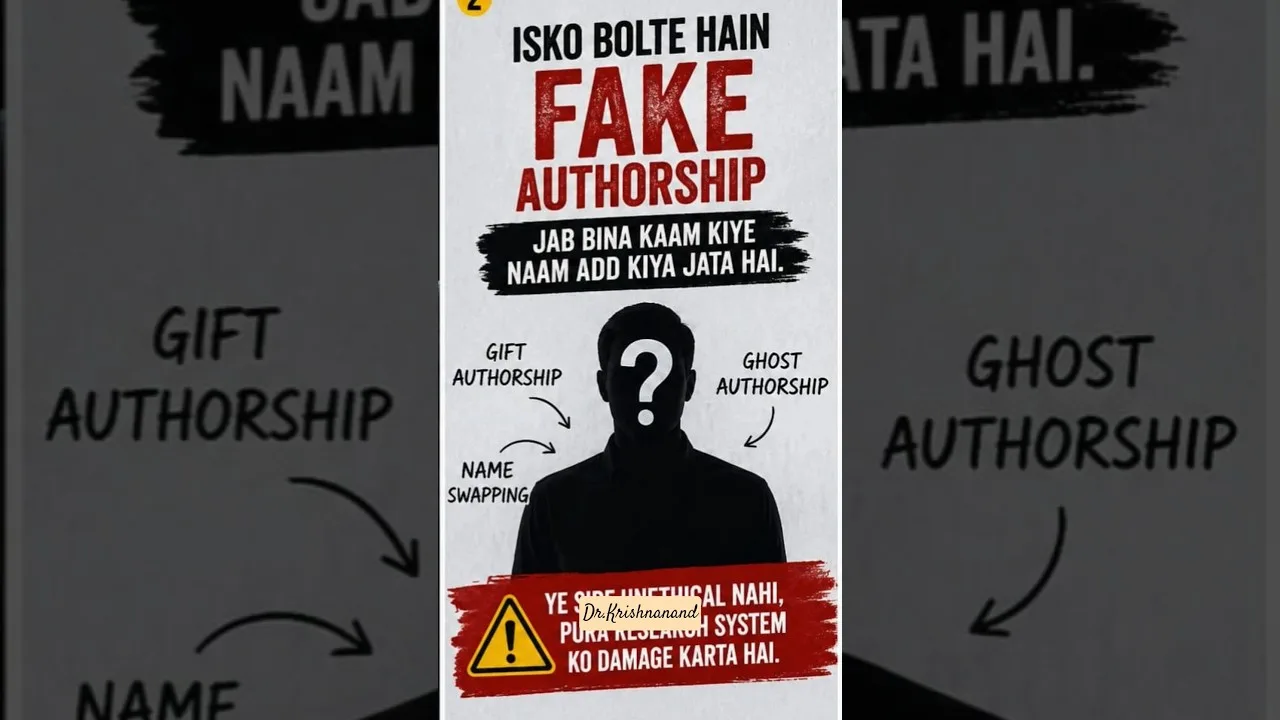
Table of Contents
- What Is Academic Authorship Fraud?
- The Three Toxic Tactics of Authorship Misappropriation
- 1. Gift Authorship: The Currency of Influence
- 2. Ghost Authorship: Invisible Hands, Visible Consequences
- 3. Name Swapping: The Quid Pro Quo of Publication
- Why Academic Authorship Fraud Is a Systemic Crisis
- Real Scientists Lose Credit and Careers
- Science Trust Erodes at Scale
- Meritocracy Dies, Gaming Thrives
- Real-World Cases: From Labs to Journals
- The "VIP Author" Scandal at a Major European University (2019)
- Ghostwriting in Opioid Marketing (2007–2017)
- Reciprocal Rings in Computer Science Conferences (2022)
- Combating Academic Authorship Fraud: A Multi-Layered Strategy
- Enforce Contributorship Transparency
- Strengthen Institutional Oversight
- Protect Whistleblowers
- Reform Evaluation Metrics
- Leverage Technology for Detection
- The Path Forward: From Silence to Accountability
- Frequently Asked Questions
- What constitutes academic authorship fraud?
- How can junior researchers protect themselves from authorship exploitation?
- What are the legal consequences of authorship fraud?
Academic authorship fraud has become a silent epidemic corrupting research integrity across disciplines, turning the noble pursuit of knowledge into a transactional marketplace where names are traded like currency. The phrase “Tum mera naam paper mein daal do… main tumhara daal deta hoon” (Add my name to the paper… I’ll add yours to mine) encapsulates a toxic culture of reciprocal name swapping that undermines merit, exploits junior researchers, and erodes public trust in science. This comprehensive investigation exposes the mechanics, consequences, and solutions to authorship misappropriation.
- Academic authorship fraud encompasses gift authorship, ghost authorship, and reciprocal name swapping — all violations of ethical publication standards.
- Junior researchers and technical staff disproportionately lose credit while senior figures inflate publication metrics.
- Retracted papers due to authorship disputes cost institutions millions in funding and reputational damage annually.
- Global ethics bodies like COPE and ICMJE provide clear authorship criteria, yet enforcement remains inconsistent.
- Whistleblower protections and transparent contribution statements are critical to dismantling the culture of silence.
What Is Academic Authorship Fraud?
Academic authorship fraud refers to the deliberate misattribution of authorship on scholarly works, violating the fundamental principle that authorship reflects substantial intellectual contribution. The International Committee of Medical Journal Editors (ICMJE) defines four criteria for authorship: substantial contributions to conception/design, data acquisition/analysis, drafting/revising the work, and final approval with accountability. When these criteria are bypassed — whether through coercion, mutual back-scratching, or commercial ghostwriting — the result is authorship misappropriation.
A 2022 meta-analysis published in Research Integrity and Peer Review estimated that 30–50% of published papers across STEM fields exhibit at least one authorship irregularity, ranging from undeserved “gift” inclusions to complete exclusion of genuine contributors. The phenomenon is not new; historical analyses trace gift authorship to the 1980s, but the hypercompetitive “publish or perish” environment has accelerated its normalization. – a key consideration for academic authorship fraud.
The Three Toxic Tactics of Authorship Misappropriation
1. Gift Authorship: The Currency of Influence
Gift authorship — also called honorary or guest authorship — occurs when an individual receives authorship without meeting ICMJE criteria, typically to leverage their reputation, funding authority, or editorial connections. Department heads, thesis advisors, and well-known principal investigators are frequent recipients. A 2021 survey of 3,200 researchers by the Committee on Publication Ethics (COPE) revealed that 28% of respondents had witnessed gift authorship in their department within the past three years. – a key consideration for academic authorship fraud.
This practice distorts merit-based evaluation. When a paper bears the name of a Nobel laureate who never saw the manuscript, reviewers may unconsciously bias acceptance decisions. Meanwhile, the actual writers — often graduate students or postdocs — receive diluted credit. The 2018 “CRISPR baby” scandal involving He Jiankui highlighted how senior co-authors can lend credibility to ethically dubious work, prompting journals to tighten contributorship disclosure requirements. – a key consideration for academic authorship fraud.
2. Ghost Authorship: Invisible Hands, Visible Consequences
Ghost authorship is the inverse: individuals who meet all authorship criteria are omitted, while professional medical writers or industry employees draft manuscripts without acknowledgment. This is rampant in industry-sponsored clinical trials. A landmark 2009 study in PLoS Medicine found ghost authorship in 11% of articles in top medical journals, rising to 40% in industry-funded trials.
The consequences are dire. Ghostwritten papers on rofecoxib (Vioxx) and paroxetine (Paxil) downplayed cardiovascular risks and suicide hazards, respectively, contributing to patient harm and billion-dollar litigation. The academic authorship guidelines now mandate explicit contributorship statements, but enforcement gaps persist, especially in journals lacking resources for forensic manuscript analysis.
3. Name Swapping: The Quid Pro Quo of Publication
Name swapping — the direct exchange of authorship positions between researchers — is the most insidious form of academic authorship fraud because academic authorship fraud masquerades as collaboration. Two principal investigators agree to add each other’s names to unrelated papers, inflating both publication counts and h-indices. This “mutual back-scratching” creates a veneer of teamwork while violating the core tenet that authorship requires intellectual ownership.
Network analysis of co-authorship graphs has revealed clusters of reciprocal naming that statistically deviate from random collaboration patterns. A 2023 bibliometric study of 1.2 million Scopus-indexed papers identified 4,700 researcher pairs with suspiciously high reciprocal authorship rates (>80% of joint papers), suggesting systematic name trading. Such networks often span institutions and countries, complicating institutional investigations.
Why Academic Authorship Fraud Is a Systemic Crisis

Real Scientists Lose Credit and Careers
The primary victims are early-career researchers, lab technicians, data analysts, and field workers whose contributions are erased or downgraded. A 2020 global survey by the Global Young Academy found that 41% of respondents had been excluded from authorship despite meeting criteria, with women and researchers from low-income countries disproportionately affected. This “credit theft” drives talent out of academia; a Nature poll reported that 32% of postdocs considering leaving research cited authorship disputes as a factor.
Technicians who maintain instruments, curate datasets, or develop protocols often receive only “acknowledgments” — a section ignored by hiring and promotion committees. The 2022 “Technician Commitment” initiative by UK funders aims to rectify this, but cultural change lags behind policy.
Science Trust Erodes at Scale
When authorship is decoupled from accountability, error detection fails. The 2010 retraction of a Lancet paper linking MMR vaccine to autism — authored by Andrew Wakefield with undisclosed conflicts — fueled vaccine hesitancy for decades. More recently, the 2023 retraction of 10,000+ papers from “paper mills” revealed industrial-scale authorship fraud, where fake authors and fabricated affiliations were sold to researchers desperate for metrics.
Public trust suffers. A 2024 Pew Research Center survey showed only 57% of Americans have “a great deal” or “fair amount” of confidence in scientists, down from 73% in 2019. Authorship scandals are cited as a top reason for skepticism, alongside funding bias and reproducibility crises.
Meritocracy Dies, Gaming Thrives
Universities and funders rely on publication counts, h-indices, and journal impact factors for hiring, promotion, and grants. When these metrics are gamed through academic authorship fraud, the incentive structure rewards manipulation over discovery. A 2021 simulation model demonstrated that if 20% of researchers engage in name swapping, the correlation between h-index and actual scientific impact drops below 0.3 — rendering the metric nearly meaningless.
This fuels a vicious cycle: junior researchers observe seniors gaming the system, internalize academic authorship fraud as “how academia works,” and perpetuate the fraud. Breaking this cycle requires structural reform, not just moral exhortation.
Real-World Cases: From Labs to Journals
The “VIP Author” Scandal at a Major European University (2019)
An investigation uncovered a department head who appeared on 87 papers over five years without reading most manuscripts. Graduate students reported implicit pressure to include him for “lab harmony.” The university retracted 12 papers, revoked his supervisory rights, and implemented mandatory contributorship audits — a rare case of institutional accountability.
Ghostwriting in Opioid Marketing (2007–2017)
Court documents revealed Purdue Pharma funded ghostwritten review articles minimizing addiction risks of OxyContin, published under names of prominent pain specialists. These papers influenced prescribing guidelines, contributing to the opioid epidemic. The scandal led to the 2019 “Sunshine Act” extensions requiring disclosure of industry payments to authors.
Reciprocal Rings in Computer Science Conferences (2022)
An analysis of ACM and IEEE conference proceedings detected 230 researcher pairs with statistically anomalous co-authorship reciprocity. Several pairs shared no topical overlap, suggesting pure metric exchange. IEEE now employs algorithmic flagging for review assignment.
Combating Academic Authorship Fraud: A Multi-Layered Strategy
Enforce Contributorship Transparency
Journals must adopt the CRediT (Contributor Roles Taxonomy) framework, requiring granular contribution statements for each author. Since 2020, over 200 journals — including Nature, Science, and PNAS — mandate CRediT. Early data shows a 15% reduction in gift authorship complaints at participating journals.
Strengthen Institutional Oversight
Universities should establish independent Research Integrity Offices with authority to audit authorship on funded projects. The US Office of Research Integrity (ORI) model — combining investigation, education, and policy — has reduced repeat offenses by 40% at institutions with dedicated staff.
Protect Whistleblowers
Fear of retaliation silences witnesses. Anonymous reporting portals, legal safeguards, and cultural normalization of “speaking up” are essential. The EU’s 2023 Whistleblower Directive now covers research misconduct, mandating confidential channels in all member-state institutions.
Reform Evaluation Metrics
Funders and hiring committees must shift from quantitative metrics (paper count, h-index) to qualitative assessment: narrative CVs, open science practices, mentorship records, and societal impact. The San Francisco Declaration on Research Assessment (DORA), signed by 2,500+ organizations, provides a roadmap.
Leverage Technology for Detection
AI-driven tools can flag anomalous authorship patterns — sudden co-authorship spikes, geographic mismatches, textual similarity to paper-mill templates. Crossref’s “Similarity Check” and new authorship verification services (e.g., Proofig, ImageTwin) are being integrated into submission workflows.
The Path Forward: From Silence to Accountability
Academic authorship fraud is not a victimless bureaucratic offense; academic authorship fraud is a structural betrayal of the social contract between science and society. Every ghostwritten drug study that hides risks, every gifted authorship that blocks a junior researcher’s fellowship, every name swap that inflates a metric used for public funding — each erodes the foundation of evidence-based progress.
Change begins with transparency. Researchers must demand CRediT statements, refuse coercive authorship requests, and report violations through protected channels. Institutions must align incentives with integrity, rewarding rigor over volume. Journals must treat authorship as a verification challenge, not a formality. And funders must audit not just financial compliance, but credit allocation.
The phrase “Tum mera naam add karo” should have no place in a lab meeting. The only name that belongs on a paper is the one earned through intellectual labor. Let us replace the culture of exchange with a culture of accountability — before the next retraction wave washes away another decade of trust.
Frequently Asked Questions
What constitutes academic authorship fraud?
Academic authorship fraud includes any deliberate misattribution of authorship: gift authorship (adding non-contributors), ghost authorship (omitting real contributors), and reciprocal name swapping (exchanging authorship for mutual benefit). All violate ICMJE and COPE ethical guidelines.
How can junior researchers protect themselves from authorship exploitation?
Document contributions in writing from project inception, use CRediT taxonomy, clarify authorship expectations with supervisors early, and consult institutional research integrity offices if pressured. Many universities now offer authorship agreement templates.
What are the legal consequences of authorship fraud?
Consequences include paper retractions, loss of funding, institutional sanctions (suspension, termination), and in cases involving clinical trial misreporting or grant fraud, civil and criminal liability under laws like the US False Claims Act.
Frequently Asked Questions
Academic authorship fraud includes any deliberate misattribution of authorship: gift authorship (adding non-contributors), ghost authorship (omitting real contributors), and reciprocal name swapping (exchanging authorship for mutual benefit). All violate ICMJE and COPE ethical guidelines.
Document contributions in writing from project inception, use CRediT taxonomy, clarify authorship expectations with supervisors early, and consult institutional research integrity offices if pressured. Many universities now offer authorship agreement templates.
Consequences include paper retractions, loss of funding, institutional sanctions (suspension, termination), and in cases involving clinical trial misreporting or grant fraud, civil and criminal liability under laws like the US False Claims Act.
