Blog
Turkey Sinkholes Climate Change: Growing Crisis in Konya Basin

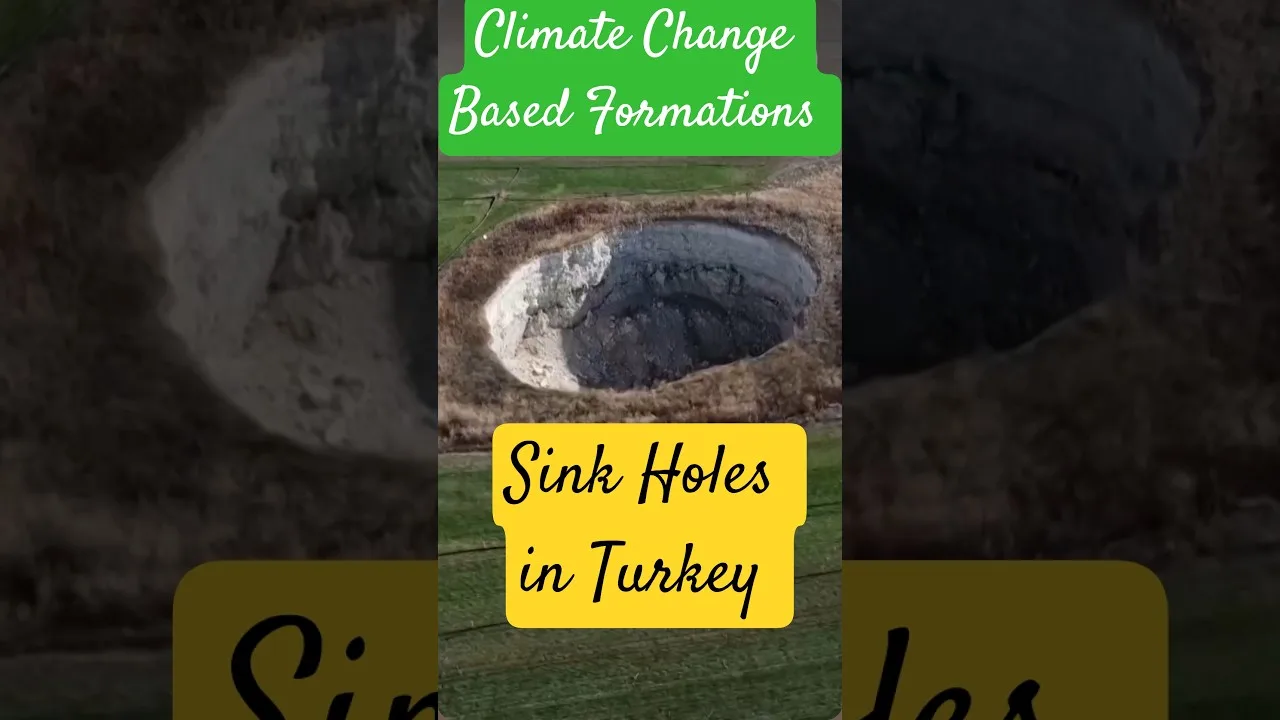
Table of Contents
- The Geological Foundation: Why Karapınar Is Vulnerable
- Karst Hydrology and Collapse Mechanisms
- Historical Context and Acceleration
- Climate Change as the Primary Driver
- Precipitation Regime Shifts
- Evapotranspiration and Soil Moisture Deficits
- Agricultural Crisis and Economic Impact
- Crop Losses and Farm Abandonment
- Infrastructure Damage
- Groundwater Management Failures
- Policy Responses and Gaps
- Crop Pattern Transformation
- Monitoring and Early Warning Systems
- Remote Sensing and AI Applications
- Community-Based Monitoring
- Future Projections and Adaptation Strategies
- Managed Aquifer Recharge Potential
- Regenerative Agriculture and Soil Carbon
- International Context and Lessons
- Transboundary Water Implications
- Conclusion: A Call for Integrated Action
Turkey sinkholes climate change impacts are accelerating at an alarming rate across the Konya Basin, where hundreds of massive depressions have swallowed fertile farmland and threatened agricultural livelihoods. In the central Anatolian region of Karapınar, located in Konya province, more than 2,500 sinkholes have been documented since systematic monitoring began in 2019, with over 700 new formations recorded in 2023 alone according to the Disaster and Emergency Management Authority (AFAD). These geological hazards, driven by a lethal combination of prolonged drought, unsustainable groundwater extraction, and the region’s unique karst geology, represent one of the most visible manifestations of climate change in the Eastern Mediterranean.
- Over 2,500 sinkholes documented in Konya Basin since 2019, with 700+ new formations in 2023
- Groundwater levels have dropped 15-20 meters in two decades due to agricultural over-extraction
- Karapınar district hosts the highest concentration, with some fields containing 10+ sinkholes per hectare
- Climate models project 30% rainfall reduction by 2100 for Central Anatolia
- Economic losses exceed $50 million annually in crop damage and infrastructure repair
The Geological Foundation: Why Karapınar Is Vulnerable
The Konya Closed Basin, spanning approximately 50,000 square kilometers, sits atop thick sequences of limestone, gypsum, and salt deposits formed during the Miocene epoch. This karst topography creates ideal conditions for sinkhole formation when subsurface voids collapse. The region’s geology features the Obruk Formation, characterized by alternating layers of soluble carbonate rocks and impermeable clay lenses that create perched aquifers. – a key consideration for Turkey sinkholes climate change.
Karst Hydrology and Collapse Mechanisms
Karst landscapes develop when slightly acidic rainwater dissolves soluble bedrock over millennia, creating underground drainage networks, caves, and voids. In the Konya Basin, the water table historically remained high enough to provide buoyant support to these subterranean cavities. However, when groundwater levels drop below the roof of a void, the loss of hydrostatic pressure triggers mechanical failure. The process accelerates during sudden recharge events, when rapid water influx creates hydraulic pressure surges that destabilize already weakened rock bridges. – a key consideration for Turkey sinkholes climate change.
Historical Context and Acceleration
Geological records indicate that natural sinkhole formation in Central Anatolia occurs at a background rate of approximately 1-2 events per century per square kilometer. The current rate in Karapınar exceeds this by three orders of magnitude. Professor Fetullah Arık of Konya Technical University’s Sinkhole Research Center notes that “the anthropogenic acceleration began in the 1980s with the widespread adoption of diesel-powered deep-well irrigation, but the climate change signal became dominant after 2000.” – a key consideration for Turkey sinkholes climate change.
Climate Change as the Primary Driver
The Turkey sinkholes climate change connection operates through multiple interconnected pathways. The Eastern Mediterranean is warming 20% faster than the global average, according to the World Meteorological Organization’s 2023 State of the Climate report. Konya province has experienced a 1.8°C temperature increase since 1970, accompanied by a 22% decline in annual precipitation.
Precipitation Regime Shifts
Historical climate data from the Turkish State Meteorological Service reveals a fundamental shift in precipitation seasonality. Winter snowfall, which historically provided slow-release aquifer recharge, has decreased by 40% since 1990. Meanwhile, extreme rainfall events have increased in intensity but decreased in frequency, leading to flash flooding rather than groundwater replenishment. The 2020-2021 hydrological year recorded the lowest precipitation in 90 years, with Karapınar receiving only 187mm against a 30-year average of 320mm. – a key consideration for Turkey sinkholes climate change.
Evapotranspiration and Soil Moisture Deficits
Rising temperatures increase potential evapotranspiration, creating a “thirstier” atmosphere that extracts more moisture from soils and vegetation. Satellite data from the European Space Agency’s SMOS mission shows that root-zone soil moisture in the Konya Basin has declined 15% since 2010. This deficit forces farmers to pump more groundwater, creating a feedback loop that accelerates sinkhole formation. – a key consideration for Turkey sinkholes climate change.
Agricultural Crisis and Economic Impact

The Konya Basin produces 35% of Turkey’s wheat, 40% of its sugar beet, and significant portions of maize, barley, and legume crops. The region’s 2.5 million hectares of irrigated land support over 400,000 farming families. Turkey sinkholes climate change impacts now threaten this agricultural heartland directly.
Crop Losses and Farm Abandonment
Field surveys by the Ministry of Agriculture and Forestry in 2023 documented 12,000 hectares of prime agricultural land lost to sinkhole formation since 2018. Individual farmers report losing 5-15% of their cultivated area annually. In the village of Çıralı, 34 families have abandoned farming entirely since 2020, selling their equipment and migrating to urban centers. The Turkish Agricultural Insurance Pool (TARSİM) paid out ₺850 million (approximately $45 million) in sinkhole-related claims in 2023, a 300% increase from 2020. – a key consideration for Turkey sinkholes climate change.
Infrastructure Damage
Beyond farmland, sinkholes have damaged critical infrastructure including the Ankara-Konya high-speed rail line (requiring ₺120 million in stabilization works in 2022), the D-715 state highway, and numerous irrigation canals. The Karapınar Solar Power Plant, Turkey’s largest at 1,350 MW, required extensive geotechnical reinforcement after three sinkholes appeared within its perimeter in 2021. – a key consideration for Turkey sinkholes climate change.
Groundwater Management Failures
While climate change provides the backdrop, unsustainable water management has been the proximate trigger. The Konya Basin contains 120,000 registered irrigation wells, with an estimated 40,000 unregistered wells operating illegally. Total annual groundwater extraction exceeds 6.5 billion cubic meters against a sustainable yield of 4.2 billion cubic meters, creating an annual deficit of 2.3 billion cubic meters. – a key consideration for Turkey sinkholes climate change.
Policy Responses and Gaps
Turkey’s 2011 Groundwater Law established protection zones and extraction permits, but enforcement remains weak. The 2023 Water Efficiency Campaign aims to reduce agricultural water use by 25% through drip irrigation subsidies covering 50% of installation costs. However, adoption rates remain below 30% in Karapınar due to high upfront costs and fragmented landholdings. The Konya Closed Basin Protection Action Plan, launched in 2021, targets aquifer recovery by 2035 through managed aquifer recharge and crop pattern changes. – a key consideration for Turkey sinkholes climate change.
Crop Pattern Transformation
Experts advocate shifting from water-intensive crops like sugar beet (requiring 8,000-10,000 m³/ha) and maize (6,000-8,000 m³/ha) to drought-tolerant alternatives such as safflower (3,000-4,000 m³/ha), chickpeas (2,500-3,500 m³/ha), and quinoa (3,500-5,000 m³/ha). Pilot projects in Sarayönü district demonstrated 40% water savings with maintained farmer income through value-added processing. – a key consideration for Turkey sinkholes climate change.
Monitoring and Early Warning Systems
Turkey has invested heavily in sinkhole monitoring since the 2019 Karapınar emergency declaration. The Sinkhole Research Center at Konya Technical University operates a network of 15 continuous GPS stations, 8 tiltmeters, and 12 piezometers providing real-time data on ground deformation and groundwater levels.
Remote Sensing and AI Applications
Since 2021, the center has partnered with TÜBİTAK Space Technologies Research Institute to process Sentinel-1 radar interferometry data, detecting millimeter-scale ground subsidence preceding collapse. An AI model trained on 5,000 historical sinkhole locations achieves 87% prediction accuracy for new formations within 30-day windows. This system issued 23 early warnings in 2023, enabling preventive evacuations.
Community-Based Monitoring
The “Obruk Watch” citizen science program, launched in 2022, equips 200 volunteer farmers with smartphone apps to report ground cracks, sudden ponding, and well water level changes. This crowdsourced data supplements instrumental monitoring and builds community resilience. The program identified 47 incipient sinkholes before catastrophic collapse in its first year.
Future Projections and Adaptation Strategies
Climate models from the Intergovernmental Panel on Climate Change (IPCC) Sixth Assessment Report, downscaled for Central Anatolia by Boğaziçi University’s Center for Climate Change and Policy Studies, project continued warming of 2.5-4.5°C by 2100 under SSP2-4.5 and SSP5-8.5 scenarios respectively. Precipitation declines of 15-30% are expected, with increased interannual variability.
Managed Aquifer Recharge Potential
Hydrogeological assessments identify 12 suitable sites for managed aquifer recharge (MAR) in the Konya Basin, with a combined potential of 350 million m³/year. The Karapınar Floodwater Spreading Project, completed in 2023, diverts seasonal floodwaters from the Çarşamba River into infiltration basins, recharging an estimated 15 million m³ annually. Scaling MAR to basin level could close 15% of the current groundwater deficit.
Regenerative Agriculture and Soil Carbon
Regenerative practices including cover cropping, reduced tillage, and organic amendments increase soil water holding capacity by 20-30% according to field trials at the Bahri Dağdaş International Agricultural Research Institute. Each 1% increase in soil organic matter retains an additional 150,000 liters of water per hectare. Carbon farming incentives could provide alternative revenue streams while building climate resilience.
International Context and Lessons
The Turkey sinkholes climate change crisis mirrors similar developments globally. In California’s San Joaquin Valley, groundwater overdraft has caused land subsidence of 8.5 meters since 1925, damaging the California Aqueduct. Iran’s Qazvin Plain has recorded 1,200 sinkholes since 2010. Mexico City subsides up to 50 cm/year due to aquifer depletion. These cases demonstrate that technical solutions exist but require political will and long-term planning.
Transboundary Water Implications
The Konya Basin’s hydrology connects to the Göksu and Seyhan river systems flowing to the Mediterranean. Reduced baseflow from groundwater depletion affects downstream ecosystems and water users. Turkey’s obligations under the UN Watercourses Convention and regional agreements with Syria and Iraq add transboundary dimensions to domestic groundwater management.
Conclusion: A Call for Integrated Action
The sinkhole crisis in Turkey’s Konya Basin represents a convergence of geological vulnerability, climate change acceleration, and unsustainable resource management. Addressing Turkey sinkholes climate change impacts requires simultaneous action on multiple fronts: aggressive groundwater demand management, rapid transition to water-efficient agriculture, large-scale managed aquifer recharge, and robust early warning systems. The 2035 target for aquifer recovery in the Konya Closed Basin Protection Action Plan is ambitious but achievable with sustained investment estimated at ₺15-20 billion over 12 years. Failure to act risks irreversible loss of Turkey’s agricultural heartland and displacement of hundreds of thousands of rural residents. The sinkholes of Karapınar are not merely geological curiosities—they are windows into a future that is already arriving.
Frequently Asked Questions
Over 2,500 sinkholes have been documented in the Konya Basin since systematic monitoring began in 2019, with more than 700 new formations recorded in 2023 alone according to AFAD (Disaster and Emergency Management Authority).
The primary causes are a combination of climate change-driven drought (22% precipitation decline since 1970), unsustainable groundwater extraction for agriculture (6.5 billion m³/year extracted vs 4.2 billion m³ sustainable yield), and the region's karst limestone geology.
Yes, through integrated approaches including managed aquifer recharge (350 million m³/year potential), transition to drought-tolerant crops (40% water savings demonstrated), drip irrigation expansion, and early warning systems using InSAR satellite monitoring with 87% prediction accuracy.