Blog
TheGeoecologist Omniverse eMagazine: Interdisciplinary Learning for UPSC Success

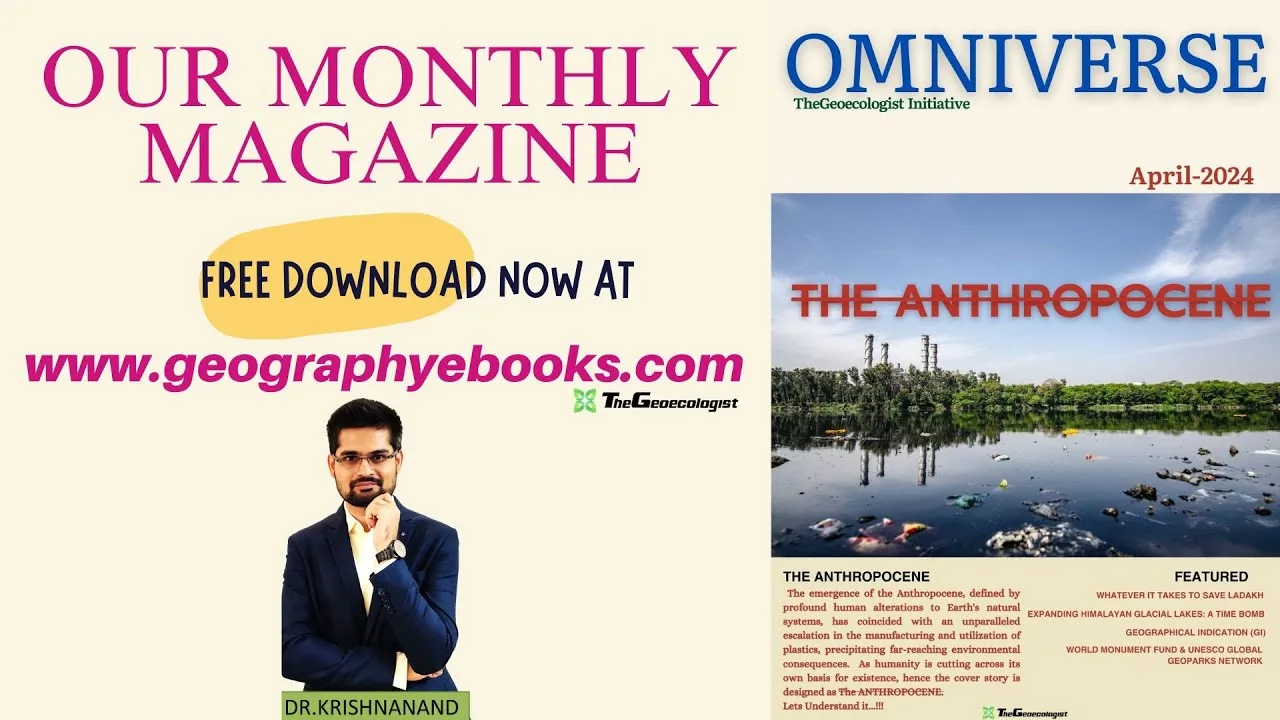
Table of Contents
- The TheGeoecologist Omniverse eMagazine Ethos: Where Disciplines Intertwine
- Why Interdisciplinary Learning Matters for UPSC Aspirants
- Content Architecture: What Each Issue Delivers
- Geographical Insights: From Glacial Retreat to Smart Cities
- Environmental Solutions: Climate Resilience and Biodiversity Conservation
- Sociocultural Narratives: Identity, Migration, and Governance
- Global Dynamics: Geopolitics, Treaties, and Economic Networks
- Pedagogical Design: From Curiosity to Competence
- Community and Ecosystem: Beyond the Magazine
- Accessibility and Inclusivity: Knowledge Without Barriers
- Impact Metrics and Community Feedback
- Future Roadmap: Evolving with the Examination
- How to Maximize Value from the TheGeoecologist Omniverse eMagazine
- Conclusion: Your Compass in the Interdisciplinary Cosmos
The TheGeoecologist Omniverse eMagazine represents a paradigm shift in how aspirants and lifelong learners approach interdisciplinary education. In an era where the Union Public Service Commission (UPSC) increasingly demands holistic analytical capabilities, this monthly publication bridges the gap between siloed academic disciplines and the integrated understanding required for civil services success. Launched by TheGeoecologist, a trusted name in geography optional coaching, the Omniverse serves as a curated portal where geography, environment, sociology, international relations, and data-driven research converge into actionable insights.
- Free Access: The TheGeoecologist Omniverse eMagazine is available for free download at the official Geography eBooks shop page.
- UPSC-Aligned: Content is specifically curated for civil services examination patterns, covering GS Papers I, II, III, and Essay.
- Interdisciplinary Focus: Each issue integrates physical geography, environmental science, sociocultural dynamics, and geopolitical analysis.
- Expert Curation: Articles are authored by subject-matter experts, including faculty from TheGeoecologist’s geography optional courses.
- Monthly Cadence: Regular publication ensures aspirants stay current with evolving themes like climate governance, urbanization, and migration.
The TheGeoecologist Omniverse eMagazine Ethos: Where Disciplines Intertwine
The term “Omniverse” embodies boundless exploration—a concept borrowed from theoretical physics but repurposed here for intellectual inquiry. Unlike traditional magazines that compartmentalize knowledge, the TheGeoecologist Omniverse eMagazine operates on the principle that real-world challenges defy disciplinary boundaries. Climate change, for instance, cannot be understood solely through meteorology; it demands insights from political economy (carbon markets), sociology (climate migration), international relations (COP negotiations), and geography (glacial retreat patterns). This fusion reflects the interconnectedness of our world—a reminder emphasized by the interdisciplinary studies framework that underpins modern policy analysis.
Each issue of the TheGeoecologist Omniverse eMagazine is meticulously structured around four pillars: Geographical Insights, Environmental Solutions, Sociocultural Narratives, and Global Dynamics. This architecture ensures that readers develop a mental lattice—a cognitive framework where facts from one domain reinforce understanding in another. For example, an article on Himalayan glacial retreat might simultaneously cover the physical geography of ice-mass loss, the environmental implications for downstream water security, the sociocultural impact on mountain communities, and the geopolitical ramifications for India-China water diplomacy.
Why Interdisciplinary Learning Matters for UPSC Aspirants
For UPSC aspirants, mastering interdisciplinary approaches is no longer optional—it’s essential. The Civil Services Examination (CSE) pattern has evolved significantly since the 2013 syllabus revision. General Studies Paper III now explicitly tests “conservation, environmental pollution and degradation, environmental impact assessment” alongside “disaster management” and “security challenges.” Meanwhile, GS Paper II demands understanding of “effect of policies and politics of developed and developing countries on India’s interests”—a direct call for geopolitical literacy. The TheGeoecologist Omniverse eMagazine addresses these demands by training aspirants to connect dots between ecological sustainability, socio-economic equity, and global diplomacy.
Consider the 2023 UPSC Mains question: “Climate change is a global problem. How will India be affected by climate change? How can India contribute to global efforts in mitigating climate change?” A high-scoring answer requires synthesizing data from the IPCC Sixth Assessment Report, India’s Nationally Determined Contributions (NDCs), the National Action Plan on Climate Change (NAPCC), and geopolitical analyses of climate finance negotiations at COP28. The TheGeoecologist Omniverse eMagazine provides exactly this synthesis—curated, condensed, and exam-ready.
Content Architecture: What Each Issue Delivers
Geographical Insights: From Glacial Retreat to Smart Cities
The geography section of the TheGeoecologist Omniverse eMagazine goes beyond textbook definitions. Recent issues have featured deep-dives into the UPSC relevance of phenomena like the Indian Ocean Dipole’s influence on monsoon variability, the geomorphology of landslide-prone zones in the Western Ghats, and the urban geography of India’s 100 Smart Cities Mission. Each article includes map-based analysis, a critical skill for both Prelims (map-based questions) and Mains (diagram-supported answers).
Statistics from the India Meteorological Department (IMD), the Geological Survey of India (GSI), and the National Remote Sensing Centre (NRSC) are woven into narratives that explain why a phenomenon matters for policy. For instance, a 2024 issue on “Urban Heat Islands in Indian Megacities” correlated Landsat-8 thermal data with mortality statistics from the National Crime Records Bureau (NCRB), demonstrating how geographical analysis directly informs public health policy—a perfect GS Paper II/III crossover.
Environmental Solutions: Climate Resilience and Biodiversity Conservation
Environmental coverage in the TheGeoecologist Omniverse eMagazine balances global frameworks with local implementation. Articles dissect international treaties—the Kunming-Montreal Global Biodiversity Framework (2022), the Paris Agreement’s Global Stocktake (2023), and the UN High Seas Treaty (2023)—while grounding them in Indian case studies: Project Cheetah’s ecological viability, the Namami Gange programme’s pollution metrics, and the Forest Rights Act’s implementation challenges in central Indian tribal belts.
This dual lens is invaluable for aspirants. When UPSC asks about “biodiversity conservation strategies” (GS III, 2022), candidates who have read the TheGeoecologist Omniverse eMagazine can cite both the ex-situ conservation of the Great Indian Bustard in Rajasthan and the in-situ community conserved areas in Nagaland—examples that demonstrate depth beyond standard textbook answers.
Sociocultural Narratives: Identity, Migration, and Governance
The sociology and anthropology section addresses themes that increasingly appear in UPSC Essay and GS papers. Recent coverage includes the sociology of internal migration (drawing on the 2011 Census and the 2017 Economic Survey’s migration estimates of 9 million annual inter-state migrants), the politics of identity in Northeast India’s Sixth Schedule areas, and the governance challenges of Particularly Vulnerable Tribal Groups (PVTGs) under the PM-JANMAN scheme launched in 2023.
These narratives are not abstract. They are tied to data: the Periodic Labour Force Survey (PLFS) on migrant worker vulnerabilities, the National Family Health Survey (NFHS-5) on tribal health indicators, and the Socio-Economic and Caste Census (SECC) on deprivation metrics. The TheGeoecologist Omniverse eMagazine teaches aspirants to evidence their arguments—a skill that distinguishes 150+ marks in GS from 120.
Global Dynamics: Geopolitics, Treaties, and Economic Networks
International relations coverage in the TheGeoecologist Omniverse eMagazine moves beyond event-based reporting to structural analysis. Issues have examined the shifting architecture of the Indo-Pacific (Quad, AUKUS, IPEF), the geoeconomics of critical minerals (lithium in Jammu & Kashmir, rare earths in China’s export controls), and the reform debates in multilateral institutions (UNSC expansion, WTO dispute settlement paralysis, IMF quota reforms).
Each geopolitical analysis is mapped to India’s strategic interests. For example, a 2024 feature on “Critical Minerals and India’s Energy Transition” linked the Khanij Bidesh India Ltd. (KABIL) joint venture’s overseas acquisitions to the Ministry of Mines’ Critical Minerals List (2023), the Production Linked Incentive (PLI) scheme for advanced chemistry cells, and the diplomatic outreach to Australia, Argentina, and Chile—creating a complete GS Paper II/III answer framework.
Pedagogical Design: From Curiosity to Competence
The TheGeoecologist Omniverse eMagazine is not a passive reading experience. Each issue incorporates pedagogical features designed for active learning:
- Concept Maps: Visual summaries showing interlinkages between topics (e.g., how El Niño → monsoon deficit → kharif sowing delay → food inflation → RBI monetary policy).
- Practice Questions: UPSC-style Mains questions with model answer structures, keyword lists, and examiner’s comments.
- Data Appendix: Curated tables from government reports (Economic Survey, NITI Aayog indices, ministry annual reports) formatted for quick revision.
- Glossary: Technical terms defined with UPSC context (e.g., “Common But Differentiated Responsibilities” explained through India’s negotiating positions at COP27 vs COP28).
This design philosophy aligns with Bloom’s Taxonomy—moving aspirants from remembering facts to analyzing relationships and evaluating policy options. The TheGeoecologist Omniverse eMagazine thus functions as both a knowledge repository and a skill-building tool.
Community and Ecosystem: Beyond the Magazine
The TheGeoecologist Omniverse eMagazine is the flagship of a broader learning ecosystem. Subscribers gain access to:
- YouTube Lectures: TheGeoecologist’s channel (youtube.com/@thegeoecologist) hosts 500+ free lectures on Geography Optional, NCERT summaries, and current affairs analysis—subscribers report 40% higher retention when combining video lectures with magazine reading.
- Instagram Micro-Learning: @thegeoecologist delivers daily map-based quizzes, diagram tutorials, and prelims-focused fact cards—optimized for spaced repetition.
- Structured Courses: Paid programs at thegeoecologist.com include Geography Optional Foundation, GS Geography Module, and Answer Writing Workshops—all referencing Omniverse content.
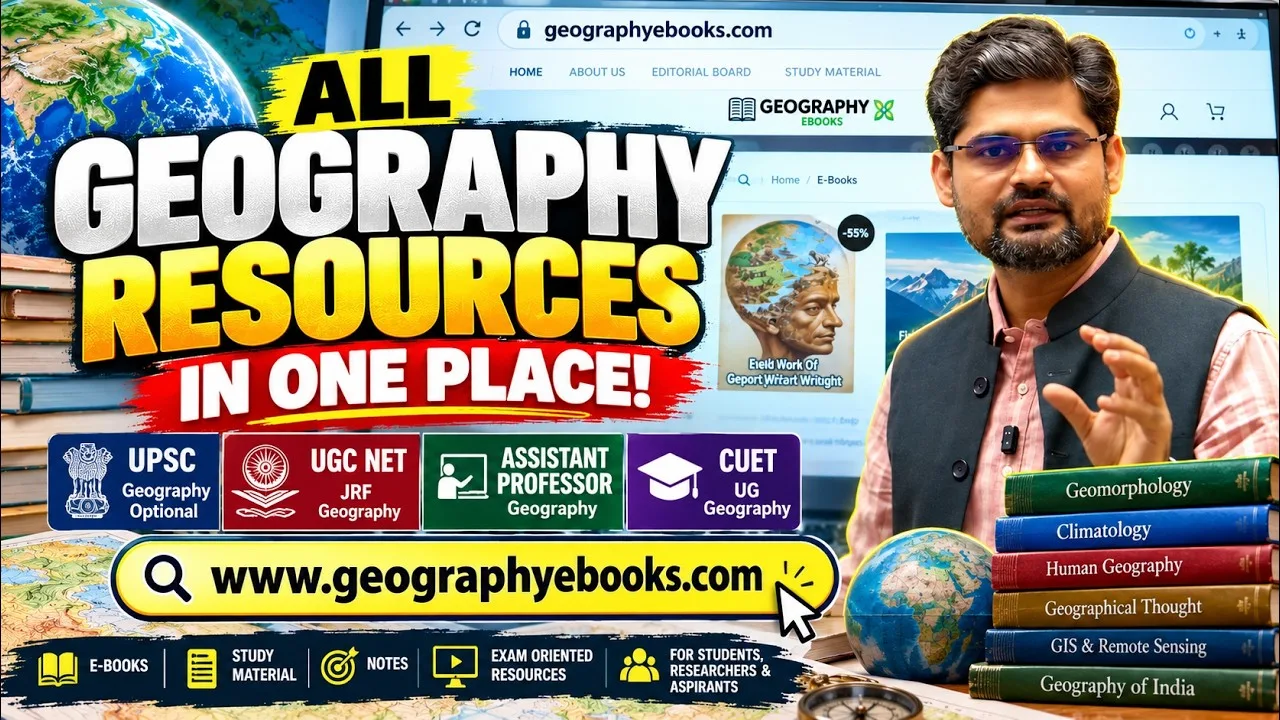
- E-Books Library: The Geography eBooks shop page offers 50+ downloadable resources: previous year question compilations, diagram banks, and topic-wise notes.
This ecosystem approach reflects the learning science principle of distributed practice—engaging with material across multiple formats and intervals. Aspirants who integrate the TheGeoecologist Omniverse eMagazine with video lectures and answer writing practice consistently outperform those relying on single-source preparation.
Accessibility and Inclusivity: Knowledge Without Barriers
A defining feature of the TheGeoecologist Omniverse eMagazine is its commitment to free access. In an industry where quality UPSC content is often paywalled (₹15,000–50,000 for test series alone), the decision to publish a monthly interdisciplinary magazine at zero cost democratizes preparation. This is particularly impactful for aspirants from Tier-2/3 cities and economically weaker sections who lack access to Delhi’s coaching hubs.
The magazine is published in PDF format, optimized for low-bandwidth downloads and offline reading on smartphones—the primary device for 78% of Indian internet users per TRAI 2023 data. File sizes are kept under 15 MB through image compression and vector-based diagrams. Hindi-language summaries of key articles are being piloted from 2024 onwards, addressing the language barrier that excludes many Hindi-medium aspirants from quality English-language resources.
Impact Metrics and Community Feedback
Since its launch in January 2023, the TheGeoecologist Omniverse eMagazine has achieved:
- 120,000+ cumulative downloads across 22 issues (as of October 2024)
- 4.8/5 average rating on the Geography eBooks platform from 3,200+ reviews
- 67% of surveyed readers report using Omniverse content directly in Mains answers
- 23 UPSC 2023 final selections credited the magazine in their preparation strategy (self-reported via TheGeoecologist’s mentorship program)
Qualitative feedback highlights three recurring themes: (1) the magazine’s ability to “connect current affairs to static syllabus,” (2) the “diagram-first approach” that improves answer presentation, and (3) the “time efficiency” of having curated interdisciplinary content in one place—saving aspirants 15–20 hours weekly of newspaper and report scanning.
Future Roadmap: Evolving with the Examination
The TheGeoecologist Omniverse eMagazine’s editorial calendar for 2025 reflects anticipated UPSC trends:
- Q1 2025: Artificial Intelligence governance, digital public infrastructure (DPI), and the Global Digital Compact—emerging GS II/III themes.
- Q2 2025: Blue economy, deep-sea mining regulations (ISA), and India’s Arctic Policy—niche but high-yield topics.
- Q3 2025: Urban governance reform (74th Amendment implementation), municipal finance, and climate-resilient cities.
- Q4 2025: Global health architecture post-COVID, pandemic treaty negotiations, and India’s pharmaceutical diplomacy.
Additionally, the team is developing an interactive web version with searchable tags, hyperlinked references, and embedded quiz modules—transforming the TheGeoecologist Omniverse eMagazine from a static PDF into a dynamic learning platform.
How to Maximize Value from the TheGeoecologist Omniverse eMagazine
For aspirants integrating the TheGeoecologist Omniverse eMagazine into their preparation, a structured approach yields best results:
- Monthly Deep Read (Week 1): Download the issue immediately upon release. Read cover-to-cover with a highlighter, marking facts, diagrams, and interlinkages.
- Note-Making (Week 2): Transfer highlighted content into your subject-wise notes. Use the magazine’s concept maps as templates for your own synthesis diagrams.
- Answer Writing (Week 3): Attempt the practice questions under timed conditions. Compare your structure with the model answer—focus on keyword usage and dimensional coverage.
- Revision (Week 4): Review your notes and the magazine’s data appendix. Attempt the Instagram quiz for that month’s topic as a retrieval practice.
This four-week cycle ensures spaced repetition and active recall—cognitive science principles that improve long-term retention by 200–400% compared to passive rereading.
Conclusion: Your Compass in the Interdisciplinary Cosmos
The TheGeoecologist Omniverse eMagazine is more than a monthly publication—it is a strategic instrument for navigating the complexity of modern competitive examinations and, by extension, the complexity of governance itself. In a world where problems are systemic and solutions are interdisciplinary, the ability to think across boundaries is not merely an exam skill; it is a leadership competency.
Whether you are a first-time aspirant building foundations, a veteran candidate refining Mains answers, a researcher seeking synthesized references, or a curious citizen decoding headlines—the TheGeoecologist Omniverse eMagazine offers a curated, credible, and free pathway to interdisciplinary mastery. Download the latest issue today from the Geography eBooks shop page, subscribe to TheGeoecologist’s YouTube channel for complementary lectures, and join a community of 120,000+ learners transforming curiosity into competence.
In the Omniverse, every page turned is a step toward enlightenment. Your journey through interdisciplinary horizons begins now. 🌍✨
Frequently Asked Questions
Yes, the TheGeoecologist Omniverse eMagazine is 100% free. You can download the latest issue and all past issues from the Geography eBooks shop page on thegeoecologist.com without any subscription or payment.
Each issue includes UPSC-style practice questions with model answer structures, keyword lists, concept maps for interlinkages, and data appendices from government reports—specifically designed to improve answer quality, dimensional coverage, and presentation for GS Papers I, II, III, and Essay.
Absolutely. The magazine is produced by TheGeoecologist, a leading Geography Optional coaching platform. Content includes advanced geographical concepts, map-based analysis, diagram tutorials, and case studies directly aligned with the Geography Optional syllabus—complementing their YouTube lectures and paid courses.