Blog
Settlement Geography UPSC: Complete Guide to Geoecologist E-Book for Geography Optional

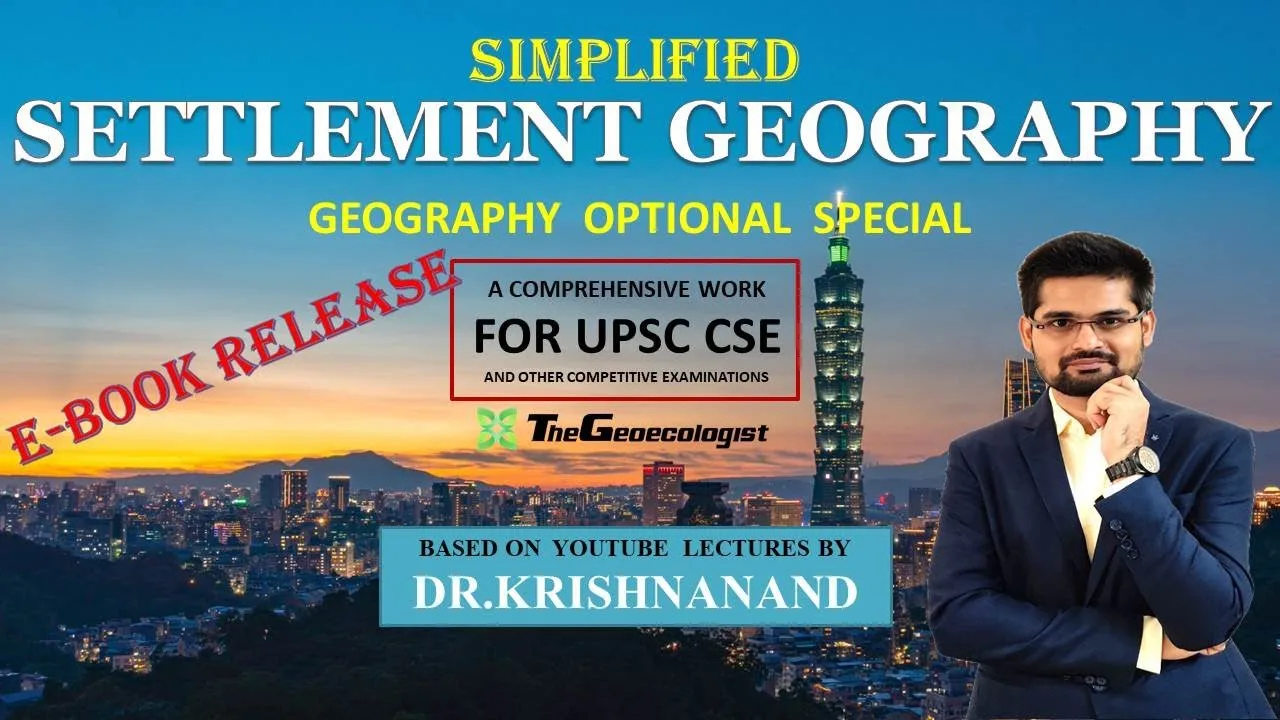
Table of Contents
- Why Settlement Geography UPSC Matters in the Current Exam Pattern
- Syllabus Alignment and Topic Weightage
- Deep Dive: Geoecologist E-Book Structure and Pedagogical Design
- Module-Wise Breakdown
- Diagrams and Visual Learning: The Competitive Edge
- Case Studies: Bridging Theory and Indian Reality
- Rural Transformation Cases
- Urban Innovation Cases
- Global Benchmarks
- Answer Writing Mastery: From Knowledge to Marks
- Integrating the E-Book into Your Preparation Timeline
- Week 1-2: Foundation Building
- Week 3-4: India Application & Case Studies
- Week 5: Contemporary & Sustainable Dimensions
- Week 6: Answer Writing Marathon
- Digital Access and Ecosystem Integration
- Comparative Advantage Over Standard Textbooks
- Frequently Asked Questions
- Is the Settlement Geography UPSC e-book sufficient on its own, or do I need supplementary books?
- How frequently is the e-book updated, and do I get free updates?
- Can I access the e-book on multiple devices, and is printing allowed?
- Conclusion: Your Strategic Asset for Geography Optional
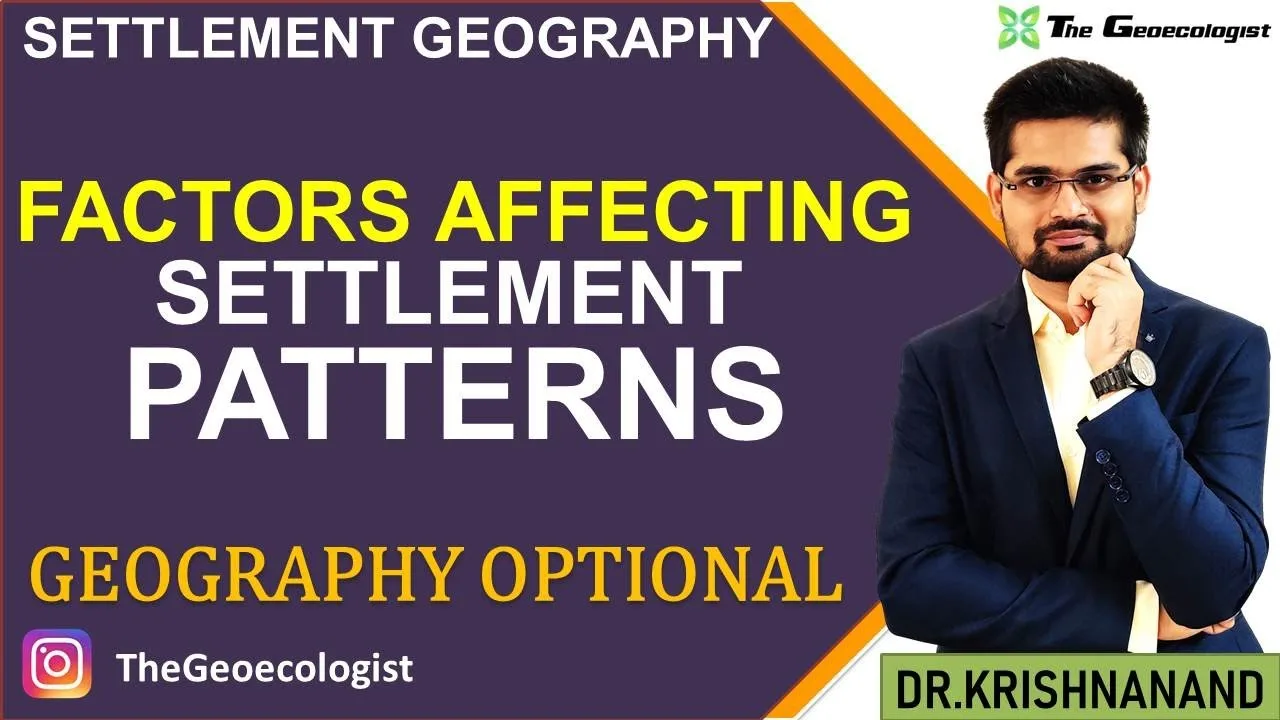
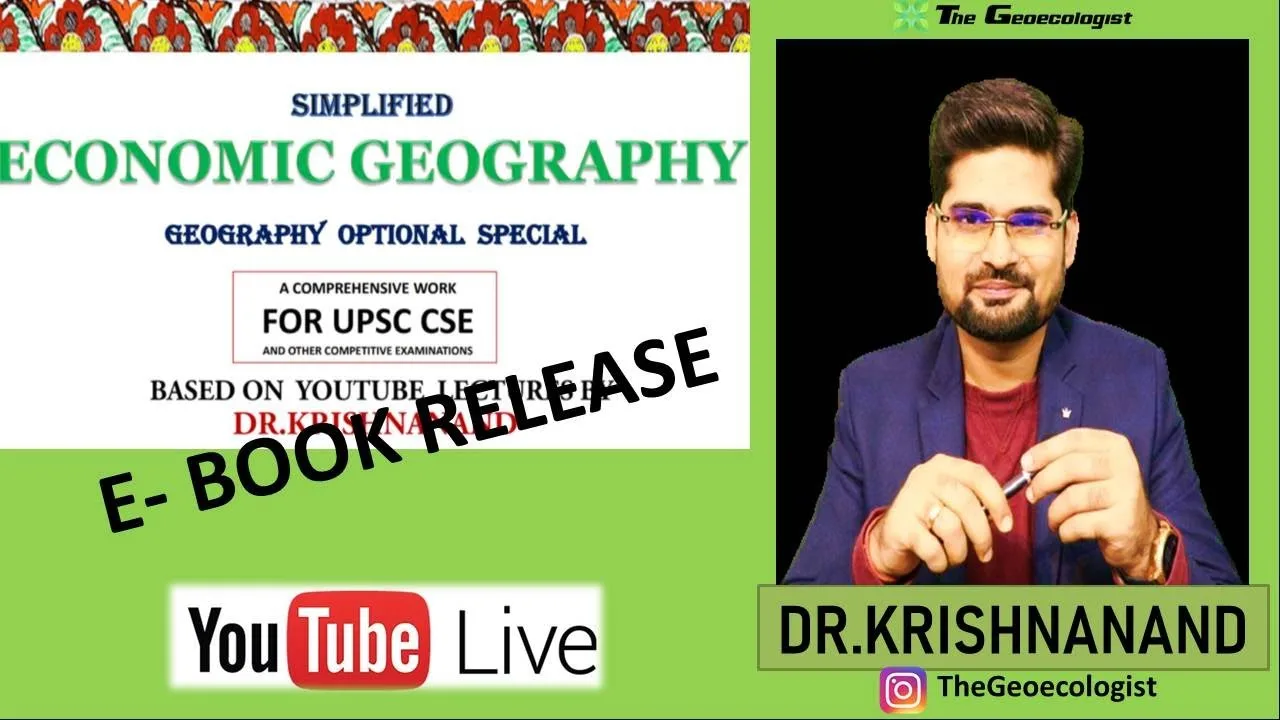
Settlement Geography UPSC preparation demands precision, depth, and exam-oriented resources that bridge theoretical concepts with practical application. For aspirants targeting the Geography optional paper in the Civil Services Examination, mastering human settlement patterns, urbanization dynamics, and spatial planning theories is non-negotiable. The Settlement Geography E-Book by Geoecologist, hosted on MithilaCraft, has emerged as a definitive resource that condenses vast syllabi into a structured, diagram-rich, and answer-writing-focused format. Settlement Geography UPSC explores why this e-book is indispensable, how it aligns with the latest UPSC trends, and how to integrate it into a high-yield study strategy.
- Settlement Geography UPSC carries significant weight in both Prelims and Mains Geography optional papers.
- Geoecologist’s e-book offers comprehensive coverage of rural and urban settlement theories, models, and case studies.
- Visual aids like Christaller’s Central Place Theory diagrams and Bid-Rent Curve illustrations simplify complex spatial concepts.
- Model answers and previous years’ questions (PYQs) develop analytical writing skills essential for Mains.
- Updated content includes climate-resilient settlements, GIS applications, and Smart Cities Mission insights.
- Available as a downloadable PDF on MithilaCraft’s academic portal for instant access.
Why Settlement Geography UPSC Matters in the Current Exam Pattern
The Union Public Service Commission has consistently tested Settlement Geography UPSC concepts through multidimensional questions linking physical geography, socio-economic development, and policy frameworks. In the 2023 Mains Geography Optional Paper I, questions on “rural-urban fringe dynamics” and “sustainable urban transport” required candidates to synthesize Central Place Theory, migration models, and contemporary government schemes like AMRUT and Smart Cities Mission. According to UPSC’s official syllabus, topics include “types and patterns of rural settlements,” “urban morphology,” “conurbation and metropolitan regions,” and “problems of urbanization and remedies.” The evolving nature of these questions — shifting from static definitions to applied analysis — makes a resource like Geoecologist’s e-book critical for staying ahead.
Syllabus Alignment and Topic Weightage
An analysis of the last five years of Geography Optional papers reveals that Settlement Geography UPSC questions constitute approximately 12-15% of total marks in Paper I. Key high-yield areas include:
- Rural Settlement Patterns: Dispersed, nucleated, linear — with Indian examples from Ganga Plains, Thar Desert, and Himalayan valleys.
- Urban Hierarchy Theories: Rank-Size Rule, Primate City concept, and Christaller’s Central Place Theory (k=3, 4, 7 marketing, transport, administrative principles).
- Urbanization Trends: Census 2011 vs 2021 projections, degree of urbanization, and state-wise disparities.
- Contemporary Issues: Slum rehabilitation, transit-oriented development, peri-urbanization, and climate-adaptive planning.
The e-book maps each subtopic to specific PYQs, enabling aspirants to prioritize revision based on recurrence probability. For instance, Christaller’s model has appeared in 4 out of the last 6 Mains papers, often requiring diagrammatic representation — a strength of this resource.
Deep Dive: Geoecologist E-Book Structure and Pedagogical Design
The Settlement Geography UPSC e-book is organized into eight modules, each following a “Concept → Diagram → Case Study → PYQ → Model Answer” framework. This pedagogical design mirrors the cognitive progression from understanding to application — essential for Mains answer writing.
Module-Wise Breakdown
| Module | Core Topics | Unique Value Add |
|---|---|---|
| 1. Rural Settlement Fundamentals | Site vs situation, house types, pattern classification | GIS-mapped Indian village morphologies |
| 2. Urban Settlement Theories | Burgess, Hoyt, Harris-Ullman, Mann models | Comparative matrix with Indian city applicability |
| 3. Central Place Theory Deep Dive | Threshold, range, k-values, hexagonal hierarchy | Step-by-step diagram construction guide |
| 4. Urbanization in India | Census trends, smart cities, counter-magnet towns | NITI Aayog & MoHUA report integrations |
| 5. Urban Problems & Policies | Housing, transport, waste, governance | PMAY, AMRUT, Swachh Bharat case evaluations |
| 6. Rural-Urban Continuum | Frings, peri-urban, rurban clusters | Shyama Prasad Mukherji RURBAN Mission analysis |
| 7. Sustainable Settlements | Compact city, transit-oriented, climate resilience | IPCC AR6 urban chapter summaries |
| 8. Answer Writing Workshop | 15 model answers, diagram templates, keyword bank | Examiner’s comments on common pitfalls |
Each module integrates settlement geography fundamentals with India-specific data from Census 2011, NSSO rounds, and recent government reports. The inclusion of QR-coded video lectures (accessible via TheGeoecologist YouTube channel) creates a multimodal learning loop — read, watch, practice, revise.
Diagrams and Visual Learning: The Competitive Edge
UPSC examiners consistently reward answers with accurate, labeled diagrams. The Settlement Geography UPSC e-book contains over 45 original diagrams, including:
- Christaller’s k=3, 4, 7 hexagonal networks with threshold/range annotations
- Bid-Rent Curve showing commercial, residential, agricultural land-use transitions
- Urban morphology models (Concentric Zone, Sector, Multiple Nuclei) adapted for Indian cities like Delhi and Mumbai
- Rural settlement patterns mapped to physiographic regions (e.g., linear settlements along Himalayan valleys)
- Smart City components framework with ICT, governance, and sustainability pillars
Each diagram comes with a “Draw in 90 Seconds” protocol — critical for time-constrained Mains examination conditions. The e-book also provides printable diagram templates for repetitive practice, a feature absent in standard textbooks like Majid Husain or Khullar.
Case Studies: Bridging Theory and Indian Reality
High-scoring answers in Settlement Geography UPSC require contextual case studies. The e-book curates 22 India-centric and 8 global case studies, categorized by theme:
Rural Transformation Cases
- Hiware Bazar, Maharashtra: Watershed-driven settlement revival — from migration hub to model village.
- Punsari, Gujarat: Rurban mission success with WiFi, CCTV, and biometric attendance in gram panchayat.
Urban Innovation Cases
- Indore’s Waste Management: 6-time cleanest city — decentralized processing, GPS-tracked collection.
- Pune’s Transit-Oriented Development: Metro-integrated zoning reducing private vehicle dependence.
- Bhubaneswar’s Child-Friendly Smart City: Social infrastructure prioritization in Area-Based Development.
Global Benchmarks
- Curitiba, Brazil: BRT pioneer — integrated land-use transport planning.
- Freiburg, Germany: Vauban district — car-free, solar-powered sustainable settlement.
- Singapore’s HDB Model: High-density public housing with ethnic integration quotas.
Each case study follows a “Problem → Intervention → Outcome → Replicability” template, enabling aspirants to deploy them as evidence in 10-marker and 15-marker answers. The e-book explicitly maps cases to past questions — e.g., Hiware Bazar for “community-led rural development” (2021, 10 marks) and Indore for “urban waste management innovations” (2022, 15 marks).
Answer Writing Mastery: From Knowledge to Marks
The ultimate test of Settlement Geography UPSC preparation is answer writing. Module 8 of the e-book is dedicated to this skill, featuring:
- Keyword Bank: 120+ high-value terms (e.g., “agglomeration economies,” “urban heat island,” “counter-urbanization”) with usage contexts.
- Structure Templates: Introduction-Body-Conclusion frameworks for 10M, 15M, and 20M questions.
- Diagram Integration Protocols: Where to place diagrams, labeling standards, and referencing in text.
- Examiner’s Commentary: Annotated model answers showing “Good,” “Average,” and “Poor” versions with specific feedback.
For example, a 2023 question on “Examine the relevance of Central Place Theory in India’s urban hierarchy” receives a model answer that: (1) defines CPT in 30 words, (2) presents k=3 diagram, (3) applies to NCR and Kolkata metropolitan region, (4) critiques using primate city deviation (Mumbai, Delhi), (5) concludes with policy implication for counter-magnet towns. This structure — theory, diagram, application, critique, forward linkage — is the hallmark of 130+ score answers.
Integrating the E-Book into Your Preparation Timeline
Effective use of the Settlement Geography UPSC resource requires strategic scheduling. Below is a recommended 6-week plan for Geography Optional aspirants:</p
Week 1-2: Foundation Building
- Read Modules 1-3 (Rural + Urban Theories + CPT) — 2 hours daily.
- Practice all 15 diagrams from memory using templates.
- Watch corresponding YouTube lectures on TheGeoecologist channel.
Week 3-4: India Application & Case Studies
- Cover Modules 4-6 (Urbanization, Problems, Rural-Urban Continuum).
- Create one-page case study cards for all 30 cases.
- Solve 5 PYQs per topic; compare with model answers.
Week 5: Contemporary & Sustainable Dimensions
- Study Module 7 (Sustainable Settlements) with IPCC/UN-Habitat references.
- Update notes with Budget 2024-25 urban allocations and Smart Cities Mission 2.0 updates.
Week 6: Answer Writing Marathon
- Complete Module 8 workshop — write 2 full-length answers daily under timed conditions.
- Self-evaluate using examiner’s rubric; seek peer review on TheGeoecologist Telegram group.
- Compile “Last Minute Revision” document: diagrams, keywords, case study one-liners.
This plan assumes concurrent preparation of other Geography Optional topics. Aspirants with limited time can compress to 3 weeks by focusing on Modules 2, 3, 4, 7, and 8 — the highest ROI segments.
Digital Access and Ecosystem Integration
The Settlement Geography UPSC e-book is delivered as a high-resolution, searchable PDF optimized for tablet and desktop reading. Upon purchase from MithilaCraft’s academic portal, aspirants receive:
- Lifetime download access with version updates (v2.1 released January 2024 added Census 2021 projections).
- Access to TheGeoecologist’s private Discord community for doubt resolution.
- Monthly “Current Affairs Connect” PDFs linking news to settlement geography topics.
- Priority registration for answer writing evaluation webinars (quarterly).
The ecosystem extends beyond the e-book. TheGeoecologist’s UPSC-aligned YouTube channel (450K+ subscribers) releases weekly “Geography in News” segments, while Instagram (@thegeoecologist) posts daily diagram quizzes. This multi-platform engagement ensures continuous revision — critical for a subject where visual memory decays rapidly.
Comparative Advantage Over Standard Textbooks
| Parameter | Majid Husain / Khullar | Geoecologist E-Book |
|---|---|---|
| Syllabus Mapping | Implicit, requires cross-referencing | Explicit module-to-syllabus tagging |
| Diagram Quality | Basic, black-white, not exam-ready | Color-coded, labeled, “Draw in 90s” protocol |
| Case Studies | Generic, outdated (pre-2010) | Contemporary (2018-2024), India-focused |
| Answer Writing | Absent | Dedicated module with evaluated models |
| Current Affairs Integration | None | Monthly updates + government scheme analysis |
| Time to Complete | 60+ hours | 25-30 hours (focused) |
For aspirants targeting 300+ in Geography Optional, the efficiency gap is decisive. The e-book eliminates low-yield reading, directing every hour toward examinable content.
Frequently Asked Questions
Is the Settlement Geography UPSC e-book sufficient on its own, or do I need supplementary books?
The e-book is designed as a comprehensive standalone resource for the Settlement Geography portion of Paper I. It covers all syllabus subtopics, provides diagrams, case studies, and answer writing frameworks. However, aspirants may supplement with NCERT Class 12 “Human Settlements” chapter for foundational clarity and the annual “India Urbanisation Report” by NIUA for latest statistics. Standard textbooks like Majid Husain can be referenced selectively for topics outside settlement geography (e.g., population geography, regional planning).
How frequently is the e-book updated, and do I get free updates?
The Geoecologist team releases major updates annually (typically post-UPSC notification and post-Census/data releases) and minor updates quarterly for current affairs. All updates are free for lifetime access holders. Version 2.1 (January 2024) incorporated Census 2021 projections, Smart Cities Mission 2.0 guidelines, and 2023 Mains PYQs with model answers. Updates are notified via email and the private Discord community.
Can I access the e-book on multiple devices, and is printing allowed?
Yes, the PDF is DRM-free and can be downloaded on up to 3 registered devices. Printing for personal use is permitted. The file is optimized for A4 printing with high-resolution diagrams (300 DPI). Many aspirants print the diagram templates and case study cards for physical revision. The searchable text layer enables quick keyword lookup during open-book practice sessions.
Conclusion: Your Strategic Asset for Geography Optional
In the high-stakes arena of UPSC Geography Optional, Settlement Geography UPSC is not merely a syllabus topic — it is a scoring opportunity that rewards structured preparation. The Geoecologist E-Book transforms this opportunity into a systematic advantage through its exam-centric architecture: syllabus-mapped modules, exam-ready diagrams, contemporary case studies, and a proven answer writing methodology. By consolidating fragmented sources into a single, updated, and practice-oriented resource, it reclaims the most precious asset in UPSC preparation — time.
Pair the e-book with active engagement in TheGeoecologist’s learning ecosystem — YouTube lectures for conceptual clarity, Instagram quizzes for retention, Discord community for peer learning, and evaluated answer writing for exam temperament. This holistic approach has powered numerous top-100 rankers in recent years. Download the Settlement Geography UPSC e-book today from MithilaCraft, and anchor your Geography Optional preparation in clarity, depth, and confidence.
Ready to elevate your Settlement Geography preparation? Download the Geoecologist E-Book now and join 15,000+ aspirants mastering Geography Optional.
Frequently Asked Questions
The e-book is designed as a comprehensive standalone resource for the Settlement Geography portion of Paper I. It covers all syllabus subtopics, provides diagrams, case studies, and answer writing frameworks. However, aspirants may supplement with NCERT Class 12 "Human Settlements" chapter for foundational clarity and the annual "India Urbanisation Report" by NIUA for latest statistics.
The Geoecologist team releases major updates annually (typically post-UPSC notification and post-Census/data releases) and minor updates quarterly for current affairs. All updates are free for lifetime access holders. Version 2.1 (January 2024) incorporated Census 2021 projections, Smart Cities Mission 2.0 guidelines, and 2023 Mains PYQs with model answers.
Yes, the PDF is DRM-free and can be downloaded on up to 3 registered devices. Printing for personal use is permitted. The file is optimized for A4 printing with high-resolution diagrams (300 DPI). Many aspirants print the diagram templates and case study cards for physical revision.