

Blog
reality perspective truth: Exploring What Is Really Real?

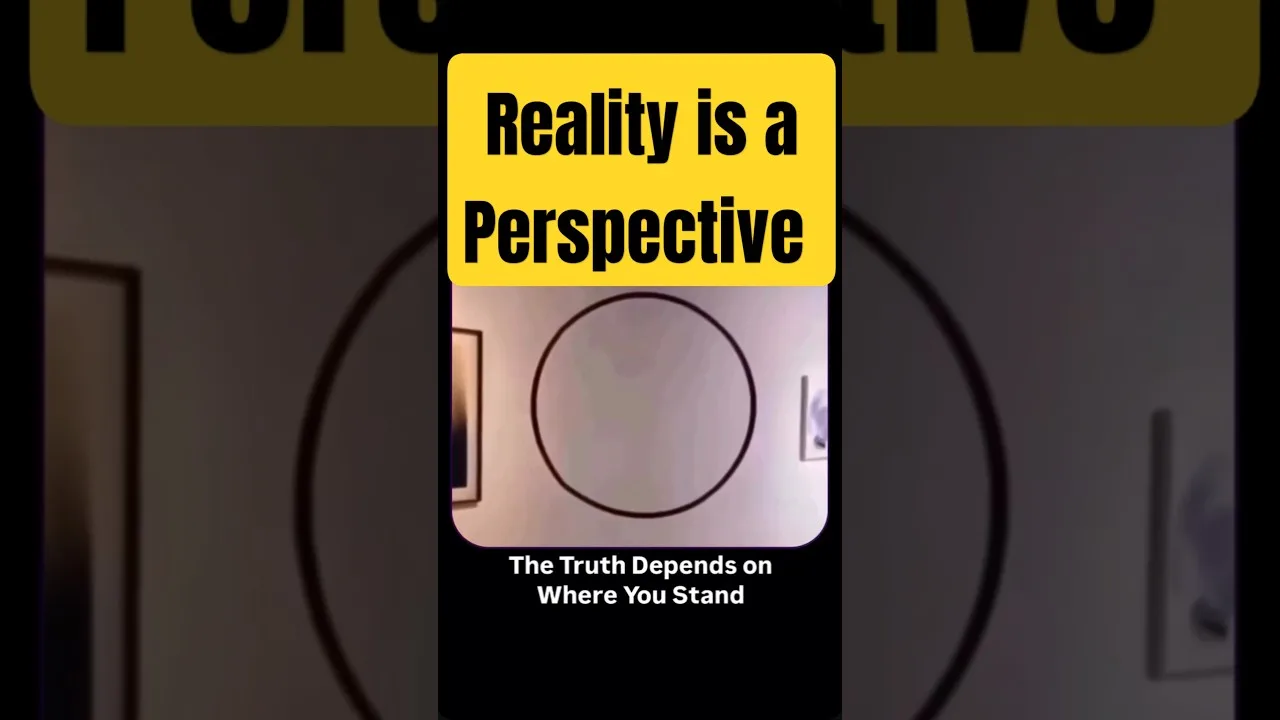
Table of Contents
- The Philosophy Behind reality perspective truth
- Ancient Roots
- Modern Interpretations
- How Perception Shapes Our reality perspective truth
- Cognitive Biases
- The Role of Language
- Scientific Insights into reality perspective truth
- Neuroscience of Perception
- Quantum Mechanics and Observer Effect
- Practical Applications of reality perspective truth
- Improving Relationships
- Enhancing Creativity
- Conclusion
reality perspective truth: Throughout history, philosophers, scientists, and everyday observers have debated whether there is an objective world independent of our minds or if what we experience is merely a construct of perception.
- reality perspective truth highlights the interplay between subjective experience and objective existence.
- Understanding perspective can improve decision‑making and empathy.
- Philosophical inquiry into truth dates back to ancient Greece, with thinkers like Plato and Aristotle.
- Modern cognitive science shows that our brains filter sensory data, shaping personal realities.
- Practical exercises such as mindfulness and perspective‑taking can help align personal views with broader truths.
The Philosophy Behind reality perspective truth
When we talk about Reality, we often assume a shared, external world that exists regardless of individual perception. Yet the concept of reality perspective truth reminds us that what we label as real is filtered through personal lenses. Ancient philosophers such as Plato argued in his Allegory of the Cave that the sensory world is merely a shadow of a higher, unchanging truth. Aristotle, meanwhile, grounded truth in empirical observation, suggesting that while our perceptions can err, repeated observation leads us closer to objective reality. This tension between ideal forms and empirical data forms the bedrock of the reality perspective truth debate.
Ancient Roots
In the East, the reality perspective truth idea appears in Buddhist teachings that describe reality as Śūnyatā (emptiness), emphasizing that all phenomena lack inherent existence and arise dependently on causes and conditions. The Hindu concept of Maya similarly suggests that the world we perceive is an illusion veiling the ultimate Brahman. These traditions contributed to a long‑standing dialogue about whether truth is absolute or perspectival.
Modern Interpretations
Fast forward to the 20th century, phenomenologists like Edmund Husserl and Maurice Merleau‑Ponty argued that consciousness is always intentional—directed toward objects—meaning that our experience of reality is always already perspectival. Later, postmodern thinkers such as Michel Foucault highlighted how power structures shape what counts as truth, reinforcing the notion that reality perspective truth is socially constructed. Contemporary analytic philosophers, meanwhile, defend a correspondence theory of truth while acknowledging that our access to reality is mediated by sensory and cognitive limitations.
How Perception Shapes Our reality perspective truth

Cognitive psychology offers concrete mechanisms through which reality perspective truth emerges. The brain does not passively record the world; it actively constructs models based on prior expectations, a process known as predictive coding. When sensory input matches predictions, we perceive stability; mismatches trigger surprise and update our internal models. This constant updating means that two individuals can witness the same event and walk away with different interpretations, each convinced theirs is the objective reality perspective truth.
Cognitive Biases
Biases such as confirmation bias, the Dunning‑Kruger effect, and the availability heuristic systematically distort our perception. For instance, confirmation bias leads us to favor information that supports existing beliefs, thereby reinforcing a personalized version of reality perspective truth. Studies show that when participants are presented with ambiguous stimuli, their interpretations often align with their ideological leanings, demonstrating how perception can diverge from any neutral fact base.
The Role of Language
Language further sculpts reality perspective truth. The Sapir‑Whorf hypothesis posits that the structure of a language influences its speakers’ worldview. Research on color perception across languages reveals that speakers of languages with distinct terms for light and dark blues are faster at discriminating those shades than speakers of languages that lump them together. Thus, the very categories we use to describe the world can constrain or expand what we consider true.
Scientific Insights into reality perspective truth
Beyond philosophy and psychology, modern physics offers startling perspectives on reality perspective truth. The famous double‑slit experiment shows that particles behave differently when observed, suggesting that the act of measurement influences outcomes. While popular interpretations sometimes overstate the role of consciousness, the experiment underscores that our access to microscopic reality is inherently mediated by the tools we use.
Neuroscience of Perception
Functional MRI studies have mapped how visual cortex activity correlates with subjective experience. When participants view ambiguous figures like the Rubin vase, alternating perceptions correspond to shifting patterns of neural activity in the fusiform gyrus and prefrontal cortex. These findings provide a biological substrate for the idea that reality perspective truth is not a static label but a dynamic brain state.
Quantum Mechanics and Observer Effect
Some interpretations of quantum mechanics, such as the QBist approach, treat the wave function as a representation of an agent’s beliefs about the world, explicitly tying reality perspective truth to personal perspective. While controversial, this view reinforces the broader theme that knowledge claims are always situated within a framework of observation and interpretation.
Practical Applications of reality perspective truth
Understanding that our truths are perspective‑laden does not lead to nihilism; rather, it empowers us to improve communication, foster empathy, and make better decisions. By recognizing the limits of our own viewpoints, we become more open to revising beliefs in light of new evidence.
Improving Relationships
In interpersonal conflict, acknowledging that each party holds a valid reality perspective truth can de‑escalate tension. Techniques such as nonviolent communication encourage speakers to express feelings and needs without attributing objective fault, creating space for mutual understanding.
Enhancing Creativity
Artists and innovators often deliberately shift perspectives to generate novel ideas. Techniques like “thinking hats” or scenario planning invite participants to adopt different viewpoints, thereby expanding the range of possible solutions. Embracing multiple reality perspective truth angles fuels breakthrough thinking in fields ranging from design to scientific research.
Conclusion
The inquiry into reality perspective truth reveals a rich tapestry where philosophy, cognitive science, linguistics, and physics intersect. While an objective reality may exist independently of observers, our access to it is inevitably filtered through personal, cultural, and biological lenses. By cultivating awareness of these filters—through mindfulness, critical thinking, and open dialogue—we can navigate the world with greater humility, compassion, and effectiveness. Ultimately, embracing the fluidity of perspective does not erase the pursuit of truth; it enriches it, allowing us to appreciate both the steadfastness of underlying realities and the vibrant diversity of human experience.
Frequently Asked Questions
reality perspective truth refers to the idea that what we consider real is shaped by our individual perspectives, beliefs, and cognitive filters, while an objective reality may exist independently of those views.
By recognizing that our truths are perspective‑laden, we become more empathetic, open‑minded, and better at resolving conflicts, leading to stronger relationships and wiser decisions.
Yes, research in cognitive psychology, neuroscience, and quantum mechanics shows that perception, language, and observation actively shape our experience of reality, supporting the perspective‑dependent nature of truth.
