

Blog
Multi-Level Planning in India: Panchayati Raj, District, and State Coordination Explained

Multi-Level Planning in India operates through a complex interplay of Panchayati Raj institutions, district-level coordination mechanisms, and state-level frameworks. Understanding this intricate system is critical for UPSC CSE aspirants, geography students, and development professionals seeking to grasp India’s federal planning architecture. The 73rd and 74th Amendments fundamentally reshaped governance structures, creating constitutional mandates for decentralized decision-making across multiple administrative tiers.
- Multi-Level Planning in India integrates Panchayati Raj institutions with district and state coordination
- The 73rd Amendment established constitutional provisions for rural governance
- District-level planning bridges local and state development priorities
- State governments coordinate spatial planning through dedicated departments
- Effective implementation requires synchronized policy frameworks across tiers
The Constitutional Framework of Multi-Level Planning in India
The foundation of Multi-Level Planning in India rests on constitutional amendments that redefined federal-state-local relationships. The 73rd Amendment Act, 1992, incorporated Part IX into the Indian Constitution, establishing Panchayati Raj institutions as nodal authorities for rural development planning. Simultaneously, the 74th Amendment Act, 1992, created Urban Local Bodies (ULBs) through Part IX-A, extending decentralized governance to urban areas.
These constitutional provisions mandatethree-tier governance structures: village/panchayat level, intermediate block level, and district/state level. Each tier possesses distinct planning responsibilities, with Panchayati Raj institutions serving as grassroots decision-makers for rural development projects. The Constitution explicitly assigns planning functions to both Union and State Governments while devolving certain functions to local bodies.
Panchayati Raj Institutions and Decentralized Planning
Panchayati Raj Institutions (PRIs) form the cornerstone of Multi-Level Planning in India’s rural development ecosystem. The three-tier structure includes Gram Panchayats at village level, Panchayat Samitis at intermediate level, and Zila Parishads at district level. Each tier maintains specific planning jurisdictions, with Gram Sabhas exercising democratic oversight through annual development plans.
The Panchayati Raj system operates under the Pancharajna Principles, emphasizing democratic decentralization, functional separateness, and financial autonomy. According to the Ministry of Panchayati Raj, over 250,000 Gram Panchayats currently execute development projects across rural India, coordinating with district authorities for resource allocation and monitoring. The Gramanchalik Sahayta Samitis (GSS) facilitate micro-planning at village level, ensuring community participation in development prioritization.
District-Level Coordination in Multi-Level Planning
District administration serves as the critical link between local governance structures and state-level planning agencies. The District Magistrate/Chief Executive Officer coordinates development activities through District Development Councils, integrating inputs from Panchayati Raj institutions, ULBs, and state departments. The District Spatial Planning Process mandates comprehensive development plans incorporating sectoral strategies from various departments.
Multi-Level Planning in India’s district framework relies on the Integrated Development Plan (IDP) mechanism, which synthesizes plans from different administrative tiers. The District Collector chairs the District Planning Committee, responsible for preparing and implementing coordinated development strategies. Recent initiatives like the Smart District concept leverage technology for enhanced coordination between Panchayati Raj institutions and district administration.
State-Level Planning Mechanisms and Coordination
State governments exercise coordination functions through dedicated Planning Departments and State Development Councils. The Multi-Level Planning in India framework requires state-level spatial planning authorities to integrate district and local plans into comprehensive state strategies. The State Spatial Development Plans (SSDPs) serve as policy documents guiding long-term development trajectories across regions.
The National Institute of Urban Planning estimates that states allocate approximately 15-20% of their development budgets to decentralized planning initiatives. State governments coordinate through mechanisms like the State Finance Commission, which recommends resource distribution between Panchayati Raj institutions and state treasuries. The 14th Finance Commission’s devolution guidelines further strengthen fiscal federalism in India’s planning architecture.
Challenges in Multi-Level Planning Coordination
Despite constitutional provisions, Multi-Level Planning in India faces significant implementation challenges. The gap between policy mandates and ground-level execution remains a persistent concern, particularly in states with weak institutional capacity. The Comptroller and Auditor General’s 2021 report highlighted that only 42% of Gram Panchayats effectively prepare development plans within prescribed timelines.
Financial constraints compound coordination challenges, with Panchayati Raj institutions often lacking adequate resources for independent planning. The Supreme Court’s 2022 ruling in People’s Union for Civil Liberties v. Union of India emphasized the need for transparent fund utilization, mandating public hearings before project approvals. Additionally, overlapping jurisdictions between Panchayati Raj institutions and district administrations create administrative confusion, hindering seamless Multi-Level Planning in India’s development processes.
Simplified Regional Planning And Development E-Book Solution
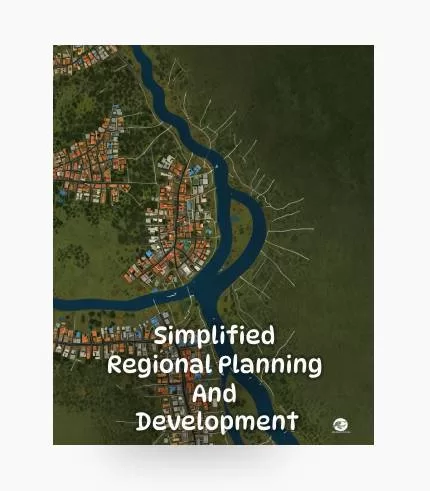
For those navigating the complexities of Multi-Level Planning in India, Simplified Regional Planning And Development by Dr. Krishnanand offers a structured approach to understanding decentralized governance frameworks. The e-book systematically breaks down intricate concepts related to Panchayati Raj institutions, district-level coordination, and state planning mechanisms through point-wise explanations and visual aids. Designed specifically for UPSC CSE aspirants and geography students, it aligns with CBCS syllabus requirements while providing practical insights into India’s federal planning architecture.
The comprehensive coverage includes detailed analysis of constitutional provisions, institutional structures, and implementation challenges in Multi-Level Planning in India. Diagrams illustrating three-tier governance, flowcharts depicting coordination mechanisms, and maps showing regional development patterns enhance comprehension. The e-book’s pedagogical approach ensures readers grasp both theoretical foundations and practical applications of decentralized planning in the Indian context.
Practical Application for UPSC Aspirants and Students
The e-book’s structured format proves invaluable for competitive examination preparation, offering concise summaries of Multi-Level Planning in India’s key features. Chapter-wise breakdown of constitutional amendments, institutional responsibilities, and coordination mechanisms enables targeted revision. Geography students benefit from the integration of theoretical concepts with real-world examples of decentralized planning implementation.
Dr. Krishnanand’s approach emphasizes analytical understanding over rote learning, helping aspirants develop answer-writing skills for GS Paper II (Governance) and Geography papers. The inclusion of previous year’s question analysis and model answers demonstrates how to frame responses on Multi-Level Planning in India topics. Students can access downloadable resources including planning flowcharts and institutional hierarchy diagrams for effective exam preparation.
External Resources for Further Study
Understanding Multi-Level Planning in India requires consultation of authoritative sources. The Ministry of Panchayati Raj’s official website provides updated guidelines on Panchayati Raj institutions and decentralized planning mechanisms. The Planning Commission’s archives offer historical perspectives on India’s Five-Year Plans and spatial development strategies. For academic research, the Journal of Rural Development publishes peer-reviewed studies on decentralized governance and local planning effectiveness. The Census of India website hosts demographic and economic data essential for analyzing regional development disparities. Wikipedia’s comprehensive articles on the 73rd and 74th Amendments provide accessible overviews of constitutional changes affecting Multi-Level Planning in India’s governance structure.
Conclusion and Next Steps
Mastering Multi-Level Planning in India requires understanding institutional frameworks, coordination mechanisms, and implementation challenges across Panchayati Raj, district, and state levels. The complexity of decentralized governance demands structured learning approaches combining theoretical knowledge with practical insights. Aspiring geographers, planners, and civil servants benefit from resources that simplify intricate concepts while maintaining analytical depth.
Simplified Regional Planning And Development by Dr. Krishnanand addresses these learning needs through comprehensive coverage of regional planning concepts. The e-book’s alignment with academic syllabi and competitive examination requirements makes it an essential resource for serious students of geography and development studies. Download the sample chapter to evaluate its relevance for your specific learning objectives.
Further reading: Multi-Level Planning India Panchayati Raj on Wikipedia
Our Recommendation
📖 Part of our complete guide: Evolution of Geographical Thought: A Comprehensive Guide for UPSC Aspirants and Geography Enthusiasts
Frequently Asked Questions
What is Multi-Level Planning in India?
Multi-Level Planning in India refers to the coordinated planning process involving Panchayati Raj institutions at village level, district administration, and state governments to achieve balanced regional development through decentralized governance structures.
How does Panchayati Raj fit into Multi-Level Planning?
Panchayati Raj institutions form the grassroots level of Multi-Level Planning in India, executing Gram Panchayat plans that feed into district-level development strategies and ultimately contribute to state-wide planning frameworks.
What are the key challenges in Multi-Level Planning?
Key challenges in Multi-Level Planning include coordination gaps between administrative tiers, insufficient financial resources at local levels, overlapping jurisdictions, and delays in plan implementation due to weak institutional capacity.

