
Blog
Living Root Bridge Meghalaya: Nature’s Engineering Marvel in the East Khasi Hills

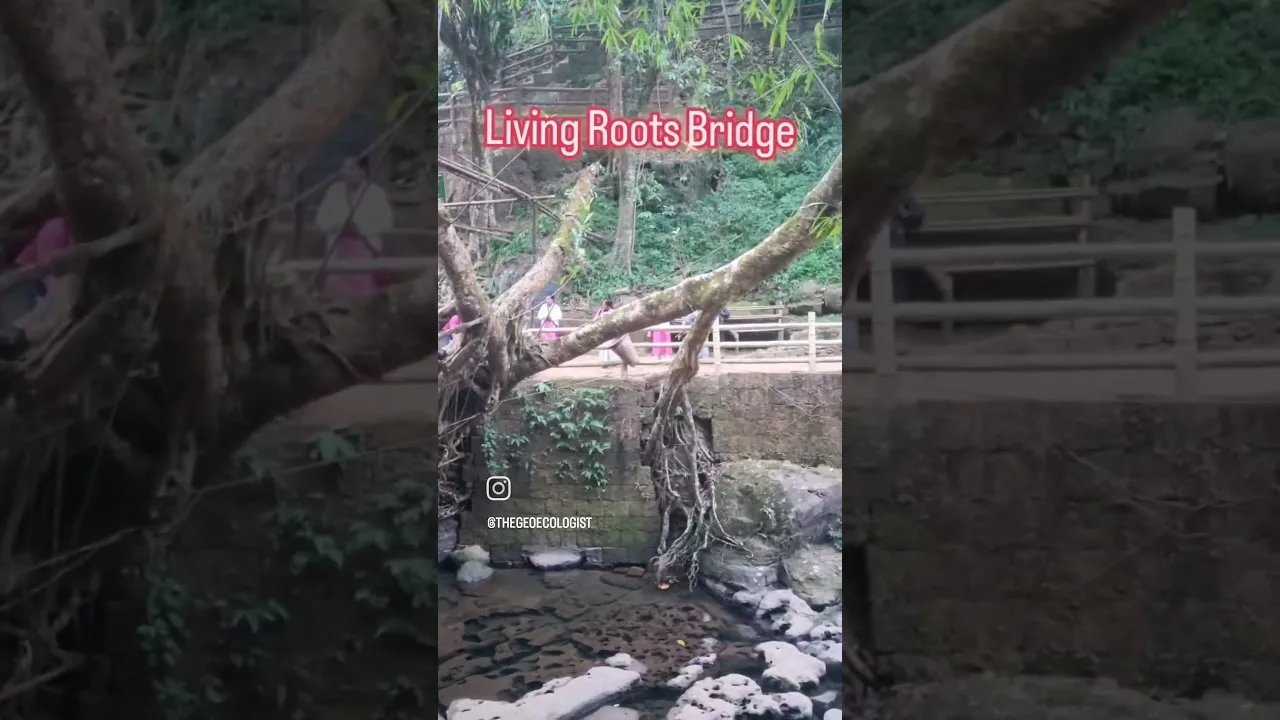
Table of Contents
- What Is a Living Root Bridge Meghalaya?
- The Science Behind Living Root Bridge Meghalaya Engineering
- Botanical Foundations: Ficus Elastica
- Root Training Methodology
- Structural Performance Metrics
- Jingkieng Deingjri: The Crown Jewel of Living Root Bridge Meghalaya
- Cultural Significance and Khasi Heritage
- Trekking to the Living Root Bridge Meghalaya: Practical Guide
- Route Options and Difficulty
- Essential Gear and Preparation
- Best Time to Visit Living Root Bridge Meghalaya
- Conservation Efforts and Sustainable Tourism
- Living Root Bridge Meghalaya: A Blueprint for Future Infrastructure
Deep within the emerald embrace of Meghalaya’s East Khasi Hills, where monsoon rains sculpt the landscape into a verdant paradise, stands a structure so extraordinary it defies conventional engineering: the Living Root Bridge Meghalaya known locally as Jingkieng Deingjri. This isn’t merely a crossing over a turbulent stream; it is a breathtaking symphony of human ingenuity and botanical resilience, grown over centuries by the Khasi people using the aerial roots of the rubber tree (Ficus elastica). As a UNESCO World Heritage tentative site, this living architecture has captured global imagination, drawing travelers, botanists, and cultural enthusiasts to witness a phenomenon where infrastructure breathes, grows, and strengthens with each passing season.
- Living Root Bridge Meghalaya structures are grown, not built, using aerial roots of Ficus elastica guided by Khasi tribal knowledge over 15-30 years.
- The famous Jingkieng Deingjri (Double Decker) bridge spans over 50 feet and is estimated to be 500+ years old, strengthening annually.
- Located near Nongriat village, reaching the bridge requires a 2-3 hour trek descending 3,500+ stone steps from Tyrna.
- Best visiting months are October through April for pleasant weather and safe trekking conditions.
- These bridges represent Indigenous bio-engineering recognized by UNESCO as intangible cultural heritage.
What Is a Living Root Bridge Meghalaya?
A Living Root Bridge Meghalaya is a functional pedestrian bridge formed by training the pliable, secondary roots of the Indian rubber tree across rivers and streams. Unlike conventional bridges constructed from steel, concrete, or timber, these structures are cultivated through a process of patient guidance spanning generations. The Khasi and Jaintia tribes of Meghalaya have perfected this technique over centuries, creating over 100 known living root bridges across the state’s southern slopes. The most celebrated examples include the Double Decker Living Root Bridge at Nongriat (Jingkieng Deingjri), the Single Decker at Riwai, and the Umshiang Double Decker near Mawlynnong.
Each bridge begins with a hollowed-out betel nut trunk placed across a waterway, guiding young rubber tree roots through its length. As roots reach the opposite bank, they anchor into soil, thickening and intertwining over decades. The result is a living, load-bearing structure capable of supporting 50 or more people simultaneously, with a lifespan exceeding 500 years when properly maintained. This remarkable bio-engineering tradition represents one of humanity’s most sophisticated examples of nature-based infrastructure.
The Science Behind Living Root Bridge Meghalaya Engineering
Botanical Foundations: Ficus Elastica
The Indian rubber tree (Ficus elastica) possesses unique characteristics that make it ideal for living architecture. As a hemiepiphyte, it naturally produces aerial prop roots that descend from branches toward the ground, seeking nutrients and stability. These roots exhibit remarkable tensile strength—comparable to steel cables of equivalent diameter—while maintaining flexibility during growth. The species thrives in Meghalaya’s hyper-humid, high-rainfall environment (Cherrapunji and Mawsynram receive 11,000+ mm annually), where conventional materials deteriorate rapidly.
Root Training Methodology
Khasi bridge builders employ a sophisticated root guidance system. Young roots are threaded through hollow areca nut trunks or bamboo scaffolding spanning the watercourse. As roots elongate, they are repeatedly woven, twisted, and fused together through a process called anastomosis—natural grafting where vascular tissues merge between adjacent roots. This creates a unified structural network distributing loads across dozens of individual root strands. Secondary roots are continuously incorporated, replacing aging members and increasing cross-sectional area. The bridge effectively performs autonomous structural health monitoring and repair, a capability no synthetic material possesses.
Structural Performance Metrics
Engineering assessments of mature Living Root Bridge Meghalaya structures reveal impressive specifications. A typical single-decker spans 15-25 meters with a 1.5-2 meter width, supporting 35-50 adults. The Double Decker at Nongriat features two functional levels separated by 3-4 meters, effectively doubling capacity. Root diameters range from 5-30 cm at anchor points, with compressive strengths exceeding 15 MPa—comparable to medium-grade concrete. Crucially, these structures gain 1-2% load capacity annually as roots thicken, unlike conventional bridges that degrade from day one.
Jingkieng Deingjri: The Crown Jewel of Living Root Bridge Meghalaya
Jingkieng Deingjri, the Double Decker Living Root Bridge near Nongriat village, stands as the most iconic example of this tradition. Estimated at 500+ years old, this dual-level marvel spans the Umshiang River with an upper deck added approximately 200 years ago when monsoon flooding rendered the lower deck impassable. The bridge measures approximately 50 feet (15 meters) in length and 4 feet (1.2 meters) in width per level, with handrails formed from woven root tendrils.
Reaching Jingkieng Deingjri requires commitment. From Tyrna village (the nearest roadhead), visitors descend approximately 3,500 stone steps through dense subtropical forest, crossing multiple steel suspension bridges over crystal-clear streams. The 2-3 hour trek each way traverses elevation changes of 600+ meters, passing through Nongriat village where homestays offer overnight accommodation. The journey itself showcases Meghalaya’s extraordinary biodiversity: rare orchids (Paphiopedilum insigne, Vanda coerulea), pitcher plants (Nepenthes khasiana), and endemic bird species including the Tawny-breasted Wren-babbler and Khasi Hill Partridge.
Cultural Significance and Khasi Heritage
The Living Root Bridge Meghalaya tradition embodies the Khasi concept of “ka jingieit“—harmonious coexistence with nature. Bridge construction and maintenance are communal responsibilities, with knowledge transmitted orally through generations. Each village maintains specific bridges, organizing annual root-training sessions where elders guide younger members. This practice reinforces social cohesion while ensuring infrastructure resilience.
Spiritually, these bridges occupy sacred space in Khasi cosmology. The rubber tree is associated with U Blei (the Supreme Creator), and bridge sites often host traditional ceremonies. The 2022 inclusion of “Living Root Bridge Cultural Landscapes” on UNESCO’s tentative World Heritage list acknowledges this biocultural heritage. As noted by the UNESCO World Heritage Centre, these structures represent “an exceptional testimony to a cultural tradition and to a civilization which is living” where “the tangible and intangible heritage are inextricably linked.”
Trekking to the Living Root Bridge Meghalaya: Practical Guide
Route Options and Difficulty
Three primary access routes serve the major Living Root Bridge Meghalaya sites:
- Tyrna to Nongriat (Jingkieng Deingjri): 3,500+ steps, 2.5-3 hours descent, 3.5-4 hours ascent. Strenuous; requires good fitness.
- Mawlynnong to Riwai (Single Decker): 20-minute walk from parking. Easy; suitable for all ages.
- Shnongpdeng to Umkar (Lesser-known): 45-minute moderate hike through forest. Fewer crowds.
Essential Gear and Preparation
Pack lightweight rain protection (poncho preferred over umbrella), sturdy trekking shoes with grip, 2+ liters water, electrolyte supplements, energy bars, basic first aid, and waterproof bags for electronics. Hire local guides at Tyrna (₹500-800/day)—they provide safety, cultural context, and support village economies. Overnight at Nongriat homestays (₹800-1,500/night including meals) allows sunrise bridge visits and exploration of nearby Rainbow Falls.
Best Time to Visit Living Root Bridge Meghalaya
Meghalaya’s climate dictates visiting windows. The optimal period is October through April, when rainfall diminishes, trails firm up, and temperatures range 15-25°C. Post-monsoon (October-November) offers lush greenery and flowing waterfalls. Winter (December-February) brings crisp, clear days ideal for photography. Pre-monsoon (March-April) sees flowering orchids but rising humidity.
Avoid May-September when the Southwest Monsoon delivers 70% of annual rainfall. Trails become hazardous—slippery steps, flash floods, leeches, and landslide risk. Bridge access may be restricted by village authorities during extreme weather. If visiting during shoulder months, verify conditions with Meghalaya Tourism or local homestay hosts.
Conservation Efforts and Sustainable Tourism
Growing popularity—fueled by social media virality—presents both opportunities and threats to Living Root Bridge Meghalaya sites. Annual visitors to Nongriat increased from ~2,000 (2015) to 25,000+ (2023), straining fragile ecosystems and community resources. In response, the Meghalaya Basin Development Authority, village durbars (councils), and NGOs have implemented measures:
- Visitor caps at sensitive sites (proposed 200/day at Jingkieng Deingjri)
- Mandatory guide hiring ensuring safety and cultural interpretation
- Waste management systems: carry-in/carry-out policies, composting toilets
- Homestay certification ensuring fair wages and environmental standards
- Root health monitoring by botanical survey teams
Travelers can contribute by choosing certified homestays, refusing single-use plastics, staying on designated paths, and respecting cultural protocols (photography permissions, modest dress). The Living Root Bridge Foundation, established 2021, channels tourism revenue into bridge maintenance, youth training programs, and watershed protection—ensuring these living wonders endure for future generations.
Living Root Bridge Meghalaya: A Blueprint for Future Infrastructure
Beyond their immediate wonder, Living Root Bridge Meghalaya structures offer profound lessons for global engineering challenges. As climate change accelerates infrastructure degradation—corroding steel, cracking concrete, washing out foundations—these bridges demonstrate carbon-negative, climate-adaptive construction. They sequester CO₂, stabilize slopes against erosion, create habitat, and require zero fossil energy for maintenance. Researchers at institutions including IIT Guwahati and ETH Zürich are studying root mechanics for applications in slope stabilization, flood-resilient pathways, and urban green infrastructure.
The Khasi tradition proves that sophisticated engineering need not separate humanity from ecology. Each step across Jingkieng Deingjri traverses not just a river, but a philosophy: that the most enduring structures are those that live, breathe, and grow alongside the communities they serve. In an age of disposable infrastructure, the Living Root Bridge Meghalaya stands as a 500-year rebuttal—a testament to patience, reciprocity, and the radical possibility of building with life itself.
Frequently Asked Questions
The trek from Tyrna village to Jingkieng Deingjri (Double Decker Living Root Bridge) takes 2.5-3 hours descending 3,500+ stone steps, and 3.5-4 hours ascending. Allow a full day for round trip, or stay overnight at Nongriat homestays for a more relaxed experience.
October through April offers the best conditions for visiting Living Root Bridge Meghalaya sites. Post-monsoon (Oct-Nov) provides lush scenery, winter (Dec-Feb) has clear skies, and pre-monsoon (Mar-Apr) features flowering orchids. Avoid May-September due to dangerous monsoon conditions.
Yes, mature Living Root Bridge Meghalaya bridges like Jingkieng Deingjri safely support 50+ adults. They strengthen annually as roots thicken. However, wear proper trekking shoes, use handrails, and hire local guides. Village authorities may restrict access during extreme weather for safety.